Social Media Marketing for Restaurants – Beginner’s Guide
Published: 5 May 2026
A single photo of a burger can bring more customers than a discount banner outside your restaurant. That is the power of social media marketing for restaurants in today’s digital world. People scroll fast, judge quickly, and choose places that catch their attention online.
In this article, we will learn and discuss social media marketing for restaurants in detail and explain how small actions create big results. You will explore how restaurants use stories, posts, and reviews to build strong connections with diners.
This introduction sets the stage for understanding how social media turns everyday meals into memorable experiences.
What is Social Media Marketing for Restaurants?
Social media marketing for restaurants is a way to connect with people online. It allows restaurants to share updates, food photos, videos, and special offers with potential customers. This type of marketing is not just about selling food but also about creating a relationship and showing what makes the restaurant unique.
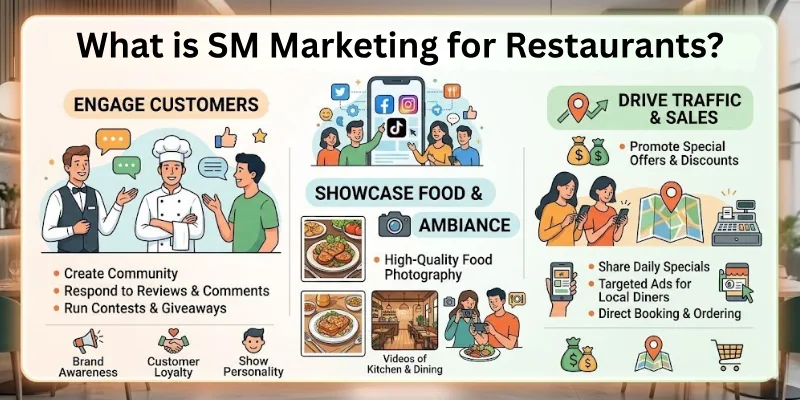
Social media gives restaurants a platform to showcase their personality, atmosphere, and menu. When used effectively, it helps attract new customers and keeps the restaurant visible to those who are already interested.
Why Social Media is Important for Restaurants
Restaurants today cannot rely only on word of mouth or traditional advertising. People check social media daily for recommendations, reviews, and new dining options before deciding where to eat. Being present online ensures a restaurant is part of these conversations and remains noticeable.
Social media also allows restaurants to share updates instantly and interact directly with customers. It helps showcase the restaurant’s vibe, specialities, and customer experience, which builds interest even before anyone steps inside.
Benefits of Social Media Marketing for Restaurants
Social media offers many practical benefits that help restaurants grow. When used properly, it increases visibility, engagement, and customer loyalty, making it a cost-effective marketing tool.
- Attract more customers – Eye-catching posts about food, events, and deals encourage visits and online orders.
- Build trust and credibility – Real photos, behind-the-scenes content, and reviews make the restaurant reliable.
- Cost-effective promotion – Reach more people with less money than traditional advertising.
- Increase engagement – Likes, comments, and shares create a strong relationship with followers.
- Encourage organic sharing – Customers sharing posts brings free promotion to new audiences.
Best Social Media Platforms for Restaurants
Not all social media platforms work the same way for restaurants. Choosing the right ones allows restaurants to reach the right audience without wasting time or resources.
Each platform has its own strengths and types of users.
- Facebook marketing for restaurants: Ideal for local customers, events, offers, and building a community. Pages provide easy access to contact info and directions.
- Restaurant Instagram marketing: Perfect for high-quality photos, Stories, and Reels. Hashtags and geotags help attract local food lovers.
- TikTok for restaurants: Short, fun videos of recipes, behind-the-scenes clips, or customer reactions help reach younger audiences quickly.
- Google Business Profile: Appearing in local searches increases visibility and attracts new customers.
- WhatsApp communication: Sharing menus, taking orders, and answering questions gives a personal touch.
How to Create a Social Media Marketing Strategy for Restaurants
A clear strategy helps restaurants stay organized and ensures their social media efforts are effective. Without a plan, posts can feel random and fail to reach the right audience.
A strategy defines goals, content, platforms, and posting schedules.
- Set clear goals: Decide whether the focus is more on visitors, online orders, or brand awareness.
- Know your audience: Understand customer preferences and interests to make posts more engaging.
- Choose the right platforms: Focus on the platforms where your audience spends most of their time.
- Plan content in advance: Include posts about food, events, offers, and behind-the-scenes moments.
- Maintain consistency: Regular posting keeps the restaurant visible and trustworthy.
- Use management tools: Tools like Hootsuite or Buffer help schedule posts and monitor engagement.
- Track performance and adjust: Analyze engagement to improve strategy over time.
Content Ideas for Restaurants
Creating the right content is key to attracting and engaging customers on social media. Restaurants need posts that are interesting, visually appealing, and aligned with their brand personality.
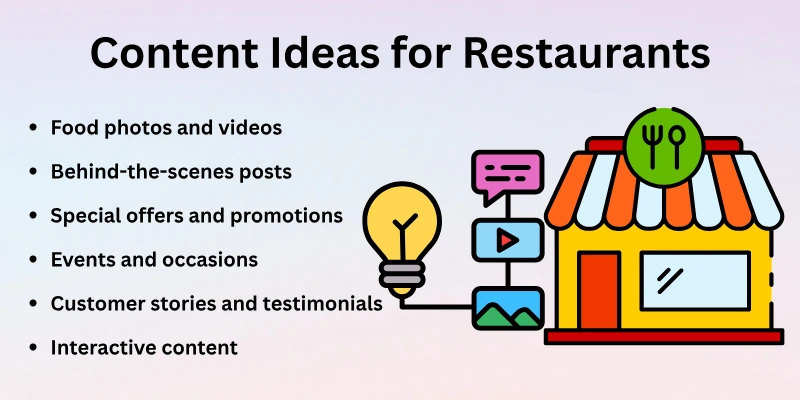
Good content encourages people to like, share, and visit.
- Food photos and videos: High-quality images of dishes, drinks, and desserts showcase what customers can expect. Short videos of plating or cooking add excitement.
- Behind-the-scenes posts: Show chefs at work, staff preparing orders, or the restaurant environment. This makes your restaurant feel more personal and approachable.
- Special offers and promotions: Announce discounts, seasonal menus, or happy hours. Posts like these motivate people to visit or order online.
- Events and occasions: Share celebrations, live music nights, or cooking workshops to create anticipation and involvement.
- Customer stories and testimonials: Featuring happy customers or reviews builds trust and encourages others to try the restaurant.
- Interactive content: Polls, quizzes, or contests keep followers engaged and make them feel part of the restaurant community.
How to Promote a Restaurant on Social Media
Promotion is more than posting content. It involves planning, targeting the right audience, and encouraging engagement to turn followers into customers. Effective promotion combines creativity with strategy.
- Use location tags and hashtags: Helps local customers discover your restaurant when searching for food nearby.
- Collaborate with local influencers: Partner with influencers who share your target audience to reach new customers.
- Engage with followers regularly: Reply to comments and messages to build a positive reputation and encourage repeat visits.
- Highlight daily specials or limited-time offers: Urgency motivates people to visit sooner rather than later.
- Encourage user-generated content: Ask customers to share their dining experience and tag your restaurant to increase visibility.
- Cross-promote on multiple platforms: Share posts across Instagram, Facebook, TikTok, and Google Business Profile to maximize reach.
Restaurant Social Media Advertising
Paid advertising can significantly increase a restaurant’s visibility and attract new customers. Even small budgets can deliver good results when campaigns are targeted effectively.
- Facebook and Instagram ads – Promote events, menu items, or special deals to people in your local area. Targeting options help reach the right audience.
- Boosting high-performing posts – Turn popular organic posts into paid ads to reach more potential customers.
- Story ads and Reels ads – Short, engaging videos grab attention and encourage users to click or visit.
- Offer-based campaigns – Ads highlighting discounts or promotions create urgency and drive immediate action.
- Track and optimize campaigns – Monitor clicks, impressions, and conversions to improve the performance of future ads.
Working with Influencers
Influencers can help restaurants reach new audiences and gain credibility. Collaborating with the right people creates authentic promotion that feels personal to potential customers.
- Choose relevant local influencers – Pick influencers whose audience matches your target customers to ensure posts reach the right people.
- Set clear expectations – Share the goals, type of content, and any key messages you want included.
- Encourage authentic content – Let influencers present your restaurant naturally, as this feels more genuine to their followers.
- Track results – Monitor engagement, clicks, and conversions to see if the collaboration was effective.
- Build long-term relationships – Consistent partnerships with influencers can create ongoing promotion and trust.
Measuring Social Media Success
Tracking performance is key to understanding what works and improving results. Without measurement, restaurants may spend time and effort on content that doesn’t bring results.
- Monitor engagement: Track likes, comments, shares, and follower growth to understand audience interaction.
- Check website traffic: Use links from social media posts to see how many users visit your website or online ordering page.
- Analyze ad campaigns: Review impressions, clicks, and conversions to assess paid promotion effectiveness.
- Evaluate content types: Identify which posts, videos, or stories get the best response to guide future content.
- Adjust strategy regularly: Use insights to refine posting schedules, content ideas, and promotion methods for better results.
Common Social Media Mistakes Restaurants Should Avoid
Even small mistakes can reduce engagement and customer interest. Being aware of these pitfalls helps restaurants maintain a professional and effective online presence.
- Over-promoting products – Constantly posting only offers or ads can feel spammy and drive followers away.
- Posting irregularly – Inconsistent posting makes the restaurant less visible and reduces engagement.
- Ignoring comments and messages – Not responding to customers can hurt trust and reputation.
- Low-quality visuals – Poor photos or videos reduce interest and fail to showcase food properly.
- Not tracking performance – Without analyzing results, restaurants may continue ineffective strategies.
Wrapping Up
In this article, we have covered social media marketing for restaurants and explained how it helps bring in more customers and build trust. We talked about why regular posting, interesting content, and talking directly with diners matter.
Social media is no longer a choice for restaurants that want to grow. Start by picking the right platforms and sharing posts that show your food and your style.
In the future, restaurants that follow trends and stay active with their audience will stand out and turn followers into loyal customers.
FAQs: SMM For Social Media Marketing
The following section answers frequently asked questions on social media marketing for restaurants:
KFC uses humour, trends, and bold visuals to stay memorable online. The brand posts witty captions, short videos, and relatable memes that match its audience. These posts often go viral and serve as strong restaurant social media post examples. KFC also replies to comments to keep engagement high.
A clear plan helps with social media management for restaurant growth. The main steps include:
- Set goals
- Know your audience
- Study competitors
- Choose platforms
- Create content
- Track results
- Improve strategy
The 70/20/10 rule guides how to promote a restaurant on social media in a balanced way. 70 per cent focuses on helpful or fun content, 20 per cent shares others’ content or trends, and 10 per cent promotes offers or sales. This mix keeps followers interested without feeling pushed.
This rule helps plan Facebook post ideas for restaurants. 30 percent shows food and menu items, 30 percent shares behind-the-scenes moments, 30 percent highlights customer stories, and 10 percent promotes deals or events. It keeps content fresh and balanced.
Most restaurants use Instagram, Facebook, TikTok, and Google Business Profile. These platforms work well for photos, videos, reviews, and updates. Choosing the right social media for a restaurant depends on where your customers spend time online.
The 7-min rule focuses on fast service and quick customer response. KFC aims to serve food and reply to online messages within minutes. This improves customer satisfaction and builds a strong brand image both online and offline.
Use social media for restaurant to share food photos, behind-the-scenes posts, and special offers. Engage with followers, reply to comments, and post regularly to stay visible. User-generated content and small ads can also help attract more customers.



- Be Respectful
- Stay Relevant
- Stay Positive
- True Feedback
- Encourage Discussion
- Avoid Spamming
- No Fake News
- Don't Copy-Paste
- No Personal Attacks
- Be Respectful
- Stay Relevant
- Stay Positive
- True Feedback
- Encourage Discussion
- Avoid Spamming
- No Fake News
- Don't Copy-Paste
- No Personal Attacks
