Digital Marketing for Restaurants
Published: 1 May 2026
Digital marketing for restaurants is the practice of promoting a restaurant online to attract more customers and grow the business. It includes websites, social media, online ads, content marketing, and customer reviews.
Today, having an online presence is essential because most people search for restaurants on Google, check menus on apps, or browse social media before deciding where to eat. A strong digital presence helps your restaurant stand out, reach the right audience, and encourage repeat visits.
In this article, we will cover effective strategies, useful tools, and real examples that restaurants can use to create a successful restaurant online marketing strategy and grow their business in the digital world.
Why Restaurants Need Digital Marketing
In today’s world, people no longer rely only on walking by restaurants or seeing a sign. Most customers search online before deciding where to eat. This is why digital marketing has become essential for restaurants. It helps you reach the right people, showcase your food, and bring more customers through your doors or online orders.
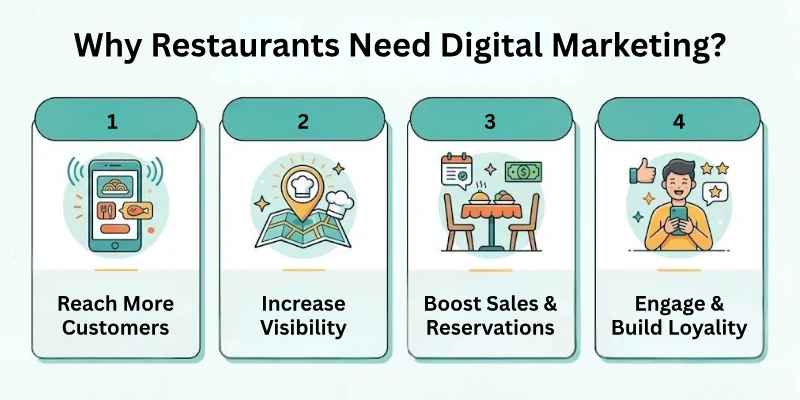
Here’s why digital marketing is important for restaurants:
How today’s customers search for food online:
- Many people use Google, Yelp, or food apps to find nearby restaurants.
- Customers check reviews, menus, and photos before choosing.
- People also search for specific cuisines, deals, or special offers.
Importance of search engines:
- Being visible on Google makes it easier for new customers to find your restaurant.
- Local SEO ensures your restaurant appears in searches like “best pizza near me”.
- Optimizing your website and listings increases trust and credibility.
Importance of social media:
- Platforms like Instagram and Facebook are perfect for showing appetizing food photos.
- Social media helps you connect with customers, respond to messages, and share updates.
- Promotions, contests, and stories can increase engagement and brand loyalty.
Importance of mobile ordering:
- Many customers prefer ordering food online through apps or your website.
- Mobile-friendly platforms make ordering easier and faster.
- Restaurants that offer smooth online ordering increase repeat customers and sales.
Trends in digital marketing for restaurants and food businesses:
- Short videos and reels showcasing your food or the chef behind the scenes.
- Collaborating with food influencers to reach new audiences.
- Personalized marketing through emails or notifications for special deals.
- Using data and analytics to understand customer behaviour and improve services.
Digital marketing is no longer optional for restaurants—it is the bridge between your food and the people searching for it. Without it, even great restaurants can remain invisible online.
Building a Digital Marketing Strategy for Restaurants
Having a plan is the first step toward success in online marketing for restaurants. A clear strategy helps you reach the right audience, spend money wisely, and grow your business efficiently.
Here’s how to build an effective digital marketing strategy for your restaurant:
Set clear goals:
- Decide what you want to achieve: more website visits, higher online orders, or stronger social media engagement.
- Goals help you measure progress and adjust your approach.
Understand your audience:
- Know who your customers are: age, location, food preferences, and online habits.
- Tailor your marketing messages to match their tastes and interests.
Choose the right platforms:
- Focus on platforms where your audience is most active.
- For visual content like food photos and videos, Instagram and TikTok work best.
- Facebook is ideal for promotions, events, and community engagement.
Create a content plan:
- Decide what type of content to post: daily specials, behind-the-scenes videos, or customer stories.
- Include a mix of images, videos, and written posts to keep your audience engaged.
Use paid campaigns wisely:
- Small paid ads on Google or social media can bring immediate visibility.
- Target ads based on location, age, and interests for better results.
Track and adjust:
- Use analytics tools to see which campaigns bring orders or engagement.
- Regularly review your strategy and improve it based on what works.
By following these steps, your restaurant’s online marketing strategy will not just look good on paper; it will deliver real results, attracting more customers both online and offline.
Website Optimization for Restaurants
A restaurant’s website is often the first impression a customer gets online. A well-optimized website not only looks professional but also makes it easy for people to find information, place orders, or make reservations.
Here’s how to make your restaurant website effective:
Mobile-friendly design:
- Most customers search for restaurants on their phones, so your website must look good and work smoothly on mobile devices.
- Buttons, menus, and booking forms should be easy to tap.
Fast loading speed:
- Slow websites can drive visitors away.
- Optimize images and use reliable hosting to ensure your site loads quickly.
Clear menus and pricing:
- Display your menu in a readable format with prices and options.
- Include appealing food images to attract customers.
Online reservations and ordering:
- Make it simple for customers to book tables or order food online.
- Integrate with popular apps or your own online ordering system.
Local SEO optimization:
- Use location-based keywords like “best pizza in [city]” to appear in local search results.
- Create and optimize your Google Business Profile to show up on Google Maps and search.
Contact information and opening hours:
- Keep your phone number, address, email, and hours easy to find.
- Consider adding a live chat option for quick inquiries.
Optimizing your website ensures that when customers look for a place to eat or order online, your restaurant stands out. A strong website is the foundation of a successful digital marketing strategy for restaurants.
Social Media Marketing for Restaurants
Social media is one of the most powerful tools for restaurants today. It helps you showcase your food, engage with customers, and build a strong online presence. The right social media strategy can turn casual visitors into loyal customers.
Here’s how restaurants can use social media effectively:
Choose the right platforms:
- Instagram and TikTok are great for sharing food photos, short videos, and behind-the-scenes content.
- Facebook is ideal for promoting events, special offers, and connecting with the local community.
- LinkedIn can be useful if you want to show your professional side or connect with partners.
Post engaging content regularly:
- Share photos of dishes, chef stories, or seasonal specials.
- Use polls, quizzes, or contests to interact with your audience.
- Highlight customer experiences and testimonials.
Use videos and reels:
- Short videos of cooking, plating, or kitchen tours attract attention and are highly shareable.
- Live videos for events or menu launches create excitement and encourage engagement.
Run targeted ads:
- Social media ads can bring your restaurant to potential customers nearby.
- Use location, age, and interest targeting for the best results.
Engage with followers:
- Reply to comments and messages promptly to build trust.
- Show appreciation for positive reviews and handle criticism politely.
Track performance:
- Use insights and analytics to see which posts get the most engagement.
- Adjust your strategy based on what your audience enjoys most.
Social media is not just about posting pictures—it’s about creating connections. With the right approach, your restaurant’s online marketing strategies can reach more people, build loyalty, and increase sales.
Content Marketing for Restaurants
Content marketing is about sharing useful, interesting, or entertaining information that connects with your audience. For restaurants, it goes beyond just showing pictures of food; it tells your story, builds trust, and keeps customers coming back.
Here’s how restaurants can use content marketing effectively:
Blogging and articles:
- Write about your restaurant’s story, chef profiles, or food sourcing.
- Share cooking tips, recipes, or special seasonal dishes.
- Blogging helps with the restaurant’s digital marketing plan and improves your website’s search ranking.
Video content:
- Create short videos showing how dishes are prepared or plated.
- Highlight behind-the-scenes moments in the kitchen or staff interviews.
- Videos are perfect for social media and email marketing campaigns.
Visual content:
- High-quality images of your food, drinks, and restaurant interior attract attention.
- Use graphics or infographics to explain offers, menu items, or events.
Customer-generated content:
- Encourage customers to share photos or reviews online.
- Feature them on your website or social media to build community and trust.
Email newsletters and updates:
- Share recipes, upcoming events, or exclusive promotions through emails.
- Personalization makes customers feel valued and more likely to order again.
Storytelling:
- Tell the story of your restaurant, your team, or your signature dishes.
- Stories create emotional connections, making customers remember you.
By consistently sharing high-quality content, your digital marketing efforts for the food industry efforts becomes stronger. Content marketing not only attracts new customers but also keeps existing ones engaged and loyal.
Paid Advertising for Restaurants
Paid advertising can give your restaurant a quick boost in visibility. It helps you reach people who are searching for food online or scrolling through social media, making it easier to attract new customers.
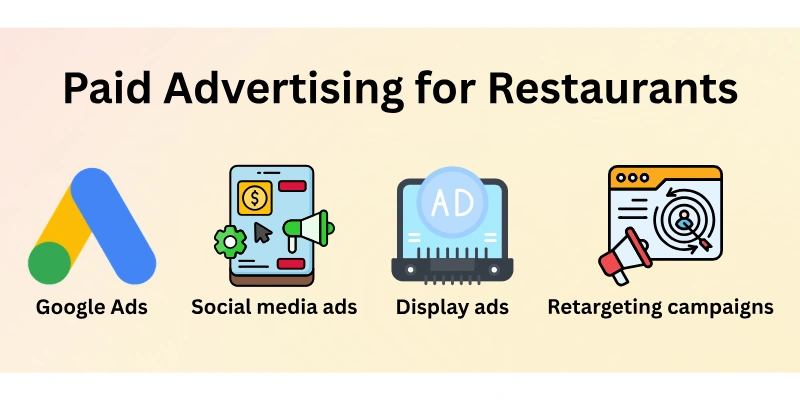
Here’s how to use paid advertising effectively for restaurants:
Google Ads:
- Show your restaurant to people searching for specific dishes or nearby restaurants.
- Use local keywords like “best burger near me” to attract nearby customers.
- Helps with restaurant online marketing strategy by targeting ready-to-buy customers.
Social media ads:
- Run ads on Instagram, Facebook, or TikTok to showcase food photos, promotions, or events.
- Target users by location, age, interests, or behaviours to reach the right audience.
- A/B testing can help you find the most effective ad format.
Display ads:
- Place banner ads on websites or apps your customers visit often.
- Use attractive visuals and clear calls to action to get clicks.
Retargeting campaigns:
- Show ads to people who visited your website but didn’t order or book.
- Retargeting increases the chances of converting interested visitors into paying customers.
Examples of successful restaurant ads:
- Promotions for limited-time dishes or discounts.
- Seasonal offers like holiday menus or summer specials.
- Engaging videos or GIFs highlighting signature meals.
Paid advertising, when used strategically, complements your other restaurant online marketing strategies. It increases visibility, drives orders, and helps you reach new audiences faster.
Influencer & Partnership Marketing
Influencer and partnership marketing help restaurants reach new audiences by leveraging the trust and followers of others. When done correctly, it can bring more visibility, engagement, and even new customers.
Here’s how restaurants can use this strategy effectively:
Collaborate with local influencers:
- Work with food bloggers, Instagrammers, or TikTok creators who have a following in your city.
- Influencers can share posts, stories, or videos about your dishes, bringing your restaurant to their audience.
- This is a practical part of digital marketing for restaurants that often gives quick results.
Micro-influencers are effective:
- Smaller influencers (1k–50k followers) often have more engaged audiences.
- They are usually more affordable and can create authentic content for your restaurant.
Host events or tastings:
- Invite influencers to try your new menu items or seasonal specials.
- Encourage them to share their experience online to increase reach and credibility.
Partnerships with local businesses:
- Collaborate with nearby cafes, bars, or entertainment venues for cross-promotions.
- Joint campaigns or bundle offers can attract customers to both businesses.
Leverage customer ambassadors:
- Encourage loyal customers to share photos and reviews on social media.
- Reward them with discounts or special perks to motivate sharing.
Influencer and partnership marketing adds a personal touch to your restaurant’s online marketing strategies, showing real people enjoying your food. It builds trust, increases engagement, and can drive a steady flow of new customers.
Email Marketing for Restaurants
Email marketing is a powerful tool to stay connected with your customers. Unlike social media, emails go directly to people who already know your restaurant and are interested in hearing from you. Done right, it can increase orders, bring diners back, and build loyalty.
Here’s how restaurants can use email marketing effectively:
- Send personalized offers: Tailor emails based on customer preferences or past orders to make them feel special.
- Highlight promotions and events: Share discounts, seasonal menus, or special events to encourage visits.
- Share valuable content: Include recipes, cooking tips, or behind-the-scenes stories to keep readers engaged.
- Maintain consistency: Send emails regularly but not too often; monthly or biweekly works well for most restaurants.
- Use clear calls to action: Encourage customers to order online, make a reservation, or visit your restaurant.
When executed thoughtfully, email marketing becomes a way to build relationships, not just sell food. It keeps your restaurant on top of customers’ minds and strengthens your restaurant’s online marketing strategy.
Online Ordering & Delivery Marketing
Online ordering and delivery have become essential for restaurants. Many customers now prefer the convenience of ordering from their phones or computers. Promoting your delivery options effectively can increase sales and improve customer satisfaction.
Here’s how to boost online orders and delivery:
- Make online ordering simple and mobile-friendly.
- Partner with popular food delivery apps.
- Promote delivery specials on social media and the website.
- Use email and push notifications for repeat orders.
- Offer incentives like discounts or free delivery.
- Highlight fast, reliable service to build trust.
Focusing on online ordering and delivery ensures your restaurant reaches customers who may never visit in person. With the right approach, you can grow sales and keep diners happy.
Using Marketing Tools for Restaurants
Marketing tools make running digital campaigns easier, faster, and more effective. From scheduling social media posts to tracking website performance, the right tools help restaurants save time and reach more customers.
Here are some key tools to consider:
- Social media schedulers: Tools like Buffer or Later help plan and post content consistently across platforms.
- Email marketing platforms: Services like Mailchimp or Sendinblue make sending newsletters and promotions simple.
- Analytics tools: Google Analytics or Hotjar track website traffic and customer behaviour for better decisions.
- Review management software: Tools like Podium or ReviewTrackers help monitor and respond to customer reviews.
- Ad management platforms: Facebook Ads Manager or Google Ads make running and tracking paid campaigns easier.
Using the best marketing tools for restaurants can save time, improve organization, and boost the effectiveness of your digital marketing efforts. Properly leveraging these tools ensures every campaign reaches its potential audience.
Common Mistakes to Avoid
Even with a strong digital marketing plan, restaurants can make mistakes that reduce the impact of their efforts. Knowing these pitfalls helps you avoid them and get better results.
Here are some common mistakes restaurants should avoid:
- Neglecting local SEO: Not optimizing for local searches means potential customers nearby might never find your restaurant online.
- Inconsistent social media posting: Irregular posts or long gaps can make your audience lose interest.
- Ignoring customer feedback: Not responding to reviews or complaints can damage your reputation.
- Overloading ads or emails: Too many promotions can annoy customers instead of attracting them.
- Poor website design: Slow, cluttered, or confusing websites discourage online orders and reservations.
- Skipping analytics: Without tracking results, it’s impossible to know what’s working or where to improve.
Avoiding these mistakes helps your digital marketing strategy for restaurants stay effective, increase customer trust, and boost sales. Simple fixes can make a big difference in your online success.
Wrapping Up
In this article, we have explored digital marketing for restaurants and how it helps attract customers and boost sales. Beyond that, it builds your brand, connects you with diners, and keeps your restaurant competitive.
Even small online efforts, like posts or promotions, can make a big difference. Using digital marketing consistently helps restaurants grow, create loyal customers, and succeed in the long run.
If you have any questions or are confused about something, feel free to discuss it in the comment section, and I will try to help you further.
FAQs: Digital Marketing for Restaurants
Many restaurant owners ask these questions about digital marketing for restaurants:
Digital marketing for restaurants means promoting your restaurant online. It helps attract more customers, increase orders, and build your brand. You can use social media, websites, emails, or online ads to reach diners easily.
Some simple strategies include:
- Posting food photos on social media
- Sharing customer reviews
- Running small online ads
- Offering promotions or discounts online
These steps help your restaurant reach more diners and grow faster.
For a cafe, focus on sharing your menu, daily specials, and behind-the-scenes content online. Use social media to engage with followers and run small ads for special offers. This helps your cafe attract regular customers.
Restaurants often share:
- Eye-catching food photos
- Videos of new dishes
- Limited-time discounts
- Customer testimonials
These ads show your restaurant’s best side and encourage people to visit.
Internet marketing for restaurants increases your visibility online. It brings more customers, helps build trust, and allows you to share your menu, events, or offers with the right audience.
A simple plan includes:
- Setting goals (more orders, more followers)
- Choosing platforms (Instagram, Facebook, Google)
- Posting content regularly
- Tracking results and improving
This plan makes digital marketing easy and effective for any restaurant.
Yes! Digital marketing for food focuses on showing your dishes online. Posting mouthwatering pictures, sharing recipes, and running promotions helps attract food lovers and increases restaurant orders.
Create social media accounts and a website, share food photos and specials, engage with customers, and run small online ads. Post regularly to attract more diners and grow your restaurant.



- Be Respectful
- Stay Relevant
- Stay Positive
- True Feedback
- Encourage Discussion
- Avoid Spamming
- No Fake News
- Don't Copy-Paste
- No Personal Attacks
- Be Respectful
- Stay Relevant
- Stay Positive
- True Feedback
- Encourage Discussion
- Avoid Spamming
- No Fake News
- Don't Copy-Paste
- No Personal Attacks
