Trending Types of Hashtags for Social Media Growth in 2026
Published: 26 Apr 2026
Have you ever noticed that some posts suddenly get a lot of views, while others stay almost invisible, even when the content is really good?
This usually happens because of the types of hashtags used in the post. Many people just pick random hashtags without thinking, and then they wonder why the results are weak. Some hashtags pull in the wrong audience, and some do nothing at all.
In this guide, we will understand different kinds of hashtags, how each type works, and how you can use them the right way to improve reach and engagement.
When you start using hashtags with purpose, you begin to see real changes in how your content performs and how fast your social media grows.
So, let’s start our journey!
Types of Hashtags
Hashtags help your content reach more people on social media. They work like labels, grouping similar posts. When you use the right hashtag type, your post can reach the right audience faster.
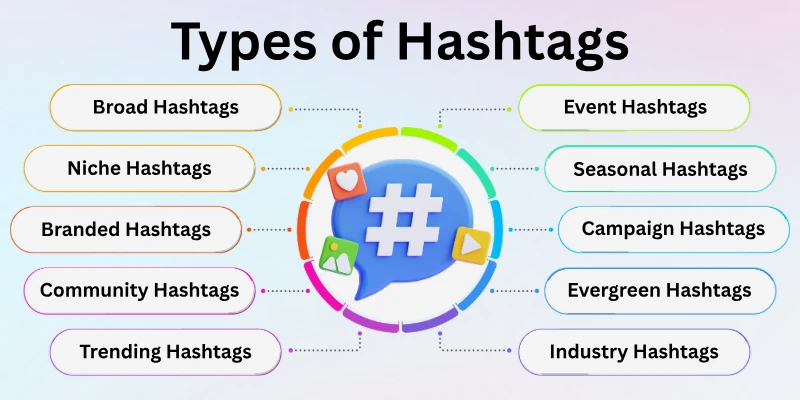
Here I am sharing all the main types of hashtags in a simple list, so you can quickly learn and apply them. I will also show you how to use each type in real posts:
- Broad Hashtags
- Niche Hashtags
- Branded Hashtags
- Community Hashtags
- Trending Hashtags
- Location-Based Hashtags
- Event Hashtags
- Seasonal Hashtags
- Campaign Hashtags
- Evergreen Hashtags
- Industry Hashtags
Now, let’s understand the kinds of hashtags simply and clearly.
1. Broad Hashtags
Broad hashtags are very general hashtags. They cover a wide range of topics and attract a large audience. These hashtags often have millions of posts under them. That makes them powerful for reach but very competitive at the same time.
People use broad hashtags when they want quick visibility. These hashtags help new accounts get attention. But your post can also get lost because so many people use the same tags. That is why balance is important.
How to use broad hashtags:
- Use only 1 to 2 broad hashtags in one post
- Combine them with more specific hashtags
- Avoid relying only on broad tags
- Test different popular tags for reach
- Use them for visibility, not targeting
2. Niche Hashtags
Niche hashtags focus on a specific topic or audience. They are smaller but more targeted. These hashtags help you reach people who are truly interested in your content.
For example, instead of using a general tag like #fitness, you can use #homeworkoutforbeginners. This brings a more focused audience. Niche hashtags usually give better engagement because they match user interests.
How to use niche hashtags:
- Use 3 to 5 niche hashtags per post
- Keep them closely related to your content
- Focus on your exact audience interest
- Mix with one or two broad hashtags
- Track which niche tags perform best
3. Branded Hashtags
Branded hashtags are created for a brand, business, or personal identity. They help people find your content easily. Many companies use them to build strong recognition.
For example, a brand like Nike uses hashtags like #JustDoIt. Small businesses can also create their own unique hashtag. This helps build identity and trust over time.
How to use branded hashtags:
- Create a unique hashtag for your brand
- Use it in every post consistently
- Encourage followers to use it
- Keep it short and easy to remember
- Track user posts under your hashtag
4. Community Hashtags
Community hashtags connect people with shared interests. These hashtags build engagement and interaction. They help you become part of a group that shares similar content.
For example, writers, fitness lovers, or designers often use community hashtags. These tags help people find like-minded users and grow together.
How to use community hashtags:
- Join active communities in your niche
- Use 2 to 4 community hashtags
- Engage with posts using the same hashtags
- Stay active in those communities
- Avoid unrelated communities
5. Trending Hashtags
Trending hashtags are based on current events or viral topics. They change quickly and can bring fast attention to your post. Many creators use them to ride trends.
These hashtags can increase reach in a short time. But they lose value quickly once the trend ends. So timing is very important.
How to use trending hashtags:
- Use them only when relevant to your content
- Act fast before the trend ends
- Do not force unrelated trends
- Combine with evergreen hashtags
- Check daily trending topics
6. Location-Based Hashtags
Location hashtags focus on a city, country, or area. They are very useful for local businesses. These hashtags help you reach nearby people.
For example, a bakery in Multan can use hashtags like #MultanFood. This brings local customers who can actually visit the store.
How to use location hashtags:
- Add your city or area name
- Use 1 to 3 location hashtags
- Combine with niche hashtags
- Great for local businesses
- Helps improve local discovery
7. Event Hashtags
Event hashtags are used for specific events like festivals, conferences, or launches. They help group all posts about one event in one place.
These hashtags are very useful during live events. They increase engagement and allow people to follow updates easily.
How to use event hashtags:
- Use official event hashtags
- Add them only during event time
- Share live updates with them
- Avoid using old event hashtags
- Keep them event-focused only
8. Seasonal Hashtags
Seasonal hashtags are based on seasons or special times of the year. They are very popular during holidays and sales seasons.
For example, #SummerSale or #RamadanDeals. These hashtags bring high engagement during specific times.
How to use seasonal hashtags:
- Use them only in the right season
- Plan content ahead of time
- Mix with product or niche hashtags
- Keep them time-relevant
- Avoid using off-season tags
9. Campaign Hashtags
Campaign hashtags are used for marketing campaigns. Businesses use them to promote products or services. They help track campaign performance.
These hashtags are often part of ads or promotions. They also encourage users to join the campaign.
How to use campaign hashtags:
- Create a clear campaign message
- Keep hashtags short and memorable
- Use them across all campaign posts
- Encourage user participation
- Track engagement results
10. Evergreen Hashtags
Evergreen hashtags stay useful all the time. They are not linked to trends or seasons. They always bring steady traffic.
These hashtags work well for long-term growth. They are safe and stable for consistent visibility.
How to use evergreen hashtags:
- Use them in almost every post
- Focus on long-term topics
- Mix with trending hashtags
- Build consistent visibility
- Track performance over time
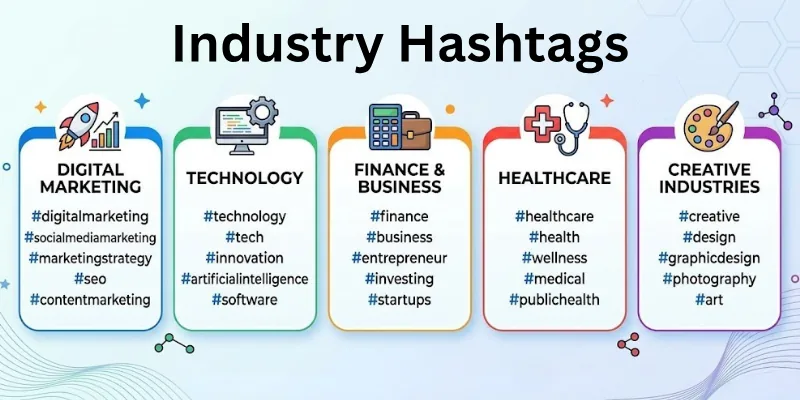
11. Industry Hashtags
Industry hashtags are based on professional fields. They help you connect with experts and audiences in your niche.
For example, #DigitalMarketing or #ContentWriting. These hashtags build authority and trust.
How to use industry hashtags:
- Use hashtags related to your profession
- Share expert or helpful content
- Connect with industry leaders
- Avoid unrelated industries
- Stay consistent in your niche
Common Mistakes People Make with Hashtags
Many people use hashtags every day, but they still do not get good results. The main reason is simple. They use hashtags in the wrong way without knowing the basic rules. Small mistakes can reduce reach and engagement.
If you fix these mistakes, your posts can perform much better. Let’s look at the most common ones people make.
Common mistakes:
- Using too many hashtags in one post
- Using hashtags that are not related to the content
- Repeating the same hashtags on every post
- Using only popular hashtags with high competition
- Ignoring niche and specific hashtags
- Writing hashtags with spelling errors
- Using very long or confusing hashtags
- Not checking trending or updated hashtags
- Copy-pasting hashtag sets without a strategy
- Using banned or restricted hashtags accidentally
Hashtag Strategy for Different Platforms
Each social media platform works in a different way. That means hashtags also work differently on each platform. If you use the same hashtag style everywhere, you may not get the best results.
A smart hashtag strategy changes based on the platform you are using. Let’s understand how you can adjust your hashtags for better reach and engagement.
Platform-wise hashtag strategy:
- Instagram: Use a mix of niche, broad, and community hashtags. You can use more hashtags here for better reach.
- TikTok: Keep hashtags short and trend-focused. Use 3 to 5 relevant hashtags only.
- Facebook: Use fewer hashtags. Focus on 1 to 3 highly relevant hashtags.
- X (Twitter): Use 1 or 2 strong hashtags only. Keep it simple and clean.
- LinkedIn: Use professional and industry-based hashtags. 3 to 5 hashtags work best.
- YouTube: Add 2 to 3 focused hashtags in the description. Use keywords as hashtags.
Benefits of Using the Right Hashtag Types
So guys, now we have looked at strategies and how to use hashtags in different ways. Now, let’s understand what benefits you can actually get when you use the right types of hashtags. This part is very important because it shows the real value behind all your effort.
When you choose the correct hashtag types, your content does not just look better. It also performs better. Small changes in hashtag use can bring big improvements in reach and engagement.
Benefits of using the right hashtag types:
- Helps your posts reach a larger and more relevant audience
- Increases likes, comments, and overall engagement
- Improves chances of getting discovered by new followers
- Builds a stronger brand presence on social media
- Connects you with the right community and target users
- Bring more traffic to your profile or website
- Helps small accounts grow faster with less effort
- Increases visibility for both new and old posts
- Supports long-term growth instead of short-term reach
- Makes your content more organized and easy to find
Conclusion
In this article, we’ve covered types of hashtags in detail. We also understood how each type works and why choosing the right one matters for your social media growth.
Personally, I always suggest using a mix of niche, community, and evergreen hashtags. This combination helps you stay visible for both short-term and long-term results.
Now it’s your turn. Try these hashtag types in your content and track what works best for you. Start small, stay consistent, and grow step by step.
But don’t leave yet, because I’m also sharing some FAQs below that you should read before you go. These answers will clear your common doubts and help you use hashtags in a smarter way.
FAQs: Types of Hashtags
Here are some frequently asked questions related to types of hashtags:
The main types of hashtags are different categories used on social media to reach the right audience. Each type works in a unique way depending on your goal. These help improve visibility, engagement, and reach.
Broad hashtags, niche hashtags, branded hashtags, community hashtags, trending hashtags, location-based hashtags, event hashtags, seasonal hashtags, campaign hashtags, evergreen hashtags, and industry hashtags are the most common types.
Hashtags help your content reach more people beyond your followers. They connect your post with users who are searching for similar content. This improves engagement and discovery.
Without hashtags, your post may stay limited to a small audience. With the right hashtags, you can grow faster and reach the right viewers.
Choosing the best Instagram hashtags depends on your content and audience. You should mix different hashtag types for better results.
Here is a simple way to choose the right mix of hashtags:
- Use niche hashtags for targeted reach
- Add 1–2 broad hashtags for visibility
- Include community hashtags for engagement
This mix helps you balance reach and relevance.
Niche hashtags focus on a specific audience or topic. Broad hashtags cover general topics and have a very large audience. Both work differently in reach and engagement.
Niche hashtags bring better engagement, while broad hashtags bring higher visibility. Using both together gives the best results.
The number of hashtags depends on the platform you are using. Each platform has different rules and user behaviour. Using too many hashtags can look spammy.
Here is a simple guide for hashtag usage on different platforms:
- Instagram: 5 to 15 hashtags work best
- TikTok: 3 to 5 hashtags are enough
- LinkedIn: 3 to 5 professional hashtags
Always focus on quality, not quantity.
Branded group hashtags are unique hashtags created for a business or personal brand. They help people recognize and follow your content easily. They also build trust and identity over time.
Here is how branded hashtags are used effectively:
- Create a unique and simple hashtag
- Use it in every post consistently
- Encourage users to share content with it
This helps track engagement and build a strong brand identity.
Trending hashtag groups are popular hashtags that go viral for a short time. They help you gain quick attention and reach. But they lose value once the trend ends.
Yes, you should use them only when they match your content. Using unrelated trending hashtags can hurt your engagement.





- Be Respectful
- Stay Relevant
- Stay Positive
- True Feedback
- Encourage Discussion
- Avoid Spamming
- No Fake News
- Don't Copy-Paste
- No Personal Attacks
- Be Respectful
- Stay Relevant
- Stay Positive
- True Feedback
- Encourage Discussion
- Avoid Spamming
- No Fake News
- Don't Copy-Paste
- No Personal Attacks
