Advantages and Disadvantages of Twitter for Beginners
Published: 18 Jan 2026
Did you know that millions of tweets are shared every single day by people, brands, and news pages from all around the world? People use Twitter to talk, learn, and share news within seconds.
This fast platform is now a big part of online communication. Many people enjoy using it because it keeps them updated in real time. But like every tool, it also has good and bad sides.
In this guide, we will look at the advantages and disadvantages of Twitter marketing so you can understand how it works and decide if it is useful for you.
Let’s begin without wasting a second.
Advantages of Twitter Marketing
There are several advantages of Twitter marketing. It helps businesses connect with people, promote their products, and grow their brand online.
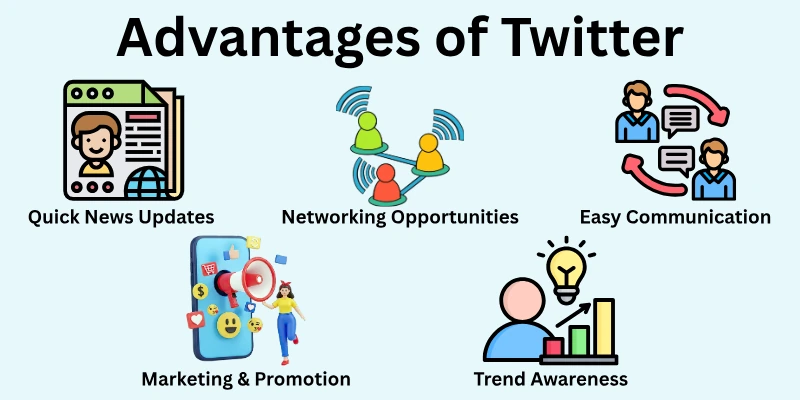
Here is the list of advantages of Twitter marketing:
- Real-Time Marketing Opportunities
- Customer Engagement and Communication
- Networking and Business Growth
- Marketing and Promotion
- Trend-Based Marketing
Here’s a detailed look at each point.
1. Real-Time Marketing Opportunities
Twitter allows businesses to share updates instantly. This makes it a powerful platform for real-time marketing. Brands can react to trending topics, news, or events and promote their products at the right moment.
Being active in real time helps businesses stay relevant and visible. Missing trends can mean losing marketing opportunities.
- Share updates instantly with your audience
- Use trending hashtags to promote products
- Join popular conversations to increase reach
- React quickly to news or events
- Stay active during peak engagement times
2. Customer Engagement and Communication
Twitter makes it easy to communicate directly with customers. People can reply, ask questions, or share feedback anytime. Businesses can respond quickly, which builds trust and improves customer relationships.
Strong communication helps brands understand customer needs and improve their services.
- Reply to customer questions quickly
- Handle complaints professionally in public
- Engage with followers through replies and mentions
- Build trust with active communication
- Encourage conversations with your audience
3. Networking and Business Growth
Twitter helps businesses connect with industry experts, influencers, and potential clients. These connections can lead to partnerships, collaborations, and new opportunities. Networking plays an important role in long-term business growth.
- Connect with professionals in your industry
- Follow and interact with influencers
- Join conversations using relevant hashtags
- Share your expertise to attract attention
- Find new clients or business opportunities
4. Marketing and Promotion
Twitter is a useful tool for promoting products and services. Businesses can share posts, links, images, and videos to attract customers. It is a cost-effective way to market your brand, especially for small businesses. With the right strategy, businesses can increase visibility and drive traffic.
- Promote products and services through tweets
- Share links to blogs or websites
- Use images and videos for better engagement
- Post regularly to stay visible
- Run ads if needed to reach more people
5. Trend-Based Marketing
Twitter highlights trending topics that people are discussing worldwide. Businesses can use these trends to create relevant content and reach a larger audience. Using trends correctly can boost engagement and brand visibility.
- Check trending topics daily
- Use relevant hashtags in your posts
- Create content based on popular discussions
- Share opinions related to trends
- Stay updated with industry news
Disadvantages Of Twitter Marketing
There are also some disadvantages of Twitter marketing. Understanding these challenges helps businesses avoid mistakes and use the platform effectively.
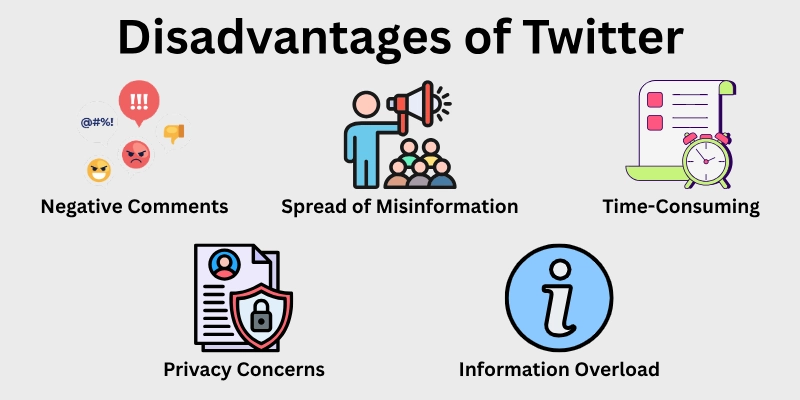
Here’s a list of the main limitations of Twitter marketing:
- Spread of Misinformation
- Negative Feedback and Public Criticism
- Time-Consuming Management
- Privacy and Brand Risk
- Information Overload and Short Lifespan
Now, we will explain each one in detail.
1. Spread of Misinformation
False or misleading content spreads quickly on Twitter. If a business shares incorrect information, it can damage trust and credibility. Marketing depends on trust, so sharing accurate content is very important.
- Always verify information before posting
- Avoid sharing unconfirmed news
- Follow reliable sources
- Correct mistakes quickly
- Maintain brand credibility
2. Negative Feedback and Public Criticism
Customers can share complaints publicly. Negative comments are visible to everyone and can affect your brand image. Handling criticism properly is important for maintaining a good reputation.
- Monitor comments and mentions regularly
- Respond calmly and professionally
- Avoid arguments with users
- Solve issues quickly
- Show transparency in communication
3. Time-Consuming Management
Twitter marketing requires regular activity. Businesses need to post content, reply to users, and monitor trends daily. Without proper management, it can waste time and reduce productivity.
- Create a content schedule
- Use tools to manage posts
- Focus on important tasks
- Avoid unnecessary scrolling
- Set clear marketing goals
4. Privacy and Brand Risk
Sharing the wrong information or data can create serious problems for a business. Protecting brand reputation and customer data is very important.
- Avoid sharing sensitive information
- Use secure passwords and settings
- Train team members about safety
- Monitor account activity
- Stay alert to suspicious behaviour
5. Information Overload and Short Content Lifespan
Twitter has a constant flow of content. Tweets quickly disappear from feeds, making it hard to maintain visibility. This makes marketing more challenging.
- Tweets lose visibility quickly
- Requires frequent posting
- Too much content can confuse users
- Hard to focus on important updates
- Needs consistent effort
Tips for Using Twitter Safely and Effectively
Twitter is fun and useful, but it’s important to use it safely and smartly. Here are some simple tips to help you get the most out of it.
- Privacy: Keep personal info private and adjust Twitter’s privacy settings.
- Trusted Accounts: Follow verified accounts and reliable sources only.
- Think Before You Tweet: Check posts for accuracy and stay polite and professional.
- Limit Screen Time: Set daily limits and focus on meaningful engagement.
- Lists and Filters: Organize accounts into lists and mute unwanted content.
- Engage Positively: Like, retweet, and reply respectfully; avoid arguments.
- Harmful Content: Report bullying, spam, or harmful posts and block offenders.
- Secure: Keep apps and devices updated, use strong passwords, and enable two-factor authentication.
These tips help you use Twitter effectively while staying safe. Following them keeps your experience fun, productive, and secure.
Common Mistakes to Avoid on Twitter
Using Twitter effectively takes planning and care. Many beginners make simple mistakes that reduce engagement or hurt their online presence. Knowing what to avoid can save time and help you build a stronger profile.
- Ignoring: Not replying to comments or messages can hurt engagement.
- Posting: Random tweets may confuse followers; create a posting schedule.
- Hashtags: Overloading tweets with hashtags looks spammy and reduces reach.
- Overposting or Underposting: Posting too much annoys followers; posting too little reduces visibility.
- Unverified Information: Posting fake news can damage credibility and trust.
- Visuals: Tweets with images or videos get more attention; plain text can be ignored.
- Inconsistent: Switching tone or style frequently confuses followers and weakens brand personality.
- Ignoring Analytics: Not tracking performance can prevent improvement and growth.
- Getting Into Arguments: Public fights or harsh replies can harm your reputation.
- Neglecting Security: Weak passwords or ignoring privacy settings can lead to hacks or misuse.
Conclusion
In this guide, we have covered the advantages and disadvantages of Twitter marketing. Twitter is great for quick updates and connections, but it can also be distracting or risky at times.
My advice is to balance its pros and cons by setting limits and being careful with personal information. By doing this, you can enjoy Twitter safely and effectively.
Read the FAQs next to learn more helpful tips. You don’t want to miss advice that can make using Twitter easier and more fun.
FAQs: Advantages and Disadvantages of Twitter Marketing
Here are some common questions about the pros and cons of Twitter advertising:
The purpose of Twitter for business is to connect with customers, share updates, and promote products or services. It helps companies reach more people quickly and stay active online.
The advantages of Twitter for business include quick updates, easy communication with customers, building trust, marketing products, and networking with other professionals.
The cost of advertising on Twitter depends on your campaign type, audience, and budget. You can start with a small amount and pay per click, impression, or engagement.
Any business or individual can be an advertiser on Twitter. Companies use it to promote products, run campaigns, or share sponsored content with a larger audience.
Yes, Twitter is good for advertising because it helps reach specific audiences, share updates quickly, and improve customer engagement. However, careful planning is needed for the best results.
Twitter marketing examples include running hashtag campaigns, sharing promotions, posting polls, engaging with customers, and using ads to boost posts.
Disadvantages of using Twitter for business include cyberbullying, fake news, information overload, privacy concerns, and the risk of wasting time on low-value content.
Businesses benefit from Twitter ads by reaching the right audience, increasing brand awareness, improving engagement, driving website traffic, and promoting products effectively.



- Be Respectful
- Stay Relevant
- Stay Positive
- True Feedback
- Encourage Discussion
- Avoid Spamming
- No Fake News
- Don't Copy-Paste
- No Personal Attacks
- Be Respectful
- Stay Relevant
- Stay Positive
- True Feedback
- Encourage Discussion
- Avoid Spamming
- No Fake News
- Don't Copy-Paste
- No Personal Attacks
