Digital Marketing for IT Companies to Attract More Clients in 2026
Published: 23 Aug 2026
In today’s fast-paced tech world, many IT companies offer excellent services but still struggle to stand out online. Even with innovative solutions, they often miss the clients who need them most because their digital presence is weak or unclear.
This can result in fewer leads, slower business growth, and missed opportunities. That’s why we decided to create this blog post on digital marketing for IT companies.
Here, we will share actionable strategies, smart planning tips, content ideas, and ways to measure success.
By the end, you’ll have clear steps to boost your online visibility, attract the right clients, and grow your business.
IT Buyer & Market Realities
Before diving into marketing strategies, it’s important to understand who you are marketing to. IT buyers are different from regular consumers; they are highly informed, careful decision-makers who expect accurate information and clear value.
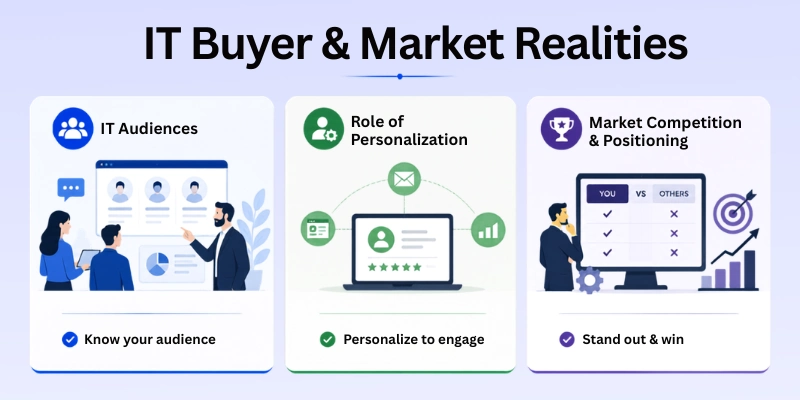
Knowing your audience helps you create content and campaigns that truly connect.
- IT Audiences: IT buyers often have technical backgrounds. They research solutions thoroughly and compare multiple providers before making a decision. This means your content, webpages, blogs, and case studies must be accurate, detailed, and easy to understand. A generic or vague message won’t build trust.
- Role of Personalization: Today’s decision-makers expect personalized experiences. They want emails, website content, and offers that feel tailored to their needs. For example, a cloud services prospect should see content about cloud security and cost savings, not general IT advice. Customized campaigns make your marketing more relevant and engaging.
- Market Competition & Positioning: The IT services industry is competitive, with many companies offering similar solutions. Budgets are growing, but so is the noise. To stand out, your digital presence must be strategic: a professional website, strong content, targeted ads, and thought leadership. Clear positioning helps clients see why your company is the best choice.
Goal Setting & Audience Planning
Before implementing any marketing strategies, IT companies need a solid plan. Setting clear goals and understanding your audience ensures every campaign delivers meaningful results.
1. Define Clear Goals
Start by deciding what you want to achieve with digital marketing. Common goals for IT companies include:
- Brand awareness – making your company known to potential clients.
- Lead generation – attracting new business opportunities.
- Conversions – turning website visitors into paying clients.
- Client retention – keeping existing clients engaged and satisfied.
Use measurable indicators (KPIs) to track progress. Examples include website traffic growth, number of demo requests, quality of leads, or newsletter sign-ups. Clear goals help you focus your efforts and measure success.
2. Build Buyer Personas
A buyer persona is a detailed profile of your ideal client. For IT companies, this might include roles such as CIOs, IT Managers, or CTOs.
When creating personas, consider:
- Pain points: What challenges do they face in IT or business operations?
- Buying triggers: What motivates them to choose a solution?
- Content preferences: Do they prefer in-depth guides, quick tips, videos, or webinars?
Having detailed buyer personas ensures your messaging, content, and campaigns are tailored to the right people, increasing your chances of engagement and conversion.
Core Digital Marketing Strategies for IT Companies
This is the heart of digital marketing for IT companies. Each strategy helps you attract the right clients, build trust, and grow your business online.
1. Website & User Experience
Your website is your digital storefront. Make it:
- Fast and mobile-friendly – clients expect seamless browsing on any device.
- Easy to navigate – clear menus and service pages help visitors find what they need.
- Action-focused – include strong CTAs like “Request a Quote” or “Book a Demo.”
- Engaging – add chat tools or chatbots for instant support and lead capture.
A professional website builds credibility and encourages potential clients to take the next step.
2. SEO for IT Companies: Visibility & Authority
SEO ensures your company shows up when clients search for IT solutions online. Focus on:
- Technical SEO – fast loading speed, proper site structure, mobile optimization.
- Content SEO – high-quality content with relevant keywords and semantic relevance.
- Link building – gain backlinks from trusted tech sites and industry blogs.
Tip: Target niche keywords like “enterprise IT support” or “cloud migration services” to attract high-quality leads actively searching for your services.
3. Content Marketing for IT Companies
Content is key for IT buyers who want detailed, trustworthy information. Use:
- Blogs, eBooks, whitepapers, and technical guides – solve client problems and educate them.
- Videos and webinars – product demos, tutorials, or live Q&A sessions.
- Case studies – showcase real results and ROI from your solutions.
Examples:
- eBook: “A Practical Guide to IT Infrastructure Modernization”
- Video: “How Our Cloud Solution Saves 40% on Costs”
4. Email Marketing for IT Companies & Lead Nurturing
Emails help you stay connected with prospects and clients:
- Segment campaigns based on industry, role, or previous engagement.
- Newsletters – share insights, updates, tips, and helpful guides.
- Lead nurturing series – gradually guide prospects through the sales funnel with targeted content.
Consistent, personalized email communication builds trust and increases conversion chances.
5. Paid Advertising & Paid Media
Paid campaigns give your company targeted visibility and faster results:
- Google Search & Display Ads – reach clients searching for IT solutions.
- LinkedIn Ads – target decision-makers like CTOs, IT Managers, or CIOs.
- Retargeting campaigns – re-engage website visitors who didn’t convert initially.
Strategic paid campaigns amplify your organic efforts and attract qualified leads quickly.
6. Advanced Engagement Tactics
These strategies help IT companies stand out:
- Content Syndication & Intent Data – distribute content to reach the right prospects and score leads.
- Interactive tools & quizzes – educate visitors while collecting valuable insights.
- Customer appreciation packages – digital or physical gifts that strengthen loyalty and relationships.
These tactics go beyond basic marketing, making your campaigns more effective and memorable.
Social Media for IT Company & Community Engagement
Social media is a powerful tool for IT companies to connect with clients, showcase expertise, and build an active online presence. Choosing the right platforms and strategies ensures your content reaches the right audience.
LinkedIn for B2B Targeting and Thought Leadership
LinkedIn is ideal for IT companies targeting business decision-makers like CTOs, IT Managers, and CIOs. Use it to:
- Share case studies, technical insights, and industry news.
- Publish thought leadership posts to showcase your expertise.
- Join or create industry groups to network and engage with potential clients.
YouTube for Tutorials and Product Explainers
Video content helps explain complex IT solutions clearly. Use YouTube to:
- Create product demos or walkthroughs.
- Share educational tutorials that solve common IT problems.
- Host webinars or live Q&A sessions to engage prospects directly.
Twitter and Tech Communities for Engagement
Twitter and niche tech forums allow you to:
- Share quick tips, company updates, or industry insights.
- Engage in conversations with IT professionals and potential clients.
- Participate in trending discussions to increase visibility.
Influencer and Partner Collaborations
Consider collaborating with tech influencers, industry bloggers, or software partners who resonate with your audience. These partnerships can:
- Extend your reach to new prospects.
- Build credibility by association.
- Promote webinars, case studies, or new services effectively.
Tip: Focus on platforms where your target audience is active and tailor content to match their expectations and interests.
Metrics, Measurement & Optimization
Measuring the success of your digital marketing efforts is essential for IT companies. Without tracking results, it’s impossible to know what works, what doesn’t, and where to invest resources.
Track Key Metrics
Focus on measurable indicators such as:
- Website traffic: see how many potential clients visit your site.
- Leads generated: track how many inquiries or demo requests you receive.
- Conversion rates: monitor how many visitors turn into paying clients.
Monitor Content and Ad Performance
Keep an eye on how your blogs, videos, social posts, and paid campaigns are performing:
- Which content drives the most engagement?
- Which ads deliver the best ROI?
- Are email campaigns leading to meaningful actions?
Use the Right Tools
Leverage analytics and marketing tools to collect accurate data:
- Google Analytics: track website activity and conversions.
- SEMrush or Ahrefs: monitor SEO performance and competitor benchmarks.
- CRM dashboards: measure lead quality and track the sales pipeline.
Link Metrics to Business Goals
Always connect your marketing metrics to real business outcomes:
- Lead quality and quantity → stronger sales pipeline.
- Conversion rates → more clients and revenue growth.
- Content engagement → improved brand authority and trust.
By regularly measuring and analyzing these metrics, IT companies can optimize campaigns, improve ROI, and make smarter marketing decisions.
Challenges & Solutions in IT Marketing
Marketing IT services comes with unique challenges. Understanding them helps companies create strategies that overcome obstacles and deliver results.
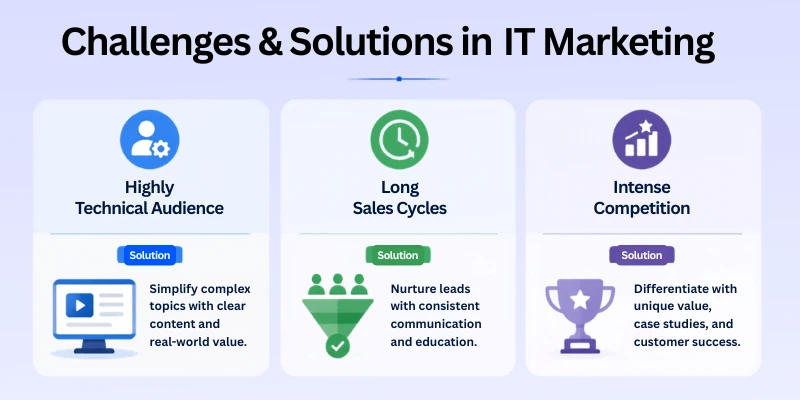
Here are the challenges:
- Challenge 1: Highly Technical Audience: IT buyers are knowledgeable and expect accurate, detailed information. Generic content won’t build trust.
- Solution: Create clear, precise content tailored to their needs. Use case studies, tutorials, and whitepapers to demonstrate expertise.
- Challenge 2: Long Sales Cycles: IT solutions often involve large investments or complex projects, which can mean a longer decision-making process.
- Solution: Nurture leads patiently through email campaigns, informative content, and personalized follow-ups. Build relationships rather than pushing for quick sales.
- Challenge 3: Intense Competition: The IT industry is crowded, making it harder to stand out.
- Solution: Focus on strong positioning and clear value messaging. Highlight unique strengths, success stories, and measurable results. Maintain consistent content across your website, social media, and campaigns to reinforce credibility.
By addressing these challenges with targeted solutions, IT companies can build trust, stay visible, and convert prospects into loyal clients.
Final Thoughts
In this article, we explored how digital marketing can help IT companies grow and succeed online. We discussed why it’s important, who the target audience is, and how to set clear goals and plan campaigns.
We also covered key strategies like website optimization, SEO, content marketing, email campaigns, paid advertising, social media, and advanced engagement tactics. Finally, we looked at measuring results and overcoming common challenges.
For IT companies, the best approach is to focus on quality content, strategic planning, and consistent execution. Next, the FAQs section will provide more practical tips and answer common questions to guide your next steps.
FAQs: Digital Marketing for IT Companies
Here are answers to the most common questions about digital marketing for IT companies:
Digital marketing for IT companies is the use of online tools to promote IT services like software development, IT support, and cloud solutions. It helps businesses reach potential clients, build trust, and grow efficiently online. Using SEO, social media, and content marketing is key to attracting the right audience.
Benefits:
- Increase visibility in search engines.
- Build authority through blogs, case studies, and tutorials.
- Reach the right audience without spending heavily on offline advertising.
Digital marketing in IT companies helps generate quality leads, improve brand awareness, and showcase expertise. It also allows precise targeting, so companies can reach decision-makers like CTOs and IT managers. Overall, it saves time and cost compared to traditional marketing methods.
Some of the most effective marketing strategies for IT include:
- SEO for visibility in Google searches.
- Content marketing to educate and engage clients.
- Email campaigns and retargeting ads to nurture leads.
Companies that use digital marketing track metrics like website traffic, lead quality, conversion rates, and social media engagement. Tools like Google Analytics and CRM dashboards help monitor results. Linking these numbers to business goals shows the real impact of campaigns.
The use of digital marketing by companies in IT helps them stand out in a competitive industry. It allows reaching clients globally, demonstrating expertise, and building long-term relationships. Without it, even the best IT solutions might go unnoticed.
IT marketing strategies
- Start with a clear website that explains services.
- Create helpful blogs, videos, or tutorials for your audience.
- Use social media and email campaigns to stay connected with prospects.




- Be Respectful
- Stay Relevant
- Stay Positive
- True Feedback
- Encourage Discussion
- Avoid Spamming
- No Fake News
- Don't Copy-Paste
- No Personal Attacks
- Be Respectful
- Stay Relevant
- Stay Positive
- True Feedback
- Encourage Discussion
- Avoid Spamming
- No Fake News
- Don't Copy-Paste
- No Personal Attacks
