Top Ecommerce Marketing Strategies for Conversions & Traffic
Published: 9 May 2026
Ecommerce is growing faster than ever, and every online store needs a strong marketing plan to succeed. Ecommerce marketing strategies help attract customers, increase sales, and retain loyal buyers.
From SEO and email marketing to social media campaigns and personalization, the right strategies can turn visitors into repeat customers.
In this guide, we’ll cover 21 practical strategies that any ecommerce business can implement, with examples and tips to make them work for your store.
1. Content Marketing Strategy for Ecommerce
Content marketing drives traffic and builds trust by providing valuable information to your audience. Instead of selling directly, you educate, solve problems, and guide buyers toward your products.
Ecommerce SEO Tips:
- Research customer questions using Google, forums, and social media.
- Write blogs, guides, or tutorials that address these questions.
- Include product links naturally to guide conversions.
- Use engaging headlines, images, and bullet points to improve readability.
- Update content regularly to maintain SEO rankings.
- Promote content on social media for wider reach.
Example: A shoe store publishes a blog, “How to choose running shoes for beginners”, and links to recommended products.
2. SEO Strategy for Ecommerce
SEO is essential to get organic traffic from search engines. Optimizing product pages, categories, and blog content increases visibility and attracts buyers actively searching for products.
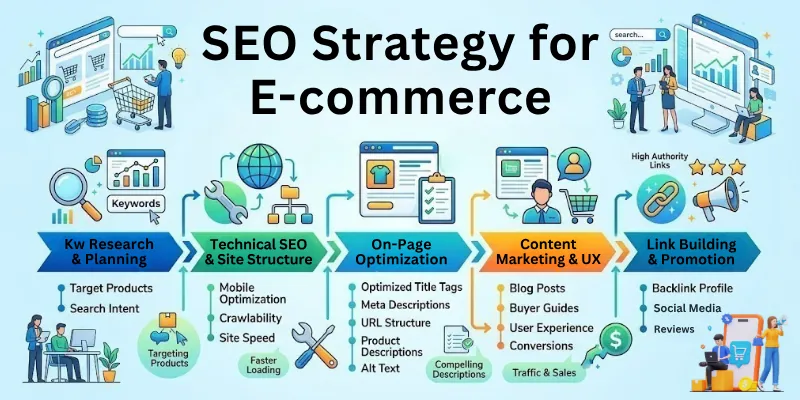
Tips:
- Use relevant keywords in product titles, meta descriptions, and image alt tags.
- Optimize URLs to include product or category names.
- Improve site speed and ensure mobile-friendly design.
- Use internal links to connect blog posts and product pages.
- Encourage reviews to generate fresh content for SEO.
Example: A wallet store uses keywords like “men’s leather wallet online” to appear in Google searches.
3. Email Marketing Strategy for Ecommerce
Email marketing nurtures customers, drives repeat sales, and increases loyalty. Well-segmented and personalized campaigns perform best.
Ecommerce Email Marketing Tips:
- Send welcome emails with an introductory offer.
- Set up abandoned cart sequences to recover lost sales.
- Segment users based on purchase behaviour and preferences.
- Include product recommendations in newsletters.
- Test subject lines and send times for optimal open rates.
Example: A fashion store sends a 10% discount email to customers who abandoned carts.
4. Retargeting Ads Strategy for Ecommerce
Retargeting ads remind visitors who left without buying about your products, increasing the chance of conversion.
Tips:
- Use Facebook and Google Ads for retargeting campaigns.
- Segment audiences based on pages visited or cart behaviour.
- Include dynamic ads showing the exact product the user viewed.
- Offer small discounts or incentives to encourage purchases.
Example: A visitor browses laptops; the next day, they see an ad for the same laptop on social media.
5. Google Shopping Ads Strategy for Ecommerce
Google Shopping Ads display product images, prices, and reviews directly in search results. They attract high-intent buyers.
Tips:
- Create optimized product feeds with correct titles and descriptions.
- Include high-quality product images.
- Monitor ad performance and adjust bids for top-performing products.
- Add reviews and ratings to increase click-through rates.
Example: A user searches “wireless earbuds” and sees your product with image, price, and rating.
6. Social Media Marketing Strategy for Ecommerce
Social media builds brand awareness, engagement, and traffic. Posting regularly helps establish trust and attracts new customers.
Tips:
- Identify platforms where your audience is most active.
- Share product demos, tutorials, and behind-the-scenes content.
- Use paid ads to target potential buyers.
- Engage with followers via comments, polls, and messages.
- Collaborate with other brands for cross-promotion.
Example: A store posts a product demo reel on Instagram with a “Shop Now” link.
7. Influencer Marketing Strategy for Ecommerce
Influencers leverage their loyal and engaged audiences to showcase your products, increasing brand credibility, expanding your reach, and driving high-quality traffic that is more likely to convert into paying customers.
Tips:
- Choose influencers whose audience matches your target market.
- Offer free products or commission-based promotions.
- Track performance using unique links or codes.
- Encourage influencers to create authentic content rather than scripted ads.
Example: A beauty influencer reviews your skincare product on YouTube.
8. Personalization Strategy for Ecommerce
Personalization boosts engagement and conversions by delivering content, product recommendations, and offers tailored to each customer’s preferences, behaviour, and past interactions, making every experience feel relevant and valuable.
Tips:
- Display recommended products based on browsing history.
- Send personalized emails with product suggestions.
- Segment customers by location, behaviour, or purchase history.
- Use popups or banners for relevant offers.
Example: “Recommended for you” sections show products similar to what the user viewed previously.
9. Loyalty Program Strategy for Ecommerce
Loyalty programs give rewards and special offers to repeat customers, helping them keep coming back and increasing the value of each customer over time.
Tips:
- Offer points for purchases and social engagement.
- Provide exclusive discounts for members.
- Send reminders to redeem points.
- Run special member-only events or offers.
Example: Earn 1 point per purchase and redeem 100 points for a discount.
10. Flash Sale Strategy for Ecommerce
Flash sales make customers act quickly by offering special deals for a short time. This creates urgency and helps your store get more sales in a short period.
Tips:
- Use countdown timers to show limited-time offers.
- Promote via email, SMS, and social media.
- Offer limited stock to encourage action.
- Combine with free shipping or small discounts for extra incentive.
Example: “24-hour sale – Flat 30% off” during a festival week.
11. Upselling & Cross-Selling Strategy for Ecommerce
Upselling promotes higher-value products; cross-selling suggests related items. Both increase revenue per customer.
Tips:
- Recommend premium versions or bundles during checkout.
- Show “Customers also bought” sections on product pages.
- Use personalized email recommendations after purchase.
Example: Suggest an upgraded laptop model or matching accessories.
12. Discount Offer Strategy for Ecommerce
Discounts help attract new customers by making products more affordable. They also encourage existing customers to buy again, boosting sales and loyalty.
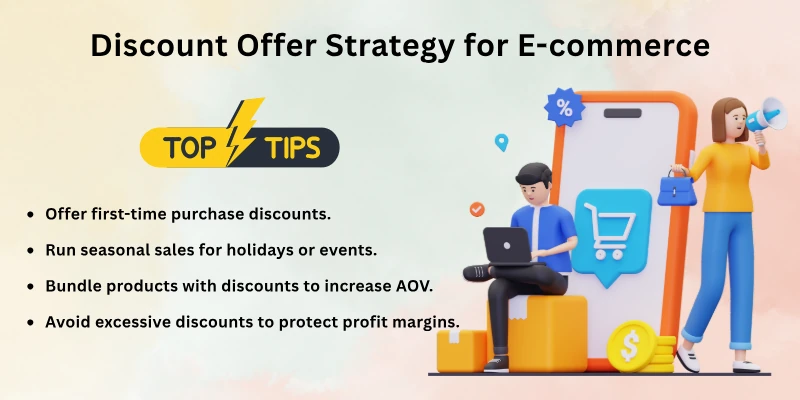
Tips:
- Offer first-time purchase discounts.
- Run seasonal sales for holidays or events.
- Bundle products with discounts to increase AOV.
- Avoid excessive discounts to protect profit margins.
Example: “Buy 2, get 1 free” promotion during the summer sale.
13. SMS Marketing Strategy for Ecommerce
SMS marketing sends messages straight to customers’ mobile phones, making sure they see your updates. This helps increase engagement and encourages them to take action quickly.
Tips:
- Send urgent offers or reminders.
- Notify customers about order updates or new arrivals.
- Segment SMS campaigns by user behavior or preferences.
- Keep messages short and actionable.
Example: “Your order is shipped! Track it here.”
14. Affiliate Marketing Strategy for Ecommerce
Affiliate marketing lets other people promote your products and earn a commission for each sale. This helps your store reach more customers without extra advertising costs.
Tips:
- Recruit bloggers, influencers, or websites relevant to your niche.
- Provide unique tracking links or promo codes.
- Reward affiliates fairly to encourage quality promotion.
- Monitor affiliate performance and optimize campaigns.
Example: A tech blogger shares your product link and earns a percentage per sale.
15. Mobile Optimization Strategy for Ecommerce
Mobile optimization makes your website easy to use on phones and tablets. This helps customers shop faster and increases the chances they will buy.
Tips:
- Ensure responsive design for all devices.
- Simplify navigation and checkout flow.
- Optimize images and site speed for mobile users.
- Test mobile usability regularly.
Example: A store simplifies checkout buttons and navigation for phone users, reducing cart abandonment.
16. Video Marketing Strategy for Ecommerce
Video marketing grabs customers’ attention and shows how products work. This makes it easier for them to understand the product and feel confident to buy.
Tips:
- Create tutorials, demos, or short social media clips.
- Include videos on product pages to increase trust.
- Use captions and visually appealing thumbnails.
- Promote videos on multiple platforms.
Example: A kitchen gadget store posts a 30-second demo showing product use on Instagram.
17. Chatbot Strategy for Ecommerce
Chatbots give customers quick help and answer their questions instantly. They also guide users through the shopping process, making it easier to complete a purchase.
Tips:
- Set up FAQs and product recommendations.
- Automate order tracking and support queries.
- Offer live chat handoff for complex questions.
- Use popups to guide users to checkout or promotions.
Example: A chatbot helps users select the right clothing size or track shipment.
18. Subscription Model Strategy for Ecommerce
Subscription models let customers receive products regularly, which keeps them coming back. This creates a steady income and builds long-term loyalty.
Tips:
- Offer products that can be delivered regularly, like snacks, cosmetics, or supplements.
- Provide discounts or perks for subscription members.
- Allow flexible subscription plans to increase adoption.
- Notify users before each shipment for engagement.
Example: A monthly skincare box automatically ships to subscribers with new products.
19. Ethical Marketing Strategy for Ecommerce
Ethical marketing shows honesty and fairness in your business. This helps customers trust your brand and keeps them coming back for a long time.
Tips:
- Be transparent with pricing and policies.
- Use sustainable materials and highlight eco-friendly practices.
- Avoid misleading claims in ads.
- Promote brand values consistently across channels.
Example: A store advertises eco-friendly packaging and fair trade products to attract conscious buyers.
20. User-Generated Content Strategy for Ecommerce
User-generated content (UGC) shows real customers using your products. This builds trust and encourages new customers to make a purchase.
Tips:
- Encourage customers to post photos and reviews.
- Display UGC on product pages and social media.
- Run contests or incentives for content creation.
- Respond to reviews to show engagement.
Example: Customer photos of purchased shoes are featured on the store’s Instagram and product pages.
21. Seasonal Campaign Strategy for Ecommerce
Seasonal campaigns offer special deals during holidays or events. This creates urgency and helps your store make more sales in a short time.
Tips:
- Plan campaigns ahead for events like Black Friday, Eid, or the New Year.
- Offer limited-time discounts and special bundles.
- Use email, SMS, and social media to promote campaigns.
- Track results to improve future campaigns.
Example: Black Friday sale with 50% off select products and free shipping.
Conclusion
In this article, we have covered ecommerce marketing strategies in detail. Ecommerce marketing is not just about driving traffic—it’s about engaging customers, optimizing conversions, and building loyalty.
By implementing these 21 strategies, from SEO and content marketing to email campaigns, personalization, and seasonal promotions, you can grow your online store effectively.
Start with a few strategies, measure results, and scale gradually. With consistent effort, your e-commerce business can thrive in any competitive market.
FAQs: Ecommerce Marketing Strategies
Here are common questions people ask about ecommerce marketing tips:
The best ecommerce marketing strategies for beginners focus on attracting traffic, engaging visitors, and increasing sales. Start with SEO, content marketing, email campaigns, and social media promotions. These strategies are easy to implement and help build a solid foundation for your online store.
Improving traffic requires a combination of SEO, blogging, and social media marketing. Use keywords in product titles, descriptions, and blog posts to rank higher on Google. Sharing content on social media also brings new visitors to your store.
Small stores can benefit from email marketing, social media engagement, and personalized product recommendations. Consistently posting on social media and sending targeted emails helps build a loyal customer base. Using low-cost strategies like content marketing can also increase visibility without a big budget.
To boost conversions, focus on ecommerce conversion tips like improving site speed, using clear call-to-action buttons, and offering free shipping. Adding product reviews and user-generated content also builds trust. Simplifying the checkout process reduces cart abandonment and increases sales.
Yes, social media campaigns are a key part of ecommerce marketing strategies. Platforms like Instagram, TikTok, and Facebook help showcase products, run ads, and engage your audience. An active social media presence can drive traffic and boost sales.
Email marketing is an effective way to reach potential and existing customers directly. You can send welcome emails, abandoned cart reminders, and special promotions. Personalized emails increase engagement and encourage repeat purchases.
SEO helps your store appear higher in search engine results, bringing organic traffic. Optimizing product pages, category pages, and blog content improves visibility. A strong SEO strategy reduces dependency on paid ads while attracting ready-to-buy customers.
Influencer marketing connects your brand with loyal audiences who trust the influencer’s recommendations. Collaborating with influencers helps expand reach and drive targeted traffic. It’s especially effective for new product launches or seasonal campaigns.


- Be Respectful
- Stay Relevant
- Stay Positive
- True Feedback
- Encourage Discussion
- Avoid Spamming
- No Fake News
- Don't Copy-Paste
- No Personal Attacks
- Be Respectful
- Stay Relevant
- Stay Positive
- True Feedback
- Encourage Discussion
- Avoid Spamming
- No Fake News
- Don't Copy-Paste
- No Personal Attacks
