Best Email Marketing Strategies to Grow Your Business
Published: 14 May 2026
Are you sending emails but not seeing results? Many businesses struggle because they don’t use the right email marketing strategies. Knowing what to send, when to send it, and who to target can make all the difference.
In this guide, we break down simple, actionable steps to help you grow your email list, engage your subscribers, and boost conversions.
By understanding these email strategies, you’ll stop guessing and start sending emails that actually work for your business.
Ready to see results? Let’s get started by following the key steps for email marketing that every beginner needs to know for success.
1. Set Clear Goals for Your Email Marketing
Before sending any emails, it is important to set clear goals. Goals help you focus on what you want to achieve and make it easier to measure success.
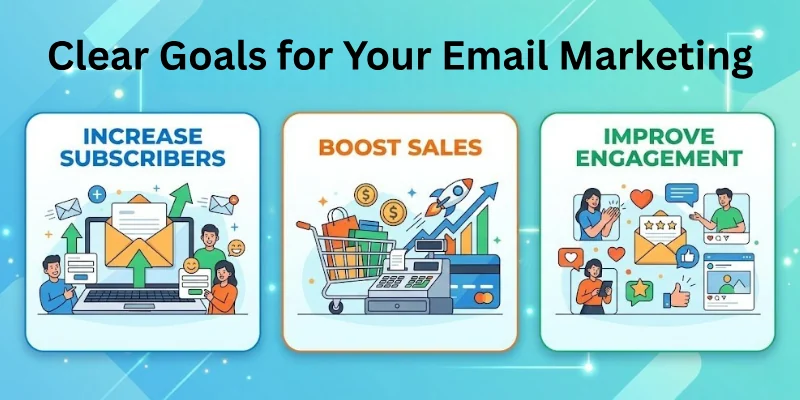
Some common goals for email marketing include:
- Increase subscribers: Get more people to join your email list
- Boost sales: Encourage customers to buy products or services
- Improve engagement: Get more people to open your emails and click links
Tip: Write your goals down clearly. This makes it easier to plan your emails and track your results.
2. Grow and Build Your Email List
A strong email list is the foundation of successful email marketing. The more people you have on your list, the more potential customers you can reach.
Here are simple ways to get subscribers:
- Website sign-up forms: Add a form on your homepage or blog so visitors can join easily
- Pop-ups with free resources: Offer a free guide, checklist, or discount in exchange for their email
- Social media promotion: Share your sign-up link on Facebook, Instagram, or Twitter
- Partnering with other small businesses: Collaborate with similar businesses to reach new audiences
Tip: Always give something valuable in return. People are more likely to subscribe if they get a free guide, discount, or helpful resource.
3. Know Your Audience
Knowing your audience is key to sending the right email to the right person. If your emails match what people want, they are more likely to open, read, and take action.
Here’s how to understand your audience:
- Collect basic information: Learn their age, location, and interests
- Observe behavior: See what they click on, buy, or engage with in your emails
Tip: Focus on your ideal customer, not everyone. Sending emails to the right people improves results and saves time.
4. Segment Your Email List
Segmentation means dividing your email list into smaller groups. This helps you send emails that are more relevant to each group.
Common types of segments include:
- Demographics: Age, location, or other personal details
- Behaviour: People who opened emails, clicked links, or visited your website
- Purchase history: Customers who bought certain products before
Benefits: When you send targeted emails, people are more likely to open them, click on links, and make purchases. Segmentation improves engagement and increases sales.
5. Personalize Your Emails
Personalization makes your emails feel human and relevant. People are more likely to read and act on emails that feel tailored to them.
Here’s how to personalize your emails:
- Use names: Start the email with the person’s first name
- Recommend products based on behaviour: Suggest items they viewed or bought before
- Send special occasion emails: Birthday, anniversary, or holiday messages
Tip: Personalization makes your emails feel human, not robotic, and helps build stronger connections with your audience.
6. Types of Email Campaigns
Different types of emails serve different purposes. Using the right type helps you connect with your audience and achieve your goals.
Here are the main types of email campaigns:
- Welcome emails: Sent when someone first joins your list; your first impression matters
- Newsletters: Share updates, tips, or news to keep your audience informed
- Promotional emails: Offer discounts, deals, or special offers to encourage sales
- Transactional emails: Order confirmations, shipping updates, or account notifications
- Re-engagement emails: Reach out to inactive subscribers to bring them back
Tip: Use a mix of these email types to keep your audience engaged and interested.
7. Create Strong Content
Strong email content grabs attention and encourages readers to take action. Clear, simple messages make your emails easier to read and more effective.
Here’s how to create strong email content:
- Use short, simple sentences: Easy to read and understand
- Focus on one main idea per email: Avoid confusing your readers
- Use actionable CTAs (Call-to-Action): Tell readers exactly what to do, like “Buy Now” or “Download Free Guide”
- Include images or simple visuals: Make your emails more attractive and engaging
Tip: Keep subject lines short and attention-grabbing to get more people to open your emails.
8. Automate Your Emails
Automation helps you send the right email to the right person at the right time without doing it manually. This saves time and keeps your audience engaged.
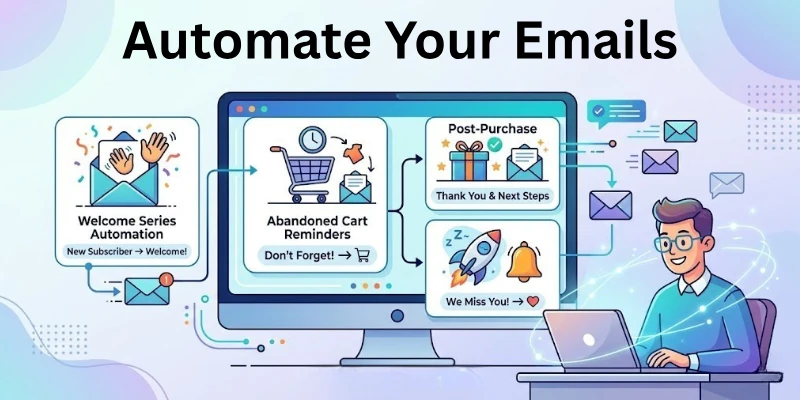
Here are common ways to automate emails:
- Welcome series automation: Automatically send a series of emails when someone joins your list
- Abandoned cart reminders: Remind customers about items they left in their shopping cart
- Post-purchase follow-ups: Thank customers, ask for reviews, or suggest related products
- Re-engagement campaigns: Automatically reach out to inactive subscribers to bring them back
Tip: Automation saves time and increases engagement, helping you build stronger relationships with your audience.
9. Decide Best Time & Frequency
Sending emails at the right time and with the right frequency helps more people see and engage with your messages. Finding the balance ensures your emails get noticed without annoying your subscribers.
Here’s what to keep in mind:
- How often to send emails: Find a balance; not too few, not too many
- Best days and times: Test and see when your audience opens emails the most
- Avoid sending too many emails: Too many emails can annoy subscribers and increase unsubscribes
Tip: Track engagement metrics, like open and click rates, to adjust your sending frequency for the best results.
10. Mobile-Friendly Emails
Most people check their emails on phones, so it’s important that your emails look good and are easy to read on small screens. Mobile-friendly emails improve engagement and make it easier for readers to take action.
Here’s how to make emails mobile-friendly:
- Use simple layouts: Avoid clutter and keep the design clean
- Large buttons and readable text: Make it easy for people to tap and read on phones
Tip: Always test your emails on mobile before sending to make sure they look perfect and are easy to use.
11. Track Performance and Metrics
Tracking your email performance shows you what works and where you can improve. Measuring the right metrics helps you make smarter decisions and get better results over time.
Key metrics to watch:
- Open rate: How many people opened your email
- Click-through rate (CTR): How many people clicked the links inside your email
- Conversion rate: How many people took the desired action, like buying or signing up
- Bounce rate: Emails that didn’t reach the inbox
- Unsubscribe rate: How many people left your list after receiving your email
Tip: Track these metrics regularly to improve your strategy and make your emails more effective.
12. Test and Improve
Testing your emails helps you discover what works best and improve your campaigns over time. Small changes can make a big difference in engagement and results.
Here’s how to do it:
- A/B testing: Send two versions of an email to see which performs better
- What to test: Subject lines, email content, visuals, and call-to-action buttons
- Compare results: Keep the version that gets better opens, clicks, or conversions
Tip: Continuous improvement is key. Always test and adjust to make your emails more effective over time.
Avoid Common Mistakes in Email Strategy
Even small mistakes can reduce the effectiveness of your email campaigns. Avoiding common errors helps your emails perform better and keeps your audience happy.
Common mistakes to watch out for:
- Sending emails without a strategy – Random emails confuse subscribers and reduce results
- Ignoring segmentation and personalization – Sending the same email to everyone lowers engagement
- Poor subject lines – Weak or unclear subject lines reduce open rates
- Not optimizing for mobile – Most people read emails on phones, so bad design loses readers
- Too frequent or too long emails – Sending too many or overly long emails annoys subscribers
Tip: Focus on planning, personalization, and mobile-friendly design to avoid these mistakes.
Tools and Platforms for Beginners
Using the right tools makes email marketing easier, even if you are just starting. The right platform can help you design, send, and track emails without stress.
Some easy-to-use email platforms include:
- Mailchimp: Great for beginners with ready-made templates and basic automation
- EmailOctopus: Simple interface and affordable pricing
- Klaviyo: Ideal for e-commerce and advanced automation
Features to look for:
- Automation: Send emails automatically based on triggers
- Templates: Ready-made designs for quick email creation
- Analytics: Track open rates, clicks, and conversions
Tip: Start simple and focus on learning the basics. You can upgrade your tools as your email list grows.
Advanced Email Strategies for Growth
Once you have a basic email strategy in place, you can use advanced techniques to grow faster and get better results. These email marketing tips help you reach the right people at the right time and make your emails more effective.
Some advanced email marketing tactics include:
- Predictive sending: Send emails at the best time for each subscriber based on their past behaviour.
- Dynamic content: Show different content or products to people depending on their actions or preferences
- Integrating email with social media or SMS campaigns: Combine channels to reach your audience more effectively
Tip: Start with simple email marketing strategies first. Use these advanced tactics once you understand your audience and have enough data to make them work.
Wrapping Up
In this article, we’ve covered email marketing strategies in detail. My advice is to focus on understanding your audience and sending emails that give real value.
Even small efforts can bring big results over time. Take action now and create your first campaign to see how email marketing can boost your business.
Thank you for reading, and I hope you enjoyed learning these strategies!
FAQs: Email Marketing Strategies
If you are new to email marketing, these simple email marketing tips and answers to common questions will help you get started with confidence:
Good email marketing tips include
- Write clear subject lines
- Send useful content to your audience
- Segment your email list so messages are more relevant
- Track results to see what works best
You can start email marketing by:
- Choosing an email platform
- Building your email list
- Planning simple campaigns
- Sending your first email with a clear goal
An email marketing strategist plans and improves your campaigns. They help you choose the best strategies to grow your list, increase opens, and get more sales.
Email subject line tips include:
- Keep it short
- Use action words
- Personalize when possible
- A strong subject line helps increase open rates.
Email marketing is a key part of digital marketing. It helps you reach customers directly, build loyalty, and drive traffic to your website or store.
Email automation tips for beginners:
- Start with welcome email series
- Set triggers for cart abandonment
- Use simple workflows to save time
For e-commerce, focus on:
- Sending product recommendations
- Recovering abandoned carts
- Personalizing emails based on past purchases
Cold email marketing tips include
- Keep emails short and friendly
- Personalize your approach
- Explain why your offer matters to the reader
Starting an email marketing blog is easier than you think. Share your experiences, tips, and strategies to help readers understand how to start email marketing and use effective email marketing tips for beginners.
Yes! Email marketing for digital marketing is a powerful tool. It helps you reach your audience directly, boost engagement, and increase conversions when combined with other digital strategies like social media and content marketing.


- Be Respectful
- Stay Relevant
- Stay Positive
- True Feedback
- Encourage Discussion
- Avoid Spamming
- No Fake News
- Don't Copy-Paste
- No Personal Attacks
- Be Respectful
- Stay Relevant
- Stay Positive
- True Feedback
- Encourage Discussion
- Avoid Spamming
- No Fake News
- Don't Copy-Paste
- No Personal Attacks
