Content Marketing Strategies to Grow Traffic and Build Brand Trust
Published: 10 May 2026
Why do some brands grow with content while others struggle, even after posting regularly? The answer lies in using the right content marketing strategies. Posting without a clear content marketing strategy often leads to wasted effort.
Strategic content marketing focuses on purpose, audience, and value. When you use the best content marketing strategies and proven content marketing techniques, your content works harder and delivers real business growth.
Seeing these common challenges, I’m here to guide you step by step through practical and effective digital content marketing strategies that actually work.
So without wasting any time, let’s start this journey and turn your content into a powerful growth tool.
Content Marketing Tips for Beginners
To succeed online, it’s important to know the key types of content strategies that work for each platform.
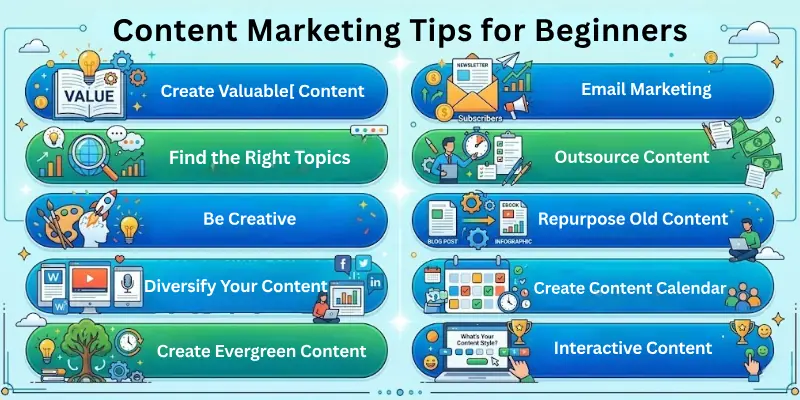
Here is the list of strategies of content marketing:
- Create Valuable and Informative Content
- Find the Right Topics
- Be Creative
- Create Content for Different Segments of Your Audience
- Diversify Your Content
- Produce Engaging Visual Content
- Create Evergreen Content
- Email Marketing
- Outsource Content
- Repurpose Old Content
- Create a Content Calendar
- Cross-Platform Content Strategy
- Showcase Industry News
- License Content From Reputable Publications
- Blend Journalism & Content Marketing
- Promote Your Content
- Interactive Content
- User-Generated Content (UGC)
- AI-Driven Content Personalization
- SEO-Optimized Content Clusters
- Short-Form Video Strategy & Micro-Moments Content
Now, we’ll examine them one by one.
1. Create Valuable and Informative Content
Creating valuable content means giving your audience something they truly need or want. It’s not just about promoting your product—it’s about solving problems, answering questions, and sharing insights that help your audience make decisions. Valuable content builds trust, positions your brand as an authority, and encourages engagement.
- Focus on audience pain points and goals
- Provide actionable tips or solutions
- Include data, research, or real-life examples
- Keep content clear, concise, and easy to read
- Mix formats: blogs, videos, infographics, guides
2. Find the Right Topics
Choosing the right topics ensures your content resonates with your audience and gets noticed. It’s about knowing what your audience is searching for, talking about, and sharing. The best topics align with audience needs while supporting your brand’s message.
- Monitor trending topics on social media and forums
- Conduct surveys or polls to understand audience interest
- Analyze competitor content gaps
- Focus on topics that offer long-term value
- Balance evergreen topics with timely, newsworthy subjects
3. Be Creative
Creativity helps your content stand out in a crowded market. Unique ideas, fresh angles, or unexpected formats capture attention and make people remember your brand. Creativity also makes sharing more likely, increasing reach organically.
- Experiment with storytelling and unusual angles
- Use interactive content like quizzes or polls
- Mix formats (video, graphics, audio, written)
- Collaborate with clients or influencers for unique perspectives
- Test ideas regularly to see what resonates
4. Create Content for Different Segments of Your Audience
Not all audience members are the same, so your content shouldn’t be either. Tailoring content to specific segments ensures it meets the right people at the right time, improving engagement and conversions.
- Identify buyer personas and their challenges
- Map content to the customer journey (awareness, consideration, decision)
- Personalize messaging based on demographics or behaviour
- Use marketing automation to deliver the right content to the right segment
- Track engagement to refine segment-specific strategies
5. Diversify Your Content
Diversifying content keeps your audience engaged and helps reach different types of learners or consumers. Using multiple formats and channels increases visibility and reduces reliance on a single type of content.
- Mix blogs, videos, infographics, podcasts, and social posts
- Tailor content format to platform and audience preference
- Rotate between short-form and long-form content
- Experiment with interactive or user-generated content
- Track performance to see which formats drive the best results
6. Produce Engaging Visual Content
Visual content grabs attention faster than text alone. It helps explain complex ideas, evokes emotions, and makes your brand memorable. Videos, graphics, and images can dramatically increase engagement and sharing.
- Use high-quality images and videos relevant to your message
- Include infographics to simplify complex data
- Optimize visuals for mobile and social platforms
- Incorporate branding consistently
- Experiment with animation, GIFs, or interactive visuals
7. Create Evergreen Content
Evergreen content stays relevant over time, providing long-term value. Unlike trending content, it continues to attract traffic and leads long after it’s published. This strategy maximizes ROI and builds lasting authority.
- Focus on timeless topics that address ongoing audience needs
- Write in simple, clear, and concise language
- Update periodically to keep content accurate
- Avoid jargon and temporary trends
- Include strong calls-to-action for lasting impact
8. Email Marketing
Email marketing is a direct way to engage your audience, nurture leads, and drive conversions. A well-crafted email strategy builds relationships and keeps your brand top-of-mind.
- Segment lists based on interests, behaviour, or demographics
- Personalize content for better engagement
- Craft compelling subject lines and concise copy
- Include clear calls to action
- Test campaigns to improve open and click-through rates
9. Outsource Content
Outsourcing content allows brands to save time, access expert perspectives, and scale production. It can improve quality and bring fresh ideas while keeping your team focused on core activities.
- Collaborate with experienced writers, designers, or agencies
- Ensure outsourced content aligns with your brand voice
- Set clear guidelines and deadlines
- Mix in-house and outsourced work for balance
- Leverage external expertise for thought leadership pieces
10. Repurpose Old Content
Repurposing content lets you get more value from your existing assets. Updating or reformatting old content saves time and reaches new audiences.
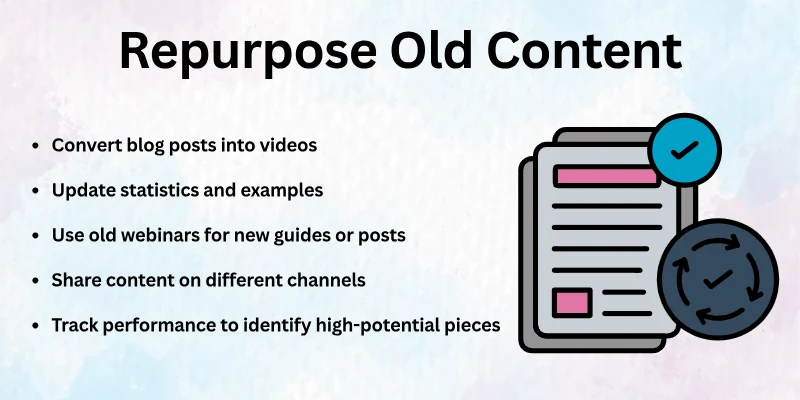
- Convert blog posts into videos, infographics, or podcasts
- Update statistics and examples to keep content fresh
- Use old webinars or presentations for new guides or posts
- Share content on different channels for a wider reach
- Track performance to identify high-potential pieces
11. Create a Content Calendar
A content calendar keeps your content organized, consistent, and aligned with marketing goals. Planning ahead ensures you never miss key dates, campaigns, or opportunities to engage your audience.
- Schedule blog posts, social media updates, and emails in advance
- Plan content around seasonal trends, events, or launches
- Assign responsibilities to team members
- Track deadlines and progress for accountability
- Use tools like Trello, Asana, or Google Sheets for easy management
12. Cross-Platform Content Strategy
Sharing content across multiple channels increases reach and reinforces your brand message. A coordinated strategy ensures consistency while adapting content for each platform’s strengths.
- Repurpose content for social media, blogs, emails, and video platforms
- Tailor messaging and format to each platform
- Maintain brand consistency in tone and visuals
- Monitor engagement and adjust distribution strategies
- Use analytics to identify high-performing channels
13. Showcase Industry News
Sharing relevant industry news positions your brand as a knowledgeable leader. It keeps your audience informed and shows that your company is engaged in the wider market.
- Curate and share news from reliable sources
- Add insights or commentary to demonstrate expertise
- Highlight trends that affect your audience’s business or interests
- Use newsletters or social media to distribute updates
- Ensure content is timely and fact-checked
14. License Content From Reputable Publications
Licensing content from trusted sources adds credibility and authority to your brand. It allows you to provide high-quality information without creating everything from scratch.
- Choose sources that align with your brand values and audience interests
- Ensure proper attribution and legal compliance
- Integrate licensed content with your own unique insights
- Use it to complement your original content, not replace it
- Track engagement to measure impact
15. Blend Journalism & Content Marketing
Combining journalism principles with content marketing creates informative, credible, and compelling content. It balances storytelling with accuracy, helping your brand earn trust.
- Focus on facts and accurate reporting
- Use storytelling techniques to make content engaging
- Highlight multiple perspectives to provide depth
- Integrate brand messages subtly without being overly promotional
- Publish well-researched, high-quality articles that educate readers
16. Promote Your Content
Promotion ensures your content reaches the right audience and drives engagement. Without promotion, even high-quality content can go unnoticed.
- Share on social media platforms relevant to your audience
- Collaborate with influencers or industry leaders for amplification
- Use email campaigns to reach subscribers
- Participate in forums or online communities
- Test paid promotion for high-value content
17. Interactive Content
Interactive content engages users directly, encouraging participation and increasing time spent with your brand. Quizzes, calculators, and polls make your content memorable.
- Create quizzes, polls, or interactive infographics
- Offer personalized results or recommendations
- Embed calculators or tools that solve real problems
- Use interactive content to capture leads
- Track user engagement for insights and improvements
18. User-Generated Content (UGC)
UGC leverages content created by your audience, building trust and authenticity. It shows real experiences and helps your brand connect with potential customers.
- Encourage reviews, testimonials, or social media posts
- Highlight customer stories and success cases
- Run contests or challenges to motivate content creation
- Share UGC on your website and social platforms
- Give credit to contributors to strengthen the community
19. AI-Driven Content Personalization
AI personalization tailors content for individual users, improving relevance and engagement. It helps deliver the right message at the right time.
- Use AI to recommend content based on user behaviour.
- Segment audiences for targeted messaging
- Automate content delivery via emails or in-app notifications
- Analyze data to refine personalization strategies
- Test different approaches to see what resonates best
20. SEO-Optimized Content Clusters
Organizing content into topic clusters boosts search engine visibility and positions your brand as an authority. It links related content around a central theme.
- Identify core topics and create supporting content pieces
- Link related content internally for better navigation
- Optimize each piece with relevant keywords and metadata
- Track performance and adjust based on search trends
- Use clusters to target both informational and transactional searches
21. Short-Form Video Strategy & Micro-Moments Content
Short-form videos and micro-moment content capture attention quickly and address immediate user needs. These formats are highly shareable and suited for mobile-first audiences.
- Produce bite-sized videos for TikTok, Instagram Reels, or YouTube Shorts
- Focus on quick tips, highlights, or product demos
- Align content with moments when users need information instantly
- Make videos visually engaging and mobile-friendly
- Track views, shares, and conversions to optimize future content
Wrapping Up
In this guide, we have covered content marketing strategies and explained how content helps a website grow.
My personal advice is simple: if you want to grow your site, start with a clear blog content strategy. After that, focus on a strong video content strategy and plan your email content strategies properly.
Also, follow basic content writing tips for SEO so your content can rank and reach more people. Thank you for reading, and best of luck with your content marketing journey.
FAQS: Content Marketing Strategy
Here are some common questions people ask about multi-platform content strategy:
Content marketing strategies are plans businesses use to create, share, and promote content that attracts their target audience. They help build trust, increase traffic, and boost conversions. Without a proper strategy, content often gets ignored and doesn’t deliver results.
For blogs, use strategies that combine valuable information, keywords, and reader engagement. Mix evergreen posts with trending topics to keep content fresh. Following blog writing tips for beginners can make your posts more readable and effective.
SEO is essential for any content marketing strategy. Use relevant keywords naturally, optimize headings, and build internal links. Following blog SEO tips helps your posts rank higher and attract organic traffic.
Use visuals, short videos, polls, and stories to engage followers. Post consistently and tailor content to each platform. Track engagement to see what resonates and refine your approach over time.
Focus on your audience’s pain points and offer clear solutions. Use simple language, strong headlines, and compelling calls to action. Copywriting tips for beginners can help you craft messages that convert readers into customers.
Your ads should clearly communicate benefits and include a strong call to action. Test different headlines, images, and formats to see what performs best. Using ad copywriting tips ensures your ads grab attention and drive clicks.
Repurposing saves time and reaches new audiences. Turn blog posts into videos, infographics, or social media snippets. This strategy keeps your content alive and maximizes its value.



- Be Respectful
- Stay Relevant
- Stay Positive
- True Feedback
- Encourage Discussion
- Avoid Spamming
- No Fake News
- Don't Copy-Paste
- No Personal Attacks
- Be Respectful
- Stay Relevant
- Stay Positive
- True Feedback
- Encourage Discussion
- Avoid Spamming
- No Fake News
- Don't Copy-Paste
- No Personal Attacks
