Digital Marketing for Fashion That Builds Loyal Customers
Published: 13 Jul 2026
Did you know that over 70% of fashion shoppers research and buy online? Digital marketing for fashion is now more important than ever. Brands that use social media, SEO, email campaigns, and influencer partnerships reach more customers and grow faster.
In this article, we will cover marketing channels, how to craft a strong strategy, emerging trends like AR and AI, common challenges, and actionable tips to boost visibility and sales.
Whether you’re a small or big brand, these insights can help your fashion business succeed online.
Now, let’s jump straight into it!
What Is Digital Marketing for Fashion?
Digital marketing for fashion is the use of online tools and channels to promote clothing, accessories, or fashion-related services. It includes social media campaigns, search engine optimization (SEO), email marketing, paid ads, influencer partnerships, and content creation tailored specifically for fashion audiences.
What sets it apart from general marketing is its focus on visual appeal, trends, and storytelling. Fashion marketing relies heavily on imagery, style inspiration, and engaging experiences, rather than just product features or generic advertising. It’s about creating an emotional connection with shoppers while showcasing the brand’s personality and style.
Why Fashion Brands Need Digital Marketing
Fashion is moving fast, and so are shoppers. Traditional marketing, like print ads, billboards, or TV, can no longer reach people where they spend most of their time: online.
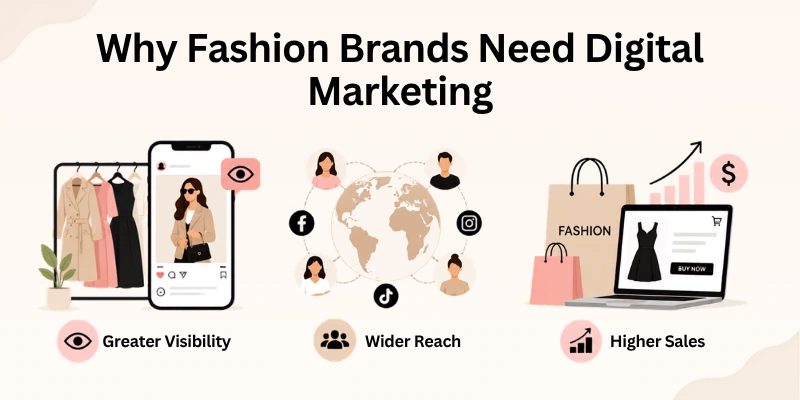
Digital marketing lets brands meet their audience on social media, search engines, and websites, wherever they are.
The benefits are clear:
- Greater Visibility: Your brand can be seen by millions, not just those near your store.
- Wider Reach: You can target specific audiences by age, interests, or location.
- Higher Sales: Engaging campaigns, shoppable posts, and personalized emails help turn viewers into buyers.
Digital Marketing Channels for Fashion
Fashion brands have many ways to connect with customers online. Using the right channels ensures your message reaches the right people at the right time.
Here’s a breakdown of the most effective ones:
1. Social Media Marketing for Fashion Brands
Social media is where fashion trends are born. Platforms like Instagram, TikTok, Pinterest, and Facebook let brands share visuals, videos, and stories that capture attention instantly.
- Visual Storytelling: Use high-quality photos, reels, or short videos to showcase outfits, accessories, or behind-the-scenes moments.
- Trend Engagement: Participate in challenges, hashtags, and viral trends to increase visibility.
- Community Building: Respond to comments, engage in polls, and feature user-generated content to build a loyal audience.
2. Search Engine Optimization (SEO) for Fashion Brands
SEO ensures that your fashion brand appears when people search for products online. This can be through Google, Bing, or other search engines.
- Organic Traffic: Well-optimized websites get free traffic from people actively searching for fashion items.
- Discoverability: Use keywords like “summer dresses online” or “men’s leather jackets” to appear in relevant searches.
- Long-Term Results: Unlike ads, SEO builds lasting visibility over time.
3. Paid Advertising for Fashion Brands
Paid campaigns help brands reach targeted audiences quickly and efficiently.
- Google Ads: Appear in search results for specific fashion-related searches. Ideal for driving traffic and sales.
- Meta Ads (Facebook & Instagram): Target users based on demographics, interests, or behaviour. Great for brand awareness and product launches.
- Retargeting: Show ads to people who visited your website but didn’t buy, nudging them to complete their purchase.
4. Email & SMS Marketing for Fashion Brands
These channels help maintain direct communication with your audience.
- Personalized Offers: Send special discounts, new arrivals, or birthday deals.
- Customer Retention: Remind past customers about your brand, keeping them engaged.
- Segmentation: Divide your audience by interests or past purchases for better-targeted campaigns.
5. Content Marketing for Fashion Brands
Content builds trust and keeps your audience engaged.
- Videos: Tutorials, styling tips, or behind-the-scenes clips.
- Blogs & Lookbooks: Share guides, trend reports, or outfit ideas to inspire customers.
- Style Guides: Help shoppers mix and match products, increasing average order value.
7. Influencer Partnerships
Influencers can amplify your brand’s reach and credibility.
- Types: Micro-influencers (smaller, highly engaged audiences) and macro-influencers (larger, broader reach).
- Authentic Collaborations: Partner with influencers whose style matches your brand. Authentic posts feel personal and trustworthy.
- Campaign Ideas: Product reviews, try-on hauls, or limited-edition collaborations.
Using a combination of these channels creates a strong, multi-touch strategy that builds visibility, engagement, and sales. Fashion brands that balance organic growth with paid campaigns and influencer partnerships see the best results.
Crafting a Fashion Digital Marketing Strategy
A strong digital marketing strategy is the backbone of any successful fashion brand. It ensures every campaign, post, or ad connects with your audience and drives results.
Here’s how to build one step by step:
1. Brand Story and Positioning
Your brand story sets you apart from competitors. It’s more than your logo or products; it’s the emotion you create.
- Share why your brand exists: sustainability, unique design, or inclusivity.
- Highlight your personality and values through visuals, captions, and campaigns.
- Emotional stories make customers feel connected, turning them into loyal fans.
Example: A brand focused on eco-friendly fashion can share behind-the-scenes footage of sustainable production, showing customers they’re part of a bigger mission.
2. Understanding Your Audience
Knowing your audience ensures your message resonates.
- Style Preferences: Are they streetwear lovers, luxury shoppers, or minimalist fashion fans?
- Demographics: Age, gender, location, and income.
- Behaviour: What platforms do they use? When do they shop online?
Use surveys, analytics, and social listening to gather insights. Targeted marketing saves money and improves engagement.
3. Content Planning
Content keeps your audience engaged and drives them toward purchase.
- Calendar: Plan posts, emails, and campaigns ahead. Keep a mix of promotional, educational, and entertaining content.
- Formats: Use videos, carousels, stories, blogs, or lookbooks, depending on the platform.
- Messaging: Keep language consistent and aligned with your brand voice.
Tip: Seasonal content, like summer collections or holiday gift guides, keeps your content fresh and relevant.
4. Platform‑Specific Tactics
Each platform has its own style and audience. Tailor your content accordingly:
- Instagram: High-quality visuals, reels, stories, and influencer collaborations.
- TikTok: Short, trend-driven videos and viral challenges.
- Pinterest: Idea boards and shoppable pins for inspiration-driven shoppers.
- Email & SMS: Personalized messages for promotions, new launches, or abandoned cart reminders.
Matching content to platform boosts engagement and improves ROI.
5. Budgeting & Goals
Set clear goals and allocate resources wisely:
- Goals: Decide whether you want brand awareness, website traffic, or sales conversions.
- Budget: Divide funds between organic content, paid ads, and influencer collaborations based on goals.
- Tracking: Monitor KPIs like engagement rate, click-throughs, or conversions to adjust strategy.
Tip: Start small, test campaigns, and scale what works best.
A well-crafted strategy ties together your story, audience insights, content, platform tactics, and budget, creating a roadmap for consistent growth and stronger brand presence.
Advanced Trends in Fashion Marketing
The fashion world is evolving fast, and digital marketing is keeping pace with exciting innovations. Brands today are using cutting-edge technology to personalize experiences, create interactive campaigns, and even sell digital clothing.
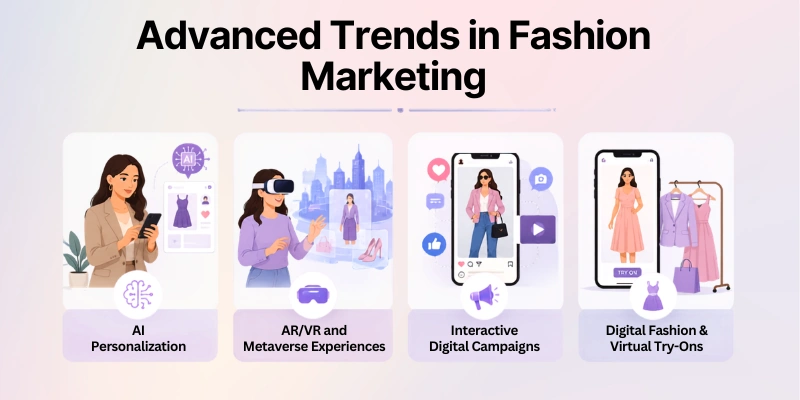
Staying ahead of these trends can give your brand a competitive edge and attract tech-savvy shoppers.
AI Personalization
- Brands use AI to recommend products based on a customer’s browsing history, style preferences, and past purchases.
- Personalized emails, product suggestions, and website experiences make shopping faster and more enjoyable.
AR/VR and Metaverse Experiences
- Virtual showrooms, augmented reality try-ons, and immersive fashion events let customers experience products digitally before buying.
- Brands can host virtual runway shows or create 3D environments that enhance engagement.
Interactive Digital Campaigns
- Gamified campaigns, quizzes, polls, and challenges increase audience participation.
- These experiences encourage sharing on social media, boosting reach organically.
Digital Fashion & Virtual Try-Ons
- Customers can try clothing and accessories virtually using apps or AR filters.
- Some brands even sell digital-only fashion items for social media avatars or the metaverse, opening new revenue streams.
Common Challenges and Solutions of Fashion Marketing
Even with the best strategies, fashion brands face hurdles in the digital world. Recognizing these challenges and finding solutions is key to staying competitive.
Competition in a Crowded Market
- Challenge: Thousands of fashion brands compete for attention online. Standing out can be difficult.
- Solution: Focus on a unique brand story, niche products, or a distinctive visual style. Highlight what makes your brand different, and use consistent messaging across all channels.
Limited Budgets for Small Brands
- Challenge: Small or new brands may not have money for large ad campaigns or influencer partnerships.
- Solution: Start with organic marketing, like social media engagement, content marketing, and collaborations with micro-influencers. Gradually invest in paid campaigns as ROI grows.
Keeping Up with Trends and Technology
- Challenge: Fashion trends and digital tools change rapidly, making it hard to stay current.
- Solution: Monitor competitors, industry blogs, and social media trends. Test new platforms and tools in small campaigns before full adoption. Being adaptable keeps your brand relevant.
By addressing these challenges strategically, fashion brands can maintain growth, stay competitive, and build lasting connections with their audience.
Final Thoughts
In this article, we’ve covered digital marketing for fashion in detail. From social media and SEO to influencer partnerships and emerging tech trends, each strategy plays a key role in building a strong brand.
My personal recommendation is to start small, focus on the channels where your audience is most active, and gradually expand your campaigns while tracking results.
Take action today: plan your first campaign, experiment with one new tactic, and watch your fashion brand grow online!
FAQs: Digital Marketing for Fashion
Here are the most common questions beginners ask related to digital marketing for fashion, with easy answers to help you get started quickly:
Digital marketing for fashion brands is the process of promoting clothing, accessories, or fashion services online. It uses tools like social media, SEO, paid ads, and email campaigns to reach potential customers. This approach helps fashion brands grow visibility, engagement, and sales faster than traditional marketing.
Social media platforms like Instagram, TikTok, and Pinterest are perfect for fashion marketing. Brands can showcase products with photos, videos, and stories to attract followers and drive sales. Consistent posting, trend participation, and influencer collaborations increase reach and brand awareness.
For fashion startups, focus on social media, content marketing, and influencer partnerships first. SEO and email marketing can help attract and retain customers over time. Combining these strategies with a strong brand story ensures your new brand stands out online.
Costs vary depending on the channels and campaigns you use. Small brands can start with free or low-cost methods like organic social media, email marketing, and micro-influencers. Paid ads and large influencer collaborations increase reach but require more budget, so plan based on your goals.
Top trends include AI personalization, AR/VR try-ons, interactive campaigns, and digital fashion collections. These tools improve customer experience and engagement by offering personalized or immersive shopping. Staying updated on trends helps fashion brands remain competitive in a crowded online market.
Success is measured by tracking key performance indicators (KPIs) like website traffic, social media engagement, click-through rates, and sales conversions. Tools like Google Analytics, Instagram Insights, and email metrics make this easier. Regularly analyzing data helps you refine campaigns and increase ROI.




- Be Respectful
- Stay Relevant
- Stay Positive
- True Feedback
- Encourage Discussion
- Avoid Spamming
- No Fake News
- Don't Copy-Paste
- No Personal Attacks
- Be Respectful
- Stay Relevant
- Stay Positive
- True Feedback
- Encourage Discussion
- Avoid Spamming
- No Fake News
- Don't Copy-Paste
- No Personal Attacks
