Digital Marketing for Hotels: Top Strategies to Attract Guests
Published: 17 Jun 2026
Why do some hotels get fully booked while others struggle, even in the same city? The answer often lies in digital marketing for hotels, which is the use of online channels like websites, social media, email, and search engines to reach travellers and encourage bookings. Many hotels have great rooms and services, but fail to connect with the right audience online.
In this article, we will discuss the importance of digital marketing for hotels, explore the key strategies that work, and highlight common mistakes hotels should avoid to attract more guests and increase bookings.
Let’s dive in and discover the strategies that boost bookings.
Importance of Digital Marketing for Hotel Success
Digital marketing helps hotels reach more guests online. Today, most people search for hotels on Google, social media, or travel apps before booking. If your hotel isn’t visible there, you could be missing out on potential bookings.
Here’s why it matters:
- More direct bookings: A strong online presence encourages guests to book directly on your website instead of using third-party sites, saving commission fees.
- Better guest engagement: Sharing updates, offers, and helpful content keeps your hotel top of mind.
- Stronger reputation: Online reviews and social proof influence travellers’ decisions. Responding to reviews builds trust.
- Targeted advertising: Digital ads let you reach the right travellers at the right time, like people searching for weekend getaways or business trips.
- Competitive advantage: Hotels using digital marketing smartly often attract more guests than those relying only on traditional marketing.
Example: A small seaside hotel started posting local travel tips on Instagram and sharing weekend offers via email. Within three months, they saw a 25% increase in direct bookings and better engagement from returning guests.
Top Digital Marketing Channels for Hotels
Hotels attract guests through many online touchpoints. A traveller may search on Google, check social media, read reviews, and then book. Each channel plays a different role in this journey. When used together, they help hotels get more visibility and more direct bookings.
Website & SEO for Hotels
Your website is where guests decide whether to book or leave. A good hotel website answers questions quickly and builds confidence.
Focus on these areas:
- Clear room descriptions with real photos
- Simple navigation so guests find prices and availability easily
- Visible contact details and booking buttons
SEO helps your hotel appear when people search online. Instead of trying to rank for broad terms, hotels should focus on location and intent.
Smart SEO ideas for hotels:
- Create separate pages for room types and facilities
- Add content about nearby places people visit
- Optimize images with clear names related to your hotel
Content Marketing for Hotels
Content marketing builds trust before a guest ever books. It shows your hotel understands travellers and their needs. Hotels can create content that helps guests plan their stay, not just sell rooms.
Content ideas that work well:
- Local food guides near your hotel
- Seasonal travel advice
- Answers to common guest questions
Good content stays useful for months and brings repeat visitors to your site.
Hotel example: A resort shared monthly blogs about best travel times and weather tips. Guests used the content to plan longer stays.
Social Media Marketing for Hotels
Social media helps hotels stay visible and memorable. Guests want to see real experiences, not polished ads. Use social media to show daily hotel life and guest moments.
Effective hotel social media practices:
- Share real guest stories and photos
- Post short videos of rooms and views
- Highlight events and special experiences
Consistency matters more than posting often. A few quality posts each week work well.
Hotel example: A city hotel shared behind-the-scenes posts of staff preparing rooms. Engagement increased, and followers felt more connected.
Email Marketing for Hotels
Email helps hotels build long-term relationships. It works best when messages feel personal and useful. Hotels should send emails based on guest behaviour, not random promotions.
Smart email ideas for hotels:
- Pre-arrival tips for upcoming guests
- Special offers for past visitors
- Reminder emails during the off-season
Keep emails short and focused on one action.
Hotel example: A hotel sent reminder emails before long weekends. Many guests booked early to secure rooms.
Online Reviews & Reputation Management
Reviews strongly influence hotel bookings. Guests often read several reviews before deciding. Hotels should treat reviews as part of daily operations, not an afterthought.
Best practices for managing reviews:
- Ask guests politely at checkout or via email
- Respond calmly and professionally
- Thank guests for positive feedback
Reviews also highlight areas for improvement.
Hotel example: A hotel improved housekeeping after repeated comments. Ratings slowly increased, leading to more bookings.
Paid Advertising for Hotels
Paid ads help hotels reach travellers who are ready to book. They work well during peak seasons or special events. Hotels should focus on intent-based advertising.
Effective paid ad approaches:
- Search ads for location-based queries
- Ads promoting limited-time offers
- Retargeting ads for past website visitors
Start with small budgets and track results weekly.
Hotel example: A hotel promoted a festival weekend through ads. Rooms filled faster than usual due to the timely promotion.
How to Measure Hotel Marketing Results
Measuring results shows whether your marketing efforts are actually bringing guests and revenue. Without tracking, you won’t know what’s working or where to improve. Even small hotels can start with simple metrics to make smart decisions.
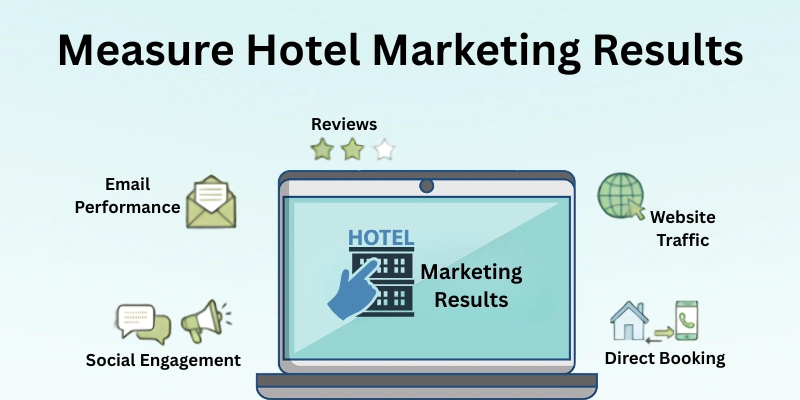
Here are the key ways hotels can measure marketing success:
- Website Traffic: Check how many visitors your website gets each month and which pages they visit most.
- Booking Conversion Rate: Track how many visitors actually book rooms through your website.
- Direct Bookings vs. OTA Bookings: See how many guests book directly versus through third-party sites to evaluate your marketing effectiveness.
- Email Performance: Monitor open rates, click-through rates, and bookings from email campaigns.
- Social Media Engagement: Look at likes, comments, shares, and follower growth to see which posts connect with potential guests.
- Online Review Scores: Track ratings on Google, TripAdvisor, and other platforms to understand guest satisfaction.
- Ad Campaign Results: Check how many clicks, impressions, and bookings come from paid campaigns.
- Return on Investment (ROI) – Compare the cost of your marketing efforts to the revenue generated from them.
Example: A small hotel noticed that most bookings came from Google search. They decided to focus more on SEO and reduced spending on less effective ad campaigns, increasing direct bookings without extra costs.
Common Digital Marketing Mistakes Hotels Should Avoid
Even small errors can cost hotels bookings and money. Avoiding these mistakes helps you get better results from your marketing efforts.
- Ignoring Mobile Users: Most travellers search and book using phones. If your website isn’t mobile-friendly, you could lose many guests.
- Not Updating Your Website: Outdated photos, old prices, or broken links make your hotel look unprofessional.
- Overlooking Reviews: Ignoring guest reviews can harm your reputation. Responding to feedback shows you care and builds trust.
- Posting Irregularly on Social Media: Inconsistent posts make it harder for guests to engage and remember your hotel.
- Sending Generic Emails: Emails that aren’t personalized feel like spam and get ignored. Use guest names and relevant offers.
- Focusing Only on OTAs: Relying entirely on third-party booking sites means paying higher commissions and losing direct guest connections.
- Skipping Analytics: If you don’t track results, you won’t know which marketing activities actually drive bookings.
Final Thoughts
In this article, we’ve covered digital marketing for hotels in detail. From my experience, focusing on a few key strategies, such as optimizing your website, engaging guests on social media, and managing online reviews, can bring the most noticeable results in a short time.
Start implementing these strategies today, track your progress, and watch your bookings grow. Don’t wait, take action now and give your hotel the online presence it deserves.
FAQs: Digital Marketing for Hotels
Here are some frequently asked questions related to online marketing for hotels:
Internet marketing for hotels uses online channels like websites, social media, and email to attract guests. It helps your property reach travellers who are searching online instead of relying on offline bookings. Effective internet marketing increases visibility, direct bookings, and overall revenue.
Small hotels can compete with bigger brands by using digital marketing in hotel industry:
- Reach a global audience with low-cost online campaigns.
- Build trust with guest reviews and social proof.
- Increase direct bookings and reduce commission fees from third-party sites.
Some digital marketing strategies for hotels that work well include:
- Optimizing your website for search engines.
- Posting engaging content and videos on social media.
- Running targeted email campaigns for past and potential guests.
The investment depends on your hotel size and goals. Start small by focusing on high-impact channels like SEO, email, and social media. Over time, you can increase spending on ads and automation tools to attract more bookings.
Yes, it can. Ways to increase direct bookings include:
- Use a user-friendly booking engine on your website.
- Offering exclusive deals via email campaigns.
- Engaging guests on social media to encourage reservations.
You can track performance by measuring:
- Website traffic and SEO rankings.
- Conversion rates and direct bookings.
- Engagement on social media and email campaigns.
Yes, managing reviews is essential for your hotel’s reputation. Responding to guest feedback builds trust and encourages bookings. Positive reviews also improve your visibility on Google and travel platforms, which helps attract more guests.



- Be Respectful
- Stay Relevant
- Stay Positive
- True Feedback
- Encourage Discussion
- Avoid Spamming
- No Fake News
- Don't Copy-Paste
- No Personal Attacks
- Be Respectful
- Stay Relevant
- Stay Positive
- True Feedback
- Encourage Discussion
- Avoid Spamming
- No Fake News
- Don't Copy-Paste
- No Personal Attacks
