Digital Marketing for B2B Business: Boost Client Growth in 2026
Published: 16 Jul 2026
Digital marketing for B2B business means using online tools and strategies to help one company sell products or services to another company. Instead of reaching individual customers, B2B marketing focuses on business clients.
It includes websites, social media, email, paid ads, and content like blogs or guides that help other businesses learn about your company.
This type of marketing is important because B2B sales usually take time and involve more decision-makers. Digital marketing helps businesses share information, build trust, and attract the right customers.
In this article, we will explain the main channels, strategies, tools, and tips for success so you can grow your B2B business online effectively.
Benefits of Digital Marketing for B2B
Digital marketing for B2B helps companies reach other businesses, save money, and grow faster. It makes marketing easier, measurable, and more effective than traditional methods. By using online tools, companies can connect with the right clients and build trust.
Here are the main benefits:
- Reach more businesses online: Your company can connect with clients anywhere, not just locally.
- Build trust and credibility: Sharing helpful content and information shows your expertise.
- Save marketing costs: Online marketing often costs less than print ads, events, or cold calls.
- Generate quality leads: Digital marketing helps find companies that are really interested in your product or service.
- Track and improve results: You can see which campaigns work best and make improvements.
- Stay competitive: Many B2B businesses already use digital marketing, so it helps you stay ahead.
Digital Marketing Channels for B2B
Online marketing for B2B uses online tools to help companies reach other companies. Unlike B2C, B2B sales take longer and involve more decision-makers.
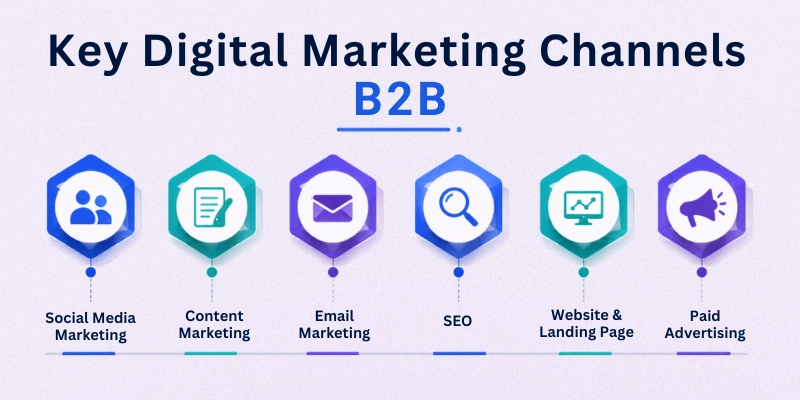
Each marketing channel plays a special role in attracting the right businesses, building trust, and generating leads.
1. Website and Landing Pages
For B2B, a website is often the first place a business learns about you. It shows your services, credibility, and industry expertise. Landing pages help collect information from other businesses interested in your products or services.
- Highlight services or solutions that solve business problems.
- Add forms for companies to request demos, quotes, or consultations.
- Offer downloadable guides or whitepapers that attract business clients.
- Make navigation clear so decision-makers can quickly find relevant information.
2. Search Engine Optimization (SEO)
B2B buyers often research online before contacting a company. SEO makes your business appear when other companies search for solutions. Without SEO, your company may remain invisible to potential business clients.
- Use keywords that target industries, company types, and professional needs.
- Create blog posts, guides, or case studies addressing business challenges.
- Get links from trusted industry websites to improve authority.
- Ensure your website works well on desktop and mobile for business users.
3. Content Marketing
B2B companies need information before making decisions. Content marketing helps your business educate other companies, show expertise, and build trust.
- Write blogs and guides that solve business-specific problems.
- Use case studies showing how your product helped another company.
- Offer eBooks or webinars as lead magnets for business contacts.
- Share industry insights on social media to position your company as an expert.
4. Email Marketing
B2B purchases usually take time and involve several people. Email marketing helps nurture business leads, keep them informed, and guide them toward a purchase.
- Send updates or offers relevant to a company’s industry or size.
- Personalize emails to decision-makers in target companies.
- Use drip campaigns to educate businesses step by step about your solutions.
- Track open rates and clicks to see which businesses are most interested.
5. Social Media Marketing
Social media lets your B2B business connect with other companies and industry professionals. It’s a way to share knowledge and build trust before a business decides to buy.
- Post content showing how your products solve business problems.
- Use LinkedIn to reach decision-makers or specific industries.
- Participate in professional groups and discussions to network with other companies.
- Run targeted ads to reach companies by industry, size, or role.
6. Paid Advertising (PPC)
Paid advertising helps B2B businesses reach the right companies quickly. Unlike B2C, you focus on specific industries, job roles, or company sizes to get qualified leads.
- Use Google Ads for searches by businesses looking for solutions.
- Run LinkedIn Ads to reach managers, CEOs, or procurement teams.
- Retarget businesses that visited your website but didn’t take action.
- Track conversions to see which ads generate actual business leads.
Strategies for Successful B2B Digital Marketing
Digital Marketing for B2B works best when you follow clear strategies. B2B businesses sell to other companies, so the approach is different from regular consumer marketing. It focuses on building trust, providing value, and guiding decision-makers step by step.
Here are the key strategies for B2B success:
- Understand Your Target Businesses – Identify the companies that need your products or services. Know their size, industry, and decision-makers. This helps you create messages that speak directly to them.
- Create Helpful Content – Make blogs, guides, and case studies that solve real problems for other businesses. Content should show your expertise and help companies make informed decisions.
- Use Lead Magnets – Offer free resources like eBooks, templates, or webinars to collect business contacts. These lead magnets attract serious business clients.
- Nurture Leads with Email – Not every business will buy immediately. Use emails to educate, follow up, and build relationships over time.
- Leverage Social Proof – Show testimonials, case studies, or client logos to demonstrate your success with other companies. This builds trust for new business clients.
- Track and Optimize – Use analytics to see which strategies bring leads. Focus on the channels and content that work best for your target businesses.
Common Mistakes to Avoid in B2B Digital Marketing
Many B2B businesses try digital marketing but make simple mistakes that stop them from getting results. Avoiding these mistakes helps your company reach the right businesses and grow faster.
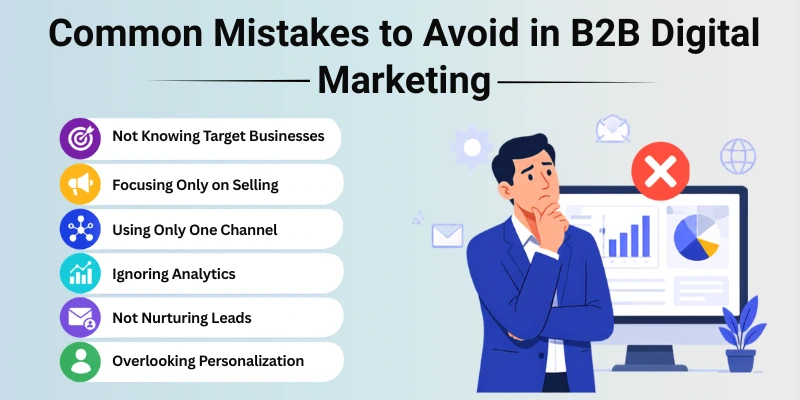
Here are the most common mistakes:
- Not Knowing Your Target Businesses – Marketing to the wrong companies wastes time and money. Always research which businesses need your products or services.
- Focusing Only on Selling – B2B buyers want value and trust. Sharing helpful content is more effective than sending constant sales messages.
- Using Only One Channel – Relying on a single channel, like email or social media, limits your reach. Combine websites, content, email, and social media for the best results.
- Ignoring Analytics – If you don’t track results, you won’t know what works. Monitor website visits, leads, and email clicks to improve strategies.
- Not Nurturing Leads – B2B sales take time. Follow up consistently with emails, content, and updates to convert potential clients into buyers.
- Overlooking Personalization – Generic messages do not attract businesses. Personalize content, emails, and ads for each company or decision-maker.
Measuring Success in B2B Digital Marketing
To grow your B2B business, it is important to measure the results of your digital marketing. Tracking performance shows which strategies work and which need improvement. B2B sales often take time, so monitoring results helps you find serious business leads and increase conversions.
Here are the main ways to measure success:
- Website Traffic – Check how many businesses visit your site. More visitors mean your content and SEO are working.
- Lead Generation – Track how many companies fill out forms, download guides, or request demos. These are potential clients.
- Email Engagement – Look at email opens, clicks, and responses. High engagement shows your messages reach the right decision-makers.
- Social Media Interaction – Track likes, shares, and comments from business accounts. Engagement indicates interest from other companies.
- Conversion Rate – Measure how many leads become paying clients. This shows the effectiveness of your B2B digital marketing strategies.
- Return on Investment (ROI) – Compare what you spend on campaigns versus the business gained. Focus on channels that bring the most value.
Measuring these results regularly helps your business make better decisions, improve strategies, and grow faster with digital marketing.
Tools to Help B2B Digital Marketing
Using the right tools makes Digital Marketing for B2B easier and more effective. These tools help your business reach the right companies, manage leads, and track results.
Here are some useful tools for B2B businesses:
- Email Marketing Tools – Tools like Mailchimp or HubSpot help send personalized emails to business leads. You can schedule campaigns, track opens, and nurture potential clients.
- CRM (Customer Relationship Management) – Tools like HubSpot CRM or Zoho CRM store company contacts, track interactions, and help follow up with leads. This is essential for B2B businesses with long sales cycles.
- Social Media Management – Tools like Buffer or Hootsuite schedule posts, monitor engagement, and track business interactions on LinkedIn, Twitter, and Facebook.
- SEO Tools – Tools like Ahrefs or SEMRush help find the right keywords, track website rankings, and analyze competitors. This helps your B2B business get discovered online.
- Analytics Tools – Google Analytics or HubSpot Analytics track website visits, conversions, and leads. You can see which campaigns bring real business results.
- Content Creation Tools – Tools like Canva or Lumen5 help make visuals, infographics, and videos that explain your products to other companies.
Using these tools, a B2B business can save time, reach more companies, and improve marketing results.
Final Words
In this article, we’ve covered digital marketing for B2B businesses in detail. I suggest every B2B company invest time in understanding their target businesses and creating content that solves real problems.
Using the right tools can make marketing easier and more effective. Take the first step now and begin building your digital strategy for long-term growth.
FAQs: Digital Marketing for B2B Business
Here are some common questions about digital marketing business-to-business. These answers will help you understand how to reach other businesses, attract leads, and grow your company online:
Results from B2B online marketing usually take time because business sales involve multiple decision-makers. If you consistently use websites, content, email, and social media, you can start seeing leads within a few weeks and sales growth over a few months.
Yes! Even small B2B businesses can benefit from digital Marketing for B2B businesses. Using simple strategies like SEO, email campaigns, and social media can help you reach other companies, build trust, and grow without spending too much money.
Digital marketing for B2B businesses is important because most companies research online before buying. Using digital channels helps your business show solutions, educate other companies, and attract serious leads. It also saves money compared to traditional marketing.
Effective B2B internet marketing strategies include: creating helpful content, optimizing your website for search engines (SEO), sending targeted emails, and using social media for professional networking. These strategies help your business reach the right companies and generate leads.
B2B online marketing helps your business reach more companies, build credibility, and stay competitive. By sharing content, running ads, and following up with emails, you can attract serious clients and turn leads into long-term business relationships.
Some useful tools for Digital Marketing for B2B Business are:
- Email marketing: Mailchimp, HubSpot
- CRM: HubSpot CRM, Zoho CRM
- Social media scheduling: Buffer, Hootsuite
- Analytics: Google Analytics
These tools make it easier to track results, manage leads, and improve your B2B marketing efforts.




- Be Respectful
- Stay Relevant
- Stay Positive
- True Feedback
- Encourage Discussion
- Avoid Spamming
- No Fake News
- Don't Copy-Paste
- No Personal Attacks
- Be Respectful
- Stay Relevant
- Stay Positive
- True Feedback
- Encourage Discussion
- Avoid Spamming
- No Fake News
- Don't Copy-Paste
- No Personal Attacks
