How to Start a Career in Digital Marketing: Beginner Guide 2026
Published: 8 Jun 2026
Digital marketing is all about promoting products or services online, through search engines, social media, email, and websites, to reach the right people at the right time.
In 2026, this career is booming because businesses rely on online visibility to grow, compete, and succeed. Whether you’re a student, fresh graduate, career changer, or freelancer, digital marketing offers a flexible, future-proof path with real growth opportunities and no strict degree requirements.
In this article, we will cover how to start a career in digital marketing, the essential skills you need, practical ways to gain experience, and strategies to land your first job or freelance client.
Why Choose Digital Marketing as a Career
Digital marketing offers strong career growth because businesses rely on online channels to reach customers and increase sales.
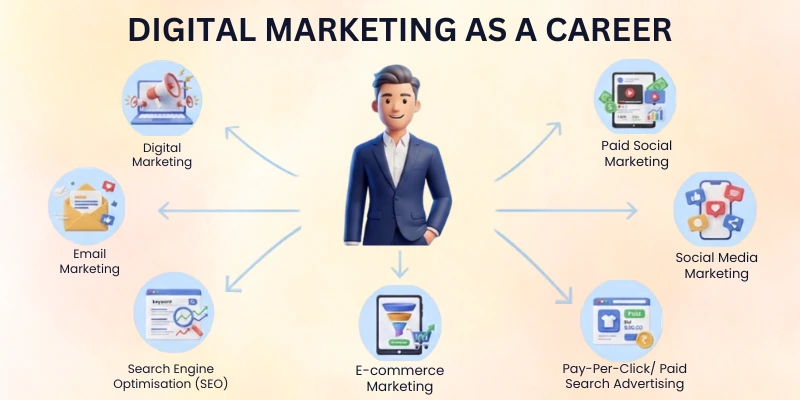
The demand keeps rising, and many roles allow remote work, flexible schedules, and global opportunities:
- Growing Demand: Companies need digital marketers to manage websites, ads, content, and social media. This need grows every year across all industries.
- Remote Opportunities: Many digital marketing jobs let you work from home or with international clients. You can build a career without moving to a big city.
- Multiple Career Paths: You can work in a marketing agency, join a company as an in-house marketer, offer services as a freelancer, or start your own online business or agency.
This flexibility makes digital marketing a practical and future-ready career choice.
Core Skills You Need
To start a career in digital marketing, you don’t need to learn everything at once. Focus on these core skills first. Each one builds real, practical ability.
- SEO (Search Engine Basics): Learn how search engines work and how websites rank on Google. Focus on keywords, page titles, simple content optimization, and basic backlinks.
- Social Media Marketing: Understand how platforms like Facebook, Instagram, LinkedIn, and TikTok work. Learn how to plan posts, engage followers, and grow an audience.
- Content Creation and Copywriting: Practice writing clear and useful content for blogs, ads, and social posts. Learn how to write headlines, short captions, and simple calls to action.
- Email Marketing Basics: Learn how to build an email list and send useful emails. Focus on subject lines, basic email design, and simple automation.
- Analytics and Data Tracking: Learn how to read data using tools like Google Analytics. Understand traffic, clicks, and conversions to see what works and what doesn’t.
- Paid Ads (Google & Meta): Learn how paid ads work on Google and social media. Start with targeting, budgets, ad copy, and basic campaign setup.
These skills give you a strong foundation and help you move faster in your digital marketing career.
How to Learn Digital Marketing
You can learn digital marketing step by step without feeling overwhelmed. Start simple, practice often, and grow your skills over time.
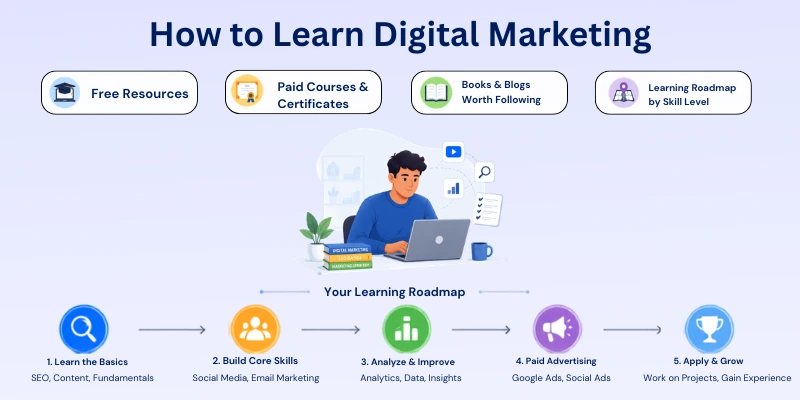
Here are some steps to learn digital marketing using different resources:
- Free Resources: Use platforms like Google Digital Garage and HubSpot Academy to learn the basics. YouTube also offers free tutorials on SEO, social media, and ads.
- Paid Courses and Certificates: Paid courses give structured learning and expert guidance. Choose courses that include practical tasks and recognized certificates.
- Books and Blogs Worth Following: Read beginner-friendly marketing books and follow trusted blogs to stay updated with trends, tips, and real examples.
- Learning Roadmap by Skill Level: Start with basics like SEO and content. Move to social media and email marketing. Then learn analytics and paid ads once you feel confident.
This approach helps you learn faster and apply your knowledge in real projects.
Choosing a Specialization
Digital marketing has many areas, so choosing one focus helps you grow faster and get better jobs. Start by matching your interest with market demand.
- Pick What You Enjoy: Choose a skill you like learning and practicing. If you enjoy writing, content marketing fits you. If you like data, SEO, or ads may suit you better.
- Check Job Demand: Look at job boards and freelance platforms to see which skills companies need most. This helps you choose a skill with real opportunities.
- Popular Specializations to Start With
- SEO Specialist: Helps websites rank higher on Google and get free traffic
- Social Media Expert: Manages posts, engagement, and growth on social platforms
- Content Marketer: Creates blogs, videos, and posts that attract and educate users
- PPC Expert: Runs paid ads on Google and Meta to drive quick results
Choose one specialization first. You can always learn from others later as your career grows.
Practical Hands-on Experience
The best way to learn digital marketing is by actually doing it. Theory helps, but experience teaches you faster. Start small and practice regularly.
- Start Your Own Blog, Website, or Social Accounts: Create a simple website or social media page. Practice writing posts, designing graphics, and sharing content. This becomes your live learning space.
- Run Small Campaigns: Try running mini ad campaigns on Google or Facebook with a small budget. Track results and see what works and what doesn’t.
- Volunteer for Real Projects or Non-Profits: Offer your skills to local businesses or non-profits. You get real experience, and they get help—everyone wins.
- Internships & Freelance Gigs: Look for internships or small freelance jobs on platforms like Fiverr or Upwork. Even small projects teach practical skills and build your portfolio.
Hands-on experience not only improves your skills but also makes you confident when applying for jobs or clients.
Certifications That Boost Credibility
Certifications show employers that you know your stuff and are serious about your career. They also help you stand out from other beginners.
Top Beginner Certificates
- Google Analytics: Learn to track website traffic and measure results
- Google Ads: Understand paid search campaigns and ad management
- HubSpot: Covers inbound marketing, email, and content basics
- Meta Blueprint: Learn advertising on Facebook and Instagram
Certifications prove you have practical knowledge and can use popular tools. They make your resume stronger and increase your chances of landing a job or freelance client.
Networking and Community
Building connections is just as important as learning skills in digital marketing. A strong network helps you find jobs, clients, and guidance.
- LinkedIn Tips for Marketers: Create a clear profile, share your work, and connect with other marketers. Comment on posts and join discussions to get noticed.
- Groups, Forums, and Events to Join: Participate in online communities, Facebook groups, Slack channels, and marketing events. These are great places to ask questions and learn from others.
- Mentorship and Peer Learning: Find mentors or peers who can guide you, give feedback, and share real-world tips. Learning with others helps you grow faster and stay motivated.
Job Search Strategies
Starting your first digital marketing job can feel tricky, but with the right approach, you can make it much easier. Focus on finding the right opportunities, showcasing your skills, and preparing well for interviews.
- Where to Look for Jobs: Search on LinkedIn, Indeed, and Glassdoor for full-time or part-time roles. If you prefer freelance work, check platforms like Upwork or Fiverr. Don’t forget to reach out to local businesses; they often need digital marketing help.
- How to Write Your Resume: Show off your skills, certifications, and any hands-on projects. Include internships, volunteer work, or small campaigns you’ve done. Keep it simple, clear, and focused on results.
- Interview Prep Tips: Practice explaining your projects and the results you achieved. Be ready to talk about campaigns, social media strategies, or SEO work you’ve done. Show your enthusiasm and willingness to learn; employers value effort and practical knowledge, even if you’re just starting out.
Freelance or Full-Time? Choosing Your Path
When starting in digital marketing, you can either work full-time for a company or freelance for multiple clients. Each path has its own benefits and challenges, so it’s important to choose what fits your goals and lifestyle:
Pros & Cons of Freelance vs. Employee Roles
- Freelance: You set your own schedule and work with different clients, but income can be unpredictable.
- Full-Time: You get a steady salary, benefits, and structured learning, but your schedule and projects may be less flexible.
How to Set Your Rates
Start by researching what beginners charge in your region or online. Consider your skills, time, and the value you deliver. Increase rates as you gain experience and results.
Client-Acquisition Tips
Build a portfolio showing your work. Network on LinkedIn, join marketing communities, and reach out to potential clients directly. Even small projects help you gain credibility and referrals.
Staying Updated in a Fast-Changing Field
Digital marketing steps change constantly, so keeping up with new tools, trends, and strategies is key to staying relevant and growing your career:
- Follow Blogs and Newsletters: Subscribe to trusted sources like HubSpot, Neil Patel, or Moz to get the latest tips and updates.
- Listen to Podcasts and Watch Videos: Short podcasts or YouTube channels can give quick insights into trends, case studies, and practical strategies.
- Join Communities and Groups: Participate in online forums, Facebook groups, or LinkedIn communities. Engaging with peers helps you learn what’s working in real time.
- Continuous Learning: Take new courses or certifications whenever a tool or trend becomes important. Even small updates in skills keep you competitive in this fast-moving field.
Staying curious and consistent with learning ensures you don’t fall behind and always have fresh ideas to apply in your work.
Wrapping Up
In this guide, we have covered how to start a career in digital marketing. While this field offers exciting opportunities, it’s important to remember that success takes time, effort, and continuous learning.
There can be challenges like keeping up with changing trends, managing client expectations, or handling competition, but you can manage these by staying curious, practicing regularly, and building a strong portfolio of skills and projects. With patience and persistence, you can turn these limitations into stepping stones for growth.
Thank you for reading, and I wish you the very best on your digital marketing journey.
FAQs: Career in Digital Marketing
Here are some frequently asked questions related to how to start a career in digital marketing. Don’t miss them; you might discover new insights and tips that could make a real difference in your career:
Digital marketing means promoting products or services online through search engines, social media, email, and websites. To start, first learn the basics like SEO, social media management, and content creation. Then, practice your skills with small projects, internships, or online courses to gain real experience and build your confidence.
No, you don’t need a formal degree. Many people start with free online courses and build practical skills through projects, internships, or freelance work.
To start a digital marketing business, first learn the basics like SEO, social media, content creation, and email marketing. Pick a niche you want to serve, build a small portfolio with personal or client projects, create a professional website, and start finding clients through networking and online platforms. Keep improving your skills to stay competitive.
You can:
- Create your own blog or social page
- Help local businesses or friends for free
- Apply for internships or small freelance jobs on sites like Upwork
Practice is the best way to learn.
Yes, certifications can be very helpful. They show clients or employers that you have verified skills in areas like SEO, social media, or email marketing. While they don’t replace real experience, they boost your credibility and can give you a head start when starting your own internet marketing business.
There’s no fixed time. Some beginners find entry‑level roles in a few months of study and practice, others take longer. Focus on learning step by step and building real work examples.
Yes, many digital marketing jobs and freelance roles let you work from anywhere. Many companies hire remote marketers because online work doesn’t require being in an office.


- Be Respectful
- Stay Relevant
- Stay Positive
- True Feedback
- Encourage Discussion
- Avoid Spamming
- No Fake News
- Don't Copy-Paste
- No Personal Attacks
- Be Respectful
- Stay Relevant
- Stay Positive
- True Feedback
- Encourage Discussion
- Avoid Spamming
- No Fake News
- Don't Copy-Paste
- No Personal Attacks
