Email Marketing vs Social Media Marketing: Which Is Better for Your Business?
Published: 28 Nov 2026
Guys, have you ever received a discount email from your favorite store and then seen the same store promoting its products on Instagram? Both methods help businesses reach customers, but they work in different ways.
This brings us to an important question: email marketing vs social media marketing. Which one should a business choose? Is it better to send emails directly to customers or promote products through social media platforms?
In this guide, I will explain both marketing methods in simple words. We will compare their costs, audience reach, communication styles, and results. You will also learn their main differences, when to use each method, and how they can work together.
Let’s get started!
What Is Email Marketing?
Email marketing is a way of promoting products, services, and business updates through email messages. Businesses collect email addresses from people who agree to receive their messages. They then send newsletters, special offers, product updates, and other useful information directly to their inboxes.
For example, suppose you visit an online clothing store and sign up for its newsletter. A few days later, you receive an email about a new clothing collection with a special discount. This is a simple example of email marketing.
Businesses use this method to stay connected with customers, share useful information, and encourage people to take action.
Common types of email marketing include:
- Welcome Emails: Introduce a business to new subscribers.
- Newsletters: Share news, tips, and regular updates.
- Promotional Emails: Announce discounts, sales, and special offers.
- Product Emails: Introduce new products and explain their features.
- Abandoned Cart Emails: Remind customers about products left in their shopping carts.
- Follow-Up Emails: Contact customers after a purchase or other action.
What Is Social Media Marketing?
Social media marketing is the process of promoting a business, product, or service through social media platforms. Businesses create and share content to attract attention, reach new people, and connect with their audience.
Popular platforms include Facebook, Instagram, TikTok, LinkedIn, Pinterest, and YouTube. Businesses use these platforms to share pictures, videos, stories, live streams, and other content.
For example, imagine a small bakery that wants more people to know about its cakes. It creates an Instagram account and shares pictures of its products, customer reviews, and short videos of cake-making. People can like these posts, leave comments, share them, or visit the bakery.
Common social media marketing activities include:
- Content Sharing: Publish pictures, videos, articles, and updates.
- Paid Advertising: Pay platforms to show promotional content to selected audiences.
- Customer Interaction: Reply to comments, messages, and questions.
- Influencer Marketing: Work with content creators to promote products.
- Community Building: Create an active group of people interested in your brand.
- Live Videos: Introduce products and answer customer questions in real time.
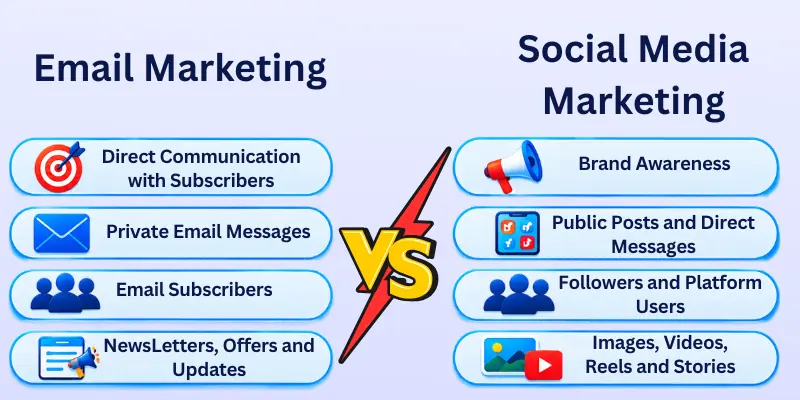
Comparison Table of Email vs Social Media Marketing
Before looking at the detailed differences, let’s compare both methods in one place.
| Point | Email Marketing | Social Media Marketing |
| Main Purpose | Direct communication with subscribers | Brand awareness and audience growth |
| Communication | Private email messages | Public posts and direct messages |
| Audience | Email subscribers | Followers and platform users |
| Content | Newsletters, offers, and updates | Images, videos, reels, and stories |
| Audience Control | More control over your subscriber list | Depends on social platforms |
| Reach | Mainly existing subscribers | Can reach followers and new users |
| Engagement | Clicks, replies, and conversions | Likes, comments, shares, and messages |
| Targeting | Subscriber groups and personal details | Platform audience and advertising tools |
| Cost | Email tools and campaign expenses | Content creation and advertising expenses |
| Best For | Customer retention and repeat sales | Brand awareness and new audiences |
Remember: Email marketing helps you communicate directly with subscribers, while social media marketing helps people discover and interact with your business through social platforms.
Differences Between Email Marketing and Social Media Marketing
Both methods help businesses connect with customers, but their working styles and uses are different.
Here are seven important areas where they differ:
- Communication and audience connection
- Audience ownership and control
- Reach and brand awareness
- Customer engagement
- Marketing costs
- Targeting and personalization
- Content and performance measurement
Let’s understand each difference with practical examples.
1. Communication and Audience Connection
The first difference is how businesses communicate with their audience. One uses direct email messages, while the other uses social content and public interactions.
Email Marketing:
- Direct Messages: Businesses send emails to people who have subscribed.
- Private Communication: Messages are delivered to individual inboxes.
- Personal Contact: Emails can include a subscriber’s name and relevant information.
- Regular Updates: Businesses can send newsletters and offers to stay connected.
Social Media Marketing:
- Public Content: Businesses share posts, videos, and stories.
- Open Discussions: People can comment and share their opinions.
- Community Interaction: Brands can communicate with followers and answer questions.
- Content Discovery: New users may find posts through recommendations and shares.
What Makes Them Different: Email marketing focuses on direct communication with subscribers. Social media marketing creates opportunities for public conversations and content discovery.
2. Audience Ownership and Control
Your audience is one of your most valuable business assets. However, email subscribers and social media followers are not controlled in the same way.
Email Marketing:
- Subscriber List: You can build and manage your own list of email contacts.
- Contact Access: You can use your list through a suitable email service.
- List Organization: You can divide subscribers into groups based on their interests.
- Direct Connection: You do not need people to follow a social media account to email them.
Social Media Marketing:
- Platform Followers: Your audience follows your account on a particular platform.
- Platform Rules: Your account must follow the platform’s policies.
- Changing Reach: Platform algorithms influence how many people see your content.
- Account Dependence: Changes to platform rules or account access can affect your marketing.
What Makes Them Different: Email gives businesses more control over their subscriber contacts. Social media audiences depend on third-party platforms. However, email delivery is not guaranteed, as messages can reach spam folders or remain unread.
3. Reach and Brand Awareness
Reach means the number of people who see your content. Both methods can help businesses reach customers, but they have different ways of finding an audience.
Email Marketing:
- Existing Audience: Emails mainly reach people who have joined your list.
- List Growth: You need to attract new subscribers to expand your audience.
- Repeat Contact: You can send new campaigns to existing subscribers.
- Limited Discovery: People generally need to subscribe before receiving your marketing emails.
Social Media Marketing:
- New Audiences: Public posts can reach people who do not follow your account.
- Content Sharing: Followers can share your posts with their own audiences.
- Recommendations: Platforms may suggest your content to interested users.
- Paid Reach: Advertising can help you reach selected groups of people.
What Makes Them Different: Social media offers more opportunities to introduce your brand to new people. Email marketing is mainly useful for communicating with an audience you have already attracted.
4. Customer Engagement
Customer engagement means how people interact with your business. These interactions help you understand whether your content is interesting and useful.
Email Marketing:
- Link Clicks: Subscribers visit your website through email links.
- Replies: Readers can respond to your messages.
- Customer Actions: People may register, download a guide, or make a purchase.
- Email Responses: Businesses can learn about customer questions and needs.
Social Media Marketing:
- Likes and Reactions: People show interest in your content.
- Comments: Users ask questions and share opinions.
- Shares: Followers spread your content to other people.
- Direct Messages: Customers can contact your business privately.
What Makes Them Different: Social media offers more visible ways to interact with content. Email provides a direct way to encourage subscribers to click links, reply, and complete specific actions.
5. Marketing Costs
Cost is important for every business, especially when the marketing budget is limited. Neither method is always free. Your expenses depend on how you manage your campaigns.
Email Marketing:
- Email Software: Some services offer free plans, while advanced tools may require payment.
- List Size: Costs may increase as your subscriber list grows.
- Content Creation: Writing and designing professional emails may require extra resources.
- Automation: Advanced automated campaigns may involve additional costs.
Social Media Marketing:
- Organic Content: You can publish regular posts without paying for advertisements.
- Content Production: Videos and graphics may require time, skills, or money.
- Paid Advertising: You need an advertising budget to run paid campaigns.
- Account Management: Managing several platforms may require extra tools or staff.
What Makes Them Different: Email costs often depend on your subscriber list and the tools you use. Social media expenses are more closely linked to content production, advertising, and account management.
6. Targeting and Personalization
Targeting means reaching people who are likely to be interested in your products. Personalization means making your messages more relevant to individual customers.
Email Marketing:
- Subscriber Groups: Divide your list based on interests or other details.
- Personalized Messages: Send content based on subscriber preferences.
- Purchase History: Recommend related products when suitable customer data is available.
- Automated Emails: Send messages based on actions such as signing up or making a purchase.
Social Media Marketing:
- Audience Selection: Advertising tools help businesses select suitable audiences.
- Interest-Based Ads: Reach people based on available interest data.
- Location Targeting: Promote products in selected locations where supported.
- Content Recommendations: Platforms may recommend posts based on user activity.
What Makes Them Different: Email marketing allows businesses to organize their own subscriber lists and personalize messages. Social media platforms provide tools to find and reach selected audiences.
7. Content and Performance Measurement
Both methods need useful content, but the content formats and performance measures are different.
Email Marketing:
- Content Format: Newsletters, product updates, promotional messages, and follow-ups.
- Delivery Rate: Shows how many emails were successfully delivered.
- Click Rate: Measures how many recipients clicked email links.
- Conversion Rate: Tracks actions such as purchases and registrations.
- Revenue: Helps measure the money generated through campaigns.
Social Media Marketing:
- Content Format: Images, short videos, reels, stories, and live streams.
- Reach: Shows how many people saw your content.
- Impressions: Counts how many times content appeared on screens.
- Engagement: Measures likes, comments, and shares.
- Conversions: Tracks actions such as purchases, leads, and website visits.
What Makes Them Different: Email marketing measures message performance and subscriber actions. Social media marketing measures content visibility, interactions, and actions taken by platform users.
One thing to remember is that email open rates are not always fully reliable. Privacy features and automated activity can affect these numbers. So, pay attention to clicks and actual business results as well.
Which Is Better: Email Marketing or Social Media Marketing?
Now that we understand the main differences, let’s answer the biggest question. Which method should you choose?
The answer depends on your business goals and the people you want to reach.
Email Marketing Is Better When:
- You Have Existing Customers: You want to share updates and offers with people who already know your business.
- You Want Repeat Sales: You want previous customers to return and purchase again.
- You Need Direct Contact: You want to send newsletters and product information to subscribers.
- You Sell Online: You want to bring interested people back to your website.
- You Want Automation: You need automatic welcome messages and follow-up emails.
Social Media Marketing Is Better When:
- You Have a New Business: You want people to discover your brand.
- You Sell Visual Products: You want to promote products through pictures and videos.
- You Want Public Interaction: You want customers to comment, share, and discuss your content.
- You Need More Visibility: You want to reach people who do not know your business.
- You Want a Community: You want to build an active group around your brand.
My Suggestion: If you are starting a new business, social media can help you attract attention. Once you have an interested audience, email marketing can help you build stronger customer relationships and encourage repeat sales.
Can You Use Email Marketing and Social Media Marketing Together?
Yes! You do not have to choose only one method. Both can support each other and help your business reach different people.
Let’s take an online clothing store as an example. The store shares product pictures and videos on Instagram. People discover its products and visit the website. The business then invites interested visitors to subscribe to its newsletter.
After someone joins the email list, the store can send new collection updates, special offers, and product recommendations.
Here is a simple way to combine both methods:
- Attract Visitors: Share useful and interesting content on social media.
- Collect Subscribers: Invite interested visitors to join your email list.
- Send Updates: Share product information, newsletters, and offers through email.
- Promote Content: Share useful email content through social media when appropriate.
- Measure Results: Check which campaigns bring website visits, leads, and sales.
For example, a business can announce a new newsletter on Facebook and invite followers to subscribe. This helps turn social media followers into email subscribers.
Remember: Social media can help people discover your business, while email gives you a direct way to stay connected with interested subscribers.
How to Choose the Right Marketing Strategy for Your Business
Before choosing a marketing method, think about your business goals, customers, and available resources.
Here are some important things to consider:
- Your Goal: Decide whether you want more brand awareness, website visitors, leads, or sales.
- Your Audience: Find out which platforms your potential customers use and how they prefer to receive information.
- Your Budget: Consider the costs of email software, content creation, advertising, and campaign management.
- Your Content Skills: Decide whether you can regularly create videos, graphics, newsletters, or written content.
- Your Available Time: Think about how much time you can spend managing campaigns and communicating with customers.
- Your Current Audience: Use the email subscribers or social media followers you already have instead of starting from zero.
For example, a local restaurant may benefit from Instagram because it can share food pictures and daily offers. An online education business may find email useful for sending course updates, learning materials, and student reminders.
Start with the method that best matches your current needs. You can add the other one as your business grows.
Final Thoughts
In this guide, we have covered social media marketing vs email marketing, their meanings, main differences, uses, and benefits. We have also discussed how both methods can work together to help businesses reach people and build customer relationships.
I recommend social media marketing for attracting new customers and building brand awareness. Choose email marketing to maintain customer relationships and encourage repeat sales. Using both can help you get better results.
Here are a few tips to remember:
- Know Your Audience: Understand your customers’ interests.
- Set Goals: Decide what you want to achieve.
- Start Small: Work within your budget.
- Create Useful Content: Share helpful information.
- Track Results: Check clicks, engagement, and sales.
I hope this guide helps you choose the right marketing strategy for your business.
Frequently Asked Questions
Here are some common questions about email marketing and social media marketing. Let’s answer them one by one:
1. What is the main difference between email marketing and social media marketing?
Email marketing uses direct messages to communicate with people who have subscribed to receive emails. Social media marketing uses platforms like Facebook, Instagram, TikTok, and LinkedIn to promote products and services.
The main difference is how businesses reach their audiences. Email focuses on direct communication, while social media focuses on public content, discovery, and interaction.
2. Which is better for small businesses, email marketing or social media marketing?
Both can help small businesses, but the right choice depends on their goals.
- Email Marketing: Useful for customer updates, special offers, and repeat sales.
- Social Media Marketing: Useful for brand awareness and attracting new customers.
- Both Together: Helpful for businesses that want to attract new people and maintain customer relationships.
A small business can start with social media and build an email list as its audience grows.
3. Is email marketing cheaper than social media marketing?
Email marketing can be affordable when you already have a subscriber list and use a suitable email service. However, costs may increase with larger lists, advanced tools, and professional content creation.
Social media marketing can also be free when you create and publish your own posts. Paid advertising, video production, and account management may increase its cost. The cheaper option depends on your business needs and marketing plan.
4. Can social media marketing replace email marketing?
No. Social media marketing cannot fully replace email marketing because both serve different purposes.
Social media helps people discover your brand and interact with your content. Email gives you a direct way to communicate with subscribers and share relevant information.
For example, a clothing store can use Instagram to introduce new products and email newsletters to share special offers with existing customers.
5. Why is email marketing useful for customer retention?
Email marketing helps businesses stay connected with customers after their first purchase. It gives businesses a way to share relevant information without waiting for customers to visit their websites again.
For example, an online store can send product updates, loyalty offers, and recommendations related to previous purchases. These messages may encourage customers to return when they need another product.
6. What are the biggest challenges of social media marketing?
The main challenges include changing algorithms, strong competition, regular content creation, and limited control over social platforms.
Businesses may also receive negative comments or struggle to reach people without paid advertising. To manage these challenges, create useful content, respond to customers, and avoid depending on only one platform.
7. Can beginners use email marketing and social media marketing?
Yes! Beginners can start with simple campaigns without having advanced marketing knowledge.
Here are a few easy steps:
- Create a social media account for your business.
- Share useful content related to your products or services.
- Invite interested visitors to subscribe to your email list.
- Send simple newsletters and business updates.
- Review your results and improve your campaigns.
Start with a small plan and learn what your audience likes.
8. Which marketing method is better for brand awareness?
Social media marketing is generally a better starting point for brand awareness because public content can reach people who do not follow your business.
For example, a new restaurant can share food pictures and short videos on Instagram. People may discover it through recommendations, shares, and other users’ activity.
Email marketing is more useful for keeping existing subscribers informed about your business.
9. Does email marketing have a higher ROI than social media marketing?
Email marketing can provide strong returns, but there is no fixed result for every business. Its ROI depends on campaign costs, audience interest, email quality, and the number of conversions.
Social media ROI also depends on the results of your campaigns. A business should compare actual sales, leads, and other valuable actions instead of looking only at likes, followers, or email opens.
10. Should I focus on email marketing or social media marketing first?
If you are starting a new business without an existing audience, I suggest starting with social media marketing. It can help people discover your products and become familiar with your brand.
As your audience grows, start collecting email subscribers. You can then use newsletters and relevant offers to stay connected with them.
This approach helps you attract new people first and build direct customer relationships over time.

- Be Respectful
- Stay Relevant
- Stay Positive
- True Feedback
- Encourage Discussion
- Avoid Spamming
- No Fake News
- Don't Copy-Paste
- No Personal Attacks
- Be Respectful
- Stay Relevant
- Stay Positive
- True Feedback
- Encourage Discussion
- Avoid Spamming
- No Fake News
- Don't Copy-Paste
- No Personal Attacks
