What Is the Difference Between Growth and Performance Marketing?
Published: 25 Nov 2026
Guys, getting more customers is not the only way to grow a business. You also need to keep those customers happy and give them good reasons to come back. At the same time, businesses want their ads to bring real results instead of wasting money. This is why understanding growth marketing vs performance marketing matters!
Both approaches help businesses improve their results, but they do not follow the same path. Growth marketing focuses on different ways to increase overall business growth. Performance marketing focuses on campaigns that bring measurable actions, such as clicks, leads, and sales.
Now, you may be wondering which one is better and how each approach works. Don’t worry! I will make everything easy to understand. We will look at their meanings, examples, main differences, and practical uses so you can make the right choice.
What Is Growth Marketing?
Growth marketing is a way of growing a business by improving every step of the customer journey. It does not focus only on getting new customers. It also looks at how to turn visitors into buyers, keep customers happy, and encourage them to buy again.
Growth marketers use data, customer feedback, and regular testing to find better ways to grow a business. They may work on SEO, social media, email marketing, website design, product improvements, and customer retention. Their main goal is to find what works best and build steady business growth over time.
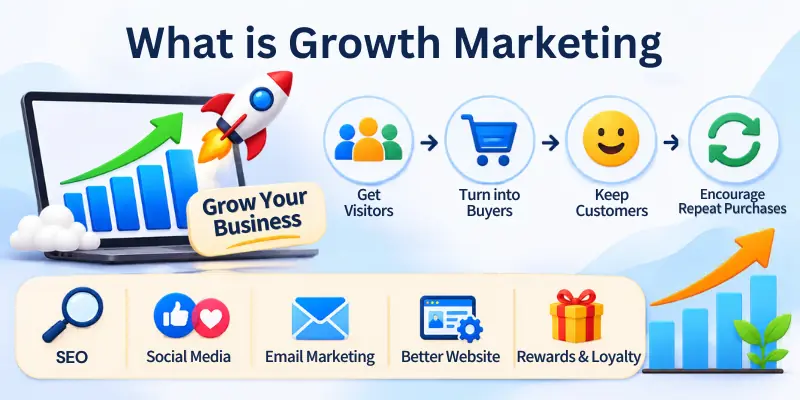
Example: Imagine you own an online clothing store. You get 1,000 website visitors every month, but only a few people buy your products. Instead of spending all your money on more ads, you try different ways to improve your store.
You may:
- Improve your product pages.
- Make the checkout process easier.
- Send emails to people who leave items in their carts.
- Offer rewards to regular customers.
- Ask buyers to share your store with friends.
These steps can help you get more sales from your existing visitors and customers. This is growth marketing because you are improving different parts of the customer journey.
What Is Performance Marketing?
Performance marketing is a way of promoting products or services where marketers focus on clear and measurable results. These results can include clicks, leads, app downloads, sales, or other actions. Businesses use performance data to understand which campaigns bring results and how much they spend to get them.
It often uses paid channels such as Google Ads, Facebook Ads, Instagram Ads, and affiliate marketing. Marketers track important numbers to see how well their campaigns perform. Depending on the agreement, advertisers may pay for clicks, leads, sales, or other results.
Example: Imagine you own the same online clothing store and want to sell 100 dresses this month. You create a Facebook ad that shows your dresses to people who may be interested in buying them.
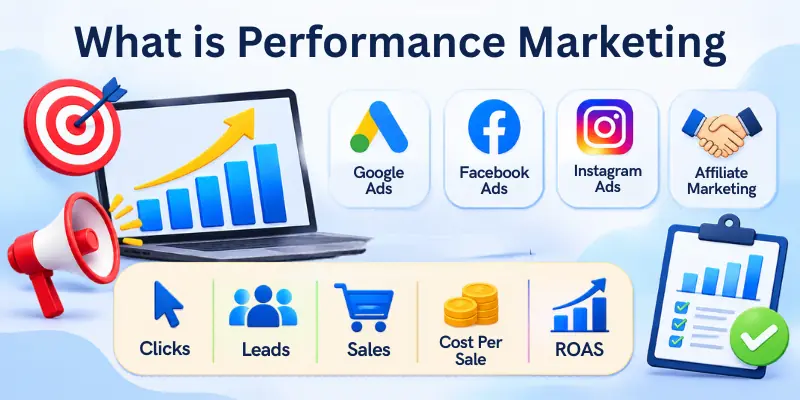
You spend money on the campaign and track:
- Clicks: How many people click your ad?
- Leads: How many people show interest?
- Sales: How many people buy a dress?
- Cost Per Sale: How much do you spend to get one customer?
- Return on Ad Spend (ROAS): How much revenue do you earn from your ad spending?
If one ad brings more sales at a lower cost, you can improve it or spend more on it. This is performance marketing because you measure your campaign through clear results.
Quick Comparison of Growth vs Performance Marketing
Now that we understand both terms, let’s compare them side by side. This table will help you understand how their goals, strategies, and results differ.
| Comparison Point | Growth Marketing | Performance Marketing |
| Main Focus | Overall business growth | Measurable marketing results |
| Main Goal | Gain and retain customers | Generate clicks, leads, and sales |
| Approach | Full customer journey | Specific marketing campaigns |
| Main Strategy | Testing and improving different growth methods | Running and improving result-based campaigns |
| Marketing Channels | SEO, email, social media, paid ads, referrals | Google Ads, social ads, affiliate marketing |
| Target | New and existing customers | People likely to take a specific action |
| Main Metrics | Retention, customer lifetime value, activation | CPC, CPA, CTR, ROAS, conversions |
| Time Focus | Short-term and long-term growth | Measurable results over campaign periods |
| Main Activities | Funnel improvement, customer experience, testing | Ad targeting, bidding, tracking, and optimization |
| Best For | Businesses that want steady growth | Businesses that want trackable campaign results |
Difference Between Growth Marketing and Performance Marketing
Both approaches use data to improve marketing results. However, they differ in their main goals, areas of focus, and daily activities.
Here are the seven main differences you should understand:
- Main Goal
- Marketing Approach
- Scope of Work
- Marketing Channels and Strategies
- Performance Measurement
- Time and Results
- Budget and Business Needs
Let’s understand each difference with simple examples.
1. Main Goal
The first difference between growth marketing and performance marketing is their main goal. Both aim to help a business succeed, but they focus on different results.
Growth Marketing:
Growth marketing focuses on increasing the overall growth of a business. It looks for ways to attract new customers, improve sales, and keep existing customers.
Its goals include:
- Customer Acquisition: Bring new people to the business.
- Customer Retention: Encourage existing customers to stay.
- Customer Engagement: Build better relationships with customers.
- More Revenue: Increase income through better marketing and customer experiences.
Performance Marketing:
Performance marketing focuses on getting specific results from marketing campaigns. It helps businesses understand whether their marketing money brings enough value.
Its goals include:
- More Clicks: Encourage people to visit a website or landing page.
- More Leads: Get contact details from interested people.
- More Sales: Turn interested people into paying customers.
- Better Returns: Get more value from marketing spending.
What Makes Them Different: Growth marketing aims to improve the overall business, while performance marketing aims to achieve specific, measurable marketing results.
2. Marketing Approach
The marketing approach explains how businesses plan and carry out their marketing activities. This is another important difference between these two methods.
Growth Marketing:
Growth marketers use a test-and-learn approach. They try different ideas, check the results, and improve their plans.
For example, an online store may test two different product page designs. The team checks which design brings more sales and uses the better version.
Common activities include:
- Testing different marketing ideas.
- Studying customer behavior.
- Improving the website experience.
- Making the buying process easier.
- Finding ways to bring customers back.
Performance Marketing:
Performance marketers focus on campaigns and their results. They study campaign data and make changes to improve performance.
For example, a business may run two Google Ads campaigns. One brings 20 sales at a lower cost, while the other brings only five sales at a higher cost. The marketer may reduce spending on the weaker campaign.
Common activities include:
- Testing different ad designs.
- Choosing the right audience.
- Improving ad messages.
- Managing campaign budgets.
- Tracking clicks, leads, and sales.
What Makes Them Different: Growth marketing tests different ways to improve business growth. Performance marketing tests and improves campaigns to get better measurable results.
3. Scope of Work
Scope of work means the areas a marketer handles. Growth marketing usually covers more parts of the customer journey, while performance marketing often focuses on specific campaigns and their outcomes.
Growth Marketing:
Growth marketing covers different stages of the customer journey, from the first time someone discovers a business to the time they become a regular customer.
It may include:
- Awareness: Help more people discover the business.
- Acquisition: Bring visitors and potential customers.
- Activation: Give new users a good first experience.
- Retention: Keep customers interested.
- Revenue: Increase sales and customer value.
- Referral: Encourage happy customers to recommend the business.
Performance Marketing:
Performance marketing usually focuses on measurable activities that help a business get a particular result.
It may include:
- Creating paid advertising campaigns.
- Finding the right target audience.
- Improving landing pages.
- Tracking leads and sales.
- Reducing the cost of getting customers.
What Makes Them Different: Growth marketing covers a wider part of the customer journey. Performance marketing focuses more closely on specific campaigns and the results they produce.
4. Marketing Channels and Strategies
Both approaches can use digital marketing channels. However, they use these channels for different purposes.
Growth Marketing:
Growth marketers can use both free and paid marketing methods. They choose strategies based on the areas where a business needs improvement.
Some common methods include:
- SEO: Improve website visibility in search engines.
- Content Marketing: Publish useful articles, videos, and other content.
- Email Marketing: Build relationships and bring customers back.
- Social Media Marketing: Connect with people and build an audience.
- Referral Marketing: Encourage customers to recommend a business.
- Paid Advertising: Bring visitors and customers through ads.
Performance Marketing:
Performance marketers often use paid channels that offer measurable campaign results.
Some common methods include:
- Google Ads: Show paid ads to people searching for products or services.
- Facebook Ads: Promote products to selected audiences.
- Instagram Ads: Reach people through image and video ads.
- Affiliate Marketing: Work with partners who promote products for a commission or agreed reward.
- Paid Search: Show advertisements in search engine results.
- Display Advertising: Show visual ads on websites and apps.
What Makes Them Different: Growth marketing can use many channels to improve the full customer journey. Performance marketing often uses paid channels to get and measure specific actions.
5. Performance Measurement
Every business needs to check whether its marketing activities are working. However, growth marketers and performance marketers may track different numbers.
Growth Marketing:
Growth marketers track numbers that show how a business grows over time.
Common metrics include:
- Customer Retention Rate: How many customers continue using a product or service?
- Customer Lifetime Value (CLV): How much value does a customer bring during their relationship with a business?
- Activation Rate: How many new users complete an important first action?
- Churn Rate: How many customers stop using a service?
- Revenue Growth: How much is the business’s income increasing?
Performance Marketing:
Performance marketers track numbers that show how well their campaigns perform.
Common metrics include:
- Click-Through Rate (CTR): How many people click an ad after seeing it?
- Cost Per Click (CPC): How much does each ad click cost?
- Cost Per Acquisition (CPA): How much does it cost to get a desired customer action?
- Conversion Rate: How many people complete a desired action?
- Return on Ad Spend (ROAS): How much revenue does an advertising campaign generate for each amount spent on ads?
What Makes Them Different: Growth marketing measures wider business progress, while performance marketing focuses on campaign results and the cost of getting those results. Both can track revenue and customer acquisition, but they use different measures to understand success.
6. Time and Results
Another difference is how businesses look at time and results. Some marketing activities bring quick results, while others need regular work before they show their full value.
Growth Marketing:
Growth marketing aims to build steady business growth. Some tests may show results quickly, but improvements in customer retention, SEO, and customer loyalty often take more time.
For example, improving a website’s checkout page may increase sales soon. However, building a strong customer base through SEO and email marketing may take months.
Performance Marketing:
Performance marketing focuses on measurable campaign results. Marketers can often see clicks, leads, and sales shortly after launching a campaign.
For example, a business can run a Google Ads campaign today and start receiving website visits as soon as the ads appear.
However, good results are not guaranteed. A campaign may need several changes before it becomes profitable.
What Makes Them Different: Growth marketing builds and improves a business over time. Performance marketing focuses on measurable campaign outcomes, which can appear quickly or take longer depending on the campaign.
7. Budget and Business Needs
Your budget and business goals also matter when choosing between these approaches. Both need planning, but they do not depend on the same resources.
Growth Marketing:
Growth marketing can use free and paid methods. A business may improve its website, publish useful content, build an email list, and test customer offers without spending heavily on ads.
However, growth marketing still needs resources such as:
- Time for research and testing.
- People to create content.
- Tools to track customer behavior.
- Support from marketing, sales, and product teams.
- Money for selected campaigns and improvements.
Performance Marketing:
Performance marketing often needs an advertising budget, especially when businesses use paid search and social media campaigns.
Its main costs may include:
- Ad Spending: Money paid to advertising platforms.
- Campaign Management: Time or fees for managing campaigns.
- Creative Work: Images, videos, and ad copy.
- Tracking Tools: Tools used to measure campaign results.
A business can start with a small advertising budget, but it should track spending carefully and understand how much each result costs.
What Makes Them Different: Growth marketing can make use of both paid and unpaid activities across a business. Performance marketing often needs direct campaign spending, particularly when it relies on paid advertising.
Which Is Better: Growth Marketing or Performance Marketing?
There is no single answer because the better choice depends on what you want your business to achieve.
Growth marketing may be a better choice if you want to build a strong business and improve customer relationships. Performance marketing may be better if you want to promote a product, generate leads, or increase sales through measurable campaigns.
Here is a simple way to decide:
Choose Growth Marketing If:
- You want to build a long-term customer base.
- You want to improve customer retention.
- Your website gets visitors but few people buy.
- You want to test different ways to grow your business.
- You want to improve more than just your advertising campaigns.
Choose Performance Marketing If:
- You want to generate leads through paid ads.
- You want to promote a new product.
- You need measurable results from your campaigns.
- You want to track your advertising costs.
- You want to find which ads bring the most sales.
Can You Use Growth Marketing and Performance Marketing Together?
Yes! In fact, using both approaches together can help a business improve its marketing results and build long-term growth.
You do not need to choose only one. Performance marketing can bring new visitors and customers, while growth marketing can improve what happens after people discover your business.
Let’s understand this with an example.
Imagine you run an online store that sells mobile phones. You want to increase sales and build a group of regular customers.
Here is how you can use both approaches:
Step 1: Use Performance Marketing to Get Customers
- Run Google Ads for people searching for mobile phones.
- Create Facebook and Instagram ads.
- Send visitors to your product pages.
- Track clicks, sales, and advertising costs.
Step 2: Use Growth Marketing to Improve Results
- Make product pages easier to understand.
- Improve the checkout process.
- Send emails about new products and offers.
- Give rewards to regular customers.
- Ask happy customers to recommend your store.
Step 3: Check the Results
Look at your advertising results, customer feedback, repeat purchases, and overall revenue. Find areas that need improvement and test new ideas.
This way, performance marketing helps you bring customers in, while growth marketing helps you improve their experience and build stronger relationships.
Final Words
In this guide, we have covered performance marketing vs growth marketing, their meanings, examples, goals, and key differences. We also explored how businesses can use both approaches together.
I suggest growth marketing if you want to build a loyal customer base. However, performance marketing is a better choice if you want to focus on paid campaigns and measurable sales results.
Take a look at the following questions for a better understanding. If you still have any questions, feel free to mention them in the comments, and I’ll be happy to guide you!
Frequently Asked Questions
Here are 10 common questions about growth marketing and performance marketing:
1. What is the main difference between growth marketing and performance marketing?
Growth marketing focuses on growing a business across the entire customer journey. It includes attracting new customers, improving their experience, increasing sales, and keeping them loyal.
Performance marketing focuses on getting measurable results from marketing campaigns. These results may include clicks, leads, sales, and conversions.
In simple words, growth marketing looks at the bigger picture, while performance marketing focuses on specific results.
2. Is growth marketing better than performance marketing?
Not always. It depends on your business goals and current needs.
- Growth Marketing: Better for businesses that want long-term growth and customer retention.
- Performance Marketing: Better for businesses that want measurable campaign results and more leads or sales.
If you want to improve your entire business, growth marketing may be a better choice. If you want to increase sales through paid campaigns, performance marketing may suit you more.
3. What are some examples of growth marketing?
Growth marketing includes different activities that help a business attract and retain customers.
Some common examples include:
- Publishing SEO-friendly blog posts.
- Sending emails to existing customers.
- Improving website design and checkout pages.
- Offering rewards to regular customers.
- Testing different landing pages.
- Creating customer referral programs.
For example, an online store may offer discount points to customers who buy regularly. This encourages repeat purchases and supports business growth.
4. What are some examples of performance marketing?
Performance marketing examples include campaigns where businesses track specific results.
For example, a company may run Google Ads to get website visitors and track how many people purchase its products.
Other examples include:
- Facebook and Instagram advertising campaigns.
- Affiliate marketing campaigns.
- Paid search advertising.
- Display advertising campaigns.
- Cost-per-lead campaigns.
- App installation campaigns.
Businesses use these methods to track campaign results and understand how much they spend to get each desired action.
5. Is performance marketing only about paid advertising?
No. Paid advertising is a major part of performance marketing, but the term can cover other result-based activities too.
For example, affiliate marketing can reward partners for bringing sales. Some campaigns also focus on leads, app downloads, or other agreed actions.
The main idea is to measure results and understand the value of marketing activities. Payment methods and campaign agreements can vary.
6. What are the main goals of growth marketing?
Growth marketing aims to improve different parts of a business and create steady growth.
Its main goals include:
- Attracting new customers.
- Improving customer experience.
- Increasing customer retention.
- Encouraging repeat purchases.
- Increasing business revenue.
- Finding new ways to grow.
For example, a software company may improve its free trial experience so more users become paying customers.
7. What are the most important metrics in performance marketing?
Performance marketers use different metrics to check whether their campaigns are working.
Some important metrics include:
- CTR: Measures how many people click an ad after seeing it.
- CPC: Measures the cost of each click.
- CPA: Measures the cost of getting a specific action.
- Conversion Rate: Measures how many people complete a desired action.
- ROAS: Measures the revenue generated from advertising spending.
- ROI: Measures the return compared with the total investment.
These numbers help marketers find successful campaigns and improve weak ones.
8. Can a small business use growth marketing?
Yes! Small businesses can use growth marketing even with a limited budget.
They do not need to spend a lot of money on advertising to start improving their business.
For example, a small bakery can publish useful posts on social media, collect customer feedback, offer rewards for repeat visits, and encourage happy customers to recommend it to friends.
These simple activities can help the bakery attract new customers and build stronger relationships with existing ones.
9. Can one marketer handle both growth marketing and performance marketing?
Yes. One marketer can handle both approaches, especially in a small business or startup.
However, both require different types of work. Growth marketing may involve customer research, website improvements, and retention strategies. Performance marketing may involve ad management, audience targeting, and campaign tracking.
As a business grows, it may need separate people or teams to manage these activities properly.
10. Are growth marketing and performance marketing the same as digital marketing?
No. Digital marketing is a broader term that covers online marketing activities. Growth marketing and performance marketing are two approaches that businesses can use within digital marketing.
For example:
- Digital Marketing: Includes SEO, social media, email, and online advertising.
- Growth Marketing: Uses different marketing methods and experiments to improve overall business growth.
- Performance Marketing: Focuses on measurable results from marketing campaigns.
You can use digital marketing channels for both growth marketing and performance marketing.




- Be Respectful
- Stay Relevant
- Stay Positive
- True Feedback
- Encourage Discussion
- Avoid Spamming
- No Fake News
- Don't Copy-Paste
- No Personal Attacks
- Be Respectful
- Stay Relevant
- Stay Positive
- True Feedback
- Encourage Discussion
- Avoid Spamming
- No Fake News
- Don't Copy-Paste
- No Personal Attacks
