Email Marketing for Restaurants: Get More Orders in 2026
Published: 11 May 2026
“A well-written email can feel like a personal invitation to your restaurant.” That’s the magic of email marketing for restaurants. From happy hour alerts to seasonal menus, emails let you connect directly with your diners.
Email marketing for restaurants is a way to send updates, offers, and messages directly to your customers’ inboxes. It allows restaurants to stay connected with diners, promote their menu, and encourage repeat visits.
In this article, we will discuss email marketing for restaurants in detail, covering strategies, examples, tools, and tips to make your campaigns successful.
Let’s dive in and explore.
Why Email Marketing is Important for Restaurants?
Email marketing gives restaurants a direct connection with diners, allowing them to share updates, offers, and news without relying on social media algorithms.
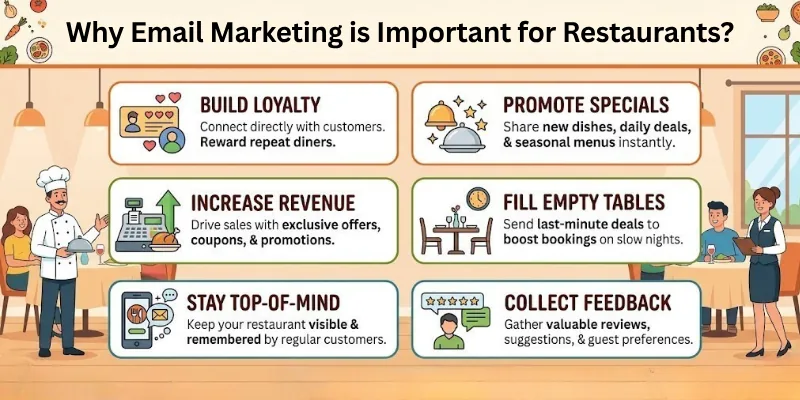
It’s one of the most effective ways to keep your brand top-of-mind. Using restaurant email marketing examples shows how small touches can make a big difference.
Key Benefits:
- Keep Customers Returning: Regular emails remind diners about your restaurant. For example, a family diner can share weekly specials to encourage repeat visits.
- Build Loyalty: Personalized emails, like “Thank You for Visiting!” or birthday rewards, make diners feel valued.
- Cost-Effective Growth: Even small restaurants can reach hundreds or thousands of subscribers at low cost using email marketing software for restaurants.
- Track Performance: Tools like Mailchimp or EmailOctopus help monitor engagement and refine campaigns.
- Stand Out from Competitors: Restaurants using email smartly, including McDonald’s email marketing, create stronger customer connections than competitors relying only on social media.
Example: A café sends “Free Cookie with Any Coffee Today” on a quiet Monday. Regulars return, and new visitors try the café, boosting sales.
How Email Marketing Helps Restaurants Grow Revenue?
Email marketing doesn’t just inform—it directly drives sales. Encouraging repeat visits, online orders, and bigger spending per visit, it helps restaurants increase revenue efficiently. Restaurant email examples show the strategies in action.
Ways It Increases Sales:
- Boost Orders: Highlight special menu items or events to encourage repeat visits.
- Encourage Online Orders: Include direct links to delivery or takeout platforms.
- Promote Limited-Time Offers: Seasonal deals or holiday specials create urgency.
- Upsell Options: Suggest combos or add-ons to raise the average order value.
- Drive Event Attendance: Emails announcing tastings, live music, or chef specials bring more diners in.
Example: A café emails “20% Off Sandwiches Today” at 11 AM. Regulars and new subscribers visit, noticeably increasing lunchtime revenue.
Types of Restaurant Email Campaigns
Restaurants can use a variety of email campaigns to engage subscribers, build loyalty, and increase orders. Using a mix ensures content stays interesting without overwhelming customers. Restaurant email marketing templates can help streamline these campaigns.
- Welcome Emails: Greet new subscribers with discounts or free items.
- Promotional Emails: Announce sales, menu deals, or limited-time offers.
- Newsletters: Share updates like new dishes, events, or chef stories.
- Seasonal & Holiday Emails: Generate excitement for limited-time specials.
- Re-engagement Emails: Encourage inactive subscribers to return.
- Event Announcements: Inform diners about tastings, live music, or new branch openings.
Example: A bistro sends a newsletter highlighting a new summer salad menu and an upcoming wine night to keep diners engaged.
How to Build an Email List for Your Restaurant?
A strong, engaged email list is the foundation of successful restaurant email marketing. The larger and more targeted the list, the better your campaigns perform.
- Collect Emails In-Store: Use signup cards or QR codes at tables and counters with small incentives.
- Capture Emails Online: Add website forms, popups, or social media links encouraging signups.
- Offer Valuable Incentives: Discounts, freebies, or loyalty points motivate subscriptions.
- Use Loyalty Programs: Link email collection to your loyalty system.
- Keep It Simple: Ask only for essential information to increase completion rates.
- Maintain List Hygiene: Remove inactive or incorrect addresses to improve engagement.
Example: A burger restaurant links its loyalty program to email signups, rewarding subscribers with points and encouraging repeat visits.
Email Segmentation for Restaurants
Segmentation lets restaurants send the right message to the right audience, increasing relevance and engagement. Using email marketing ideas for restaurants, you can target customers more effectively.
- By Visit Frequency: Regular diners get exclusive offers; occasional visitors receive reminders.
- By Order Type: Dine-in, takeout, and delivery customers receive tailored promotions.
- By Interests: Track preferences like desserts, vegan options, or spicy dishes.
- By Location: Send branch-specific promotions to nearby subscribers.
- By Engagement Level: Re-engage inactive users with incentives.
Example: A pizza restaurant emails delivery customers a family combo offer, while dine-in customers get weekend specials.
Personalization Tips for Restaurant Emails
Personalized emails make diners feel valued and understood, increasing open rates and engagement. Restaurant email subject lines can be customized for better results.
- Use Names: Address subscribers directly in subject lines or greetings.
- Tailor Content to Preferences: Highlight menu items based on past orders.
- Celebrate Special Dates: Send birthday or anniversary rewards.
- Suggest Items: Recommend combos or add-ons based on previous choices.
- Branch-Based Customization: Share offers relevant to a subscriber’s local location.
Example: A café emails morning regulars a “Breakfast Combo Deal” and afternoon visitors a “Lunch Special”, aligning offers with habits.
Email Design Best Practices for Restaurants
Good design captures attention and drives action. Using restaurant email marketing templates can make your emails visually appealing and consistent.
- Clean Layout: Focus on one message per email to avoid confusion.
- High-Quality Food Images: Appetizing visuals increase clicks and visits.
- Highlight CTAs: Make buttons clear, e.g., “Order Now” or “Reserve a Table”.
- Consistent Branding: Use your restaurant’s colours, fonts, and logo for recognition.
- Readable Text: Use short paragraphs, headings, and bold text for easy scanning.
Example: A café features a steaming latte in its newsletter with a bold “Order Online” button, increasing morning orders.
Email Automation for Restaurants
Automation saves time and keeps customers engaged by sending messages triggered by actions or dates. Using email marketing services for restaurants makes this process easier.
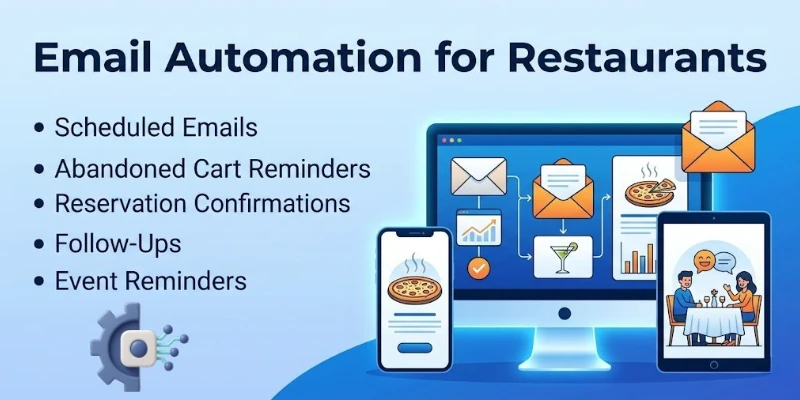
- Scheduled Emails: Plan weekly or seasonal promotions in advance.
- Abandoned Cart Reminders: Encourage customers to complete online orders.
- Reservation Confirmations: Reduce no-shows with instant confirmation emails.
- Follow-Ups: Thank diners after visits to encourage return visits.
- Event Reminders: Automatically count down to in-restaurant events.
Example: A fast-food chain automates reservation confirmations and abandoned cart reminders, boosting orders without extra staff effort.
Best Time and Frequency for Restaurant Emails
Timing impacts engagement. Using email marketing tips for restaurants helps find the best schedule to maximize opens and clicks.
- Optimal Days: Midweek for lunch deals, weekends for dinner offers.
- Best Times: Morning for breakfast/lunch promotions, afternoon for dinner specials.
- Frequency: 1–2 emails per week is ideal; adjust based on engagement.
- Test Results: Track opens and clicks to refine timing.
Example: A café emails lunch deals at 10 AM and dinner specials Friday afternoons, increasing visits without overwhelming subscribers.
Best Email Marketing Tools for Restaurants
Choosing the right tool makes your campaigns easier, smarter, and more effective. Using email marketing software for restaurants helps track results, segment customers, and design professional emails.
- Automation & Triggers: Schedule campaigns and automated messages.
- Analytics: Track engagement and see what works.
- Template Design: Create branded, professional-looking emails.
- Multi-Channel Integration: Combine email with SMS, push notifications, or loyalty programs.
- Segmentation: Target specific customer groups easily.
Example: A fine-dining restaurant uses an analytics tool to identify popular menu items and promotes them in emails to drive reservations.
Common Email Marketing Mistakes Restaurants
Avoid these mistakes to keep subscribers engaged and get the best results. Using restaurant email examples helps learn what works and what doesn’t.
- Overloading Subscribers: Sending too many emails annoys readers; focus on valuable content.
- Weak Subject Lines: Generic lines are ignored. Use clear, enticing wording.
- Ignoring Analytics: Track opens, clicks, and conversions to improve campaigns.
- Inconsistent Branding: Keep colours, fonts, and tone uniform across emails.
- Neglecting List Quality: Remove inactive or outdated emails to maintain engagement.
Example: A café sent daily emails with unclear offers. After switching to two focused emails per week, engagement and clicks increased noticeably.
Final Thoughts
In this article, we have covered email marketing for restaurants, including strategies, types of campaigns, list-building tips, and tools to make your emails effective.
By using personalized messages, automation, and well-timed offers, restaurants can boost orders, reward loyal customers, and fill tables even on slow days.
Implementing these tips consistently helps turn casual visitors into regular diners and keeps your restaurant top-of-mind. Start small, track results, and watch your campaigns grow into a powerful marketing tool.
FAQs: Email Marketing for Restaurants
Below are the most common questions restaurants ask, with simple answers to help you get started and improve your campaigns.
Email marketing for restaurants means sending updates, offers, and messages to your diners by email. It helps you keep customers informed about menu changes, deals, and events. This direct approach builds loyalty and brings people back more often.
For a restaurant with regulars, email marketing keeps your best customers coming back. You can send special offers, loyalty rewards, or weekly updates. Customers who feel remembered are more likely to visit again and become true fans.
Great marketing ideas for restaurants include sending welcome emails with a free offer, weekly specials, birthday deals, and event invites. You can also share new menu highlights or VIP-only coupons to get more clicks and visits.
Good restaurant email subject lines are short, clear, and exciting. Use words that make people curious, like “Today’s Special Inside!” or “Limited Time Discount for You.” A strong subject line helps your email get opened more often.
Fast food emails should have a clear offer, a tasty image, and a simple call to action like “Order Now” or “Get 20% Off.” These messages work well because fast food customers like quick deals and easy actions.
Yes. You should use email marketing software for restaurants to build lists, schedule emails, and track results. These tools help you create professional campaigns more easily than sending emails by hand.
Most restaurants send emails once or twice a week, so they stay in touch without annoying people. Watch how your audience responds and adjust. Too many emails can lead to unsubscribes


- Be Respectful
- Stay Relevant
- Stay Positive
- True Feedback
- Encourage Discussion
- Avoid Spamming
- No Fake News
- Don't Copy-Paste
- No Personal Attacks
- Be Respectful
- Stay Relevant
- Stay Positive
- True Feedback
- Encourage Discussion
- Avoid Spamming
- No Fake News
- Don't Copy-Paste
- No Personal Attacks
