Digital Marketing for Interior Designers to Grow in 2026
Published: 16 Jun 2026
These days, interior designers have many ways to show their work online, but it can be confusing to know which ones really get clients. Not every platform or method works the same, so it’s important to focus on the right ones.
Digital marketing for interior designers means using websites, social media, and online tools to show your portfolio, attract clients, and grow your business.
In this article, we will explain why digital marketing is important, go through the best channels for interior designers, and give simple strategies to get more visibility and client inquiries.
Role of Digital Marketing for Interior Designers
Digital marketing plays a key role in helping interior designers reach more clients and grow their business. It’s not just about being online; it’s about showing your work to the right people and building trust.
Key Roles:
- Builds Visibility: Helps potential clients find your services online.
- Showcases Your Portfolio: Let clients see your style and past projects.
- Attracts Quality Leads: Brings inquiries from people who are genuinely interested in your work.
- Builds Trust and Credibility: Positive reviews and a professional online presence make clients feel confident.
- Gives a Competitive Edge: Stands out in a crowded market of interior designers.
Digital Marketing Channels for Interior Designers
Digital marketing channels are the online tools and platforms interior designers use to reach new clients. Each channel helps you show your work, attract inquiries, and grow your business.

By focusing on the right channels, you can make sure your marketing efforts get results, and your designs reach the right audience.
Here are the main channels for interior designers:
- Website & Portfolio for Interior Designers
- Search Engine Optimization (SEO)
- Social Media Marketing
- Email Marketing
- Paid Advertising
- Video & Visual Marketing
Let’s look at them in detail.
1. Website & Portfolio for Interior Designers
Your website is the foundation of your digital presence. It’s where potential clients get their first impression of your work, and it often determines whether they contact you.
- Portfolio Showcase: Upload high-quality images of your completed projects. Include “before and after” shots, room descriptions, materials used, and design concepts. This helps clients visualize your style and skills.
- Service Pages: Clearly outline all the services you offer, such as residential design, office interiors, kitchen remodelling, or custom furniture design. Each service page should include benefits, pricing info (if applicable), and examples.
- Contact & Call-to-Actions (CTAs): Make it easy for clients to reach you. Include contact forms, email links, phone numbers, and buttons like “Request a Consultation.”
- Professional Design: Ensure your site is visually aligned with your design style, mobile-friendly, fast-loading, and easy to navigate. A polished website enhances credibility and trust.
- SEO-Friendly Website: Use proper headings, meta descriptions, and image alt texts so your site can be found on search engines.
2. SEO (Search Engine Optimization) for Interior Designers
SEO helps interior designers appear in search results when potential clients look for design ideas, services, or professionals online. A well-optimized website can attract more visitors, increase brand visibility, and bring in valuable leads over time.
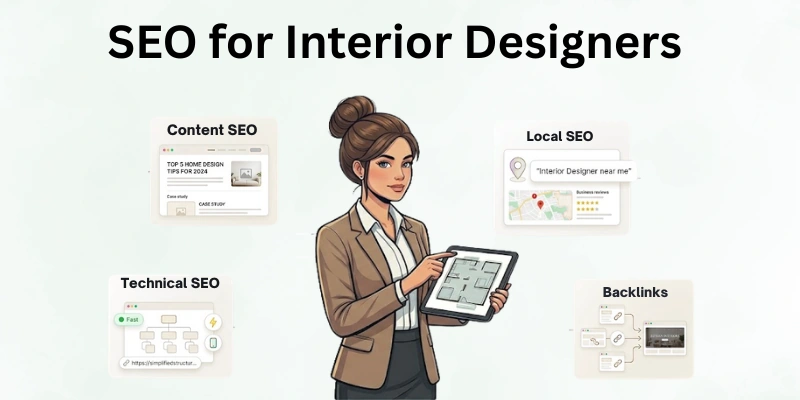
By using the right keywords, creating helpful content, and improving website performance, interior designers can build a strong online presence. SEO is a long-term approach that helps connect your services with people who are actively searching for them.
- Local SEO: Focus on keywords like “interior designer in [city]” or “modern home interior designer near me.” Claim your Google Business Profile to appear in local search results.
- Content SEO: Create blog posts, guides, or case studies about interior design trends, tips, or project walkthroughs. This demonstrates expertise and improves your website ranking.
- Technical SEO: Make your website fast, mobile-friendly, and well-structured. Use headings, meta tags, alt texts, and sitemaps so search engines can read your site easily.
- Backlinks: Collaborate with design blogs or online magazines to get backlinks, which improve credibility and SEO ranking.
3. Social Media Marketing for Interior Designers
Social media is a visual-first platform, ideal for interior designers to showcase their work and attract clients.
- Platforms: Focus on Instagram, Pinterest, TikTok, and Houzz, as these platforms prioritize images and videos.
- Visual Content: Share high-quality photos of completed projects, mood boards, and before-and-after transformations. Use reels or short videos to engage viewers.
- Engagement: Respond to comments, DMs, and messages. Use polls, quizzes, and interactive stories to connect with your audience.
- Consistency: Post regularly and maintain a consistent brand voice and design aesthetic to build recognition.
- Hashtags & Geo-Tags: Use relevant hashtags and location tags to reach local clients and improve discoverability.
4. Email Marketing for Interior Designers
Email marketing is a direct way to nurture leads and keep clients engaged.
- Email Collection: Offer free resources like style guides, checklists, or downloadable project ideas to collect emails from your website visitors and social media followers.
- Newsletters: Send regular emails with project highlights, tips, or updates about your services. Include clear CTAs like “Schedule a Consultation” or “View Our Portfolio.”
- Segmentation: Separate your email list into categories like homeowners, businesses, or luxury clients to send targeted messages that are relevant.
- Automation: Use automated email sequences to welcome new subscribers or follow up on inquiries, saving time while keeping potential clients engaged.
5. Paid Advertising for Interior Designers
Paid advertising is a fast way to attract high-quality leads and complement your organic efforts.
- Google Ads: Target people actively searching for interior designers in your area using keywords like “best interior designer in [city].”
- Social Media Ads: Run ads on Instagram, Facebook, or Pinterest with visuals of your projects to capture attention.
- Retargeting Ads: Show ads to people who have already visited your website or social profiles to remind them of your services.
- Budget Planning: Focus on campaigns that give measurable results, like clicks, inquiries, or booked consultations, rather than just impressions.
6. Video & Visual Marketing for Interior Designers
Video is one of the most engaging formats to showcase interior design projects.
- Project Walkthroughs: Record videos showing your completed spaces in detail. Explain design choices, materials, and styling tips.
- Time-Lapse Transformations: Create time-lapse videos of room makeovers to show the full process in seconds.
- Tutorials & Tips: Share mini-guides, styling tips, or DIY advice to position yourself as an expert.
- Platforms: Use YouTube for long-form walkthroughs and Instagram Reels or TikTok for short, highly shareable clips.
- Visual Appeal: Ensure videos are well-lit, professional, and align with your brand style to attract potential clients.
Collaborations, Partnerships & Community for Interior Designers
Collaborating with others is a powerful way for interior designers to reach more clients and grow their reputation. Working with professionals, brands, or community networks allows you to showcase your skills to a wider audience and build credibility.
- Professional Collaborations: Partner with architects, real estate agents, contractors, or furniture suppliers. Joint projects and co-marketing efforts can introduce your services to new clients.
- Brand Partnerships: Team up with home décor brands, influencers, or online platforms to feature your designs and increase visibility.
- Community Engagement: Take part in local events, workshops, webinars, or online design groups. Active participation helps establish trust, highlight your expertise, and create lasting connections.
- Co-Created Content: Work together on blog posts, social media campaigns, or video projects to share audiences and expand your online reach.
Focusing on collaborations and community involvement allows interior designers to gain credibility, attract referrals, and reach new clients without depending solely on paid ads or organic search.
Final Words
In this article, we’ve covered digital marketing for interior designers in detail. From my experience, starting with a strong website and active social media presence delivers the fastest results for visibility and client engagement.
Take a moment to review your current online platforms and begin creating a simple plan to showcase your portfolio and reach more clients today.
FAQs: Digital Marketing for Interior Designers
Here are some common questions interior designers have about digital marketing, along with clear answers to help you get started and improve your online presence:
The best marketing strategies for interior design firms focus on a mix of online presence, social media engagement, and showcasing portfolios through websites. Blogging, SEO, and email marketing also help attract potential clients. Combining these channels ensures consistent visibility and client inquiries.
Social media marketing for interior designers allows you to share project photos, videos, and tips directly with potential clients. Platforms like Instagram, Pinterest, and TikTok can increase your visibility and build trust. Consistent posting and engagement help turn followers into real leads.
Marketing for an interior design business helps you stand out in a competitive market. Without a proper strategy, even talented designers may go unnoticed. Effective marketing builds brand recognition, attracts clients, and grows revenue.
Start by focusing on free or low-cost channels like social media, your website, and local SEO. Share high-quality images of your portfolio and engage with local communities online. Over time, invest in paid ads and email marketing to scale your reach.
To know how to market an interior design business, begin by auditing your current online presence. Identify your ideal clients and choose the channels where they spend most of their time. Then create a simple marketing plan focusing on 2–3 key strategies.
Yes, a professional website serves as a digital portfolio where clients can view your work and services. Optimizing it for SEO ensures your site appears in local searches. Clear contact options and strong visuals make it easier for clients to reach out.
Track website traffic, social media engagement, email open rates, and inquiries received to measure success. Use tools like Google Analytics and platform insights to monitor results. Adjust your strategies based on what brings the most client leads.



- Be Respectful
- Stay Relevant
- Stay Positive
- True Feedback
- Encourage Discussion
- Avoid Spamming
- No Fake News
- Don't Copy-Paste
- No Personal Attacks
- Be Respectful
- Stay Relevant
- Stay Positive
- True Feedback
- Encourage Discussion
- Avoid Spamming
- No Fake News
- Don't Copy-Paste
- No Personal Attacks
