Digital Marketing for Authors: Reach More Readers & Grow Your Writing Career
Published: 28 Aug 2026
Digital marketing for authors is the art and science of promoting your books, writing, and personal brand online. In today’s world, simply writing a great book is not enough; authors need to reach readers where they spend most of their time: online.
This article will give you a step-by-step guide to digital marketing for authors. We will discuss:
- How to understand and connect with your readers
- Building a strong author brand
- Creating and managing your website
- Social media marketing for authors
- Email marketing strategies
- Content marketing ideas
- Pre-launch and launch book strategies
- Post-launch promotion
- Measuring your results
By the end of this guide, you will have a complete roadmap to effectively market your books online and grow a loyal reader base.
So, friends, let’s get moving and dive in!
Understanding Your Readers
The first step in digital marketing is understanding your audience. You cannot reach readers if you don’t know who they are.
- Identify your readers: Consider their age, interests, location, and favourite book genres.
- Study their habits: Find out which social media platforms, blogs, or forums they use.
- Create reader personas: A simple profile helps you know how to communicate with them.
For example, if your readers are young adults who love fantasy novels, platforms like Instagram or TikTok will be more effective than LinkedIn.
Building Your Author Brand
A strong author brand sets you apart from other writers. It shows who you are and what your books stand for.
- Consistent voice: Keep your tone and style consistent across your website, social media, and newsletters.
- Professional visuals: Use a professional author photo, book covers, and banners.
- About Me section: Write clearly about who you are, your writing journey, and what readers can expect.
- Show personality: Share small personal stories, writing challenges, or behind-the-scenes glimpses.
A strong brand builds trust and makes readers want to follow your work.
Author Website: Your Online Home
Your website is the central hub for all your digital marketing efforts. It is where readers learn about you and your books.
- Essential pages: Home, About, Books, Blog, Contact.
- SEO basics: Use your author name, book titles, and relevant keywords in headings, URLs, and meta descriptions.
- Calls-to-action: Include newsletter sign-ups, book pre-orders, and links to online stores.
- Mobile-friendly design: Most readers browse on smartphones, so make your website fast and easy to navigate.
A well-designed website builds credibility and keeps readers engaged.
Social Media Marketing for Authors
Social media connects you directly with your audience and helps build a loyal community.
- Choose the right platforms: Instagram, Facebook, TikTok, X (Twitter), or LinkedIn, depending on your audience.
- Post engaging content: Behind-the-scenes writing updates, sneak peeks, book teasers, or live Q&A sessions.
- Visual content: Photos, short videos, and graphics attract attention more than text alone.
- Consistency: Post at least 2–3 times per week. Create a content calendar to plan ahead.
- Engage: Reply to comments, share reader posts, and join relevant groups or discussions.
Social media helps your readers feel connected to you personally, not just your books.
Email Marketing for Authors
Email is a direct, personal way to reach your readers. It helps maintain relationships and increase book sales.
- Build a mailing list: Offer freebies like short stories, character guides, or sample chapters in exchange for email sign-ups.
- Send regular newsletters: Keep emails short, engaging, and valuable. Share updates, tips, and exclusive content.
- Clear subject lines: Make readers want to open your email.
- Segment your list: Send personalized emails to different groups, like new subscribers versus loyal readers.
Email keeps your audience engaged even when social media algorithms change.
Content Marketing for Authors
Now that we’ve covered email marketing for authors, let’s move on to content marketing. Content marketing helps you show your expertise, build trust with your audience, and attract readers.
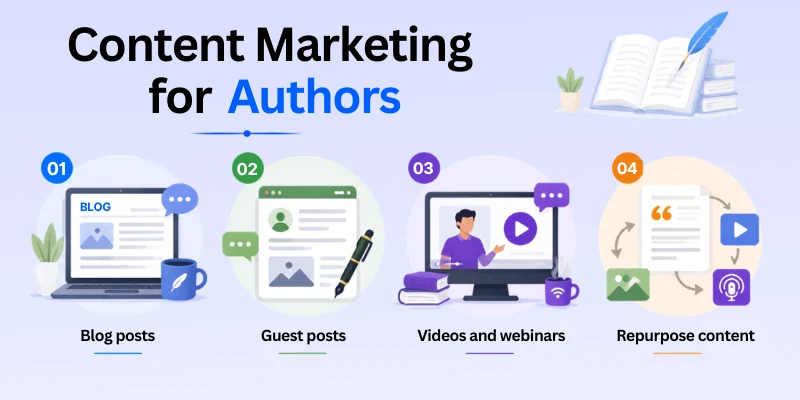
Here are the types of content:
- Blog posts: Share writing tips, character insights, or book reviews.
- Guest posts: Write on other blogs to reach a wider audience.
- Videos and webinars: Short clips about your writing process or live readings.
- Repurpose content: Turn blogs into social posts or email content to save time.
Content marketing builds credibility and encourages readers to follow your work.
Pre-Launch Book Marketing
Creating excitement before your book launch is crucial.
- Reveal your book cover on social media.
- Share teaser chapters or quotes to spark interest.
- Contact book bloggers, reviewers, and influencers.
- Use countdown posts for the launch date.
Pre-launch marketing ensures your book gets attention from the start.
Launch Week Strategies
Launch week is your chance to make a strong impact.
- Host virtual launch events on social media.
- Share live readings, Q&A sessions, or interviews.
- Encourage readers to post reviews, photos, and ratings.
- Promote your book with paid ads if possible.
A well-planned launch week can boost sales and create momentum for future marketing.
Post-Launch Promotion
After your launch, continue engaging your readers and promoting your book.
- Share positive reviews and testimonials.
- Post reader-generated content, like fan art or photos.
- Run small ad campaigns targeting your readers.
- Keep posting consistent updates on your social media and website.
Ongoing promotion helps your book reach new audiences and keeps sales steady.
How to Measure Your Digital Marketing Results as an Author
Measuring your results is key to understanding what works and improving your digital marketing efforts. Tracking the right metrics helps you spend time and money wisely while growing your audience effectively.
- Website Analytics: Monitor visitors, popular pages, and how readers navigate your site. Tools like Google Analytics can show which content attracts the most readers.
- Email Performance: Track open rates, click-through rates, and unsubscribe rates to see how engaged your audience is. Adjust your emails based on this data.
- Social Media Engagement: Measure likes, comments, shares, and follower growth. Notice which posts perform best and create more similar content.
- Book Sales and Conversions: Check which marketing channels lead to purchases, pre-orders, or downloads. This helps focus efforts on high-performing strategies.
- Ad Performance: If you run paid campaigns, track impressions, clicks, and return on investment (ROI) to optimize your advertising budget.
- Feedback and Reviews: Pay attention to reader comments, reviews, and messages. They provide insights into what readers enjoy and what can be improved.
By regularly reviewing these metrics, you can refine your strategy, focus on the most effective methods, and grow your readership steadily.
Common Mistakes Authors Make
Even experienced authors sometimes make mistakes in digital marketing.
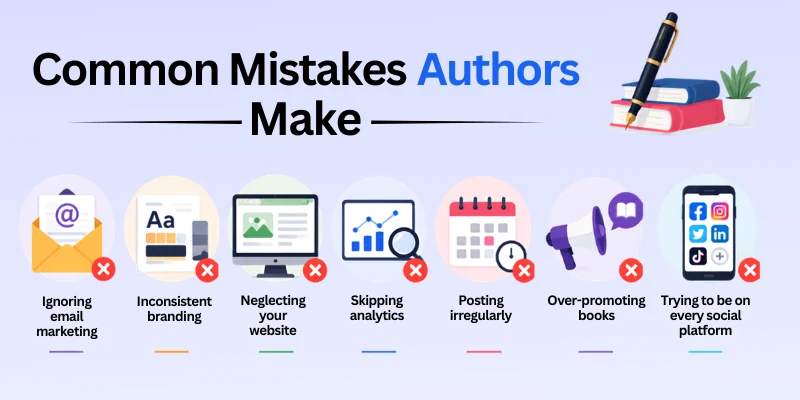
Avoiding these common errors can save time, money, and help your books reach more readers.
- Ignoring email marketing: Not building or engaging your mailing list means missing direct connections with readers.
- Trying to be on every social platform: Spreading yourself too thin reduces impact. Focus on 1–2 platforms where your readers are most active.
- Inconsistent branding: Using different tones, images, or messages confuses readers and weakens your professional image.
- Neglecting your website: An outdated or unclear website discourages visitors from exploring your books.
- Skipping analytics: Without tracking performance, you won’t know which strategies actually work.
- Posting irregularly: Inconsistent posting makes it harder to build and maintain a loyal audience.
- Over-promoting books only: Sharing only book links without engaging content can turn readers away.
Final Words
In this article, we have covered digital marketing for authors in detail. From understanding your readers to building your brand, managing your website, social media, email, content marketing, pre-launch, launch, and post-launch strategies, every step is important.
By following these professional tips and staying consistent, authors can grow their audience, sell more books, and build a lasting career in writing.
Digital marketing is not just promotion; it is connecting with readers, sharing your story, and creating a loyal community.
FAQs: Digital Marketing for Authors
Here are answers to common questions authors have about digital marketing:
Digital marketing for authors means using online tools and platforms to reach readers, promote your books, and grow your audience. It includes websites, social media, email newsletters, blogging, and advertising, all aimed at helping your books get noticed and read.
To start promoting books online, begin with a professional author website and social media profiles. Share engaging content like book teasers, writing progress, and reader stories. Use email newsletters to stay in touch and grow a loyal following. These basics help you connect with readers and encourage them to buy your work.
Yes. Social media is one of the key parts of digital marketing authors use to build relationships with readers. Platforms like Instagram, Facebook, and TikTok let you share updates, visuals, videos, and live sessions so readers stay connected and excited about your books.
Digital marketing for publishers works best when it includes a mix of channels: publisher and author websites, social communities, email newsletters, book recommendation services like BookBub, and online book platforms. These channels help both publishers and authors reach a wider reading audience.
Email marketing lets you send updates directly to readers who subscribed to your list. Share news about upcoming books, special deals, exclusive chapters, and personal messages. This strategy builds trust and encourages loyal readers to buy and recommend your books.
Absolutely! Self‑published authors can use many digital marketing for authors strategies, like listing books on online stores, building a mailing list, engaging on social media, using SEO on their website, and posting in reader communities, to increase visibility and book sales online.
After publishing, focus on consistent promotion: share reader reviews on social media, run paid ads if budget allows, keep your email list engaged with regular newsletters, and join online book communities like Goodreads to stay visible to readers. These continue to promote books online and help build long‑term reader interest.


- Be Respectful
- Stay Relevant
- Stay Positive
- True Feedback
- Encourage Discussion
- Avoid Spamming
- No Fake News
- Don't Copy-Paste
- No Personal Attacks
- Be Respectful
- Stay Relevant
- Stay Positive
- True Feedback
- Encourage Discussion
- Avoid Spamming
- No Fake News
- Don't Copy-Paste
- No Personal Attacks
