Best Digital Marketing for Coaches to Get Clients in 2026
Published: 15 Jun 2026
Digital marketing for coaches is the practice of using online tools and platforms to attract clients, share your expertise, and grow your coaching business. It helps you reach the right people, build trust, and turn interest into real coaching sessions. Even beginners can start small and see results quickly with the right approach.
In this article, we will guide you through simple, actionable strategies, content ideas, and tools to help your coaching business grow online and reach more clients consistently.
Let’s get started.
What Coaches Must Know Before Marketing
Before you start promoting your coaching services online, it’s important to understand your audience and your goals. Marketing without a clear plan is like throwing darts in the dark—you might hit something, but it won’t be consistent.
Identify Your Ideal Client
Ask yourself: Who do I want to help the most? Think about their age, job, lifestyle, and challenges. The more you know about your clients, the easier it is to create content that speaks to them.
Example:
- A life coach might focus on young professionals feeling stuck in their careers.
- A fitness coach could target busy parents who want quick, effective workouts at home.
Understand Their Problems
Your marketing should address real issues your clients face. People are more likely to follow or hire a coach who understands their pain points.
Tip: Make a short list of 3-5 common problems your clients have. For example:
- Stress management
- Career uncertainty
- Weight loss struggles
- Lack of motivation
Know Where They Spend Time Online
Different clients use different platforms. If you know where your ideal clients hang out, you can focus your energy there.
Examples:
- Career coaches: LinkedIn
- Life coaches: Instagram or Facebook
- Fitness coaches: YouTube or TikTok
Action Step: Write down your client’s problem and favourite platform. This will help you plan your content and choose the right marketing channels.
Core Digital Marketing Channels for Coaches
To grow your coaching business online, it helps to focus on the main marketing channels. These are the platforms and tools where you connect with clients, share your expertise, and build trust. Below are the key channels every coach should know.
1. Website: Your Digital Home Base
Your website is your online office. It shows your professionalism and makes it easy for clients to find you. Without a website, people may trust you less, even if your social media is strong.
Must-Have Pages:
- Home Page: Introduce yourself and your services clearly.
- About Page: Share your story and why you coach.
- Services Page: Explain what you offer and how it helps clients.
- Testimonials Page: Show real feedback from past clients.
- Contact Page: Make it easy for people to book calls or ask questions.
Example: A health coach adds a “Book a Free Consultation” button on the homepage. Visitors can schedule a call in seconds, turning traffic into clients.
2. SEO (Search Engine Optimization)
SEO helps people find your website on Google. When someone searches for a coach in your niche, good SEO makes sure your site appears near the top.
Simple SEO Tips:
- Use keywords people search for, like “career coach for young professionals.”
- Add keywords naturally to titles and headings.
- Write helpful blog posts answering common client questions.
- Include your location if you coach locally.
Example: A career coach writes a blog titled “3 Ways to Choose the Right Career After College.” When students search for career advice, the blog appears on Google, bringing them to the coach’s website.
3. Content Marketing for Coaches
Content marketing is sharing useful information to attract and engage your audience. You don’t have to be perfect—start small and focus on helping clients.
Types of Content Coaches Can Use:
- Blog Posts: Explain tips, strategies, or client stories.
- Short Videos: Share quick advice on Instagram, TikTok, or YouTube.
- Guides or Checklists: Give away free resources in exchange for emails.
Example: A mindset coach creates a 3-step checklist for reducing stress. People download it and join her email list, becoming potential clients.
4. Social Media Marketing for Coaches
Social media is where many people first discover you. Pick one or two platforms to start, instead of spreading yourself too thin.
What to Post:
- Daily or weekly tips
- Stories about real client wins
- Short Q&A or live sessions
- Motivational posts
Platform Examples:
- Instagram: Life coaches and fitness coaches
- LinkedIn: Career and business coaches
- Facebook: Community groups for engagement
- YouTube: Detailed tutorials or advice
Tip: Consistency is more important than perfection. Posting 2–3 helpful posts a week is better than posting daily randomly.
5. Email Marketing
Email allows you to communicate directly with people who are interested in your services. It builds trust and encourages clients to take action.
Easy Email Ideas for Coaches:
- Weekly tips or advice
- Client success stories
- Free resources (checklists, guides, mini-trainings)
- Special offers for sessions or courses
Example: A fitness coach emails a free “7-Day Home Workout Plan.” Subscribers try it, see results, and book paid coaching.
6. Paid Advertising (Beginner-Friendly)
Paid ads let you reach the right people faster, but you don’t need a big budget to start.
Beginner Tips:
- Start with small amounts to test what works.
- Use Facebook or Instagram ads for service promotions.
- Use Google Ads if people search for your niche online.
Example: A life coach runs a $5/day ad for a free webinar. A few attendees booked follow-up sessions.
Step‑by‑Step Coaching Marketing Setup
Starting digital marketing can feel overwhelming, but breaking it into small steps makes it simple. Follow this step-by-step setup to get your coaching business online and attract clients.
Step 1: Define Your Niche
- Decide who you help and what problem you solve.
- A clear niche makes marketing easier and more effective.
Example: Instead of “I coach people,” say: “I help busy parents lose weight in 30 minutes a day.”
Step 2: Build Your Website
- Choose a simple website builder (like Wix, Squarespace, or WordPress).
- Add the must-have pages: Home, About, Services, Contact, Testimonials.
- Include a clear call-to-action on every page.
Tip: Even a small website can look professional if it’s simple and clear.
Step 3: Choose Your Primary Marketing Channel
- Pick one platform to start (Instagram, LinkedIn, or YouTube).
- Focus your energy on creating helpful content consistently.
Example: A career coach starts on LinkedIn and posts twice a week, instead of trying all platforms at once.
Step 4: Create a Lead Magnet
- Offer something free in exchange for emails.
- It can be a checklist, mini-guide, or a short video series.
Example: A mindset coach gives a free “3-Day Confidence Boost Guide” to new subscribers.
Step 5: Start Your Email List
- Use a simple email tool like MailerLite, ConvertKit, or Mailchimp.
- Send weekly tips, success stories, or free resources.
- Keep emails short, clear, and actionable.
Tip: Emails are your direct line to potential clients—treat them like valuable relationships.
Step 6: Publish Content Regularly
- Plan a simple content schedule.
- Example: 2 posts per week on social media, 1 blog per month.
- Focus on teaching and helping before selling.
Example: A fitness coach shares 2 tips per week on Instagram: one video, one carousel post.
Step 7: Track Your Progress
- Check simple metrics: website visits, social engagement, email sign-ups, and calls booked.
- Review monthly and adjust your strategy based on what works.
Tip: Small improvements every month are more effective than trying to do everything perfectly.
How to Track Marketing Success
To know if your marketing efforts are working, you need to measure the right things. Tracking results helps you see what’s effective and what needs improvement, so you can grow faster without wasting time.
Key Metrics Coaches Should Track:
- Website Visits: See how many people visit your site each month.
- Email Sign-Ups: Track how many people join your list from lead magnets or free resources.
- Social Media Engagement: Likes, comments, shares, and new followers show if your content connects with people.
- Calls Booked: Count how many people schedule sessions through your website or social platforms.
- Client Conversions: Track how many leads turn into paying clients.
Tip: Focus on a few metrics at first. Trying to track everything can be overwhelming. Start simple and gradually expand.
Tools for Coaches
Using the right tools makes your marketing easier, faster, and more effective. You don’t need complicated software, just a few beginner-friendly tools to manage your website, content, email, and social media.
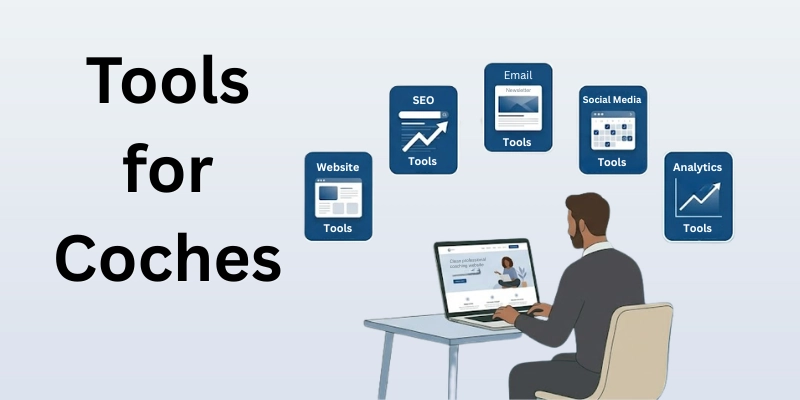
Essential Tools Coaches Can Use:
Website Builders:
- Wix, Squarespace, WordPress – Build a simple, professional website without coding.
- Tip: Keep it clean and easy to navigate; include Home, About, Services, and Contact pages.
SEO Tools:
- Google Keyword Planner, Ubersuggest, Yoast SEO – Find keywords and optimize blog posts so people can find your site on Google.
- Example: A career coach uses “career coach for new graduates” in blog titles to attract relevant visitors.
Email Marketing Tools:
- MailerLite, ConvertKit, Mailchimp – Build your email list and send helpful tips or free resources.
- Tip: Start with 1–2 emails per week focused on value, not selling.
Social Media Tools:
- Canva, Buffer, Later – Create posts, graphics, and videos, and schedule them in advance.
- Example: A life coach schedules motivational posts for the week, saving hours of work.
Analytics Tools:
- Google Analytics, Facebook/Instagram Insights, LinkedIn Analytics – Track traffic, engagement, and conversions to see what works.
- Tip: Focus on a few key metrics first, like website visits, emails collected, and calls booked.
Common Mistakes Coaches Should Avoid
Even experienced coaches can make mistakes when starting digital marketing. Avoiding these will save time, energy, and frustration.
Mistakes to Watch Out For:
- Trying Too Many Platforms at Once: Focus on 1–2 channels first instead of spreading yourself too thin.
- Posting Without a Plan: Random content confuses your audience. Create a simple schedule instead.
- Selling Too Much: Teach and provide value first. People buy when they trust you.
- Ignoring Your Email List: Emails are a direct connection to potential clients. Don’t leave them empty.
- Neglecting Your Website: A poorly organized website can lose clients before they even contact you.
Tip: Start small, stay consistent, and gradually expand your marketing efforts. Mistakes are okay as long as you learn and improve.
Final Words
We’ve walked through the key steps coaches need to succeed online, from beginner-friendly strategies to practical tools and content ideas. Digital marketing for coaches isn’t about doing everything at once; it’s about taking simple, consistent actions that grow your business over time.
Remember:
- Focus on small, manageable steps instead of overwhelming yourself.
- Share helpful content that builds trust and connects with your audience.
- Monitor your results and refine your approach regularly.
By applying these tips, you can attract clients, strengthen your online presence, and steadily grow your coaching business. Start today, and turn your expertise into real results!
FAQs: Digital Marketing for Coaches
New to digital marketing for coaches? These simple answers to common questions will help you get started and see results:
Digital marketing for coaches means using the internet to reach more clients and grow your coaching business. It includes strategies like social media posts, emails, and blog content. With consistent effort, it helps coaches connect with the right audience online.
Coach digital marketing helps you:
- Build trust with potential clients before they contact you
- Share helpful content to show your expertise
- Reach a wider audience beyond your local area
It makes it easier for people to find and hire your services.
Marketing your coaching business doesn’t have to cost a lot. You can start with free strategies like posting tips on social media, writing blog articles, or sending emails. Paid ads can be added later once you see what works best.
Social Media Platforms:
- Instagram and TikTok: Great for life and fitness coaches
- LinkedIn: Perfect for career or business coaches
- Facebook groups: Good for community engagement
Results usually appear in a few weeks to a few months. It depends on how consistent you are with posting content, engaging with clients, and building your email list. Small, regular actions often work better than trying everything at once.
Types of Content for Coaches Marketing:
- Tips and how-to guides
- Short videos for social media
- Client success stories and testimonials
- Free resources like checklists or mini-guides
Content should teach first and sell later, helping clients trust your expertise.




- Be Respectful
- Stay Relevant
- Stay Positive
- True Feedback
- Encourage Discussion
- Avoid Spamming
- No Fake News
- Don't Copy-Paste
- No Personal Attacks
- Be Respectful
- Stay Relevant
- Stay Positive
- True Feedback
- Encourage Discussion
- Avoid Spamming
- No Fake News
- Don't Copy-Paste
- No Personal Attacks
