Digital Marketing for Schools: Strategies to Grow Enrollment
Published: 23 May 2026
Two schools started at the same time in the same town. One filled its classrooms quickly, while the other struggled for months.
The reason was simple…
The first school used digital marketing for schools to reach parents online, while the second school relied only on traditional methods like flyers and word-of-mouth. Today, parents check websites, social media, and reviews before choosing a school.
This article will show how your school can use digital marketing to boost enrollment and build a strong reputation. We will cover websites, social media, email campaigns, and online ads that connect effectively with students and parents.
Without any delay, let’s explore the power of digital marketing in the education industry:
What is Digital Marketing for Schools?
Digital marketing for schools is the use of online tools and strategies to promote a school, attract students, engage parents, and build a strong reputation. Instead of relying only on flyers, billboards, or local ads, schools use the internet, such as websites, social media, search engines, email, and online ads, to reach their audience wherever they spend time online.
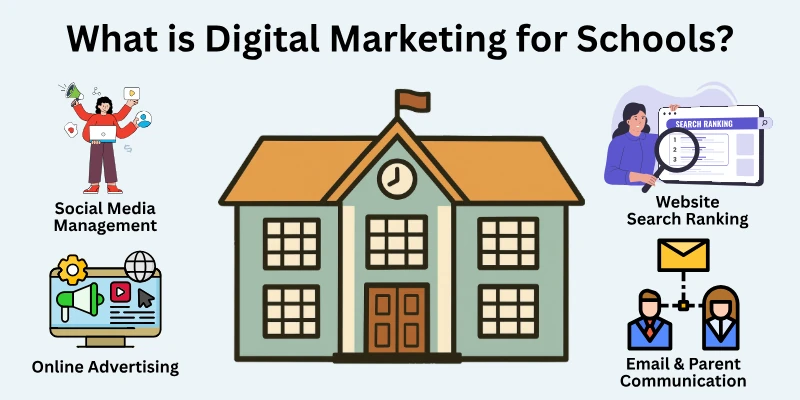
In simpler terms, it is like putting your school on the digital map so parents and students can find you easily, learn about your programs, and feel confident choosing your school.
Digital Marketing Strategies for Schools
Digital marketing is now a must for schools. Today, parents search online before deciding where to enrol their children. Students are also connected online and influenced by what they see.
A strong online presence helps schools show who they are, attract new students, and communicate clearly with families.
Here are the main strategies every school can use to stand out online and grow their enrolment:
- School Website Optimization
- SEO for Schools
- Content Marketing for Schools
- Social Media Marketing for Schools
- Email Marketing for Schools
- Paid Advertising for Schools
- Online Reviews & Reputation
- Virtual Events & Webinars
- Community Outreach & Partnerships
Now, we’ll break down every marketing tip for schools.
1. School Website Optimization
A school’s website is often the first impression parents get. If it is slow, confusing, or outdated, parents may move on without exploring further. A clear and mobile-friendly website helps parents feel confident about your school right away.
What to focus on:
- Essential pages: About Us, Admissions, Curriculum, Events, Testimonials, Contact, and FAQs.
- Easy navigation: Parents should reach important info, like application forms or virtual tours, in just a few clicks.
- Visuals that tell a story: Photos of classrooms, playgrounds, and student events make the school feel welcoming and lively.
- Clear calls to action: Buttons like “Apply Now” or “Schedule a Visit” guide parents toward next steps.
Think of your website as a friendly guide that walks parents through your school’s story while answering their questions along the way.
2. SEO for Schools
Even the best website won’t help if parents can’t find it. SEO makes your school show up when parents search for education options online.
How schools can do it:
- Use words parents type, like “best schools near me” or “admissions open in [city].”
- Keep your Google Business Profile updated with your address, phone, photos, and timings.
- Add clear titles and headings on each page so parents immediately understand what it’s about.
- Ask local blogs or community websites to mention your school—it helps parents find you faster.
SEO helps your school appear right when parents are looking, making it easier for them to take the next step.
3. Content Marketing for Schools
Content marketing gives parents and students useful information they actually want. It shows your school cares and is experienced in helping children grow.
Ideas to try:
- Blog posts: “How to Pick the Right School” or “5 Tips for a Smooth Admission.”
- Videos: Virtual tours, classroom activities, or interviews with teachers and students.
- Guides and FAQs: Clear explanations of school policies, events, and programs.
- Resources for parents: Tips for homework, learning activities, or career guidance.
Answering common parent questions with helpful content encourages sharing and builds your school’s reputation naturally.
4. Social Media Marketing for Schools
Social media lets your school connect, share, and show what makes it unique. It’s not just posting updates; it’s about building a community.
Ways to use it:
- Pick the right platforms: Facebook and Instagram for parents, and YouTube for videos and virtual tours.
- Share a variety of content: Events, student projects, announcements, and achievements.
- Try interactive posts: Stories, polls, contests, or live Q&A sessions with teachers or principals.
A lively social media presence keeps your school fresh in parents’ minds and gives them a window into daily school life.
5. Email Marketing for Schools
Email is a simple and direct way to communicate with parents. It keeps them updated and helps build a stronger connection with your school.
Ideas for email use:
- Newsletters with event updates, exam schedules, holidays, and student achievements.
- Segment emails for different audiences: prospective parents, current parents, or alumni.
- Automate reminders for application deadlines, fee payments, and upcoming events.
Fun and clear subject lines like “Join Our Virtual Open Day This Saturday” help parents open and act on your emails.
6. Paid Advertising for Schools
Paid ads allow schools to reach parents who are actively looking for educational options, giving results faster than organic methods alone.
Tips for ads:
- Use Google Ads for searches like “top school near me” or “admissions open in [city].”
- Run Facebook or Instagram campaigns targeting parents in your area.
- Experiment with messages, images, and formats to see what works best.
Strategically placed ads can bring more inquiries and applications in a short period.
7. Online Reviews & Reputation
Parents often rely on reviews when choosing a school. Seeing positive feedback makes them feel more confident in their choice.
Ways to manage reviews:
- Ask parents and alumni to share their experiences online.
- Respond politely to any negative comments, showing you listen and care.
- Feature positive reviews on your website and social media.
Good reviews help your school stand out and reassure parents that your school is a safe and supportive place.
8. Virtual Events & Webinars
Not all parents can visit in person. Virtual events let them experience your school from anywhere, making it easier to connect.

Ideas for schools:
- Host virtual open days showing classrooms, labs, and sports facilities.
- Run webinars about your curriculum or student development programs.
- Offer live Q&A sessions so parents can speak directly with teachers or principals.
Recording these events lets parents watch at their convenience, keeping them engaged even after the live session.
9. Community Outreach & Partnerships
Schools involved in their local community are seen as caring and trustworthy. It strengthens your image and creates lasting relationships.
Ways to connect:
- Partner with local businesses for events or programs.
- Share student involvement in community service or competitions online.
- Collaborate with NGOs, clubs, or cultural organizations for projects and campaigns.
Demonstrating that your school values more than academics leaves a positive impression on families and the community.
Measuring Success in School Digital Marketing
Running digital marketing for educational institutions is just the first step; understanding what works is what makes it truly effective. Without tracking results, it’s hard to know which strategies bring in inquiries, enrollments, or parent engagement.
Key Metrics
To see if your efforts are paying off, track these important numbers:
- Website traffic: How many parents and students visit your site and which pages they explore.
- Leads and inquiries: How many people are filling out forms, requesting tours, or contacting your school?
- Conversions: How many website visitors actually become enrolled students?
- Engagement on social media: Likes, shares, comments, and direct messages show how parents are interacting with your content.
- Email performance: Open rates, click-through rates, and responses indicate how well your messages resonate.
Tools to Track
You don’t need to guess- these tools give clear insights:
- Google Analytics: Shows website visits, page views, and user behaviour in detail.
- Social media insights: Platforms like Facebook, Instagram, and YouTube provide analytics for posts, reach, and engagement.
- Email marketing dashboards: Tools like Mailchimp or Sendinblue track opens, clicks, and conversions.
Pro Tip: Review your metrics regularly, adjust your strategies based on results, and focus on the channels that bring the most inquiries and applications.
How to Create Your School’s Digital Marketing Plan
Having marketing plans for schools is like having a roadmap. Without them, efforts can feel scattered, and it’s hard to see what’s working. A clear plan helps schools attract more students, communicate effectively with parents, and make the best use of their resources.
Here’s a step-by-step approach any school can follow.
Step 1 – Set Clear Goals
Before starting, you need to know what success looks like. Setting clear goals gives your team focus and direction.
Examples of school marketing goals:
- Increase student enrollment by a certain percentage.
- Get more parents signing up for newsletters or updates.
- Boost attendance for virtual open days or webinars.
- Grow social media followers or interactions with posts.
Tip: Make goals measurable. Instead of saying “get more inquiries,” aim for “increase admission form submissions by 20% in six months”. Clear goals make it easier to track progress and adjust strategies.
Step 2 – Choose the Right Channels
Not every digital channel works for every school. The key is to focus on where your audience actually spends time.
Common channels for schools:
- Website: The hub for all information, tours, and applications.
- Social media: Facebook and Instagram for parent engagement, YouTube for videos.
- Email: Newsletters and updates for current and prospective parents.
- Paid ads: Google and social ads to reach parents actively searching for schools.
Tip: Think about your audience’s habits. Busy parents may prefer email updates, while prospective students might engage more with social media posts or videos.
Step 3 – Set Budget & Timeline
Planning a budget and timeline keeps your marketing realistic and organized.
How to approach it:
- Decide how much to spend on paid ads, content creation, or website improvements.
- Allocate more to channels that bring the best results.
- Create a timeline for campaigns, newsletters, or virtual events.
Tip: Start small and scale up. Test your strategies for a few months, see what works, then increase investment in successful channels.
Step 4 – Monitor and Improve
A digital marketing plan isn’t “set and forget.” Continuous tracking helps you understand what works and what needs adjustment.
Ways to monitor performance:
- Check website traffic and form submissions regularly.
- Track social media likes, comments, shares, and messages.
- Monitor email open rates and click-throughs.
Tip: Use insights to refine your plan. If a channel isn’t bringing results, tweak the message, timing, or content rather than giving up completely. Over time, these small improvements lead to big gains.
Final Thoughts
Now that you understand how it works, digital marketing for schools is more than just posting online. It’s about reaching the right parents, showing what makes your school unique, and turning interest into real enrollments.
The same ideas also work for digital marketing for students and digital marketing for colleges—helping them connect, grow, and engage effectively.
Next, we’ve answered some of the most common questions about digital marketing for schools so you can take action with confidence.
FAQs: Digital Marketing for Schools
Here’s a quick Q&A to help you understand digital marketing for schools better.
Some proven strategies include:
- A mobile‑friendly, easy‑to‑use school website
- Search engine optimization (SEO) to appear in search results
- Regular posts on platforms like Facebook and Instagram
- Email newsletters for parents
- Targeted online ads to reach specific audiences
These help increase visibility, engagement, and inquiries.
Schools can track results using metrics like:
- Website visits and page views
- Number of inquiries or form submissions
- Engagement on social media (likes, comments, shares)
- Email open and click‑through rates
Tools like Google Analytics and social insights make this easy to follow and improve over time.
Digital marketing does not work overnight. Most schools see meaningful improvements in 3 to 6 months once a strategy runs consistently. SEO and content efforts build over time, while paid ads can show faster results but still need testing and adjustment.
Both are possible:
- Small schools can handle basics in‑house using free tools and simple posts.
- Larger campaigns or paid advertising may benefit from an experienced marketer or agency.
Start small, learn what works, and scale as needed. Asking clear questions before hiring outside help helps you choose the right support.
Avoid these pitfalls:
- Relying only on flyers or offline methods without a digital presence
- Posting irregularly on social media
- Ignoring tracking and analytics
- Targeting too broad an audience instead of the most relevant parents and students
Fixing these can improve results without extra budget.
Very important. Social platforms let schools:
- Share updates and achievements
- Show campus life through photos and videos
- Engage parents in real time
Platforms like Facebook and Instagram help build a community and trust, which drives inquiries and referrals.
Paid ads can be worth it, especially when you need to reach more parents quickly. They let you target specific areas, age groups, and interests. Start with a small budget, track results, and refine your targeting to improve performance.

Digital Marketing for Photographers: Complete Guide to Grow Your Photography Business Online




- Be Respectful
- Stay Relevant
- Stay Positive
- True Feedback
- Encourage Discussion
- Avoid Spamming
- No Fake News
- Don't Copy-Paste
- No Personal Attacks
- Be Respectful
- Stay Relevant
- Stay Positive
- True Feedback
- Encourage Discussion
- Avoid Spamming
- No Fake News
- Don't Copy-Paste
- No Personal Attacks
