How Digital Marketing for Charities Boosts Donations Fast in 2026
Published: 12 Jun 2026
Have you ever wondered why some charities thrive online while others struggle to get even a single donation?
It’s not luck, it’s digital marketing for charities, and understanding it can completely change how your cause grows.
That’s why I decided to write this guide in detail, covering strategies, SEO, social media, content marketing, automation, and performance tracking so you can attract more supporters and increase online donations.
So, why are you waiting? Stay with me and let’s explore it!
What Is Digital Marketing for Charities?
Digital marketing for charities is the practice of using online tools and platforms to promote a charity’s mission, connect with supporters, and raise funds. Unlike traditional marketing, which relies on posters, flyers, or events, digital marketing reaches people where they spend most of their time: online.
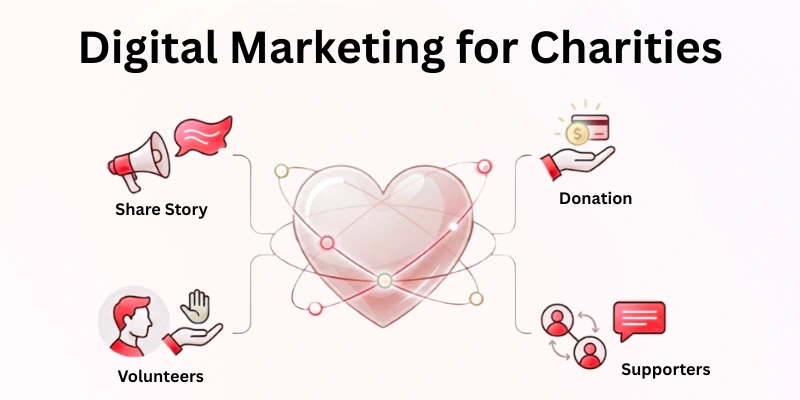
Through digital channels, like websites, social media, email, and search engines, charities can:
- Share their stories and impact
- Encourage donations
- Recruit volunteers
- Build long-term relationships with supporters
Digital marketing makes promotion more measurable, cost-effective, and far-reaching. Even small charities can reach thousands of people without spending heavily.
In short, digital marketing for charities is about using online tools strategically to grow awareness, engagement, and contributions while staying focused on the cause.
Creating a Digital Marketing Strategy for Charities
A clear digital marketing strategy helps charities focus their efforts, save time, and achieve measurable results. Without a plan, campaigns can feel scattered and less effective.
Here’s how to create one step by step:
1. Set Clear Goals
Define exactly what you want to achieve online. Goals should be specific, measurable, and time-bound. Examples:
- Increase online donations by 25% in 6 months
- Grow email newsletter subscribers by 1,000 in 3 months
- Gain 500 new social media followers every month
2. Define Your Target Audience
Know who you are trying to reach. Are they:
- Local community members?
- International donors?
- Volunteers or advocates?
3. Create Donor Personas
Build profiles representing your ideal supporters. Include:
- Age and location
- Interests and motivations
- Preferred online platforms
This helps tailor messages and content that resonate.
4. Choose the Right Marketing Channels
Not every platform is right for every charity. Focus on where your supporters are most active:
- Website for detailed information and donations
- Social media for engagement and storytelling
- Email for updates and nurturing relationships
- Paid campaigns for targeted outreach
5. Set a Budget and Timeline
Plan how much you’ll spend on tools, ads, or content. Create a calendar to schedule campaigns, posts, and email sequences. This ensures consistent messaging and reduces last-minute stress.
Tip: Start small with one or two channels, track results, then scale.
Best Digital Marketing Channels for Charities
Using the right digital channels helps charities reach the right people efficiently. Not every channel works for every charity, so it’s important to focus on the ones that bring the most impact.
1. Website Optimization for Charities
Your website is the foundation of all digital marketing efforts. A well-designed website encourages visitors to stay, learn about your mission, and donate. Key tips:
- Clear donation buttons: Make it easy to give with a prominent call-to-action.
- Mobile-friendly design: Most supporters browse on phones.
- Fast loading speed: Avoid losing visitors due to slow pages.
- Easy navigation: Organize content so people can quickly find impact stories, events, or volunteer opportunities.
2. SEO for Charities
Search engine optimization helps your charity appear in Google searches when people look for causes or ways to give. Strategies include:
- Using keywords related to your cause, like “donate to children’s charity”
- Writing blogs that share impact stories and success updates
- Implementing local SEO for community-focused projects
3. Social Media Marketing for Charities
Social media builds engagement and awareness. Tips for charities:
- Choose platforms your audience uses most (Instagram, Facebook, LinkedIn, TikTok)
- Share impactful stories, photos, and videos
- Post consistently and interact with followers to build a loyal community
4. Email Marketing for Nonprofits
Email is a direct line to supporters. Use it to:
- Send donation appeals or campaign updates
- Share success stories and impact reports
- Automate thank-you messages for donations
5. Google Ad Grants for Charities
Google offers free advertising through Google Ad Grants, giving nonprofits up to $10,000 per month in ad credit. Tips:
- Target keywords relevant to your cause
- Create simple ads that lead to donation pages
- Track results and refine campaigns for better performance
6. Paid Advertising for Fundraising Campaigns
Sometimes small investments in paid ads boost results quickly. Ideas:
- Facebook and Instagram ads targeting local donors
- Retargeting campaigns for people who visited your donation page but didn’t give
Content Marketing for Charities
Content marketing helps charities share their mission, engage supporters, and inspire donations. The right content makes people feel connected to your cause and more willing to help.
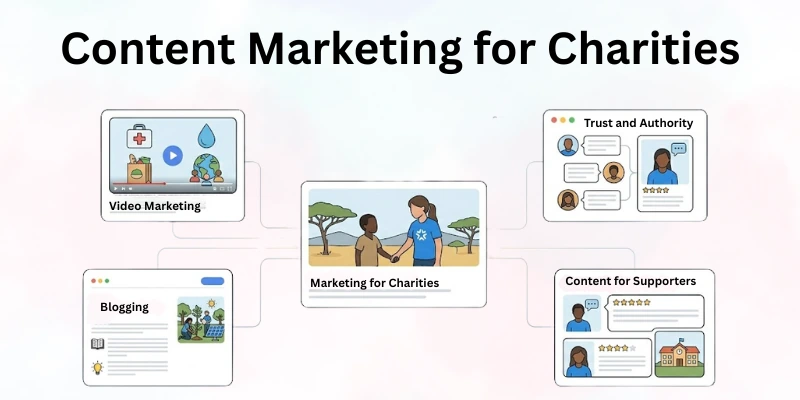
By creating valuable and authentic content, charities can build trust, increase awareness, and encourage more people to support their mission.
1. Impact Stories That Inspire Donations
Stories about real people or communities you’ve helped are powerful. They:
- Show tangible results of donations
- Build emotional connections
- Encourage supporters to take action
Example: Share a short story of a child whose life improved because of your programs, accompanied by a photo or video.
2. Video Marketing for Nonprofits
Videos are highly engaging and easy to share. Use them to:
- Highlight success stories
- Show behind-the-scenes work
- Promote fundraising campaigns
Even short 30-second videos can make a big impact on social media.
3. Blogging for Cause Awareness
Regular blog posts:
- Educate people about your mission and the issues you tackle
- Improve SEO, helping new supporters find you
- Offer tips or advice that aligns with your charity’s goals
Example: A charity focused on environmental issues can blog about “5 Simple Ways to Reduce Plastic Waste” while linking to donation campaigns.
4. User-Generated Content from Supporters
Encourage your volunteers or donors to share:
- Photos of them participating in events
- Testimonials about why they support your cause
- Social media posts using your campaign hashtags
This content builds trust and authenticity, showing real people backing your charity.
Using Automation and AI in Charity Marketing
Automation and AI help charities save time, reach more supporters, and personalize communications without adding extra workload. These tools make campaigns more efficient and improve engagement.
- Email Automation: Send welcome sequences, donation reminders, and thank-you messages automatically.
- Donation Follow-Ups: Automatically reach out to supporters after donations with updates or impact stories.
- AI for Content Creation: Generate social media captions, blog ideas, or email drafts quickly.
- Personalised Donor Journeys: Tailor messages based on supporter behaviour and preferences to increase engagement.
- Chatbots for Instant Support: Answer common questions and guide visitors to donate or volunteer.
- Automated Social Posting: Schedule posts across multiple platforms to maintain a consistent presence.
Measuring the Success of Digital Marketing for Charities
Tracking performance helps charities understand what works and what needs improvement. When you measure results regularly, you can make smarter decisions and increase your overall impact.
- Website Traffic: Monitor how many people visit your site and which pages they view most.
- Conversion Rate: Track how many visitors complete important actions like donating or signing up.
- Online Donations: Measure total funds raised through digital campaigns.
- Email Open and Click Rates: See how many supporters read and engage with your emails.
- Social Media Engagement: Analyze likes, shares, comments, and follower growth.
- Cost Per Donation: Calculate how much you spend to acquire each donation.
- Volunteer Sign-Ups: Track how many people register through online campaigns.
- Campaign Performance Reports: Review results after every campaign to identify strengths and gaps.
Tip: Review your data monthly. Focus more on the channels that deliver better results and adjust the ones that underperform.
Final Words
In this article on digital marketing for charities, we covered strategies, SEO, social media, content marketing, automation, and performance tracking. These tactics help charities increase online donations, grow supporters, and boost visibility.
Start with clear goals, optimize your website, focus on the most effective channels, and measure results. With the right digital marketing strategy for charities, you can expand your reach, engage supporters, and make a bigger impact faster.
Take action today and watch your charity thrive online. Goodbye, and best wishes for your mission!
FAQs: Digital Marketing for Charities
Here are the top FAQs on digital marketing for charities to help you boost donations and grow your online presence:
Digital marketing for charities allows organizations to connect with people online through websites, social media, and email campaigns. It expands reach beyond local communities to national and global audiences. More visibility means higher chances of donations, event participation, and supporter engagement.
Charities can attract donations by creating a user-friendly website with clear donate buttons. Sharing real-life impact stories through social media and emails motivates supporters. Running targeted campaigns with Google Ad Grants or Facebook ads also helps increase donations effectively.
Posting engaging stories, short videos, and photos helps supporters connect emotionally with your cause. Consistency in posting and interacting with followers builds trust and loyalty. Using hashtags, campaigns, and shareable content increases visibility and supporter engagement online.
Yes. Small charities can use free tools like Canva for graphics, Mailchimp for emails, and organic social media posts. Repurposing content and leveraging partnerships with local businesses or influencers reduces costs. Google Ad Grants also provides free advertising to eligible nonprofits, helping them reach more people without spending money.
Using tools like Google Analytics and social media insights helps track website visits, donation conversions, and engagement. Key metrics like email open rates, click-throughs, and campaign performance show what works best. Reviewing these results regularly helps charities optimize campaigns and improve fundraising success.
Short-form videos on Instagram and TikTok are highly effective for engagement. AI tools can help personalize emails and content for supporters. Peer-to-peer fundraising campaigns and interactive content, like quizzes or live streams, are also growing trends that boost donations and awareness.




- Be Respectful
- Stay Relevant
- Stay Positive
- True Feedback
- Encourage Discussion
- Avoid Spamming
- No Fake News
- Don't Copy-Paste
- No Personal Attacks
- Be Respectful
- Stay Relevant
- Stay Positive
- True Feedback
- Encourage Discussion
- Avoid Spamming
- No Fake News
- Don't Copy-Paste
- No Personal Attacks
