Shopify Marketing Strategies: Ultimate Guide to Growing Your Store
Published: 21 May 2026
Running a Shopify store is exciting, but even the best products can get lost in a crowded online marketplace. Every day, thousands of stores compete for attention, and customers have endless options. This is why marketing with Shopify is important; it can turn a small store into a profitable business.
In this guide, we’ll explore Shopify marketing strategies that are actionable, beginner-friendly, and proven to increase traffic, sales, and customer loyalty. From email marketing to social media, paid ads, SEO, and seasonal campaigns, you’ll get everything you need to grow your store.
Let’s get straight into the details and uncover everything you need to know!
Email & SMS Marketing for Shopify
Email and SMS marketing remain some of the most effective ways to engage Shopify customers. They allow you to send targeted messages, recover abandoned carts, and build relationships that lead to repeat purchases.
How to implement email & SMS campaigns:
- Collect emails and numbers: Use sign-up forms, checkout opt-ins, and pop-ups.
- Automate campaigns: Welcome messages, abandoned cart reminders, and product updates.
- Segment your audience: Target new vs. repeat buyers with relevant offers.
Shopify Marketing Tip: Personalize emails using the customer’s name or recommend products based on browsing behaviour.
Example: A fashion store sends a 10% discount SMS to new subscribers and recovers 6% of abandoned carts within 24 hours.
Social Media Marketing for Shopify Store
Social media is a powerful tool for driving traffic and sales. Platforms like Instagram, TikTok, and Facebook allow Shopify stores to showcase products, engage customers, and even sell directly.
Tips for social media success:
- Post short product tutorials or demo videos.
- Share behind-the-scenes content or user-generated content (UGC).
- Use Reels or TikTok videos to highlight products.
- Enable shopping tags for Instagram and Facebook to allow direct purchases.
Pro Tip: Interact with comments and DMs regularly to build trust and community.
Shopify Paid Advertising
Paid ads give your Shopify store instant visibility. Google Ads, Facebook Ads, and TikTok Ads allow precise targeting to potential buyers.
Steps to run effective ads:
- Identify your target audience using demographics and interests.
- Design visually appealing ads with strong offers.
- Test ad variations to see what converts best.
- Track ROI and adjust campaigns based on performance.
Pro Tip: Combine paid ads with organic strategies like email marketing for maximum results.
Influencer Marketing for Shopify
Influencers can expose your products to new audiences quickly. Micro-influencers (10K–50K followers) often drive higher engagement at lower costs.
How to collaborate effectively:
- Identify influencers whose audience aligns with your niche.
- Offer free products or commissions for sales generated.
- Provide unique discount codes or affiliate links.
- Track results using unique codes or analytics.
Example: A skincare Shopify store partners with beauty micro-influencers who create tutorials using their products, driving traffic and sales.
SEO & Content Marketing
Search Engine Optimization (SEO) helps your Shopify store appear in search results when people look for products you sell. Content marketing complements SEO by providing helpful, shareable content.
Steps to implement SEO and content marketing on Shopify store marketing:
- Conduct keyword research to find terms your audience searches for.
- Optimize product titles, descriptions, meta tags, and images.
- Create blog content such as how-to guides, comparisons, and tutorials.
- Repurpose blogs into social posts, videos, or infographics.
Tip: Use long-tail keywords for better chances of ranking and attracting targeted traffic.
Onsite Engagement & Popups
Popups are highly effective tools for converting visitors into subscribers or buyers when used strategically, offering timely offers and capturing attention without disrupting the browsing experience.
Best practices:
- Use exit-intent or scroll-triggered popups.
- Offer value like discounts, free shipping, or bonus gifts.
- Keep designs simple and non-intrusive.
Tip: Avoid showing too many popups at once; a single well-timed popup is more effective.
Reviews, Loyalty & Referral Programs
Customer reviews, loyalty programs, and referral incentives build trust and encourage repeat purchases.
How to set up these programs:
- Display product reviews prominently on product pages.
- Launch a loyalty program to reward repeat buyers.
- Offer referral discounts to encourage new customer acquisition.
Example: Give points for purchases and extra points when friends buy through referral links.
Upselling & Cross-Selling: Increase Average Order Value
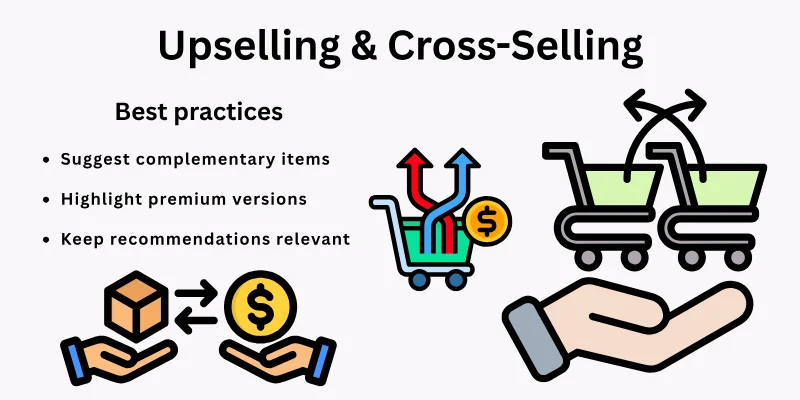
Upselling and cross-selling are powerful strategies that encourage buyers to add more items or choose higher-value products, increasing the average order value while enhancing the overall shopping experience.
Best practices:
- Suggest complementary items on product pages or checkout.
- Highlight premium versions of the product.
- Keep recommendations relevant and concise.
Tip: Use phrases like “Frequently Bought Together” or “Upgrade for Extra Benefits”.
Retargeting & Remarketing
Retargeting ads are an effective way to re-engage visitors who leave your store without making a purchase, reminding them of the products they viewed and encouraging them to complete their order.
How to implement retargeting:
- Install Meta Pixel or Google Remarketing on your Shopify store.
- Show ads with the exact products a visitor viewed.
- Offer incentives like discounts to encourage purchases.
Tip: Combine retargeting ads with email and SMS campaigns for maximum conversions.
Seasonal Campaigns
Seasonal campaigns drive sales by creating urgency. Holidays and special events are perfect for boosting revenue.
Ideas for campaigns:
- Limited-time offers for Black Friday, Valentine’s Day, Eid, or Christmas.
- Holiday bundles or gift sets.
- Countdown timers on product pages to increase urgency.
Example: Launch a “Holiday Gift Bundle” with a 72-hour discount to encourage immediate sales.
Shopify Marketing Tools to Boost Performance
Using the right tools saves time and enhances results. Shopify marketing tools help automate emails, popups, ads, and analytics.
Recommended tools:
- Klaviyo or Omnisend for email & SMS campaigns
- Plug in SEO for on-page optimization
- Smile.io or LoyaltyLion for loyalty programs
- Canva or Photoshop for creative ad visuals
Tip: Start with 1–2 tools and gradually add more as your store grows.
Wrapping Up
In this article, we have covered Shopify marketing strategies that can help your store get more visitors, make more sales, and keep customers coming back. Using a mix of email campaigns, social media, SEO, influencer partnerships, paid ads, popups, and marketing tools will give you the best results.
Tip: Pick 1–2 strategies this week, try them out, watch the results, and improve as you go. If you keep doing this, your Shopify store can grow steadily and get loyal customers.
Want to master Shopify marketing strategies? These FAQs have the answers and tips you need to grow your store.
FAQs: Shopify Marketing Strategies
We’ve answered some common questions about Shopify marketing below to help you get better results from your store:
Shopify marketing strategies are plans you use to get more people to visit your store and buy your products. These plans include things like using email campaigns, social media posts, ads, and SEO to reach and engage your customers.
Marketing helps more people find your store and understand what you sell. It makes your brand visible online, brings more visitors, and turns those visitors into buyers. A good plan also helps you keep customers returning.
These steps guide you on how to promote a Shopify store:
- Post regularly on social media.
- Write helpful blog posts about your products.
- Collect emails and send newsletters.
- Ask customers to share reviews and photos.
These steps help your store grow naturally without paying for ads.
The best places to market your store are where your customers spend time. This often includes social media like Instagram or TikTok, search engines like Google (via SEO), email newsletters, and other Shopify promotion methods to share special offers and updates.
For most stores, posting 3–5 times a week keeps your audience interested without overwhelming them. Share product photos, short videos, user stories, and simple tips that relate to your brand.
Start with a plan that includes email marketing, social posts, and basic SEO for your product pages. Focus on one or two channels first, learn what works, and then add more over time.
Watch simple numbers like website visits, email signups, and sales growth. If these go up after you use new strategies or Shopify advertising services, it means your marketing is working. Tracking results helps you repeat what works and improve what doesn’t.




- Be Respectful
- Stay Relevant
- Stay Positive
- True Feedback
- Encourage Discussion
- Avoid Spamming
- No Fake News
- Don't Copy-Paste
- No Personal Attacks
- Be Respectful
- Stay Relevant
- Stay Positive
- True Feedback
- Encourage Discussion
- Avoid Spamming
- No Fake News
- Don't Copy-Paste
- No Personal Attacks
