Pros and Cons of Remarketing for Growth in 2026
Published: 17 Apr 2026
Did you know that businesses that use remarketing can increase their sales by up to 70%? Remarketing shows ads to people who have already visited your website, reminding them about your products.
Understanding the pros and cons of remarketing helps you use it wisely and avoid common mistakes.
In this article, we will explore how remarketing can boost your sales, save ad costs, and improve customer engagement. You’ll also learn the challenges to watch out for to get the best results.
Let’s get started!
Benefits of Remarketing
Remarketing helps businesses reconnect with people who have already visited their website. It gives brands another chance to turn visitors into customers.
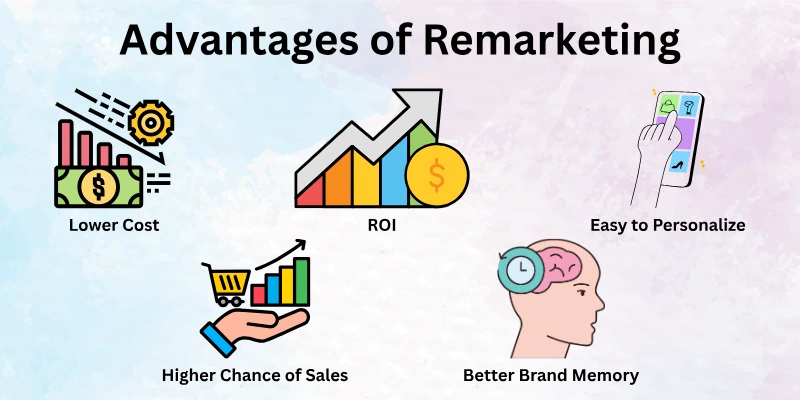
Below is a list of the main advantages of remarketing that show why many businesses use this marketing strategy:
- Higher Chance of Sales
- Better Brand Memory
- Lower Cost Than Some Ads
- Easy to Personalize
- Good Return on Investment (ROI)
Now, let’s explore each advantage in more detail.
1. Higher Chance of Sales
Remarketing helps you reach people who have already visited your website or shown interest in your product. These people are more likely to buy because they already know your brand. Showing them relevant ads reminds them to complete a purchase.
- Bring back visitors who left without buying
- Encourage people to try products they viewed
- Increase chances of repeat purchases
2. Better Brand Memory
When people see your ads again and again, they remember your brand. This helps your brand stay in their mind even if they don’t buy right away. Remarketing keeps your name visible and builds trust over time.
- Make your brand familiar and trusted
- Stay ahead of competitors in memory
- Help customers recognize your logo and products
3. Lower Cost Than Some Ads
Remarketing often costs less than running ads to totally new people. You target only people who have already visited your site, so your money works smarter. You don’t waste budget on random viewers.
- Save money on ad campaigns
- Focus the budget on people more likely to buy
- Reduce wasted impressions
4. Easy to Personalize
You can show different ads to different people based on what they did on your site. Personal ads feel more relevant and catch attention better. This makes people more interested in clicking and buying.
- Show ads for specific products they viewed
- Use their location or interests to customize ads
- Offer discounts or deals based on past activity
5. Good Return on Investment (ROI)
Since remarketing targets interested visitors, you often earn more from your ad spend. You spend money wisely and get higher chances of sales. A strong ROI means your advertising is working well.
- Get more sales for the same budget
- Track which ads bring the most profit
- Improve campaign results over time
Disadvantages of Remarketing
Remarketing can help businesses grow, but it also has some drawbacks. If you do not manage it properly, it may affect user experience and marketing results.
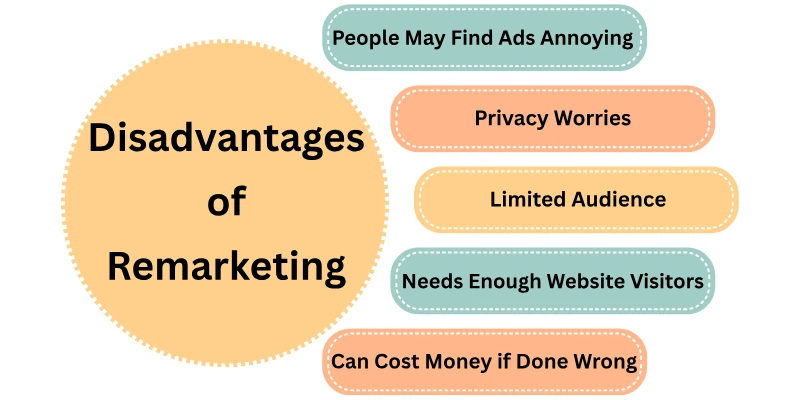
Here are some common cons of remarketing that businesses should understand before using this strategy:
- People May Find Ads Annoying
- Privacy Worries
- Limited Audience
- Needs Enough Website Visitors
- Can Cost Money if Done Wrong
Next, let’s examine these disadvantages in more detail.
1. People May Find Ads Annoying
Seeing the same ad repeatedly can irritate some people. Too many reminders may make them ignore your brand or even feel frustrated. It’s important to show ads carefully.
- Overexposure can reduce interest in your product
- Can annoy potential customers if ads repeat too much
- May hurt your brand image if not managed properly
2. Privacy Worries
Remarketing tracks visitors’ behaviour online. Some people do not like being tracked. Privacy concerns can make them avoid your website or ads.
- Users may block cookies or ads
- Some people may not trust your brand
- Can limit your audience if privacy settings are strict
3. Limited Audience
Remarketing only targets people who have already visited your website. This means you can’t reach brand new visitors with these ads.
- Smaller pool of potential customers
- Hard to grow new audiences with remarketing alone
- Only works well if your website already has traffic
4. Needs Enough Website Visitors
If your site has very few visitors, remarketing won’t work well. You need a steady flow of people to make ads effective.
- Low traffic reduces ad reach
- The campaign may not generate enough clicks
- Hard to test ad performance with a small audience
5. Can Cost Money if Done Wrong
If you don’t plan your remarketing properly, you can waste money. Showing irrelevant ads or targeting the wrong people lowers profit.
- Ads may appear to uninterested people
- Budget can run out quickly without results
- Poor setup can reduce overall campaign effectiveness
Examples of Remarketing Mistakes
Many businesses make simple mistakes when they run remarketing campaigns. These mistakes can reduce results and waste advertising money.
Learning about them can help you run better and smarter remarketing ads.
- Showing the same ad too often, which can make users annoyed and ignore your brand
- Not switching ad messages, which makes campaigns look boring and repetitive
- Not matching the right ad with the right visitor, which reduces interest and clicks
Quick Tips to Improve Remarketing
You can improve remarketing results by using smart strategies. Small changes in your ads and targeting can help you reach the right people and increase conversions.
Here are some helpful tips to improve remarketing campaigns:
- Change ad design often to keep ads fresh and interesting
- Don’t show one ad too many times to avoid ad fatigue
- Divide visitors into groups based on their actions
- Use social media remarketing to reach more potential customers
Conclusion
So guys, it’s time to wrap up. In this article, we’ve covered the pros and cons of remarketing in detail. Remarketing can help businesses bring back visitors and increase sales, but it works best when you use it carefully.
From my experience, the best approach is to show helpful ads, limit how often people see them, and target the right audience.
If you plan your campaigns well, remarketing can become a strong part of your marketing strategy. Now try these tips and start improving your remarketing campaigns today.
FAQs: Pros and Cons of Remarketing
Here are some common questions about remarketing, answered in simple and easy-to-understand language:
Remarketing does not always cost a lot of money. You can set a small daily budget and only pay when someone clicks your ad. For many small businesses, remarketing is cheaper than broad advertising.
Yes, remarketing can improve conversion rates because it targets interested visitors. People who have already seen your site are more likely to buy than brand‑new users. This helps you get more sales from your ads.
Common mistakes are showing the same ad too often and not updating ad messages. Another mistake is targeting people who have already bought without changing the ad. These errors can waste money and annoy visitors.
Yes, small businesses can use remarketing to connect with visitors again. But it works best when the site has enough traffic to support ads. Starting small and testing results helps you avoid overspending.
Remarketing ads should run long enough to remind people, but not so long that they feel annoyed. Many marketers start with 30–60 days of ad visibility. You can adjust based on what works best for your audience.
Yes, you can use remarketing on social media like Facebook and Instagram. These platforms allow you to show ads to visitors who came to your website. Social media remarketing helps you reach users in many places online.
You can measure success by tracking clicks, conversions, and return on ad spend (ROAS). Tools like Google Analytics and ad platforms help you see who returned and bought. These numbers show if your remarketing strategy is working.



- Be Respectful
- Stay Relevant
- Stay Positive
- True Feedback
- Encourage Discussion
- Avoid Spamming
- No Fake News
- Don't Copy-Paste
- No Personal Attacks
- Be Respectful
- Stay Relevant
- Stay Positive
- True Feedback
- Encourage Discussion
- Avoid Spamming
- No Fake News
- Don't Copy-Paste
- No Personal Attacks
