SEO for Travel Agencies: Rank Higher, Earn More Bookings
Published: 20 May 2026
Travel websites operate in one of the most competitive online markets. Every day, people search for destinations, hotels, tour packages, and travel tips. Large travel brands spend millions on ads, but smart travel businesses rely on SEO to attract free, long-term traffic.
SEO is not only about ranking on Google. It helps travellers find useful information, plan their trips with confidence, and book the right services at the right time. If your travel website does not appear in search results, you lose potential customers before they even discover your brand.
In this guide, you will learn step by step how SEO for travel agencies works, including:
- How travellers search online and what they look for
- How to research and choose the right travel keywords
- How to optimize your website structure, pages, and content
- How to use technical SEO, link building, and local SEO to improve rankings
- How to avoid common SEO mistakes and prepare for seasonal and international traffic
What Is SEO for Travel Sites?
SEO for travel sites is the process of improving a website so it ranks higher on Google when people search for travel-related topics.
For example, if someone searches:
- “Best places to visit in Bali”
- “Cheap hotels in Dubai”
- “Umrah packages from Pakistan”
A well-optimised travel site appears on the first page, increasing visibility and bookings.
How SEO works for travel websites:
- Use keywords that travellers actually search for.
- Create helpful, detailed content about destinations, hotels, and travel tips.
- Make the website fast, mobile-friendly, and secure.
- Build trust through backlinks, reviews, and authority content.
Travel SEO is different from other niches because:
- Searches change with seasons and trends.
- Users search with different intentions, like planning vs booking.
- Content must be detailed, accurate, and updated regularly.
- Both local and international SEO are important.
Who needs travel SEO:
- Travel agencies
- Tour operators
- Hotels and accommodations
- Travel blogs and guides
- Destination websites
The goal is not just traffic; it’s to attract the right people at the right time and turn them into bookings or leads.
3. How Travellers Search Online (Search Intent Breakdown)
Understanding search intent is crucial for travel SEO. People search differently depending on what stage of planning they are in.
Stage 1: Dreaming Stage
- Users are exploring ideas.
- Examples: “Top honeymoon destinations,” “Best countries to visit,” “Budget travel ideas.”
Stage 2: Planning Stage
- Users compare options and make choices.
- Examples: “Best time to visit Bali,” “Italy 7-day itinerary,” “Dubai trip cost.”
Stage 3: Booking Stage
- Users are ready to purchase or book.
- Examples: “Book hotel in Mecca,” “Cheap flights to London,” “Turkey tour package price.”
A successful travel website should have content for all three stages. This increases visibility and conversions.
Understanding Google’s Ranking Factors for Travel Websites
Google uses many factors to decide which travel websites rank higher. Some of the most important include:
- Content Quality: Detailed, accurate, and helpful content about destinations, trips, and travel services.
- User Experience (UX): Easy navigation, clear structure, and fast-loading pages.
- Website Speed: Fast websites keep users and rank better.
- Mobile-Friendliness: Most travel searches happen on mobile.
- Trust & Authority: Backlinks, reviews, and reliable information.
- Freshness: Up-to-date content, especially for seasonal or event-based travel.
Google favours travel websites that provide real value to users, answer questions, and are easy to use.
Keyword Research for Travel Sites (In-Depth)
Keyword research is the foundation of SEO. Choosing the right keywords ensures you attract relevant travellers.
Types of Travel Keywords
There are many types of travel keywords, and each type reflects a different stage of the traveller’s planning and booking process.
- Destination Keywords: “Paris travel guide,” “Maldives tourist attractions”
- Hotel and Accommodation Keywords: “Best hotels in Istanbul,” “Budget hotels in Bangkok”
- Tour Package Keywords: “Umrah package price,” “Europe tour packages from Pakistan”
- Informational Keywords: “Best time to visit Turkey,” “Travel tips for first-time travellers.”
- Local Keywords: “Travel agency in Karachi,” “Tour operator in Lahore”
How to Find the Right Keywords
- Google autocomplete and “People Also Ask”
- Competitor research
- Keyword research tools (Ahrefs, SEMrush, Ubersuggest)
- Focus on long-tail keywords for high conversion and easier ranking
Website Structure and SEO Architecture for Travel Sites
A clear website structure helps users and Google navigate your site. Best practices:
- Categories and subcategories: Organize by destination, tour type, or service.
- Destination-based URLs: example.com/europe/italy/rome
- Internal linking: Connect related pages like destination guides, itineraries, and hotels.
- Avoid orphan pages (pages with no links from other pages).
A well-organized structure improves rankings and user experience.
On-Page SEO for Travel Websites (Complete Guide)
On-page SEO ensures each page is optimized for search engines and users.
Page Titles
- Include the main keyword and the destination
- Be clear and attractive
- Example: “Best Time to Visit Turkey for Budget Travellers”
Meta Descriptions
- Write naturally, including the main keyword
- Summarize the page content
- Example: “Discover the best time to visit Turkey with travel tips, weather, and must-see attractions.”
URLs
- Short and readable
- Include the keyword naturally
- Example: example.com/things-to-do-in-bali
Headings (H1, H2, H3)
- H1: Main page topic (one per page)
- H2: Main sections
- H3: Sub-sections or details
Content Optimization
- Place keywords naturally
- Use related terms (semantic keywords)
- Avoid keyword stuffing
Content Strategy for Travel SEO (Core Section)
Content is the backbone of travel SEO because it attracts, informs, and engages travellers. It provides useful tips, showcases destinations, and guides visitors through planning and booking.
Destination Guides
- Must include overview, top attractions, food, culture, transport, costs, and safety tips
Travel Itineraries
- Detailed day-wise plans
- Costs and travel tips
- Example: “7 Days Turkey Travel Itinerary”
Travel Blogs
- Target informational keywords
- Seasonal tips, travel hacks, mistakes to avoid
Commercial Pages
- Tour packages
- Hotels and services
- Booking-focused content
Helpful, human-friendly content builds trust and ranks better.
Image and Visual SEO for Travel Websites
Travel websites rely on images. Optimized images improve speed and ranking.
- Compress images to reduce file size
- Use descriptive file names and alt text
- Use modern formats (WebP, JPEG 2000)
- Enable lazy loading
- Example alt text: “Hot air balloons flying over Cappadocia, Turkey”
Technical SEO for Travel Sites
Technical SEO ensures your website works well and is crawlable.
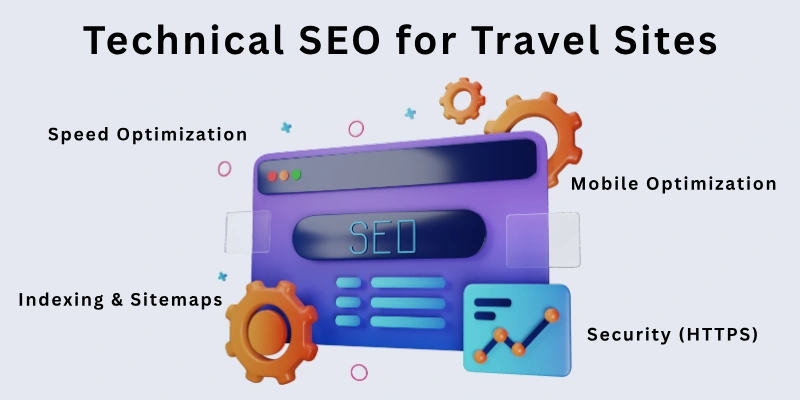
Speed Optimization
- Use fast hosting
- Compress images
- Reduce unnecessary scripts
- Use caching
Mobile Optimization
- Mobile-friendly design
- Readable text and buttons
- Fast loading on phones
Indexing & Sitemaps
- Submit XML sitemap to Google
- Ensure all pages are indexable
Security (HTTPS)
- Builds trust
- Google prefers secure sites
Local SEO for Travel Agencies and Tour Operators
Local SEO helps travel businesses attract customers in their area.
- Optimize Google Business Profile
- Add accurate NAP details (Name, Address, Phone)
- Collect reviews and upload real photos
- Create location-specific landing pages
Local keyword examples:
- “Travel agency in Karachi”
- “Tour operator in Lahore”
Link Building Strategies for Travel Websites
Backlinks improve authority and rankings.
High-Quality Link Sources
- Travel blogs
- Tourism boards and local websites
- Hotel or partner websites
- Travel directories
Link Building Methods
- Guest posting
- Blogger outreach
- Digital PR campaigns
- Content that naturally attracts links
User Experience and Conversion Optimization
Google values sites that users love.
Improve UX by:
- Clear menus and navigation
- Easy booking forms
- Trust signals like reviews, badges, and testimonials
- Fast-loading pages
- Clear calls to action
Better UX = higher rankings + higher bookings
Seasonal SEO and Trend-Based Travel Content
Travel searches are seasonal.
- Plan content for summer, winter, holidays, and festivals
- Update seasonal pages early
- Example: “Eid Umrah packages,” “Summer Europe tours”
International SEO for Travel Websites
If targeting multiple countries:
- Use Hreflang tags for languages
- Multi-language content
- Local currency options
- Region-specific pages
- Example: “Flights to Dubai for UK travellers”
Common SEO Mistakes Travel Sites Must Avoid
Even the best travel websites can struggle with SEO if they make common mistakes. Avoiding these errors helps your site rank higher, attract more visitors, and convert them into bookings.
Here are the key SEO mistakes travel sites often make:
- Duplicate Content: Copying the same information across multiple pages.
- Thin Content: Pages with very little useful information.
- Slow Website Speed: Pages that take too long to load.
- Poor Mobile Experience: Non-responsive or hard-to-use mobile pages.
- Keyword Stuffing: Overusing keywords unnaturally in content.
- Ignoring Seasonal Updates: Failing to update content for holidays, festivals, or peak travel times.
- Broken Links: Links that lead to non-existent pages or errors.
- Missing Meta Tags: Missing or poorly written titles and descriptions.
- Weak Internal Linking: Pages are not properly connected to help navigation or SEO.
- Ignoring User Experience (UX): Complicated navigation, hard-to-find information, or confusing design.
Conclusion
In this article, we have covered SEO for travel agencies and how it helps travellers find the right information while making your site easy to use.
My personal recommendation is to focus on:
- Keyword research and intent
- Helpful, detailed content
- Fast, mobile-friendly website
- Trust-building and backlinks
- Seasonal and international strategy
A consistent, high-quality SEO approach will bring steady traffic, build authority, and increase bookings for years to come.
FAQs: SEO for Travel Website
Here are some common questions about SEO for travel websites, explained in simple ways to help you improve your site and get more visitors:
SEO for travel sites is the process of optimizing a travel website so it ranks higher in search engines. By using a proper travel SEO strategy, your website can attract more visitors looking for destinations, tours, hotels, or travel tips. This includes SEO for travel blogs, tour operators, and all types of travel businesses.
SEO for travel blogs helps your posts appear in search results when users look for travel tips, destinations, or itineraries. Without SEO, even the best travel content may not reach the right audience. Implementing SEO for travel bloggers ensures your content gets traffic, builds authority, and grows your blog over time.
SEO for tour operators focuses on optimizing websites for local and international travel searches. This includes creating landing pages for tour packages, optimizing content with destination keywords, and following tourism SEO best practices. A strong SEO strategy helps tour operators get more inquiries and bookings online.
Some key SEO tips for travel websites include:
- Targeting the right travel keywords for your niche
- Creating detailed destination guides and itineraries
- Optimizing images and videos for faster loading
- Building backlinks from relevant travel sites
- Ensuring a mobile-friendly and fast website performance
These steps are crucial for any SEO for travel sites strategy.
A good travel SEO strategy starts with understanding your audience and search intent. Then, focus on:
- Keyword research (destination, tours, hotels)
- High-quality content for blogs, guides, and packages
- Technical SEO (speed, mobile-friendliness, site structure)
- Link building and local SEO
Following this plan ensures your travel website ranks higher and attracts the right visitors.
Yes! Even small blogs can rank well by targeting long-tail keywords, creating unique content, and following SEO practices for travel bloggers. Focus on providing detailed, helpful content that travellers cannot find elsewhere.
Tourism SEO refers to SEO specifically for the travel and tourism industry. It includes strategies for travel agencies, tour operators, hotels, and destinations. Tourism SEO focuses on driving organic traffic, improving bookings, and increasing visibility for travel websites and blogs.
Travel content should be updated regularly to stay relevant. Update guides, itineraries, and packages at least once a year or whenever details change. This is an important part of any SEO for travel industry strategy to maintain rankings.




- Be Respectful
- Stay Relevant
- Stay Positive
- True Feedback
- Encourage Discussion
- Avoid Spamming
- No Fake News
- Don't Copy-Paste
- No Personal Attacks
- Be Respectful
- Stay Relevant
- Stay Positive
- True Feedback
- Encourage Discussion
- Avoid Spamming
- No Fake News
- Don't Copy-Paste
- No Personal Attacks
