Digital Marketing for Psychologists to Grow Online in 2026
Published: 24 Jun 2026
Digital marketing for psychologists means using online channels to help people discover your psychology practice, understand your services, and decide whether your practice is right for them. It includes your website, search engines, educational content, social media, directories, email, and online advertising.
People often research a psychologist online before making contact. They may look at your qualifications, areas of expertise, services, location, and professional information. A clear online presence makes it easier for the right people and referral sources to understand what you offer.
In this guide, you’ll learn practical digital marketing strategies for psychologists, from building a professional website and improving search visibility to creating educational content, promoting psychology services, and protecting professional boundaries online.
Benefits of Marketing for Psychologists
A strong online presence can help psychologists make their services easier to discover and understand. It can also help potential clients and professional referral sources learn more about a psychologist before making contact.
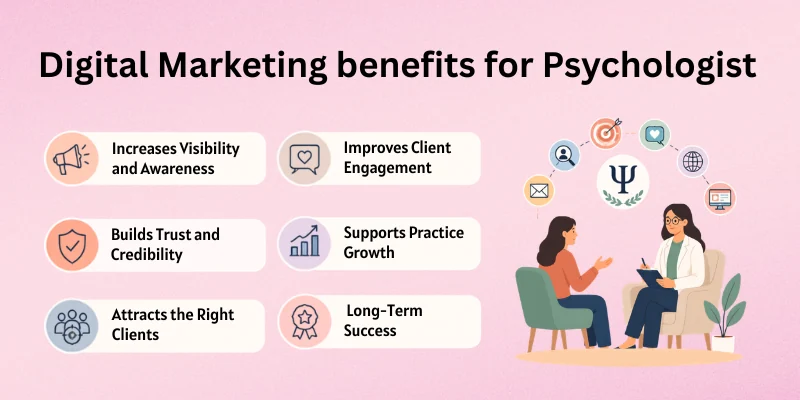
Here are some important benefits:
- Improve Online Visibility: SEO, professional directories, and a well-structured website can help people find your practice when they search for psychological services.
- Show Your Professional Expertise: Your website gives you space to explain your qualifications, experience, areas of specialization, and professional approach.
- Explain Psychology Services Clearly: People may not know what a psychological assessment, consultation, or specific service involves. Clear online information can answer these questions before they contact you.
- Reach the Right Audience: You can create content and service pages around the areas you actually work in, such as child psychology, clinical psychology, assessments, or other specialties.
- Build Professional Credibility: Helpful educational content and accurate professional information can give visitors a better understanding of your expertise.
- Support Referral Relationships: An informative website can help doctors, schools, attorneys, and other professionals understand when your services may be appropriate for a referral.
- Make Contact Easier: Clear appointment information, contact details, and service descriptions reduce confusion for people who are considering your practice.
Digital marketing should support your professional practice, not replace the quality of your psychological services.
Digital Marketing Strategies for Psychologists
Psychologists can use several online channels to improve visibility and communicate their expertise. You do not need to use every platform at once.
Start with the areas that match your services, audience, and practice goals.
1. Build a Professional Psychology Website
Your website is often one of the first places people look when researching a psychologist. It should quickly explain who you are, what services you provide, and how someone can contact your practice.
Focus on these areas:
- Create clear service pages: Give each major service its own page when appropriate. For example, you may have separate pages for psychological assessments, child psychology, clinical services, or consultation.
- Explain your qualifications: Include relevant education, professional credentials, areas of specialization, and experience.
- Make navigation simple: Visitors should be able to find your services, About page, contact information, and appointment details without searching through multiple pages.
- Make the website mobile-friendly: Your pages should work properly on phones, tablets, and computers.
- Add clear contact options: Tell visitors how they can request an appointment or contact your practice.
- Answer common questions: Explain what a first consultation involves, who your services are for, and what people should expect.
A psychology website should feel professional and informative without making exaggerated promises about treatment outcomes.
2. Use SEO for Psychologists
SEO helps your psychology practice appear when people search for relevant services online.
Instead of targeting broad terms alone, create pages around the services and locations that genuinely match your practice.
For example:
- “psychologist in Chicago”
- “clinical psychologist in Chicago”
- “child psychologist in Chicago”
- “psychological assessment in Chicago”
- “psychologist for anxiety”
- “online psychologist”
You can improve your SEO by:
- Using a clear page title and H1 heading
- Creating separate pages for important services
- Adding location information when you serve a specific area
- Writing useful answers to common psychology questions
- Improving internal links between related pages
- Keeping your contact and professional information accurate
- Checking whether important pages are indexed by search engines
If you have a local practice, also keep your Google Business Profile and relevant professional directory profiles accurate and consistent.
The goal is not to place the same keyword throughout every page. Each page should answer a clear question or describe a specific service.
3. Highlight Your Professional Expertise
One major opportunity for psychologists is to make their professional background easy to understand.
Create a strong About page that explains:
- Your education
- Professional credentials
- Areas of specialization
- Relevant experience
- Services you provide
- Professional approach
- Professional memberships, where relevant
- Publications or research, if applicable
You can also create an author or professional profile for educational articles published on your website.
This information helps visitors understand who is behind the practice and why a particular service may be relevant to them.
Keep all credentials and professional claims accurate and current.
4. Create Psychology-Focused Content
Content marketing gives psychologists a way to educate people before they contact the practice. Instead of publishing generic posts simply to use keywords, answer questions your audience actually has.
Useful topics may include:
- What happens during a psychological assessment?
- What should I expect from an initial psychology consultation?
- When should someone consider a psychological evaluation?
- What is the difference between different psychology services?
- How does psychological testing work?
- What questions should I ask before choosing a psychologist?
- How can parents prepare a child for an assessment?
You can publish this information through:
- Blog posts
- Educational videos
- FAQs
- Downloadable resources
- Webinars
- Professional guides
Keep educational content general. Avoid turning public comments, blog posts, or social media discussions into individual clinical advice.
4. Social Media Marketing for Psychologists
Social media can help psychologists share educational information and make their professional expertise more visible. You do not need to be active on every platform. Choose the channels that fit your audience and professional goals.
Content ideas include:
- Simple explanations of psychology concepts
- Short educational videos
- Answers to common general questions
- Research findings explained in plain language
- Information about your services
- Announcements about educational events
- General mental health resources
Keep professional boundaries clear. Do not discuss identifiable client information or provide personal diagnoses through comments or direct messages. You can also make it clear on your social profiles that general online interaction does not create a professional relationship.
6. Promote Specific Psychology Services
Avoid making your website one large page that lists every service you provide. If you offer several distinct services, consider creating a dedicated page for each important service.
For example:
- Psychological Assessment: Explain what the assessment is, who it may be appropriate for, what the process involves, and how someone can request more information.
- Child Psychology: Explain the types of concerns you work with, who can contact the practice, and what parents can expect.
- Clinical Psychology: Explain the services you actually provide and the types of concerns you work with.
- Consultation Services: Explain who can request a consultation and what the consultation includes.
Only promote services that you actually offer and are qualified to provide.
7. Build Referral Relationships Online
Digital marketing does not have to focus only on people searching for a psychologist. Professional referral sources can also find your practice online. Depending on your area of practice, these may include:
- Physicians
- Psychiatrists
- Pediatricians
- Schools
- Other mental health professionals
- Attorneys
- Community organizations
Create a professional referral page that explains your services, referral process, contact information, and the types of cases or services you accept. You can also maintain professional profiles on relevant directories and organizations.
The goal is to make it easy for a potential referral source to understand what you do and when a referral may be appropriate.
8. Use Paid Advertising Carefully
Paid advertising can increase visibility for specific services, but it should support a strong website rather than replace one.
Psychologists may use search advertising for terms related to services they actually provide, such as:
- “child psychologist near me”
- “psychological assessment near me”
- “clinical psychologist in [city]”
- “online psychologist”
Before running ads:
- Make sure your landing page matches the advertisement.
- Use accurate service descriptions.
- Avoid promises about treatment outcomes.
- Check current advertising and professional requirements.
- Make sure your contact and appointment information is easy to find.
Start with a focused campaign rather than advertising every service at once.
9. Market Telepsychology Services
If you provide online psychological services, make that information easy to find.
Create a dedicated telepsychology page that explains:
- Whether you offer online appointments
- Who can use the service
- How appointments work
- What technology clients need
- How to request an appointment
- Any location or licensing restrictions that apply
Do not assume that online services can be provided everywhere. Make your service area and professional requirements clear.
You can then link to the telepsychology page from your homepage, relevant service pages, and other appropriate marketing channels.
10. Track Your Marketing Results
Tracking your results helps you understand which parts of your digital marketing are bringing useful traffic and inquiries.
You can monitor:
- Organic search traffic
- Search impressions and clicks
- Important keyword rankings
- Website visitors
- Visits to service pages
- Contact form submissions
- Appointment requests
- Calls or other contact actions
- Advertising costs and results
- Referral sources
You can also ask new clients how they found your practice as part of your normal intake process, provided your process follows applicable privacy and professional requirements.
Review your results regularly instead of changing your strategy every few days.
Ethical Considerations for Psychologist Marketing
Marketing a psychology practice requires more care than simply promoting a general business. Psychologists should make sure their online information is accurate, avoid misleading claims, protect client confidentiality, and maintain appropriate professional boundaries.
Pay attention to:
- Accurate credentials: Only list qualifications, licenses, certifications, and specialities that you actually hold.
- Honest claims: Avoid promising specific treatment outcomes or suggesting that a particular result is guaranteed.
- Client privacy: Never share identifying client information in marketing content.
- Social media boundaries: Keep public interactions professional and avoid providing individualized clinical advice online.
- Reviews and testimonials: Do not assume that standard review-marketing tactics are appropriate for psychological services. Professional rules and local requirements may restrict testimonials or how psychologists interact with public reviews.
- Advertising rules: Check the professional and licensing requirements that apply to your location before launching campaigns.
Ethical requirements can vary by jurisdiction and professional body, so psychologists should check the rules that apply to their own practice.
Common Digital Marketing Mistakes Psychologists Should Avoid
A few common mistakes can make a psychology practice harder to find or understand online.
- Using the same page for every service: A single generic services page may not explain your individual services well. Create dedicated pages when a service deserves more detailed information.
- Hiding professional credentials: Your education, qualifications, and areas of expertise should be easy to find. Visitors should not have to search through several pages to understand your professional background.
- Writing only for search engines: Adding keywords repeatedly does not make content useful. Write for people first and use search terms naturally.
- Giving individualized advice on social media: Public comments are not a suitable place for diagnosis or personal psychological advice. Keep social content educational and general.
- Making unsupported claims: Avoid statements that guarantee results or make claims you cannot support.
- Ignoring local search: If you provide in-person services, make sure your location and service area are clear across your website and relevant profiles.
- Treating every marketing channel as necessary: You do not need to be active on every social platform, publish every week, and run ads at the same time. Choose channels that match your practice.
- Forgetting to update information: Review your website regularly. Update old contact details, services, credentials, appointment information, and outdated content.
Final Thoughts
In this article, we’ve explained digital marketing for psychologists in detail. Every psychologist can benefit by learning how these strategies work and using them to reach and educate clients.
I suggest starting with creating helpful content and staying active online, because this not only supports your clients but also makes your practice more trusted.
Don’t wait, try one marketing tactic this week and see how it helps your practice grow.
FAQs: Digital Marketing for Psychologists
Here are some of the most frequently asked questions about marketing strategies for psychologists:
Digital marketing for psychologists includes all online strategies used to promote a therapy practice and attract clients. It covers websites, SEO, social media, email marketing, and paid ads. These tools help psychologists reach people searching for mental health support, therapy sessions, or counselling online.
Psychologists can optimize their website by creating clear service pages for therapy types like CBT, trauma therapy, and couples counselling. Adding easy online booking, professional design, and mobile-friendly pages makes it simple for clients to schedule sessions. A well-optimized website also improves search rankings, helping clients find your practice online.
Instagram, Facebook, and LinkedIn are ideal platforms for psychologists to share mental health tips, therapy insights, and educational content. Posting regularly and engaging with followers builds trust and helps potential clients feel connected to your practice. Social media also increases visibility for people searching for therapy and mental health support online.
Psychologists should create blogs, videos, and downloadable guides that explain therapy approaches, mental health tips, or coping strategies. This content educates potential clients and positions the psychologist as an expert in the field. SEO-optimized content also helps the practice appear in searches for counselling, therapy sessions, or mental health support.
Psychologists can send newsletters with mental wellness tips, updates about therapy sessions, or links to educational content. Collecting emails ethically through downloadable guides or sign-up forms allows for personalized communication. Email marketing helps psychologists stay connected with clients while encouraging bookings and repeat therapy sessions.
Yes, paid advertising like Google Ads or social media campaigns helps psychologists reach clients actively searching for therapy or counselling online. Ads can target keywords such as “child psychologist near me,” “online therapy for anxiety,” or “couples counselling.” Paid campaigns increase visibility, attract new clients, and complement other marketing strategies.




- Be Respectful
- Stay Relevant
- Stay Positive
- True Feedback
- Encourage Discussion
- Avoid Spamming
- No Fake News
- Don't Copy-Paste
- No Personal Attacks
- Be Respectful
- Stay Relevant
- Stay Positive
- True Feedback
- Encourage Discussion
- Avoid Spamming
- No Fake News
- Don't Copy-Paste
- No Personal Attacks
