Digital Marketing for Recruitment Agencies in 2026
Published: 28 Jul 2026
Digital marketing for recruitment agencies means using the internet to find and hire the best candidates. It helps recruiters post jobs online, share them on social media, use emails, and appear in search results so more people can see the opportunities.
This method matters because most job seekers look for work online, and it helps hiring teams reach the right candidates faster, save time, and reduce costs.
In this article, we will cover why digital marketing is important for recruitment, the key strategies to use, tools that make hiring easier, tips for writing job ads, building your employer brand, improving candidate experience, and how to measure success.
Why Recruiters Need Digital Marketing
Most job seekers now use the internet to search for jobs. Traditional hiring methods alone cannot reach all potential candidates. Digital marketing helps recruiters connect with the right people faster and more efficiently.
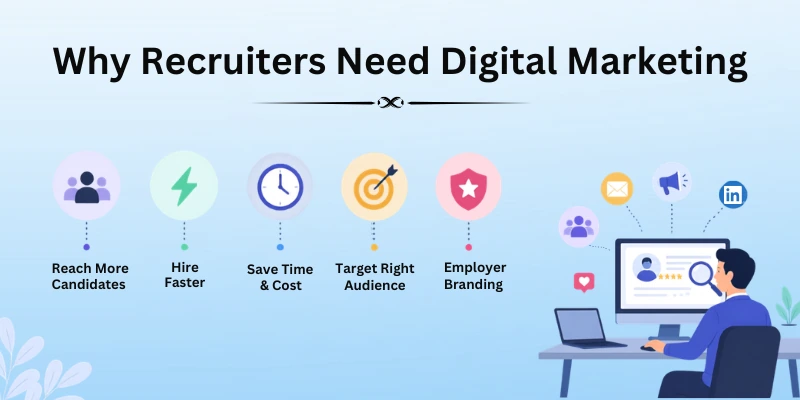
Here’s why digital marketing is essential for recruitment:
- Reach more candidates: Online job ads, social media, and email campaigns let you connect with a larger audience than offline methods.
- Hire faster: Digital marketing makes it easier for candidates to see and apply for jobs quickly.
- Save time and cost: Automation tools and online campaigns reduce manual work and lower hiring expenses.
- Target the right audience: You can focus your ads on people with the skills and experience you need.
- Build a stronger employer brand: Consistent online presence shows candidates that your company is modern and trustworthy.
Key Digital Marketing Strategies for Recruitment
Recruiters can attract more candidates and hire faster when they use digital marketing specifically for recruitment.
Below are the most effective strategies, explained in simple, expert-friendly language:
1. SEO for Recruitment: Make Your Job Listings Visible
Search Engine Optimization (SEO) for recruitment ensures your job ads appear in Google when candidates search online.
- Use keywords like “jobs in [role]”, “recruitment marketing strategies”, or “digital marketing for hiring” in titles and descriptions.
- Optimize your career pages and job posts so candidates find you easily.
- Add location and role details to target local and relevant talent.
2. Social Media Marketing for Recruiters
Social media marketing helps recruiters connect directly with job seekers online.
- Post openings and career content on LinkedIn, Facebook, and Instagram.
- Share employee stories, company culture videos, and hiring updates.
- Use hashtags like #RecruitmentMarketing, #HiringNow, or #JobsOnline.
3. Paid Ads for Recruitment (PPC Campaigns)
Paid advertising helps your job posts reach the right candidates quickly.
- Use Google Ads or social media ads targeted by job title, location, or skills.
- Include clear calls-to-action: “Apply Now for [Job Role]”.
- Monitor ad performance to focus on high-converting campaigns.
4. Recruitment Content Marketing
Create content that attracts candidates and builds trust in your brand.
- Write blog posts: “Tips for Landing a Job in [Industry]” or “Why Work at [Company Name]”.
- Share videos and infographics about your team, office, and work culture.
- Include keywords like “digital marketing for recruitment agencies” naturally in posts.
5. Email Marketing for Recruitment Campaigns
Email campaigns keep potential candidates engaged.
- Send job alerts, newsletters, and career tips.
- Segment lists by role, experience, or location.
- Use clear subject lines like “New [Job Role] Opening – Apply Today!”.
6. Mobile-Friendly Recruitment Marketing
Most job seekers apply using phones or tablets.
- Make your career pages and forms mobile-friendly.
- Keep forms short and simple.
- Ensure job descriptions are readable on small screens.
7. Employee Advocacy and Referral Marketing
Employees can help share job openings and attract high-quality candidates.
- Encourage staff to post openings on social networks.
- Reward employees for successful referrals.
- Use messaging like “Join Our Team – Referral Program”.
Tools That Help Your Recruitment Marketing
Using the right tools can make digital marketing for recruitment easier, faster, and more effective.
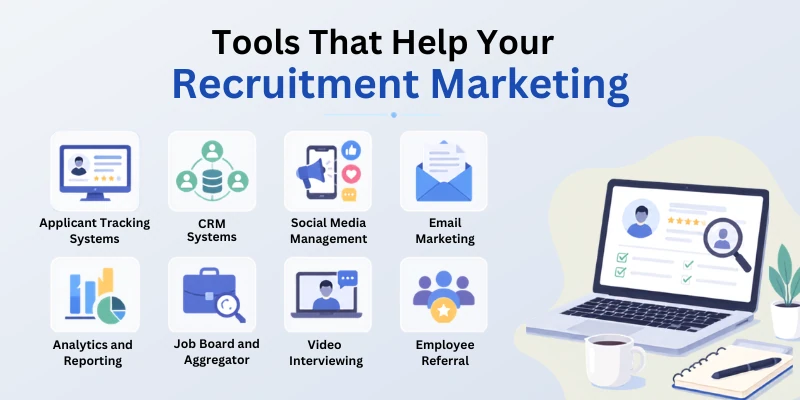
These tools help you track candidates, manage campaigns, and measure results so you can hire smarter.
- Applicant Tracking Systems (ATS): Keep all candidate applications in one place. Track their progress from application to hire. Examples: BambooHR, Workable.
- CRM Systems for Recruitment: Manage relationships with potential candidates and past applicants. Send personalized emails and follow-ups easily.
- Social Media Management Tools: Schedule posts, monitor engagement, and analyze which platforms attract the most candidates. Examples: Hootsuite, Buffer.
- Email Marketing Tools: Automate email campaigns, track opens and clicks, and segment candidates by job role or location. Examples: Mailchimp, HubSpot.
- Analytics and Reporting Tools: Measure website traffic, job ad clicks, and conversion rates. Use data to improve future campaigns. Examples: Google Analytics, SEMrush.
- Job Board and Aggregator Tools: Post jobs across multiple platforms at once and reach a wider audience. Examples: Indeed, ZipRecruiter, Glassdoor.
- Video Interviewing Platforms: Conduct remote interviews efficiently and save time for both recruiters and candidates. Examples: HireVue, SparkHire.
- Employee Referral Platforms: Encourage employees to refer candidates, track referrals, and reward successful hires. Examples: RolePoint, Zao.
Building Your Employer Brand Online
A strong employer brand helps your company attract the right candidates faster. Digital marketing for recruitment is not just about posting jobs; it’s about showing why candidates should want to work with you. Your online presence communicates your company culture, values, and work environment.
Here’s how to build your employer brand effectively:
- Show Your Company Culture: Share videos, photos, or stories of daily work life, team events, and employee achievements. This helps candidates feel connected before they even apply.
- Highlight Employee Experiences: Post interviews, testimonials, or success stories from current staff. Use keywords like “digital marketing for recruitment agencies” or “recruitment marketing strategies” naturally in posts.
- Be Active on Social Media: Maintain consistent activity on platforms like LinkedIn, Facebook, and Instagram. Share updates about job openings, company achievements, and career tips.
- Maintain a Careers Page: Your website’s careers page should be clear, attractive, and easy to navigate. Include open positions, benefits, and company values.
- Engage with Candidates Online: Respond to comments, messages, and reviews. Show that your company values feedback and is approachable.
- Leverage Awards and Recognition: Share any industry awards, certifications, or recognition. Candidates are more likely to trust and apply to companies with proven credibility.
Writing Better Job Ads
Writing clear and attractive job ads is a key part of digital marketing for recruitment. A well-written ad not only informs candidates about the role but also encourages the right people to apply. Good job ads show professionalism and reflect your company culture.
Here are tips to write effective recruitment-focused job ads:
- Use Clear Job Titles: Include the role and level, like “Senior Software Engineer – Full Time”. Avoid vague titles like “Tech Guru.” Use keywords naturally such as “digital marketing for recruitment agencies” when relevant.
- Highlight Key Responsibilities: List the main tasks clearly so candidates know what is expected. Use bullet points for easy reading.
- Include Required Skills and Experience: Specify essential qualifications and preferred experience. This helps attract candidates who fit the role.
- Show Benefits and Perks: Mention salary range, flexible work options, health benefits, or professional development opportunities.
- Add Location and Job Type: Clearly state whether the role is remote, hybrid, or in-office, and include the city or region.
- Use a Clear Call-to-Action (CTA): Encourage candidates to apply immediately with phrases like “Apply Today”, “Join Our Team Now”, or “Submit Your Resume”.
- Keep it Simple and Scannable: Use short sentences and bullet points. Avoid jargon or long paragraphs that might confuse candidates.
Creating a Candidate Pipeline
A candidate pipeline is a pool of potential candidates you can reach when hiring. Digital marketing for recruitment helps you build and maintain this pipeline so you always have qualified people ready to apply. Having a pipeline makes hiring faster, easier, and more efficient.
Here’s how to create a strong candidate pipeline:
- Collect Candidate Information: Use career forms, job applications, and email sign-ups to gather resumes and contact details.
- Segment Candidates: Organize candidates by skills, experience, location, or role type. This makes it easier to target the right people for specific job openings.
- Engage Regularly: Send emails with job updates, company news, or career tips. Keep candidates interested and connected to your company.
- Use Social Media: Share upcoming openings, industry news, and content that appeals to your target talent. Encourage followers to join your talent pool.
- Leverage Employee Referrals: Ask current employees to refer candidates. Referred candidates are often a better fit and hire faster.
- Track and Measure Pipeline Effectiveness: Monitor applications, responses, and conversion rates. Adjust your recruitment marketing strategy based on what works best.
Final Words
In this article, we’ve covered digital marketing for recruitment in detail. I recommend that every recruiter start using online strategies like social media, SEO, and email campaigns to reach the right candidates faster.
Digital marketing helps not only to attract talent but also to build a strong employer brand that candidates trust. By implementing these techniques, you can save time, reduce hiring costs, and find better-fit candidates for your roles.
Don’t wait, apply these tips today and watch your hiring process become easier and more effective.
FAQs: Digital Marketing for Recruitment
Here are answers to common questions about digital marketing for recruitment to help you hire better and faster:
Social media platforms like LinkedIn, Facebook, and Instagram let recruiters share job openings and company updates. It helps attract both active job seekers and passive candidates who may not be looking directly. Using social media also improves your employer brand online.
Tools like applicant tracking systems (ATS), email marketing platforms, and CRM systems make recruitment marketing easier. Social media management and analytics tools help track engagement and improve campaigns. Using these tools saves time and ensures more candidates see your job postings.
SEO ensures your job postings appear in search results when candidates look online. Optimizing titles, descriptions, and keywords like “digital marketing for recruitment agencies” helps attract more relevant candidates. This increases visibility without paying for ads.
A candidate pipeline is a pool of potential hires you can contact for future openings. Use email campaigns, social media, and employee referrals to keep candidates engaged. Segment candidates by skills and experience to send the right jobs at the right time.
Employer branding shows candidates why they should work at your company. Sharing videos, employee stories, and culture highlights online builds trust and interest. A strong brand attracts higher-quality candidates and reduces hiring time.
The future of recruitment marketing includes AI for resume screening, personalized candidate experiences, and mobile-first applications. Video interviews and virtual tours will become more common. Using these strategies helps companies stay competitive and attract top talent.




- Be Respectful
- Stay Relevant
- Stay Positive
- True Feedback
- Encourage Discussion
- Avoid Spamming
- No Fake News
- Don't Copy-Paste
- No Personal Attacks
- Be Respectful
- Stay Relevant
- Stay Positive
- True Feedback
- Encourage Discussion
- Avoid Spamming
- No Fake News
- Don't Copy-Paste
- No Personal Attacks
