Digital Marketing for Export Business – Grow Leads Fast with SEO
Published: 25 Jun 2026
Digital marketing for exporters means using the internet to promote your products to buyers in other countries. Unlike traditional marketing, which uses print ads or trade shows, digital marketing helps you reach people worldwide anytime.
Export businesses need online marketing because most international buyers search online before choosing a supplier. Using digital marketing for export business helps you get noticed, build trust, and grow your sales faster.
It is different from regular marketing because you must think about different languages, cultures, and online habits in each country. Small changes for each market can make a big difference in getting more leads and sales.
Let’s dig in and see how digital marketing can help your export business grow!
Why Digital Marketing Matters for Export Growth
Using digital marketing for export business is key to growing your sales in new countries
Here’s why it matters:
- Reach Buyers Worldwide: Connect with potential clients in multiple countries without physical presence.
- Cost-Effective Marketing: Save money compared to attending trade fairs or running print ads abroad.
- Build Brand Awareness: Let buyers recognize your products and trust your company before contact.
- Stay Competitive: Many exporters are online; digital marketing keeps you visible in the global market.
- Trackable Results: Measure your campaigns, see what works, and improve over time.
Understand Your Export Markets Before You Market
Before using Digital Marketing for Export Business, it’s important to know who your customers are and what they need. Each country is different, so understanding your market will help your campaigns succeed.
Here’s what to focus on:
- Research Your Target Countries: Learn which countries have demand for your products.
- Know Buyer Behaviour: Find out how buyers search online and make purchasing decisions.
- Check Local Culture and Language: Adjust your messages so they are clear and appealing.
- Study Competitors: See what other exporters are doing online and find ways to stand out.
- Identify Marketing Channels: Some countries use LinkedIn more, others prefer Facebook or Google.
Build a Strong Export-Focused Online Foundation
A solid online presence is the base of digital marketing for an export business. Without it, other marketing efforts may not work well. Your website and online platforms should be ready to attract and serve international buyers.
Key steps to build a strong foundation:
- Professional Website: Create a clean, easy-to-navigate website that shows your products clearly.
- SEO for Target Countries: Use keywords buyers search for in each country so they can find you easily.
- Content Localization: Translate your content and adapt it for local languages and cultures.
- Clear Contact Information: Make it easy for buyers to reach you, including local phone numbers or email.
- Mobile-Friendly Design: Many buyers use phones or tablets, so your site must work well on all devices.
5. Key Digital Channels for Export Businesses
When you use Digital Marketing for Export Business, it’s important to focus on the channels where your international buyers are active.
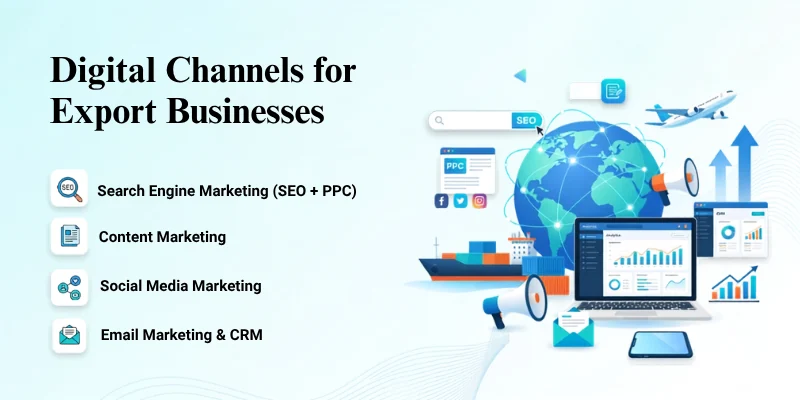
Each channel has its own strengths, and combining them can give the best results.
1. Search Engine Marketing (SEO + PPC)
- SEO (Search Engine Optimization): Helps your website appear in search results when buyers look for products online. For example, if you export handmade furniture, your site should appear when someone searches “handmade furniture suppliers USA.”
- PPC (Pay-Per-Click Ads): Paid ads on Google or Bing target buyers in specific countries. You only pay when someone clicks your ad, making it a cost-effective way to reach serious buyers.
- Local Keywords: Use keywords that match each country’s language and search trends to attract relevant traffic.
2. Social Media Marketing
- LinkedIn: Excellent for B2B exporters. Connect with importers, distributors, and wholesalers. Share product updates, success stories, and case studies.
- Facebook & Instagram: Useful for B2C products or visually appealing items. Post product photos, videos, and promotions to engage international buyers.
- YouTube: Demonstrate your products, share tutorials, or show factory processes to build trust and credibility.
3. Content Marketing
- Buyer Guides & Blog Posts: Create helpful content about your products or industry. For example, “How to Choose the Right Export Supplier for Organic Food.”
- Case Studies & Testimonials: Share stories of successful clients in other countries to build confidence.
- Video Content: Short videos explaining your products can improve engagement and trust across borders.
4. Email Marketing & CRM
- Automated Email Campaigns: Send welcome emails, product updates, or follow-ups automatically to international leads.
- Segmentation: Organize contacts by country, product interest, or buyer type to send personalized messages.
- Tracking Engagement: Measure open rates, click rates, and responses to improve campaigns.
By using these channels effectively, your digital marketing for export business will reach the right audience, generate leads, and help you grow in international markets.
Advanced Strategies to Drive Results
Once your basic channels are set up, using advanced strategies can make your digital marketing for export business even more effective.
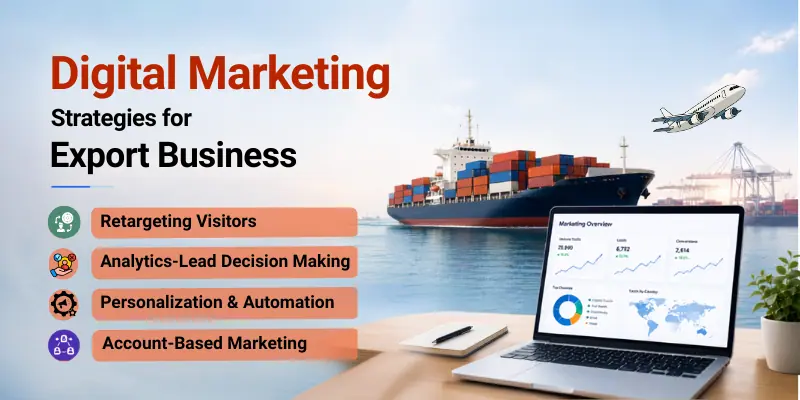
These tactics help you reach high-value buyers and get better results from your campaigns.
1. Retargeting Visitors
- Retargeting shows ads to people who visited your website but didn’t make a purchase or inquiry.
- For example, if someone viewed your product catalog but left, retargeting ads can remind them about your products in their own language.
- This increases the chance they return and contact you.
B. Account-Based Marketing (ABM)
- ABM focuses on targeting specific companies or high-value buyers rather than a broad audience.
- Exporters can use ABM to reach distributors, wholesalers, or large retailers directly with personalized campaigns.
- This strategy builds stronger relationships and higher conversion rates.
C. Analytics-Led Decision Making
- Use tools like Google Analytics, LinkedIn Insights, or email metrics to track visitor behaviour.
- Identify which countries, products, or campaigns bring the most leads.
- Adjust your marketing plan based on real data instead of guesswork.
D. Personalization & Automation
- Send personalized messages and product recommendations based on buyer interests and past behaviour.
- Automate repetitive tasks like follow-up emails, lead scoring, or social media posting.
- This saves time and ensures no lead gets missed.
Measure & Optimize Your Export Marketing
To get the best results from digital marketing for export business, it’s not enough to just run campaigns; you need to track performance and make improvements. Measuring and optimizing ensures your efforts bring real leads and sales.
Key Steps to Measure & Optimize:
- Set Clear Goals: Decide what you want from your campaigns, like leads per country, website inquiries, or sales growth.
- Track Key Metrics: Monitor metrics such as website traffic, conversion rates, cost-per-lead, and social media engagement.
- Use Analytics Tools: Tools like Google Analytics, LinkedIn Insights, or email marketing dashboards show which campaigns are working best.
- Test and Improve: Try A/B testing for ads, emails, and landing pages to see which versions perform better.
- Adjust for Each Market: Look at results by country. If a campaign works well in one market but not another, adjust your messaging, visuals, or targeting.’
Common Mistakes to Avoid
Even with online marketing for export business, many exporters make simple mistakes that reduce results. Avoiding these pitfalls will save time, money, and effort.
Common Mistakes:
- Ignoring Localization: Using the same content for every country can confuse buyers. Always adapt language, visuals, and offers for each market.
- Focusing on Only One Channel: Relying on just social media or Google ads limits your reach. Use multiple channels to connect with buyers.
- Not Using Analytics: Running campaigns without tracking results makes it hard to know what works. Always measure and improve.
- Overlooking Mobile Users: Many international buyers use phones or tablets. Ensure your website and emails are mobile-friendly.
- Neglecting Follow-Up: Leads may not buy immediately. Use email and CRM tools to follow up and nurture prospects.
Final Thoughts
In this article, we’ve explored digital marketing for export business in detail. Focus on SEO, social media, and personalized content for each country to build trust with international buyers. Track results and refine campaigns regularly.
Remember, understanding your audience and adapting your approach is the key to success. Start now and grow your export business globally!
FAQs: Digital Marketing for Export Business
Here are some common questions people ask about the export business:
SEO (search engine optimization) helps your website show up when buyers search for export products like yours in Google or other search engines. By using export‑specific keywords, localized content, and technical SEO, you can appear higher in global search results. This increases visibility and brings more targeted traffic from countries you want to sell to.
Yes, social media platforms like LinkedIn and Instagram help you connect with international buyers and importers. LinkedIn is especially useful for B2B export marketing because it lets you reach decision‑makers directly. With regular posts, videos, and ads, you build brand awareness and credibility across borders.
One of the easiest ways is to use Google Ads or targeted social media ads that show your products to buyers in specific countries. You can also join B2B marketplaces and optimize your website for export‑related search terms to attract organic leads. Combining paid ads with good SEO increases inquiries and export opportunities.
Costs vary based on your goals, but digital marketing for export business can fit almost any budget. Paid ads and professional SEO services cost more upfront, while content marketing and social media can start with a small investment. The key is to track your spending and focus on channels that deliver measurable leads and sales growth.
You measure performance with key metrics like website traffic, number of inquiries by country, conversion rate, and cost per lead. Analytics tools like Google Analytics or campaign dashboards help you see which strategies bring the best results. Regular tracking lets you improve your marketing and get better outcomes over time.
Yes, a professional, SEO‑optimized website is often the first place buyers learn about your business. It acts as your global showroom, showcasing products, certifications, contact details, and export info. A strong website builds credibility and makes it easier for buyers to trust and contact you online.
New exporters should start with basics like optimizing their website for search, creating social media profiles, writing buyer‑focused content, and collecting email leads. Even simple tactics like posting product photos, running targeted ads, and using email follow‑ups can attract buyers internationally. Over time, you can scale up with analytics, retargeting, and automation for better performance.



- Be Respectful
- Stay Relevant
- Stay Positive
- True Feedback
- Encourage Discussion
- Avoid Spamming
- No Fake News
- Don't Copy-Paste
- No Personal Attacks
- Be Respectful
- Stay Relevant
- Stay Positive
- True Feedback
- Encourage Discussion
- Avoid Spamming
- No Fake News
- Don't Copy-Paste
- No Personal Attacks
