Digital Marketing for Political Campaigns – Engage Voters in 2026
Published: 11 Aug 2026
How can a political campaign reach thousands of voters online in just a few hours? Digital marketing for political campaigns answers this question. It uses social media, emails, websites, and online ads to share messages fast. Campaigns can target the right voters and see what works in real time.
In this blog, we will show you how to plan your online strategy, engage voters, and avoid common mistakes so your campaign works smarter and reaches more people.
So, let’s get started!
What is Digital Marketing for Political Campaigns?
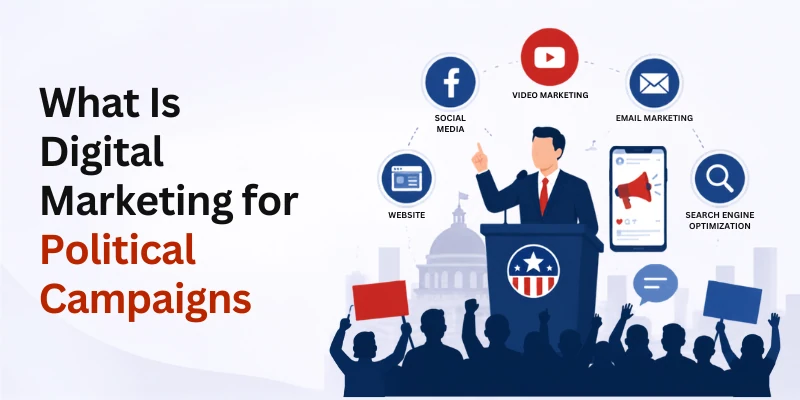
Digital marketing for political campaigns is using online tools to connect with voters. Campaigns use the internet to share messages, ideas, and updates about their candidates.
It helps parties reach more people quickly and directly.
For example:
- Posting updates or videos on social media
- Sending emails to supporters
- Running ads on Google or Facebook
- Sharing news and events on a campaign website
The goal is simple: let voters know about the candidate, their plans, and why they should vote for them.
Digital marketing makes campaigns faster, cheaper, and more effective than traditional methods like posters or TV ads.
Why Use Digital Marketing in Politics
Digital marketing helps political campaigns reach voters faster and smarter. Here’s why it matters:
- Reach More People Quickly: Campaigns can connect with thousands of voters online in minutes.
- Talk Directly to Voters: Social media, emails, and websites let candidates speak straight to supporters.
- Save Money: Online ads and posts cost less than TV, radio, or printed flyers.
- Measure Results: Campaigns can see which posts, emails, or ads work best and improve them.
- Engage Voters Anytime: People can watch videos, read updates, and respond from home or mobile devices.
Using digital marketing, political campaigns can work smarter, not harder, and reach the right voters at the right time.
Key Digital Marketing Channels for Political Campaigns
Political campaigns use several online tools to reach voters. Each tool helps in a different way. Here are the main channels:
1. Social Media Platforms
- Platforms like Facebook, Instagram, Twitter, and TikTok let campaigns share posts, videos, and stories.
- Voters can like, comment, and share, which spreads the message further.
- Candidates can post updates about events, policy ideas, or personal stories to connect with supporters.
2. Email Marketing
- Campaigns send newsletters and updates directly to supporters’ inboxes.
- Emails can include invitations to events, reminders to vote, or information about policies.
- Personalized messages make voters feel important and connected.
3. Campaign Website & SEO
- A website is the campaign’s home online. It shows who the candidate is, their policies, and upcoming events.
- Using SEO (Search Engine Optimization) helps voters find the site when they search online.
- Keep the website simple, fast, and easy to navigate.
4. Online Advertising
- Paid ads appear on social media, search engines, or other websites.
- Ads can target specific groups of voters based on age, location, or interests.
- Online ads help campaigns reach voters who might not see posts organically.
5. Content Marketing
- Campaigns share blogs, videos, and infographics to explain policies clearly.
- Helpful and interesting content can attract more followers and build trust.
How to Build a Winning Digital Strategy
A good digital strategy helps political campaigns reach the right voters and get results. Here’s how to do it step by step:
1. Set Clear Goals
- Decide what you want to achieve online.
- Examples: more social media followers, higher website visits, more event sign-ups, or more donations.
- Clear goals help you focus your efforts and measure success.
2. Know Your Voters
- Understand who your voters are.
- Learn about their age, location, and what issues matter to them.
- When you know your voters, you can send messages they care about.
3. Craft Strong Messaging
- Keep messages simple and easy to understand.
- Use the same tone across all channels, so voters recognize the candidate.
- Focus on what the candidate promises to do and why it matters to voters.
4. Plan Your Content
- Make a content calendar to organize posts, emails, and ads.
- Mix different types of content: short posts, images, videos, and informative blogs.
- Post regularly so voters stay engaged and informed.
5. Engage With Voters
- Reply to comments and messages quickly.
- Ask questions and encourage discussions online.
- Host live sessions or Q&A events to connect directly with supporters.
6. Track and Improve
- Use online tools to see which posts, emails, or ads work best.
- Measure clicks, shares, likes, and website visits.
- Adjust your strategy based on what voters respond to most.
Common Mistakes to Avoid in Digital Political Campaigns
Even online campaigns can make mistakes. Avoiding common errors helps build trust, reach more voters, and improve campaign success. Careful planning and consistent communication make digital campaigns more effective.
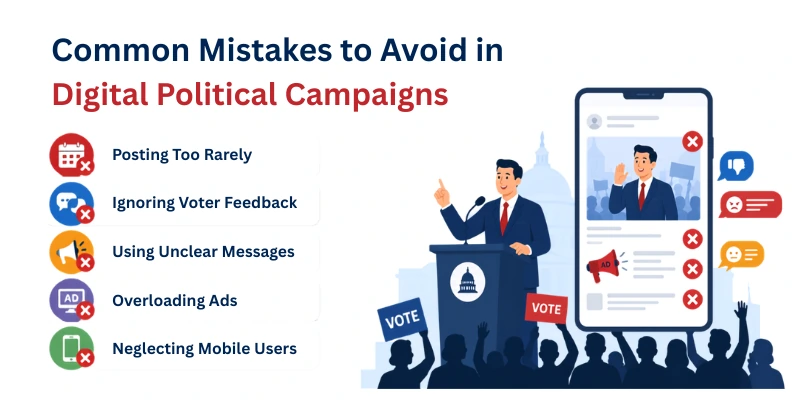
Avoiding these keeps your strategy strong:
- Posting Too Rarely: If you post only once in a while, voters forget about the campaign.
- Ignoring Voter Feedback: Not replying to comments or messages makes voters feel ignored.
- Using Unclear Messages: Confusing or mixed messages can make voters unsure about the candidate.
- Overloading Ads: Too many ads can annoy voters instead of attracting them.
- Neglecting Mobile Users: Many voters check online on phones. Make sure websites and posts look good on mobile.
Avoiding these mistakes helps campaigns stay trusted, clear, and effective.
Final Words
Now, guys, we have covered digital marketing for political campaigns from start to finish. We talked about what it is, why it matters, and the best online tools to reach voters. We also shared steps to build a winning strategy, tips for engagement, how to measure results, and common mistakes to avoid.
Using digital marketing, campaigns can connect with more voters, share clear messages, and make smarter decisions online. Remember, the key is consistency, clarity, and interaction. Start small, post regularly, and keep improving based on what works.
Go ahead and use these strategies to make your campaign stronger and closer to the people you want to reach!
FAQs: Digital Marketing for Political Campaigns
Now, guys, let’s answer some common questions about digital marketing for political campaigns. These tips will make everything even clearer and easier to follow!
Social media for politics helps candidates talk directly to voters. Platforms like Facebook, Instagram, Twitter, and TikTok let campaigns share posts, videos, and live updates. This increases visibility and voter engagement.
A campaign website is the main hub online. It shows the candidate’s profile, policies, and events. Using SEO makes it easier for voters to find the website when they search online for the candidate or election news.
Digital ads for elections can appear on social media, search engines, or other websites. They target specific voter groups based on age, location, or interests. This ensures the campaign reaches the right people efficiently.
Campaigns track social media likes, shares, comments, website visits, email opens, and ad clicks. This data helps them see what works and improve their political campaign strategy over time.
Posting too rarely, ignoring voter feedback, unclear messages, too many ads, and neglecting mobile users are common mistakes. Avoiding these keeps campaigns strong and trustworthy.
Yes! Even small campaigns can use online tools like social media, email, and low-cost ads to reach voters. A clear plan and regular posts make a big difference in engagement and visibility.



- Be Respectful
- Stay Relevant
- Stay Positive
- True Feedback
- Encourage Discussion
- Avoid Spamming
- No Fake News
- Don't Copy-Paste
- No Personal Attacks
- Be Respectful
- Stay Relevant
- Stay Positive
- True Feedback
- Encourage Discussion
- Avoid Spamming
- No Fake News
- Don't Copy-Paste
- No Personal Attacks
