Top Advantages and Disadvantages of Backlinks in 2026
Published: 12 Aug 2026
Did you know that websites with strong backlinks rank higher on Google? Backlinks are one of the main ways search engines decide which sites are trusted. Understanding the advantages and disadvantages of backlinks helps you grow your website safely. With the right links, your pages get more visitors and better visibility online.
In this article, we will cover the main benefits of backlinks, the common drawbacks, the difference between quality and bad backlinks, and tips to build strong links.
So guys, let’s dig into this and see the magic!
Benefits of Backlinks
Backlinks are very important for your website. They help search engines, bring more visitors, and make your site more trusted.
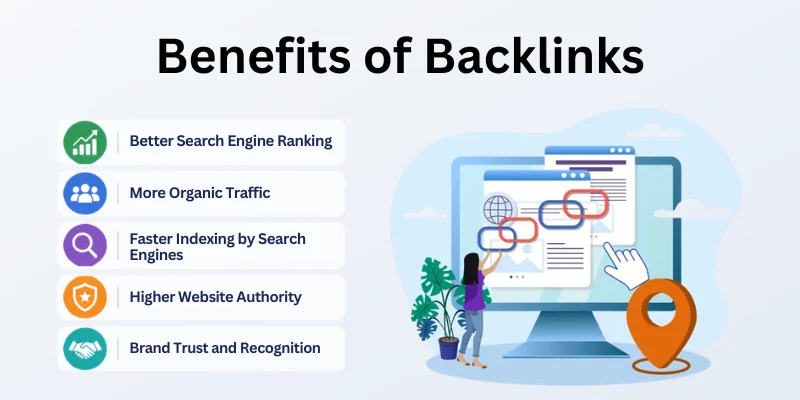
Here is the list of advantages of backlinks:
- Better Search Engine Ranking
- More Organic Traffic
- Faster Indexing by Search Engines
- Higher Website Authority
- Brand Trust and Recognition
Let’s explore in detail.
1. Better Search Engine Ranking
Backlinks are like votes from other websites telling search engines your site is trustworthy. When you have more high-quality backlinks, Google and other search engines see your site as important. This helps your pages appear higher in search results. Higher rankings mean more people can find your website easily.
Sites with strong backlinks often beat competitors in Google searches. This works because search engines use backlinks to measure the value of content. So, building good backlinks is a key step to improving your site’s ranking. Without backlinks, even good content may stay hidden in search results.
2. More Organic Traffic
Backlinks bring real visitors from other websites. When someone clicks a link to your site, they are already interested in your topic. This is called organic traffic because it comes naturally, not from paid ads. The more relevant backlinks you have, the more people will visit your pages.
This can lead to more customers, subscribers, or readers. Organic traffic usually has a higher chance of engagement. It also shows search engines that your site is popular and useful. Backlinks act like doors that guide people directly to your content from trusted sources.
3. Faster Indexing by Search Engines
Backlinks help search engines find your website faster. When a new page gets linked from another site, search bots follow the link and notice your page quickly. This means your content can appear in search results sooner than if it had no backlinks. Faster indexing is especially helpful for new websites or new blog posts.
Without backlinks, search engines may take longer to discover your pages. Good backlinks act like signals telling search engines, “Check out this new content!” This keeps your site visible and up-to-date in searches.
4. Higher Website Authority
Backlinks from strong, trusted websites increase your site’s authority. Authority means search engines trust your content more and consider it reliable. When high-authority sites link to you, your own ranking power grows. This makes it easier to rank for competitive keywords over time.
Websites with higher authority usually get more traffic and have better credibility. Backlinks help you build long-term SEO strength because search engines value trust and reputation. The more quality links you earn, the stronger your website becomes in the eyes of search engines.
5. Brand Trust and Recognition
When popular websites link to your site, people start to trust your brand more. Readers see these links as recommendations from trusted sources. This improves your online reputation and makes your business look credible. Over time, backlinks help your brand become recognizable in your niche.
Users are more likely to return to your site or share your content. Good backlinks also help new visitors feel confident about your products or services. In short, backlinks not only improve SEO but also make your brand appear trustworthy and respected online.
Drawbacks of Backlink
Backlinks can also cause problems if they are not managed carefully. Some links may hurt your site or take a lot of effort to maintain.
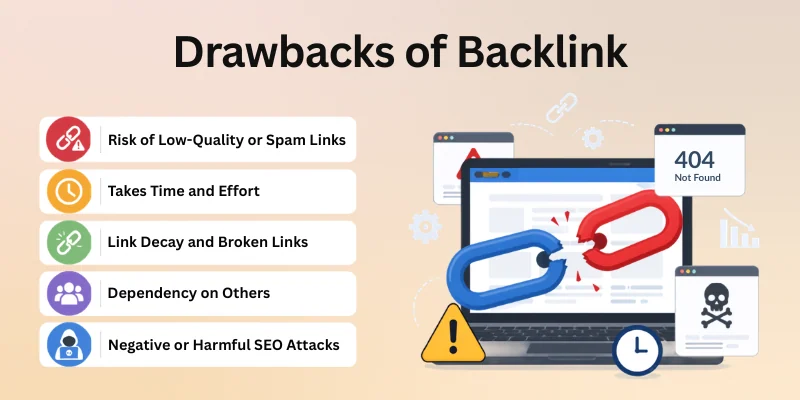
Here is the list of cons of backlinks:
- Risk of Low-Quality or Spam Links
- Takes Time and Effort
- Link Decay and Broken Links
- Dependency on Others
- Negative or Harmful SEO Attacks
Let’s look at them in detail.
1. Risk of Low-Quality or Spam Links
Not all backlinks are good for your site. Links from low-quality or spammy websites can hurt your SEO. Google may see these links as spam and lower your ranking. Sometimes, bad backlinks can even get your site penalized.
You must check where your backlinks come from. Focus on links from trusted, relevant websites. Avoid buying links from unknown sources. Good backlinks improve your site, but bad ones can do the opposite.
2. Takes Time and Effort
Building quality backlinks is not quick or easy. You need to create good content that others want to link to. You also have to reach out to website owners or bloggers. This process takes patience and planning.
You cannot get strong backlinks overnight. Beginners may feel frustrated at first. But consistent effort brings long-term results. Spending time on backlinks is important for your site’s growth.
3. Link Decay and Broken Links
Backlinks are not permanent. Websites may remove links or pages may stop working. These broken links can reduce your SEO benefits. You must regularly check your backlinks to make sure they still work. Fix or replace links when needed.
This helps keep your site healthy in Google’s eyes. Broken links may confuse users and search engines. Regular maintenance keeps your website strong and trusted.
4. Dependency on Others
Backlinks rely on other website owners. You cannot control when they remove a link or change their site. This can affect your traffic and rankings suddenly. Your SEO success partly depends on external sites.
You must build multiple backlinks to reduce this risk. Diversifying your links makes your site more stable. Don’t rely on only one or two sites. The more trusted backlinks you have, the safer your SEO becomes.
5. Negative or Harmful SEO Attacks
Sometimes competitors may try to harm your SEO by creating spammy backlinks to your site. This is called a negative SEO attack. Google may see these links as low quality and penalize your site.
You need to monitor your backlink profile regularly. Tools can help detect harmful links. If you find bad links, you can request removal or disavow them. Protecting your site from harmful backlinks is part of safe SEO practice.
Quality Backlinks vs Bad Backlinks
It is important to know the difference between good backlinks and bad backlinks. Good links help your site, while bad links can harm it.
- Quality Backlinks: Come from trusted, relevant websites. Help your SEO and bring real visitors.
- Bad Backlinks: Come from spammy or irrelevant sites. Can lower your ranking or cause penalties.
- Tips for Quality Links: Focus on content people want to share, guest post on trusted blogs, and avoid buying cheap links.
- Tips to Avoid Bad Links: Check your backlinks regularly, remove spammy links, and disavow harmful links if needed.
How to Build Good Backlinks (Tips)
Building good backlinks takes time, but it is very helpful for your website. Here are some simple tips to get strong links from trusted sites:
- Create Great Content: Write useful articles, guides, or videos that people want to share.
- Guest Posting: Write posts for other trusted websites in your niche and include your link.
- Reach Out to Bloggers: Contact bloggers or website owners and ask if they can link to your content.
- Use Social Media: Share your content on social media to get more visibility and potential links.
- Check Competitors: Look at where your competitors get backlinks and try to earn links from similar sites.
- Avoid Bad Practices: Don’t buy links or use spammy methods; these can hurt your site.
Final Words
In this guide, we have covered the benefits and drawbacks of backlinks. While backlinks bring many advantages like better rankings, more traffic, and higher trust, they also come with limitations and risks such as bad links, time and effort, and link decay.
My recommendation is to focus on building quality backlinks from trusted sites and regularly monitor your links. By carefully managing your backlinks and avoiding spammy sources, you can enjoy the benefits while minimizing the risks.
Thank you for reading, and I hope this guide was helpful for you.
Don’t skip the next FAQ section. It has more tips and tricks that could be very helpful for you.
FAQs: Benefits and Drawbacks of Backlinks
Here are some common questions about backlinks that beginners often ask. Let’s simply answer them:
Backlinks act like votes of confidence for search engines. The more high‑quality backlinks you have, the more search engines trust your site. This can help your pages appear higher in Google and other search results.
Yes. When popular websites link to your content, people may click those links to visit you. This natural traffic is called organic traffic and can help grow your audience.
Quality backlinks come from trusted, relevant sites with good reputations. Spammy backlinks come from low‑quality or irrelevant websites and can hurt your SEO. Search engines may penalize sites with too many spammy links.
No. Only backlinks from reputable and relevant sites help your SEO. Links from low‑quality or unrelated sites can do nothing or even harm your rankings.
Building strong backlinks takes time and effort. You must create useful content, reach out to other sites, and build relationships. This process can take weeks or months, not days.
Yes. Spammy or low‑quality backlinks can lower your site’s ranking or trigger penalties from search engines. It’s important to audit and remove harmful links regularly.
A do‑follow backlink tells search engines to pass authority to your page. A no‑follow backlink doesn’t pass authority but can still bring referral traffic. Search engines like a natural mix of both types




- Be Respectful
- Stay Relevant
- Stay Positive
- True Feedback
- Encourage Discussion
- Avoid Spamming
- No Fake News
- Don't Copy-Paste
- No Personal Attacks
- Be Respectful
- Stay Relevant
- Stay Positive
- True Feedback
- Encourage Discussion
- Avoid Spamming
- No Fake News
- Don't Copy-Paste
- No Personal Attacks
