How Digital Marketing for Real Estate Can Grow Your Leads
Published: 2 May 2026
The way people buy and sell property has changed completely over the years. Buyers now expect instant access to listings, photos, videos, and clear information. Digital marketing for real estate supports this shift by using online platforms to promote properties and services effectively.
From search results to social media and paid ads, digital strategies help agents stay visible, connect with the right audience, and compete confidently in today’s property market.
This article will guide you step by step through the most effective digital marketing strategies, tools, and tactics so you can attract buyers, generate leads, and grow your real estate business online.
What is Digital Marketing for Real Estate?
Digital marketing for real estate is the use of online tools and platforms to promote properties and grow real estate businesses. Instead of relying only on flyers, newspapers, or open houses, agents use digital channels to reach buyers, sellers, and investors more effectively.
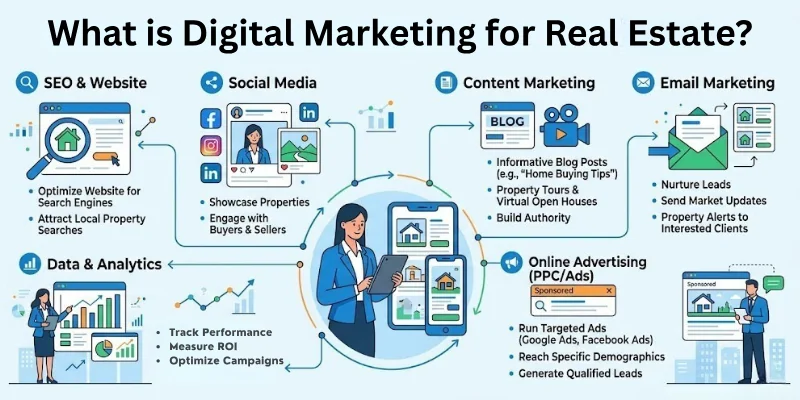
It includes methods such as:
- Websites and online listings: Showcase your properties with detailed information.
- Photos and videos: Highlight homes and create visual appeal for buyers.
- Virtual tours: Let potential buyers explore properties without visiting in person.
- Sharing market knowledge: Provide tips, updates, and guidance to build trust.
In simple terms, digital marketing helps agents display listings, communicate their value clearly, and connect with people who are interested in buying or selling real estate.
Importance of Digital Marketing for Real Estate
Most buyers and sellers now start their property search online, and a strong digital presence is essential to stay competitive. Digital marketing allows agents to reach the right people at the right time and showcase their listings effectively.
It is important because it helps real estate professionals:
- Stay visible: Reach potential buyers and sellers during their online research.
- Showcase listings clearly: Share property photos, videos, and details in an easy-to-access format.
- Provide valuable information: Share tips, market updates, and guidance to build credibility.
- Target the right audience: Reach specific locations, budgets, and buyer interests.
- Track and improve results: Measure campaigns and optimize strategies based on real data.
In short, digital marketing helps real estate agents attract quality leads and grow their business efficiently.
Step-by-Step Digital Marketing Strategy for Real Estate
A successful digital marketing strategy works best when it’s planned step by step. This roadmap helps agents and agencies focus on the most effective actions, from planning goals to selecting the right channels and creating campaigns that produce results.
1. Set Clear Goals
Start by deciding exactly what you want to achieve with your digital marketing efforts. Clear goals guide your strategy, make your campaigns measurable, and help you focus on actions that matter.
Examples of goals:
- Generate more inquiries for specific properties
- Increase awareness of your real estate brand locally
- Boost property showings or online appointment bookings
2. Identify Target Audience
Knowing your audience ensures your marketing speaks directly to the people most likely to buy or invest. Tailoring your messaging improves engagement and increases the chances of turning prospects into clients.
Steps to define your audience:
- Create buyer personas such as first-time buyers, property investors, or luxury clients
- Identify their preferences, pain points, and what motivates them to act
- Understand where they spend time online and how they search for properties
3. Build a Strong Online Foundation
Your website and digital presence act as the hub of all marketing activities. A solid foundation ensures potential clients have a positive experience and can easily find the information they need.
Key elements to focus on:
- Mobile-friendly design: Most buyers browse on smartphones, so your site should look great and function smoothly on any device
- Clear property listings: Include essential details, high-quality images, and property descriptions
- Optimized user experience: Fast-loading pages and easy navigation keep visitors engaged
4. Choose the Right Channels
After setting goals and building a foundation, select the channels that best reach your target audience. Using multiple platforms together creates a stronger, coordinated marketing presence.
Effective channels for real estate:
- SEO: Optimize pages and listings so buyers can find you in local searches
- Social Media: Showcase properties, share tips, and engage with followers
- Paid Ads: Target potential buyers using location, interests, or demographics
- Content Marketing: Share blogs, videos, neighbourhood guides, and market insights
Digital Marketing Components (Tactics + Tools)
To succeed in real estate, digital marketing needs the right mix of tactics and tools. Each component plays a specific role in attracting buyers, generating leads, and converting interest into real inquiries.
When these elements work together, they create a strong and reliable marketing system.
1. Search Engine Optimization (SEO)
SEO helps real estate businesses appear in search results when people look for properties or agents online. Local SEO for real estate agents is especially important because most buyers search by city, area, or neighbourhood.
Key SEO actions include:
- Local keyword targeting: Use location-based keywords to attract nearby buyers and sellers.
- Google Business Profile optimization: Keep your profile updated with photos, reviews, and contact details to improve local visibility.
- On-page SEO for listings: Optimize property titles, descriptions, images, and URLs so listings rank better in search results.
Strong SEO supports lead generation for real estate agents by bringing consistent, high-intent traffic to listings and service pages.
2. Content Marketing
Content marketing for real estate focuses on educating and guiding buyers instead of just selling. Useful content builds trust and positions you as a market expert.
Effective content formats include:
- Blog posts: Answer common buyer and seller questions.
- Neighbourhood guides: Help buyers understand local areas, pricing, and lifestyle.
- Market insights: Share trends, price changes, and investment opportunities.
- Virtual tours and video content: Allow buyers to explore properties online before booking visits.
This approach works well for marketing for real estate investors and property managers, as it builds long-term credibility and attracts serious inquiries.
3. Social Media Marketing
Social media marketing for real estate listings helps agents stay visible and connect with audiences daily. Each platform serves a different purpose and audience type.
Platform selection:
- Facebook for local reach and lead ads
- Instagram for visuals and short videos
- LinkedIn for investors and professional clients
Short video ideas
- Property walk-throughs
- Quick tips
- Market updates
Engagement tactics:
- Polls
- Q&A sessions
- Comments
- Direct messages
Well-planned social media marketing for realtors keeps listings active, builds relationships, and supports faster lead conversion.
4. Paid Advertising
Paid advertising delivers faster results by placing listings directly in front of interested buyers. It works best when combined with strong targeting and landing pages.
Common paid ad channels include:
- Google Ads: Capture buyers actively searching for properties.
- Facebook / Meta lead campaigns: Collect inquiries without leaving the platform.
- Retargeting ads: Re-engage users who viewed listings but didn’t inquire.
Paid ads are highly effective for digital marketing for real estate investors and competitive local markets where organic reach alone is not enough.
5. Email Marketing & Automation
Email marketing keeps prospects engaged after the first interaction. Automation ensures consistent follow-ups without manual effort.
Best practices include:
- Segmented campaigns: Send relevant emails based on buyer type or interest.
- Drip sequences: The guide leads step by step with helpful content.
- Lead nurturing: Build relationships until prospects are ready to act.
This strategy supports long-term lead generation for real estate agents and improves conversion rates over time.
6. Landing Pages
Landing pages are designed to focus on one goal—getting an inquiry. They perform better than generic websites because they remove distractions and guide users clearly.
High-converting landing pages include:
- Focused pages: Dedicated pages for listings, offers, or consultations.
- Strong CTAs: Clear action buttons like “Book a Tour” or “Get Details”.
- Visual support: Property images, videos, and trust signals.
Landing pages are especially useful for digital marketing for property managers and paid campaigns, where conversion speed matters.
Advanced Digital Marketing Tips for Real Estate
Once the basics are in place, advanced strategies can give real estate agents a real edge. These tips focus on smarter ways to attract buyers, save time, and improve results, helping your campaigns stand out from the competition.
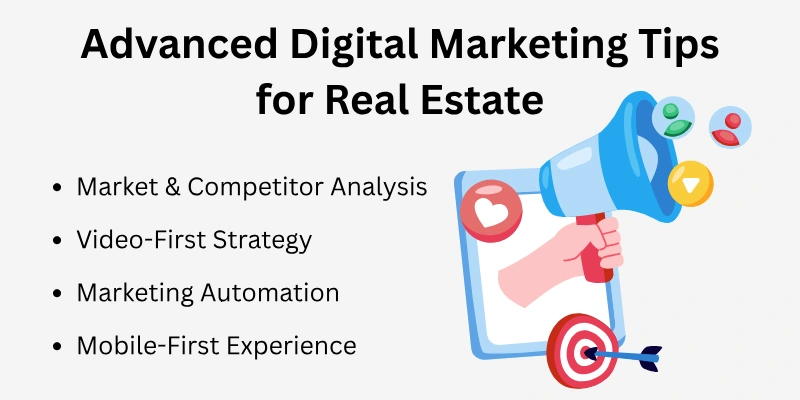
1. Market & Competitor Analysis
Understanding the local market and knowing what other agents are doing helps you make informed decisions. By analyzing trends and competitor strategies, you can identify opportunities, avoid mistakes, and position your properties more effectively.
Practical steps:
- Track which keywords competitors are ranking for
- Observe their ad campaigns and social media activity
- Identify gaps in their listings or content that you can fill
2. Video-First Strategy
Video is one of the most effective ways to grab attention and show properties in detail. Short, engaging videos make listings more memorable and help buyers connect with homes before visiting in person.
Ideas to try:
- Quick walkthroughs highlighting property features
- Client testimonial videos for credibility
- Neighbourhood tours to showcase the area’s lifestyle
3. Marketing Automation
Automation saves time and ensures no leads are overlooked. By using tools to automate emails, follow-ups, and task reminders, you can stay organized and nurture leads consistently without losing a personal touch.
Benefits:
- Automated follow-ups keep potential buyers engaged
- Track leads’ interactions with emails and listings
- Free up time for direct client interactions and property viewings
4. Mobile-First Experience
With most buyers searching for properties on their phones, mobile optimization is essential. A smooth mobile experience makes it easier for visitors to browse listings, watch videos, and contact you, improving engagement and conversion rates.
Focus areas:
- Responsive website design that works on all devices
- Fast-loading pages and clear navigation
- Clickable buttons and forms for easy interaction
Measuring Success of Digital Marketing for Real Estate
Tracking results is one of the most important parts of any digital marketing strategy. Without measurement, it’s hard to know what’s working, which campaigns need improvement, or where to invest your time and budget.
Monitoring performance ensures that your efforts are focused on tactics that actually bring results.
Key metrics to track:
- Website Traffic: See how many people visit your site and which listings or pages get the most attention.
- Conversion Rate: Measure how many visitors take action, like submitting an inquiry or scheduling a tour.
- Cost per Lead (CPL): Know how much you spend to acquire each lead and which channels give the best return.
- Engagement Metrics: Track clicks, video views, shares, and comments to see how your audience interacts with your content.
Tools to help:
- Google Analytics: Provides detailed reports on traffic, user behaviour, and conversions.
- CRM Systems: Track leads, follow-ups, and client interactions in one place.
- Social Media Insights: Measure engagement, reach, and ad performance across platforms.
By keeping an eye on these metrics, real estate professionals can refine their campaigns, allocate resources wisely, and grow their business more efficiently.
Real-World Examples & Case Studies in Real Estate Digital Marketing
Seeing how digital marketing works in real life can help you understand which strategies really deliver results. These examples show practical ways agents and agencies have used online tools to generate leads, engage buyers, and grow their business.
Examples:
- SEO Success: A local agent optimized property listings with neighbourhood-specific keywords and blog content, doubling organic traffic and generating more quality leads in three months.
- Paid Advertising Wins: A condo developer ran Facebook Lead Ads targeting specific locations and interests, generating 100 high-quality inquiries in just two weeks.
- Social Media Impact: A realtor posted short Instagram videos showcasing virtual tours and client testimonials, increasing inquiries and bookings by 50% compared to static photos.
These case studies highlight that using the right combination of online strategies can produce measurable results and help real estate professionals stand out from the competition.
Benefits of Digital Marketing in Real Estate
Digital marketing offers real advantages for real estate professionals. It allows agents to connect with more buyers, spend marketing budgets wisely, and track exactly how campaigns are performing.
Key Benefits:
- Wider Audience Reach: Reach buyers and investors beyond your local area, including those actively searching online.
- Targeted Marketing: Focus on specific buyer types, like first-time homebuyers, investors, or luxury clients.
- Higher ROI: Online campaigns often cost less than traditional advertising and deliver more qualified leads.
- Measurable Results: Track clicks, inquiries, and conversions to understand what works and improve campaigns.
Challenges and Limitations of Real Estate Digital Marketing
While digital marketing offers many advantages, it also comes with challenges that real estate professionals need to be aware of. Knowing these hurdles helps agents plan better strategies and avoid common pitfalls.
Key Challenges:
- High Local Competition: Many agents use digital marketing, so standing out in a crowded market requires creative strategies and consistent effort.
- Technical Skills Required: Running campaigns, managing SEO, or analyzing data often needs knowledge of digital tools and platforms.
- Maintaining Trust Online: Buyers rely heavily on online information, so inaccurate listings, poor-quality content, or slow responses can damage credibility.
By understanding these challenges, real estate professionals can plan carefully, focus on quality, and use digital marketing in a way that strengthens their reputation and results.
Future Trends in Real Estate Digital Marketing
Digital marketing is changing fast, and the agents who adapt early gain an edge. Technology is helping professionals reach buyers more efficiently and create experiences that traditional marketing can’t match.
Trends Shaping the Future:
- AI and Chatbots: Smart tools can answer buyer questions instantly, qualify leads, and save agents time.
- Personalized Marketing: Sending tailored property suggestions and updates keeps buyers engaged and makes them feel understood.
- Interactive Experiences: Virtual tours, 3D walkthroughs, and video content let buyers explore homes online and make faster decisions.
Keeping up with these trends helps real estate professionals stay relevant, provide better service, and make smarter marketing decisions.
Wrapping Up
In this article, we covered digital marketing for real estate from strategy to execution. We discussed how agents can plan campaigns, choose the right channels, use advanced tactics, and measure performance to achieve consistent results.
The next step is action. Start by setting clear goals, launching focused campaigns, and using dedicated landing pages to capture leads. Track inquiries, study performance data, and improve your approach based on real results.
Digital marketing works best when all parts work together. By following a structured plan and applying these strategies consistently, real estate professionals can attract quality leads, build trust, and grow their business with confidence.
FAQs: Digital Marketing for Real Estate
Here are a few helpful FAQs to understand online marketing for real estate better:
Digital marketing for real estate helps agents promote properties using websites and online platforms. It includes real estate web marketing to attract buyers through search and content. This approach improves visibility and lead quality.
Yes, a clear digital marketing plan for real estate helps you stay focused. It defines your goals, audience, and channels. Digital marketing for real estate works better with planning.
A digital marketing strategy for real estate sets the long-term direction. Tactics are daily actions like posting or running ads. Digital marketing for real estate needs to succeed.
Yes, digital marketing for real estate helps promote digital real estate for sale to the right audience. Online listings, ads, and videos speed up buyer interest. This increases inquiry chances.
Digital marketing for real estate supports a strong real estate business marketing online. It builds trust and brand presence. This helps attract steady clients.
Yes, common real estate marketing examples include listing posts, short videos, and local blogs. Digital marketing for real estate often starts small. These examples show quick results.
Yes, digital marketing for commercial real estate targets investors and businesses online. It uses data-driven ads and professional content. Digital marketing for real estate adapts well to this market.
Online marketing for real estate agents helps reach buyers before competitors. Digital marketing for real estate builds personal branding. It also improves lead follow-ups.
Learning how to promote your real estate business starts with visibility and trust. Digital marketing for real estate uses SEO, ads, and content. Consistency brings results.
A clear marketing strategy for property focuses on the audience and location. Digital marketing for real estate helps test and improve campaigns. This leads to better conversions.


- Be Respectful
- Stay Relevant
- Stay Positive
- True Feedback
- Encourage Discussion
- Avoid Spamming
- No Fake News
- Don't Copy-Paste
- No Personal Attacks
- Be Respectful
- Stay Relevant
- Stay Positive
- True Feedback
- Encourage Discussion
- Avoid Spamming
- No Fake News
- Don't Copy-Paste
- No Personal Attacks
