Digital Marketing for Publishers to Grow Your Audience Fast in 2026
Published: 26 Aug 2026
Books and magazines were once sold mostly in physical stores. Today, many people read on phones, tablets, and computers. Because of this change, publishers now promote their books online.
Publishers who embrace digital marketing reach more readers, build trust, and increase book and content sales.
In this guide, you will learn simple and useful ways to use digital marketing for publishers. We will cover SEO, social media, content marketing, email marketing, and online ads that help publishers grow their audience and sell more books.
Why Digital Marketing Matters for Publishers
Digital marketing is essential for publishers in today’s online world. It allows books and content to reach readers faster and more effectively than traditional methods.
Benefits of digital marketing for publishers:
- Reach readers where they spend time: Most readers search for books online before buying.
- Boost discoverability: SEO, social media, and online ads make books easier to find.
- Engage and retain readers: Blogs, newsletters, and social media interactions build long-term relationships.
- Make data-driven decisions: Track what works and improve campaigns continuously.
- Expand globally: Digital marketing lets publishers reach audiences beyond local markets.
Key Strategies for Digital Marketing for Publishers
To succeed online, publishers need a clear plan. Digital marketing for publishers involves several strategies that help your books reach more readers, build loyalty, and increase sales.
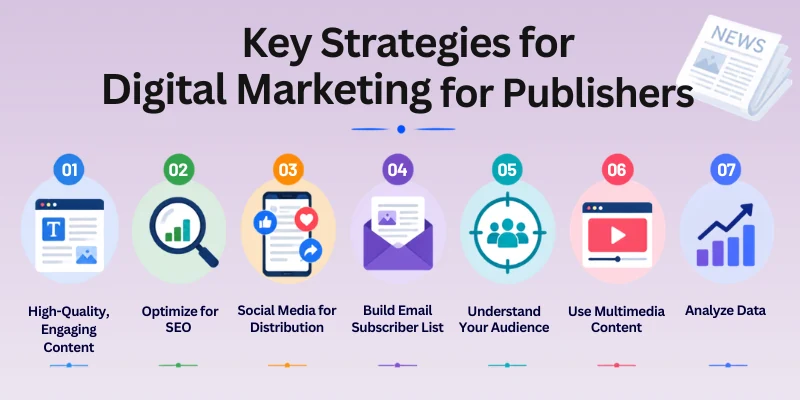
Below are the most effective approaches.
1. Build a Strong Online Presence for Digital Marketing for Publishers
Your website is your digital home. A professional and well-structured website is the foundation of any digital marketing for publishers’ strategy.
Tips for a strong website:
- Professional design: Mobile-friendly, fast loading, and easy to navigate keeps readers engaged.
- Author and book pages: Include bios, book covers, summaries, reviews, and purchase links. Example: An adventure book page can feature a colourful cover, a story summary, and a “Buy Now” button.
- User experience: Simple menus, readable text, and fast pages make it easy for readers to explore your site.
A strong online presence increases trust, improves discoverability, and makes other marketing efforts more effective.
2. Use SEO Effectively in Digital Marketing for Publishers
SEO helps your books and content appear higher in search engines so readers can find them organically. It is a key part of digital marketing for publishers.
SEO Steps:
- Keyword research: Identify words readers search for, e.g., “best fantasy books for teens.” Include these naturally in your content.
- On-page SEO: Optimize titles, headings, and meta descriptions so search engines understand your pages.
- Content SEO: Write blogs, guides, or articles that answer readers’ questions. Example: “5 Fun Adventure Books for Kids” attracts readers interested in that genre.
- Link building: Collaborate with bloggers, review sites, and educational websites to get backlinks.
- Technical SEO: Ensure a fast-loading, secure (HTTPS), mobile-friendly, and easy-to-navigate site structure.
Effective SEO helps publishers increase visibility without relying entirely on paid ads.
3. Leverage Social Media in Digital Marketing for Publishers
Social media platforms allow publishers to connect with readers directly. Using them strategically is a key part of digital marketing for publishers.
Best Platforms:
- Instagram: Share book covers, short videos, and stories.
- Facebook: Build communities and share events or book updates.
- LinkedIn: Share professional, educational, or business content.
- TikTok: Post short videos, book challenges, or author tips for younger audiences.
- Twitter: Share quick updates, news, and engage in conversations.
Content Ideas:
- Book launches with videos or photos
- Author interviews or Q&A sessions
- Behind-the-scenes content about book creation
Community Building: Reply to comments, ask questions, and encourage discussions. Engaged readers are more likely to become loyal fans.
4. Email Marketing for Publishers in Digital Marketing
Email marketing strengthens reader relationships and drives sales. It is an essential component of digital marketing for publishers.
Steps for effective email marketing:
- Build subscriber lists: Collect emails from your website, social media, or events.
- Send newsletters and updates: Share short, useful, and interesting content.
- Automation: Send automatic emails for new subscribers, book launches, or reminders.
- Personalization: Use readers’ names and suggest books or topics they like to increase open rates.
Example: A monthly newsletter featuring “Top 3 Adventure Books for Teens” can motivate readers to explore more of your books.
5. Collaborate with Influencers and Bloggers in Digital Marketing for Publishers
Influencers and bloggers help publishers reach niche audiences and build credibility. Collaboration is an important strategy in digital marketing for publishers.
How to collaborate:
- Partner with book reviewers and content creators to promote your releases.
- Send review copies to bloggers in your genre to reach their followers.
- Encourage readers to share reviews, photos, or videos.
- Plan joint launches to create buzz and attract new readers.
6. Paid Advertising in Digital Marketing for Publishers
Paid ads allow publishers to reach the right audience quickly. They complement other strategies in digital marketing for publishers.
Types of paid ads:
- Google Ads: Target readers searching for books or topics relevant to your content.
- Social Media Ads: Promote posts on Instagram, Facebook, or TikTok to reach specific audiences.
- Retargeting campaigns: Show ads to visitors who previously visited your website but didn’t buy.
- Budget planning: Track results to optimize spending and avoid waste.
Paid advertising boosts visibility and speeds up audience growth.
7. Use Data and Analytics in Digital Marketing for Publishers
Data-driven decisions help publishers refine strategies and get better results. Tracking performance is a key part of digital marketing for publishers.
What to track:
- Traffic: Number of visitors to your website or posts
- Conversion rate: How many visitors buy a book or subscribe
- Engagement: Likes, comments, shares, and other interactions
How to use data:
- Analyze trends and identify what works best.
- Adjust campaigns based on insights to reach more readers and improve results.
Common Digital Marketing Mistakes Publishers Should Avoid
After implementing all the strategies above, it’s important to know what pitfalls can slow down your success.
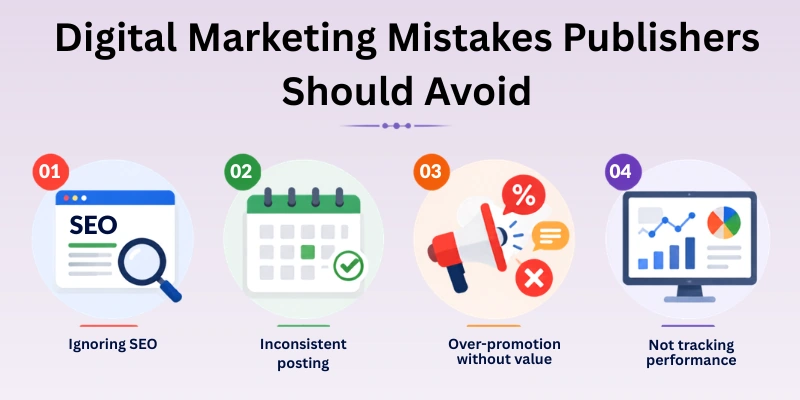
Avoiding these common mistakes helps you save time, money, and effort while reaching more readers effectively.
- Ignoring SEO: Not optimizing your website or content makes it hard for readers to find your books.
- Inconsistent posting: Irregular updates on blogs, social media, or newsletters can lose reader interest.
- Over-promotion without value: Only selling books without sharing helpful or engaging content can turn readers away.
- Not tracking performance: Without monitoring metrics, you cannot know what works or improve your campaigns.
Future of Digital Marketing in Publishing
The publishing world is changing fast. Staying updated with trends helps publishers grow, stay relevant, and connect better with readers. Here are the key developments shaping the future:
- Growth of digital reading platforms: More readers use eBooks, apps, and online magazines, increasing the need for online promotion.
- Rise of AI-driven marketing: Artificial intelligence helps publishers understand reader preferences, suggest content, and target ads more effectively.
- Increased importance of community building: Online communities, discussion groups, and interactive content keep readers engaged and loyal.
Conclusion
In this article, we have covered practical strategies for digital marketing for publishers to help them reach more readers and grow their business. We started with why digital marketing is essential, explored how to build a strong online presence, and discussed SEO techniques to improve visibility.
We looked at social media, email marketing, influencer collaborations, and paid advertising to engage readers effectively. We also explained how to use data and analytics to refine campaigns, highlighted common mistakes to avoid, and shared future trends shaping publishing online.
By applying these strategies, publishers can connect with the right audience, strengthen reader relationships, and increase book and content sales successfully.
Thank you for taking the time to read this guide. I hope the insights shared here will help you grow your audience and achieve your publishing goals.
FAQs: Digital Marketing for Publishers
Here are answers to some common questions about digital marketing for publishers to help you understand and apply these strategies more effectively:
Digital marketing for publishers uses online tools like websites, social media, SEO, email, and ads to promote books, articles, and content to readers. It helps publishers connect directly with their audience and showcase their content to more people online.
It helps publishers reach more readers, increase book sales, and build trust with their audience. In the digital age, most readers discover books online, so publishers need effective marketing to stay visible and competitive.
Instagram, Facebook, LinkedIn, TikTok, and Twitter are effective depending on your audience and content type. Using the right platform allows publishers to share updates, promote books, and engage with readers directly.
SEO makes books and articles easier to find on search engines. By using the right keywords, optimizing content, and building backlinks, publishers can improve visibility and attract readers who are actively searching for their topics.
Newsletters, book updates, personalized recommendations, and automated campaigns keep readers engaged. Regular, useful emails build loyalty, remind readers about new releases, and encourage them to explore more content.
Yes, paid ads on Google or social media help reach readers quickly, especially for new book releases or special promotions. They allow publishers to target specific audiences and get faster results than relying on organic reach alone.
Track website traffic, engagement, conversions, email open rates, and social media interactions to see what works. Using analytics helps publishers make informed decisions, improve campaigns, and reach more readers effectively.



- Be Respectful
- Stay Relevant
- Stay Positive
- True Feedback
- Encourage Discussion
- Avoid Spamming
- No Fake News
- Don't Copy-Paste
- No Personal Attacks
- Be Respectful
- Stay Relevant
- Stay Positive
- True Feedback
- Encourage Discussion
- Avoid Spamming
- No Fake News
- Don't Copy-Paste
- No Personal Attacks
