Digital Marketing for NGOs – Boost Donations & Awareness in 2026
Published: 17 Aug 2026
Digital marketing for NGOs uses the internet to share your organization’s message. Every year, millions of people use social media, search engines, and emails to learn about causes. NGOs can reach them easily online.
Digital marketing for NGOs helps raise funds, attract volunteers, and create awareness. It saves money and reaches more people than traditional methods.
In this article, we will cover: why digital marketing for NGOs matters, key channels, strategies for content, social media, email, fundraising, tools, and tips to measure success.
Why Digital Marketing Matters for NGOs
Digital marketing for NGOs is very important because it helps organizations grow, reach more people, and achieve their goals. Unlike traditional methods, online marketing works faster, costs less, and can reach people all over the world.
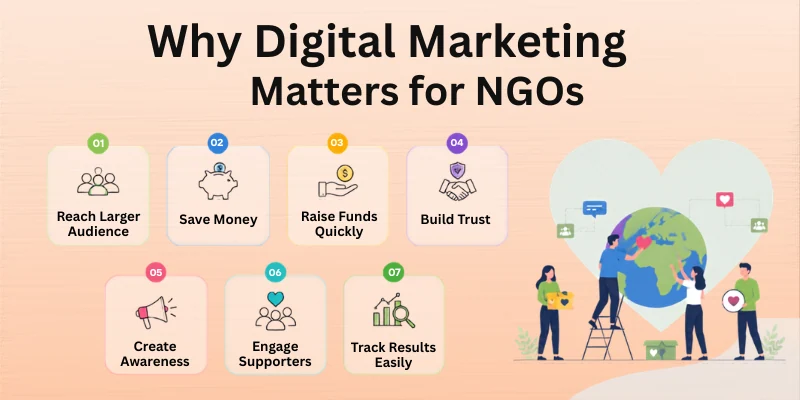
Here are the main reasons why digital marketing for NGOs matters:
- Reach a Larger Audience: Connect with supporters, donors, and volunteers anywhere in the world.
- Save Money: Online campaigns cost less than print ads, events, or flyers.
- Raise Funds Quickly: Share donation links online to get funds faster.
- Build Trust and Credibility: Show your work, success stories, and impact to earn supporters’ trust.
- Create Awareness: Teach people about your cause through social media, blogs, and videos.
- Engage Supporters: Interact with followers online, reply to comments, and build strong relationships.
- Track Results Easily: See what works using analytics and improve your campaigns.
Key Digital Marketing Channels
Digital marketing for NGOs uses different channels to reach people online. Each channel has its own way to help you connect with supporters, share your story, and raise funds.
1. Social Media Marketing
Social media platforms like Facebook, Instagram, LinkedIn, and Twitter help NGOs reach a large audience.
- Share updates, success stories, and events.
- Post images, videos, and live streams to attract attention.
- Engage with followers by replying to comments and messages.
- Use hashtags to reach people outside your followers.
- Run paid campaigns to target specific supporters or donors.
2. Email Marketing
Email marketing helps NGOs connect directly with supporters’ inboxes.
- Send newsletters with updates, success stories, and donation links.
- Personalize emails by using supporters’ names.
- Include clear calls-to-action like “Donate Now” or “Join Our Campaign.”
- Schedule emails regularly to keep supporters informed but not overwhelmed.
3. Content Marketing
Content marketing shares helpful or inspiring information about your NGO.
- Write blogs that explain your mission and projects.
- Create videos showing your team, events, or impact.
- Share stories about people or communities your NGO helps.
- Make guides, tips, or educational posts about your cause.
- Good content builds trust and keeps supporters interested.
4. Search Engine Optimization (SEO)
SEO helps your NGO appear on search engines like Google when people look for your cause.
- Use keywords like “Digital Marketing for NGOs” or your cause in blogs and website pages.
- Optimize your website for mobile devices and fast loading.
- Add clear titles, headings, and descriptions to your pages.
- The better your SEO, the more people find your NGO online.
5. Pay-Per-Click Advertising (PPC)
PPC helps NGOs get quick visibility online by paying for ads.
- Create ads on Google, Facebook, or Instagram.
- Target people who are likely to support or donate.
- Only pay when someone clicks your ad.
- Use PPC for special campaigns, events, or fundraising drives.
6. SMS Marketing
SMS marketing sends short messages directly to supporters’ phones.
- Share urgent updates, donation drives, or event reminders.
- Keep messages short, clear, and actionable.
- Reach people who may not check emails or social media regularly.
These channels work together to help your NGO reach supporters, raise funds, and grow awareness efficiently.
Digital Marketing Strategies for NGOs
Digital marketing for NGOs works best when you have a clear strategy. A good strategy helps you plan your campaigns, reach the right people, and achieve your goals.
Here are the main strategies NGOs can use:
Planning Your Strategy
- Set Clear Goals – Decide if you want more donations, volunteers, or awareness.
- Know Your Audience – Understand your supporters, donors, and volunteers.
- Choose the Right Channels – Pick social media, email, content, or ads based on your goals.
- Create a Content Calendar – Plan posts, emails, and campaigns in advance.
- Track and Improve – Monitor results and change what does not work.
Content & Social Media Strategy
- Share success stories of people or communities your NGO helps.
- Post images and videos that show your NGO’s work.
- Write blogs or guides about your cause to educate supporters.
- Engage followers by replying to comments and messages quickly.
- Use hashtags and live events to reach new audiences.
- Post regularly but keep content interesting and simple.
Email Marketing Strategy
- Send short, clear emails that supporters can read quickly.
- Personalize emails using supporters’ names.
- Include strong call-to-actions like “Donate Now” or “Join Us Today.”
- Send updates consistently, but don’t overload inboxes.
- Share news, events, success stories, and donation links in emails.
Fundraising Online
- Create donation pages on your website for easy giving.
- Launch crowdfunding campaigns for special projects.
- Use social media fundraising tools to reach more donors.
- Share urgent campaigns via email, SMS, or social media.
- Highlight how donations make an impact to encourage supporters.
These strategies work together to help your NGO grow, connect with supporters, and raise funds efficiently.
Measuring Digital Marketing Success
Digital marketing for NGOs works best when you check results. Measuring success helps you know what works, what doesn’t, and how to make your campaigns better.
Here are simple ways to measure success:
- Look at Website Visitors: See how many people visit your site and which pages they like.
- Check Social Media: Count likes, comments, shares, and followers to see who is interested.
- Check Emails: See how many people open your emails and click on links.
- Count Donations and Volunteers: See how many people donate or sign up to help online.
- Use Tools: Tools like Google Analytics can show which campaigns work best.
- Compare with Your Goals: Check if your campaigns are reaching your goals for donations, awareness, or volunteers.
- Improve Your Campaigns: Change what does not work to get better results.
Challenges NGOs Face in Digital Marketing
Online marketing for NGOs can be very helpful, but it is not always easy. Many NGOs face some common challenges when trying to grow online.
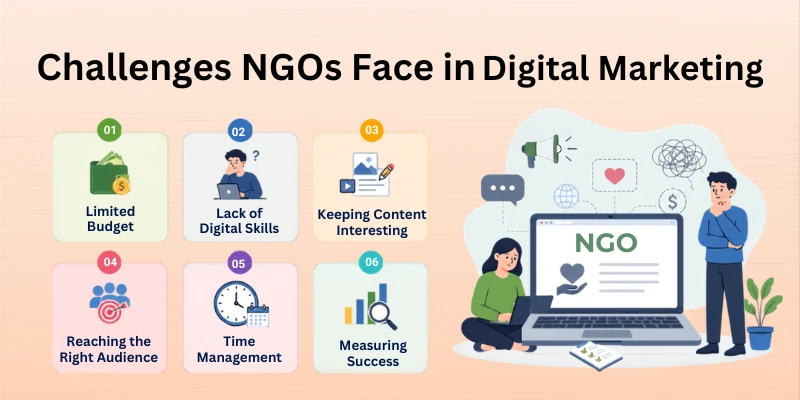
Here are the main challenges:
- Limited Budget – Many NGOs have little money for ads, tools, or campaigns.
- Lack of Digital Skills – Staff may not know how to use social media, email, or SEO properly.
- Keeping Content Interesting – Posting good and fresh stories regularly can be hard.
- Reaching the Right Audience – It can be difficult to find people who want to donate or volunteer.
- Time Management – Running campaigns, creating content, and managing platforms takes time.
- Measuring Success – Some NGOs do not know how to track results or improve campaigns.
Tools & Platforms for NGOs
Digital marketing for NGOs becomes easier when you use the right tools. These tools help create content, manage campaigns, track results, and raise funds online.
Here are some useful tools and platforms:
- Canva – Make posters, social media images, and banners easily without design experience.
- Mailchimp – Send emails, newsletters, and donation campaigns to supporters.
- Google Analytics – Track your website visitors, see what works, and improve campaigns.
- Buffer or Hootsuite – Schedule social media posts and manage multiple platforms at once.
- GoFundMe, GiveIndia, JustGiving – Online platforms for donations and fundraising campaigns.
- Facebook Fundraisers – Raise money directly on social media using your NGO’s page.
- Google Forms or Typeform – Collect volunteer sign-ups, surveys, and feedback easily.
Using these tools saves time, helps you reach more supporters, and improves the results of digital marketing for NGOs.
Case Studies / Success Stories
Digital marketing for NGOs works best when we see real examples. Many NGOs have used online strategies to reach more supporters, raise funds, and create awareness.
Here are some examples:
- Storytelling Works – An NGO shared stories of children they helped on social media. People liked, shared, and donated more than before.
- Email Campaign Success – One NGO sent personalized emails with clear donation links. Donations increased by 40% in a month.
- Social Media Fundraisers – An NGO used Facebook Fundraisers during an emergency campaign. They reached thousands of new supporters and collected funds quickly.
- Video Campaigns – NGOs posting short videos about their projects got more engagement and volunteers. Videos helped supporters see the impact of donations.
- Website and SEO – NGOs optimizing their websites for search engines appeared on Google when people searched for their cause. More people visited their website and signed up to help.
These examples show that using digital marketing for NGOs can make a big difference when strategies are clear and consistent.
Final Words
In this article, we’ve covered digital marketing for NGOs in detail. From my experience, even small actions, like posting real stories on social media or sending regular email updates, can create a big impact.
I recommend starting today and experimenting with different strategies. Take action now, connect with supporters, and watch your NGO grow and make a bigger difference.
FAQs: Digital Marketing for NGOs
Here are some frequently asked questions about online marketing for NGOs:
Many NGOs have limited budgets, lack digital skills, or struggle to post content regularly. Reaching the right audience online can also be difficult. Understanding these challenges helps NGOs plan better strategies and improve results.
Social media helps NGOs connect with supporters and share their stories. Platforms like Facebook, Instagram, and LinkedIn allow posts, videos, and live updates to reach more people. Using social media regularly can increase donations and volunteer sign-ups.
NGOs can raise funds online using donation pages, crowdfunding campaigns, and social media fundraisers. Email campaigns with clear call-to-actions also encourage donations. Digital marketing for NGOs makes fundraising faster and easier than traditional methods.
The best channels include social media, email, content marketing, SEO, and paid ads. Each channel has a different purpose, such as attracting donors, engaging volunteers, or building awareness. Combining these channels creates a strong online presence for your NGO.
NGOs can track website traffic, social media engagement, email open rates, and donation numbers. Tools like Google Analytics show which campaigns bring the best results. Measuring success helps NGOs improve campaigns and reach more supporters.



- Be Respectful
- Stay Relevant
- Stay Positive
- True Feedback
- Encourage Discussion
- Avoid Spamming
- No Fake News
- Don't Copy-Paste
- No Personal Attacks
- Be Respectful
- Stay Relevant
- Stay Positive
- True Feedback
- Encourage Discussion
- Avoid Spamming
- No Fake News
- Don't Copy-Paste
- No Personal Attacks
