Email Marketing for Real Estate: Tips to Grow Leads Fast
Published: 4 May 2026
Email marketing for real estate helps agents stay connected with people who show interest in property. It allows you to share information in a calm and organized way instead of rushing people to make decisions.
Since property decisions involve research and planning, email gives agents a steady space to communicate. It works quietly in the background while building familiarity over time.
This guide explains email marketing for real estate in a clear and practical way, suitable for both beginners and working professionals.
What is Email Marketing for Real Estate?
Email marketing in real estate means sending planned and useful emails to people who want property-related information. These emails are created with purpose and sent only to interested subscribers.
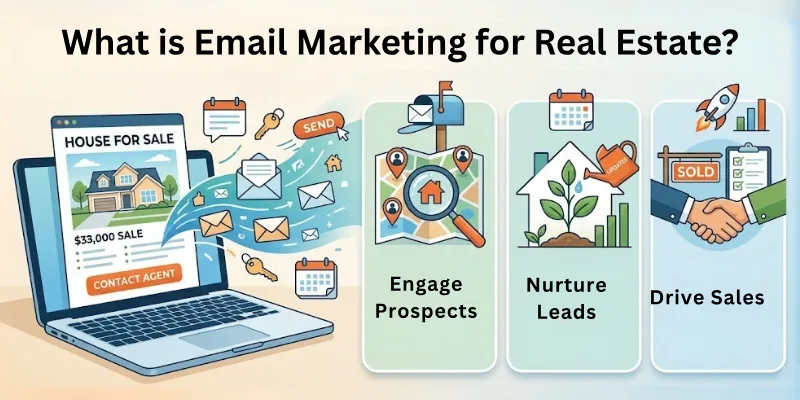
They focus on:
- Solving questions
- Sharing updates
- Offering guidance
Real estate emails may include:
- Property information
- Event details
- Area knowledge
- Helpful advice
The main goal is to stay connected in a meaningful way until the reader decides to take the next step.
Why Email Marketing is Important for Real Estate?
Property decisions involve planning, comparison, and timing. Email marketing supports this process in a calm and organized way. It allows agents to stay in touch without pressure.
Here is why email marketing matters in real estate:
- Trust-building: Consistent emails help people feel comfortable before starting a conversation.
- Brand recall: Your name stays familiar even when someone is not actively searching.
- Direct reach: Messages go straight to the inbox instead of competing with online noise.
- Decision support: Emails help people move forward at their own pace.
- Client continuity: Past clients stay connected long after a deal is closed.
- Budget-friendly: Email costs less than many other marketing methods.
- Helpful communication: Emails allow you to educate instead of constantly selling.
How Email Marketing Works in Real Estate
Email marketing works best when it follows a clear and thoughtful process. Each step helps move the relationship forward naturally.
Here is how it works:
- Lead entry: People share their email through forms, events, or online content.
- Contact grouping: Subscribers are organized based on interest or intent.
- Message planning: Emails are written with specific goals in mind.
- Email delivery: Messages are sent manually or through automation tools.
- Response tracking: You observe how people interact with your emails.
- Ongoing communication: Content is adjusted based on reader behaviour.
This approach allows agents to stay relevant without being intrusive.
How to Build an Email List for Real Estate
An email list grows best when people join because they see value. The focus should be on attracting the right audience, not just collecting more addresses.
Here are effective ways to grow your list:
- Lead magnets: Offer free resources that solve small problems or answer common questions.
- Event sign-ups: Use registration forms for webinars, open houses, or local activities.
- Client referrals: Encourage existing contacts to invite friends or family.
- Extra resources: Provide bonus content in exchange for email access.
- Interactive tools: Create quizzes or assessments related to property needs.
- Member-only access: Give early updates or private content exclusively to subscribers.
- Local partnerships: Collaborate with nearby businesses for joint campaigns.
A focused, engaged list brings far better results than a large but inactive one.
Email Marketing Strategies for Real Estate Agents
Email marketing works best when it’s planned carefully. In real estate, people move at different speeds, so emails should guide them gently rather than push them. A solid strategy helps agents stay useful, clear, and professional in every message.
Here are effective strategies explained:
- Audience targeting: Not every contact wants the same information. Buyers may want property options, while sellers look for market insights. Sending the right message to the right group keeps emails relevant and engaging.
- Action-based emails: When someone clicks a link, views a listing, or downloads a guide, it shows interest. Follow-up emails based on these actions feel timely and thoughtful.
- Seasonal planning: Real estate activity changes throughout the year. Emails that match the season, market trends, or local events feel natural and helpful.
- Story-led content: Share simple client experiences or property journeys. Stories create emotional connections and make your emails feel real, not just promotional.
- Performance improvement: Track your email results to see what works. Over time, this helps improve subject lines, content, and timing.
- Step-by-step campaigns: Instead of sending a single email, use a series that explains things gradually. This keeps readers engaged without overwhelming them.
- Channel alignment: When emails match your website, social posts, and ads, your message stays clear and trustworthy across all platforms.
Using these strategies, real estate agents can build steady communication, maintain reader interest, and gradually turn contacts into confident clients.
Types of Real Estate Emails
Different emails serve different purposes. Using a mix keeps communication balanced and meaningful.
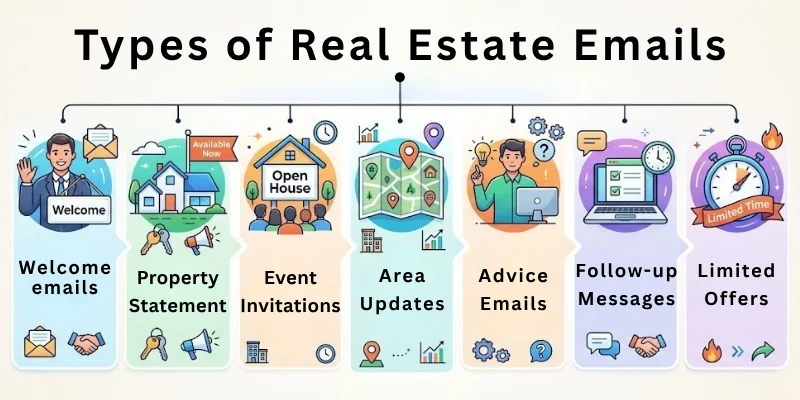
Here are common types of real estate emails:
- Welcome emails: A friendly introduction for new subscribers.
- Property announcements: Information about available or updated properties.
- Event invitations: Details about open houses or virtual tours.
- Area updates: News about neighbourhoods or local developments.
- Advice emails: Practical guidance for buyers or sellers.
- Follow-up messages: Gentle reminders after interaction or interest.
- Limited offers: Time-sensitive opportunities shared with subscribers.
Each type plays a different role in building engagement.
Write High-Converting Real Estate Emails
Good emails are easy to read and easy to understand. They respect the reader’s time and attention.
Here’s how to write better emails:
- Clear subject lines: It allows readers to know what the email is about.
- Focused writing: Stick to one main idea per email.
- Simple action request: Make the next step obvious.
- Clean design: Use spacing and visuals wisely.
- Personal wording: Write as if speaking to one person.
- Useful content: Share information that people can apply.
- Readable layout: Keep formatting simple and clear.
Good writing makes emails feel natural, not promotional.
Timing and Frequency Tips for Real Estate Emails
Timing affects how emails are received. A balanced schedule keeps communication comfortable.
Here are practical guidelines:
- Midweek days: People are more attentive during the workweek.
- Quiet hours: Morning or evening works better than busy hours.
- Routine sending: A steady schedule builds familiarity.
- Controlled volume: Too many emails reduce interest.
- Purpose-based sending: Send emails when there is real value.
- Location awareness: Consider where your audience lives.
Consistency matters more than exact timing.
Tools for Real Estate Email Marketing
Email marketing is a powerful way for real estate agents to stay connected with clients and turn leads into sales. Choosing the right tools can save time, improve communication, and make every email count.
- Mailchimp: A beginner-friendly platform with ready-to-use templates, automated welcome emails, and detailed analytics for opens and clicks.
- Constant Contact: Drag-and-drop email builder with real estate-specific templates, event promotion tools, and easy list management.
- Sendinblue: Affordable platform that combines email and SMS campaigns, with segmentation options to target buyers, sellers, or investors.
- HubSpot CRM: Free CRM that tracks every email interaction, segments leads by stage, and integrates seamlessly with email campaigns.
- Zoho CRM: Syncs with email tools to send personalized campaigns, automate follow-ups, and track property inquiries.
- Salesforce: Advanced CRM ideal for large agencies, offering fully customized email sequences and detailed campaign analytics.
- ActiveCampaign: Automation tool for drip campaigns, follow-ups, and behaviour-based personalized emails to engage leads.
- Drip: Automates property-related emails based on user actions, like browsing listings or clicking property links.
- Canva: Design tool with pre-made email templates to create attractive property promotions and newsletters.
- BEE Free: Simple email editor for responsive templates, ready to export to your email platform.
- Litmus: Tests emails across devices and clients to ensure professional formatting and consistent display.
- Google Analytics: Tracks traffic from email campaigns to your listings and shows which campaigns drive inquiries.
- EmailOctopus: Affordable email platform with analytics for engagement, opens, and subscriber growth.
- OptinMonster: Lead capture tool with pop-ups and forms to grow your email list and target property-specific offers.
- Sumo: Adds email capture forms to landing pages and integrates with major email platforms for smooth list building.
Common Email Marketing Blunders in Real Estate
Even small mistakes can reduce interest in your emails without you realizing it. Being aware of them helps your campaigns perform better.
Watch out for these issues:
- Excessive emails: Sending too many messages can annoy readers and reduce attention.
- Unclear headlines: Confusing subject lines lower open rates.
- Missing direction: Emails without a clear purpose can confuse readers.
- Design problems: Poor layout or cluttered visuals affect readability.
- Generic tone: Messages should feel personal, not like mass mail.
- Inconsistent sending: Random schedules weaken engagement over time.
- Unchecked errors: Typos or mistakes reduce your credibility.
Avoiding these mistakes keeps your emails professional, engaging, and effective.
Email Marketing vs Social Media for Real Estate
Email and social media play different roles in real estate marketing. Using both wisely creates a balanced strategy.
Here’s how they differ:
- Inbox presence: Emails reach people directly, while social media relies on feeds.
- Privacy level: Emails feel personal; social posts are public.
- Message lifespan: Emails stay visible longer than social updates, which disappear quickly.
- Action clarity: Emails encourage direct responses like clicks, calls, or sign-ups.
- Performance insight: Email results are easier to track and measure.
- Cost control: Emails don’t depend heavily on paid reach, unlike social ads.
Each channel works best when used for its strength, and together they can boost your real estate marketing results.
Final Words
In this article, we have discussed email marketing for real estate and how it can help agents and realtors connect with clients, stay visible, and grow their business.
We covered why it is important, the types of real estate emails to clients you can send, ideas for email campaigns, and even professional email address ideas for realtors. By using simple, consistent, and helpful emails, you can build trust, generate leads, and turn potential clients into loyal customers.
Start small, stay regular, and watch how email marketing for real estate agents can make a real difference in your business success.
FAQs: Email Marketing for Real Estate
If you are a real estate agent or realtor, these frequently asked questions will help you understand email marketing for real estate and how to use it to connect with clients, grow leads, and stay visible in your market:
Email marketing for real estate agents is a way to send messages directly to potential buyers or sellers. You can share listings, tips, and market updates. It helps build trust and keeps clients engaged with your business.
Use:
- Send new property alerts to interested clients.
- Share tips on buying or selling homes.
- Keep your audience updated on the local market.
Using email marketing for realtors regularly makes clients remember you and increases your chances of getting leads.
Some good options include:
- New listing emails
- Market trend updates
- Success stories from past clients
These real estate emails to clients help show your expertise and keep your contacts interested.
Yes! Here are simple ideas:
- Welcome emails for new subscribers
- Monthly newsletter with home tips
- Check-in emails to past clients
These email ideas for real estate agents keep your audience engaged and improve your chances of referrals.
Choose something professional and easy to remember:
- john.doe.realestate@example.com
- cityname.agent@example.com
- homesbyjane@example.com
Using clear addresses builds trust and improves open rates, which is important for estate agent email marketing.
You can look for inspiration from top-performing campaigns or use email marketing services for real estate. Examples include:
- Weekly listing updates
- Monthly market snapshots
- Personalized check-in emails
These real estate email marketing examples show how to connect with clients effectively and professionally.


- Be Respectful
- Stay Relevant
- Stay Positive
- True Feedback
- Encourage Discussion
- Avoid Spamming
- No Fake News
- Don't Copy-Paste
- No Personal Attacks
- Be Respectful
- Stay Relevant
- Stay Positive
- True Feedback
- Encourage Discussion
- Avoid Spamming
- No Fake News
- Don't Copy-Paste
- No Personal Attacks
