Digital Marketing for Agriculture: Grow Farm Business
Published: 28 May 2026
Agriculture is evolving beyond the boundaries of fields and marketplaces. In today’s connected world, growth depends not only on production and distribution but also on digital presence.
Digital marketing for agriculture represents the strategic integration of online platforms, data-driven communication, and brand positioning within the agricultural sector.
It enables farmers, agribusinesses, and agri-tech companies to communicate their value, share expertise, and remain relevant in an increasingly competitive environment.
As the industry modernizes, digital strategy becomes an essential extension of agricultural operations, shaping how businesses present themselves and engage with their audiences.
Why Does Agriculture Need Digital Marketing?
Traditional farming relied on local markets and word-of-mouth to sell products. But the world has changed. Buyers now look online first before deciding what to buy, where to buy it, and from whom. Digital marketing helps farmers and agribusinesses reach their buyers online, where the buyers spend their time.
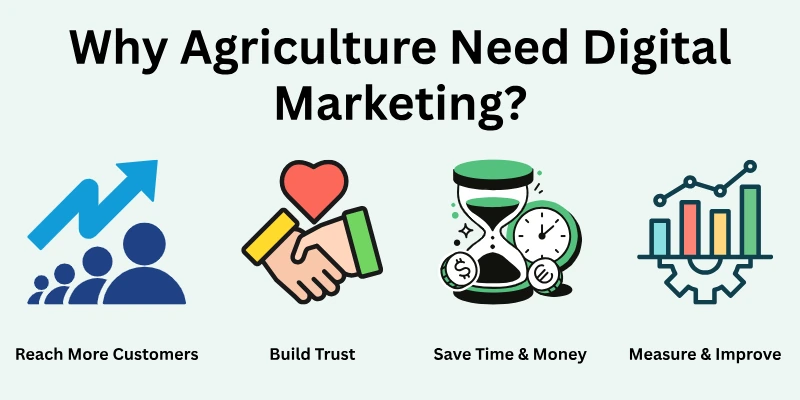
Here’s why it matters:
- Reach more customers: You can sell not just locally but regionally or nationally. A small organic farm, for example, can reach health-conscious buyers far beyond its village.
- Build trust and credibility: Sharing information about your crops, farming methods, or machinery shows buyers you are reliable and professional.
- Save time and money: Instead of relying solely on flyers, phone calls, or local fairs, online marketing lets you connect with many buyers quickly.
- Measure and improve: Digital tools show which posts, ads, or emails actually bring results, so you know what works and what doesn’t.
Top Digital Marketing Strategies for Agriculture
Digital marketing isn’t just one thing. It’s a combination of strategies that work together to help your farm or agribusiness reach more buyers, build trust, and increase sales.
Below are the key strategies that really make a difference.
1. Build a Simple, Professional Website
Your website is your farm’s online home. It’s where buyers go to learn about your products and contact you. A good website should be easy to navigate, mobile-friendly, and visually clear.
- Include clear information about your products, services, and prices.
- Use high-quality photos of your produce, machinery, or livestock.
- Add contact options like WhatsApp, phone number, or email.
- Keep the design simple so pages load quickly, even in rural areas with slow internet.
Example: A vegetable farm can post pictures of weekly harvests, describe each crop, and allow buyers to place orders directly through a simple contact form.
2. Focus on Search Engine Optimization (SEO)
SEO helps your farm show up when buyers search online. By optimizing your website and content, you make it easier for people to find you.
- Research keywords like “organic wheat seeds Punjab” or “high-quality fertilizer near me”.
- Add those keywords naturally in page titles, headings, and product descriptions.
- Use local SEO to appear in nearby towns or districts.
- Build backlinks by sharing your content on trusted agriculture websites or blogs.
Example: A seed supplier can rank for “high-yield rice seeds”, so farmers searching online are directed straight to their website.
3. Share Helpful Content
Content marketing is about teaching, guiding, and inspiring your audience. Good content builds trust and keeps buyers coming back.
- Write blog posts with tips like “How to Protect Your Crops from Pests” or “Best Practices for Organic Farming.”
- Make simple video tutorials showing planting or harvesting techniques.
- Use infographics to compare different fertilizers, seeds, or crop varieties.
- Share success stories from other farmers to inspire your audience.
Example: A dairy farm can create a video showing proper milking and storage techniques, making buyers confident in the quality of their milk.
4. Use Social Media to Connect
Social media is a powerful tool to reach and engage with your audience. It’s not just for promotion; it’s for building relationships.
- Post short videos or photos of farm activities.
- Answer questions from buyers in comments or messages.
- Join farming groups or local community pages.
- Share seasonal tips, product updates, or behind-the-scenes farm stories.
Example: A poultry farm can show live feeding or egg collection on Facebook, helping buyers see transparency and build trust.
5. When is the Right Time to Run Paid Ads?
Paid advertising can help your products get faster visibility, especially during planting or harvest season.
- Use Google Ads for specific searches like “tractor for sale near me.”
Run Facebook or Instagram ads targeting buyers by location or crop type. - Track which ads bring the most interest and adjust them.
Example: A fertilizer supplier can run ads during the sowing season, targeting farmers in regions where that crop is grown.
6. Send Emails and WhatsApp Messages
Direct messaging keeps your buyers informed and engaged.
- Segment your audience by crop type, location, or buying history.
- Share seasonal tips, promotions, or harvest reminders.
- Use WhatsApp Business to confirm orders quickly and efficiently.
Example: A vegetable farm can send weekly planting tips to subscribers while reminding them about seasonal offers.
7. Make Videos for Better Reach
Videos are easy to watch, share, and trust. They help buyers understand your products clearly.
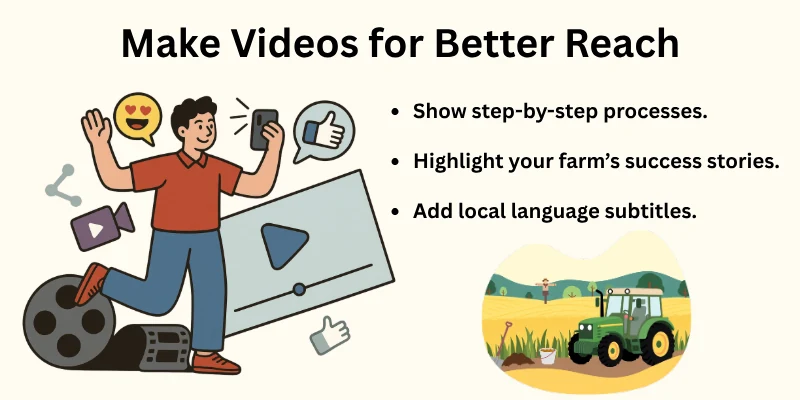
- Show step-by-step processes for planting, harvesting, or equipment use.
- Highlight your farm’s success stories.
- Add local language subtitles for wider reach.
Example: A seed company can show a germination test video so farmers see the quality of their seeds.
8. Collaborate with Influencers and Partners
Working with trusted voices can amplify your marketing efforts.
- Partner with local agriculture experts or educators.
- Publish guest blogs or video interviews.
- Co-host webinars for farmers on modern techniques.
- Offer affiliate programs with local distributors.
Example: An organic fertilizer brand can collaborate with a popular agriculture educator to demonstrate how their product improves crop yield.
Challenges in Digital Marketing for Agriculture
Digital marketing creates strong growth opportunities for farmers and agribusiness owners. But it also comes with real obstacles. When you understand these challenges clearly, you can plan better and avoid common mistakes.
Here are the 10 major challenges in the list below:
- Limited internet access in rural farming areas makes it hard to stay active online and manage campaigns consistently.
- Low digital skills prevent many farmers from using websites, social media tools, and analytics effectively.
- Lack of a clear marketing strategy leads to random posting, weak branding, and wasted advertising budgets.
- High online competition makes it difficult to stand out among other farms and agribusiness brands.
- The seasonal nature of agriculture creates irregular product supply and inconsistent marketing momentum.
- Limited marketing budgets restrict paid advertising, professional website development, and content creation.
- Difficulty targeting the right audience causes weak messaging and low conversion rates.
- Measuring real return on investment (ROI) becomes challenging when online promotions lead to offline sales.
- Building trust and credibility takes time, especially when customers care deeply about food safety and quality.
- Rapid changes in digital platforms and trends make it hard to keep strategies updated and effective.
Future Trends to Watch in Digital Marketing for Agriculture
Digital marketing keeps changing fast. For farmers and agribusinesses, adapting to new trends can create fresh opportunities, boost sales, and build stronger customer connections.
Here are 10 key future trends shaping agriculture marketing:
- AI-powered tools will make content creation, ad targeting, and customer insights faster and smarter.
- Voice search optimization will become important as more users search for agricultural tips using voice assistants.
- Video marketing growth will continue, with short, engaging clips helping farms tell their story.
- Mobile-first strategies will dominate as farmers and buyers rely on smartphones for browsing and buying.
- Agri-influencer collaborations with niche food and farming creators will boost trust and reach.
- Personalized content will increase conversions by addressing specific customer needs and interests.
- Data analytics and predictive insights will help farms make better decisions and plan campaigns with higher ROI.
- E-commerce integration will expand as more farms sell products directly online with secure payment and delivery tools.
- Augmented reality (AR) experiences will let buyers explore products and farm processes in immersive ways.
- Environmental responsibility will help farms win customer loyalty.
These trends will help agriculture brands connect deeper with audiences, tell stronger stories, and adapt to buyer preferences.
Final Words
In this guide, we have explored digital marketing for agriculture and key strategies to help farmers and agribusinesses grow online. We have also discussed important tools like SEO, social media marketing, content creation, email campaigns, and online selling for agricultural products.
Additionally, we have looked at real challenges such as limited internet access, low digital skills, tight budgets, and competition in the agricultural sector. Finally, we highlighted future trends in digital marketing for agriculture, including AI tools, mobile-first strategies, video marketing, and sustainability branding.
The main lesson is clear: you do not need a big budget to succeed in digital marketing for agriculture. You need a clear plan, consistent effort, and a willingness to learn.
Start small. Choose one platform. Create helpful content. Track your results. Improve step by step.
Test often. Learn quickly. Stay consistent.
FAQs: Digital Marketing for Agriculture
Here are some frequently asked questions related to digital marketing in agriculture:
Agricultural digital marketing is the use of online tools to promote farm products and services. It includes social media, email campaigns, websites, and online marketplaces. This approach helps farmers connect with buyers directly and increase sales efficiently.
Marketing strategies for farmers include social media promotion, content creation, email marketing, and local SEO. These strategies help farmers reach the right audience and boost product visibility. Consistent use of these tactics can improve both brand trust and sales.
Farming marketing allows small farms to reach more customers without relying solely on local markets. Using online platforms, farms can showcase products, share stories, and attract buyers. This method increases revenue and strengthens the farm’s brand online.
Methods of advertising in agriculture include social media ads, search engine marketing, email campaigns, and collaborations with local businesses. These methods help farms target buyers more accurately. Combining online and offline advertising increases overall reach.
Agribusiness marketing focuses specifically on promoting agricultural products and farm services. It requires understanding seasonal demand, farm supply chains, and buyer preferences. Digital tools like websites and social media make agribusiness marketing more efficient and measurable.
Social media allows farmers to showcase their products, share farm updates, and interact with customers directly. Platforms like Facebook, Instagram, and YouTube make it easier to build trust and engage buyers. Using social media effectively supports all aspects of digital marketing for agriculture.
Small farms can track website visits, social media engagement, and online sales to measure success. Tools like Google Analytics and simple dashboards help monitor results. Tracking these metrics allows farms to refine their marketing strategies for better growth.




- Be Respectful
- Stay Relevant
- Stay Positive
- True Feedback
- Encourage Discussion
- Avoid Spamming
- No Fake News
- Don't Copy-Paste
- No Personal Attacks
- Be Respectful
- Stay Relevant
- Stay Positive
- True Feedback
- Encourage Discussion
- Avoid Spamming
- No Fake News
- Don't Copy-Paste
- No Personal Attacks
