Social Media Marketing for Law Firms: Easy Guide to Get Clients Online
Published: 13 May 2026
Why is social media marketing for law firms not bringing new clients even when you post regularly?
Many lawyers face this problem. They stay active on social media but still do not get messages or calls. The issue is usually a wrong strategy, weak content, or choosing the wrong platform.
In this article, we explain how social media marketing for law firms really works. We also cover what kind of posts you should share, which platforms to use, and how to get better results.
You will also learn easy steps to improve your reach and attract real clients.
What is Social Media Marketing for Lawyers
Attorney social media marketing is the practice of using platforms like Facebook, Instagram, LinkedIn, X (Twitter), and YouTube to promote a law firm and connect with potential clients.
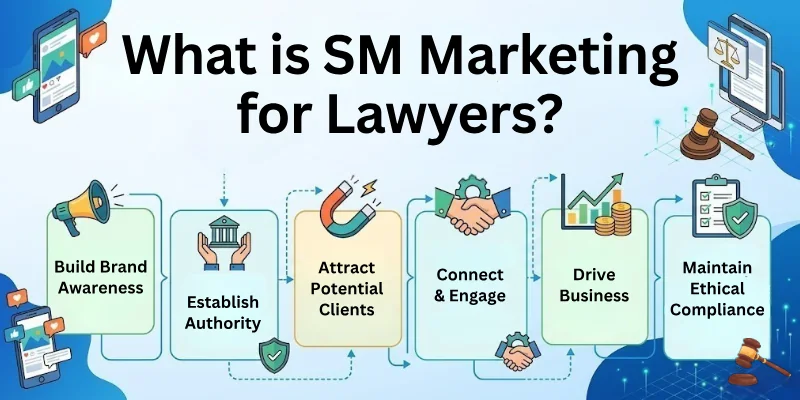
Instead of just posting randomly, it involves sharing helpful legal tips, client success stories, and engaging content that builds trust and demonstrates expertise.
A good lawyer’s social media post helps:
- Show your knowledge in a specific area of law
- Reach clients where they spend time online
- Build your law firm’s brand and credibility
- Generate inquiries and consultations naturally
In short, it’s a strategic way for lawyers to grow their practice online while staying professional and client-focused.
Setting Clear Goals for Lawyer Social Media
Before posting anything, every law firm needs clear goals. Knowing what you want to achieve helps you create posts that matter and get real results.
- Define what you want: awareness, engagement, or client leads
- Decide measurable outcomes for each goal
- Focus on quality over quantity in your posts
- Align social media goals with your law firm’s overall objectives
- Track progress regularly to see what works and adjust
Law Firm Social Media Strategy
A solid social media strategy helps lawyers use their time and resources wisely while reaching the right clients. It’s not just about posting randomly; each post should have a purpose and fit into a bigger plan.
Key Steps to Create Your Strategy:
- Know your target audience: Understand who your ideal clients are, what problems they have, and which platforms they use most.
- Set clear goals: Decide if you want to build awareness, generate leads, or engage your community.
- Choose the right content mix: Combine educational posts, promotional updates, and community-focused content to keep your profile balanced.
- Plan your posting schedule: Decide how often to post on each platform and stick to it consistently.
- Track and adjust: Use analytics to see which posts perform best and refine your strategy over time.
This approach ensures every lawyer’s social media post serves a purpose, builds credibility, and helps grow your law firm.
Best Social Media Platforms for Law Firms
A lawyer’s social media post is most effective when it matches the platform. Some platforms grow trust, others increase visibility, or share fast updates. Don’t post the same content everywhere.
Here’s a breakdown of the most commonly used social media platforms and how they support law firm marketing.
1. Facebook Marketing for Lawyers
Facebook remains one of the largest social platforms worldwide, with a massive daily user base. It allows law firms to stay connected with local audiences, share useful information, and interact directly with people who may need legal help.
- Content formats supported: Status updates, images, video posts, live broadcasts, Stories, Reels, event listings, and interactive polls
- Business presence: Yes. Law firms can create Facebook Business Pages to showcase services, collect reviews, and share essential contact details.
- Standout tools: Private messaging through Messenger, groups for community interaction, and detailed advertising tools for targeted outreach.
2. Instagram for Lawyers
Instagram is designed around visual storytelling and short content. It’s especially effective for law firms that want to build brand recognition and connect with audiences on a more personal level.
- Content formats supported: Photos, short videos, Stories, Reels, carousel posts, and live video sessions
- Business presence: Yes. Instagram business profiles provide performance insights, promotional options, and advertising support.
- Standout tools: Content discovery through the Explore page, high reach with Reels, and smooth integration with Meta advertising tools.
3. Twitter for lawyers (X)
X is a platform built for speed and conversation. It works best for sharing brief updates, opinions, and timely information. Lawyers often use it to react to legal developments or join public discussions.
- Content formats supported: Short text posts, images, videos, polls, and live audio features
- Business presence: Yes. Professional accounts unlock analytics, paid promotions, and customizable call-to-action buttons.
- Standout tools: Hashtags for visibility, trending topics, and Spaces for hosting or joining live audio conversations.
4. LinkedIn for Lawyers
LinkedIn is a professional-first social network focused on business relationships and career growth. It is one of the strongest platforms for lawyers targeting corporate clients or professional referrals.
- Content formats supported: Text posts, long-form articles, images, videos, and interactive polls
- Business presence: Yes. Law firms can create company pages to share updates, highlight services, and post job opportunities.
- Standout tools: Professional networking, hiring features, educational resources, and in-depth analytics.
5. TikTok for Lawyers
TikTok centers on short, engaging video content and is especially popular with younger audiences. Law firms can use it to explain legal concepts in a simple, creative, and relatable way.
- Content formats supported: Short videos, live streaming, and audio-driven content
- Business presence: Yes. TikTok Business Accounts provide insights, advertising tools, and creative features for brand growth.
- Standout tools: Trend-based content discovery, Duets and Stitches for collaboration, and strong algorithm-driven reach.
6. YouTube for Lawyers
YouTube is the world’s largest video platform and a powerful tool for law firms to educate and connect with potential clients. Video content builds trust faster than text alone and positions your firm as an expert in your field.
- Content formats supported: Long-form videos, short videos (YouTube Shorts), live streams, and educational tutorials
- Business presence: Yes. YouTube channels allow law firms to showcase videos, playlists, and client-friendly content.
- Standout tools: SEO-driven search discovery, analytics for tracking viewer engagement, and the ability to embed videos on websites or other platforms.
Creative Content Ideas for Lawyer Social Media Posts
Posting the same content repeatedly won’t engage clients. Law firms need variety to show expertise, build trust, and keep followers interested.
Legal tips and simple explainers
- Share easy-to-understand legal advice or answers to common questions
- Break down complex laws into short, digestible posts
- Example: “What to do if you get a traffic ticket in 3 simple steps”
Case studies and client success stories
- Highlight past wins or positive client experiences (with consent)
- Show real results your firm delivers
- Builds credibility and encourages new clients to reach out
Behind-the-scenes law firm content
- Share staff introductions or a look at daily work life
- Humanize your law firm and build a connection with followers
- Example: photos of your team volunteering or preparing for a case
Writing Effective Lawyer Social Media Posts
Great posts are easy to read, engaging, and show your expertise without overwhelming your audience.
Using clear, simple language
- Avoid legal jargon; use words clients understand
- Keep sentences short and to the point
- Make each post easy to scan quickly
Building trust without fear in posts
- Focus on helpful advice, not scary scenarios
- Show empathy and professionalism
- Example: “Here’s what to do if you face a landlord dispute.”
Posting Frequency and Timing for Lawyers
Knowing when and how often to post helps your law firm stay visible and active without overwhelming your team.
How often to post on each platform
- Start small: 2-3 posts per week per platform
- Gradually increase based on engagement and capacity
- Maintain consistency to build audience trust
Finding the best times for engagement
- Post when your audience is online (usually mornings or lunch breaks for local clients)
- Test different times and track which gets the most interaction
- Adjust your schedule based on analytics
Social Media Advertising for Law Firms
Paid ads help lawyers reach clients beyond organic posts and can generate leads faster when done correctly.

Facebook and Instagram ads for lawyers
- Promote posts to your local area or a specific audience
- Use clear calls to action like “Book a Consultation”
- Test small budgets first to see what works best
LinkedIn ads for legal services
- Target professionals and businesses for corporate or referral clients
- Sponsored content can highlight expertise or case studies
- Focus on building connections rather than aggressive selling
Managing Online Reviews and Comments for Lawyers
Engaging with clients online is an essential part of law firm marketing. Every lawyer’s social media post can spark comments and questions, so how you respond matters.
Responding to comments professionally
- Always reply politely and promptly to questions or compliments
- Use responses to reinforce your expertise and credibility
- Avoid generic replies; personalize based on the comment
Handling negative feedback effectively
- Address complaints calmly and offer solutions when possible
- Never argue or disclose confidential information
- Show professionalism to turn negative experiences into trust-building opportunities
Tracking Results and Measuring Success for Lawyers
To improve lawyer social media posts, it’s important to measure what works. Analytics help law firms focus on strategies that generate real leads and engagement.
Key metrics to track
- Engagement: likes, comments, shares
- Follower growth and reach of posts
- Website clicks and consultation requests from social platforms
- Performance of paid ads and campaigns
Tools for social media analytics
- Free tools: Facebook Insights, Instagram Insights, LinkedIn Analytics
- Paid tools: Hootsuite, Sprout Social, Buffer for tracking across multiple platforms
- Use analytics to adjust your posting schedule and content strategy
Pro Tips to Improve Lawyer Social Media Marketing
Running social media for a law firm can feel overwhelming, but small changes can make a big difference. These tips help lawyers create posts that engage clients and build their firm’s online reputation.
Pro Tips:
- Stay consistent with posting to keep your audience engaged
- Focus on providing value, not just selling legal services
- Tailor your content to each platform and audience
- Use clear, simple language that clients can understand
- Mix content types: educational posts, success stories, and behind-the-scenes updates
- Engage with followers by responding to comments and messages promptly
- Monitor analytics to see what works and adjust your strategy accordingly
Final Thought
In this article, we’ve covered social media marketing for law firms in detail. We looked at how lawyers can use social platforms to attract clients and stay visible online.
From my experience, I personally recommend focusing on building trust first, not just posting random content. Share useful legal tips and answer common client questions in simple words.
This helps people connect with you easily. If you are serious about growing your law practice, start using these strategies today and stay consistent to see real results over time.
FAQs: Social Media Marketing for Law Firms
This section answers the questions most lawyers have about social media for law firms, including how to use it for marketing, building trust, and attracting new clients.
Good social media management for lawyers keeps your posts fresh and relevant, saves time, and helps you stay active with followers.
- It builds trust
- It grows awareness
- It helps engage with potential clients online
This makes your firm look professional and reachable.
Yes, legal social media posts can help attract clients when they provide helpful information, answer common legal questions, or show your firm’s expertise.
- Use simple language
- Share tips people care about
- Be consistent with your posts
This shows your law firm as helpful and trustworthy.
There is no single best platform, but many lawyers find success with:
- LinkedIn for professional networking and referrals
- Facebook for local audience engagement
- Instagram for visual branding and short videos
- YouTube for longer explainer content
Choosing the right one depends on where your ideal clients spend time online.
Law firms check simple numbers to see how their social media posts perform:
- Likes, comments, and shares
- Clicks to your website
- New followers each month
These help you understand what content works best and how social media helps your practice grow.
Lawyers can create effective legal social media content by focusing on posts that educate, inform, or answer common questions.
- Share quick legal tips or step-by-step guides
- Highlight client success stories (with permission)
- Show behind-the-scenes work to humanize your firm
Regular, helpful posts make your social media presence stronger and attract more clients.




- Be Respectful
- Stay Relevant
- Stay Positive
- True Feedback
- Encourage Discussion
- Avoid Spamming
- No Fake News
- Don't Copy-Paste
- No Personal Attacks
- Be Respectful
- Stay Relevant
- Stay Positive
- True Feedback
- Encourage Discussion
- Avoid Spamming
- No Fake News
- Don't Copy-Paste
- No Personal Attacks
