Digital Marketing for Dropshipping in 2026 Guide
Published: 25 Jul 2026
Dropshipping allows you to sell products online without holding stock. Your supplier ships the product directly to your customer. But having a store alone is not enough. Without digital marketing for dropshipping, potential buyers will never find your store.
For dropshipping stores, digital marketing helps you:
- Attract buyers who are ready to purchase dropshipping products
- Build trust so customers feel confident buying online
- Turn one-time visitors into repeat buyers
Think of digital marketing as the engine of your dropshipping business; it drives traffic, builds credibility, and increases sales.
Start with a Clear Marketing Plan for Your Dropshipping Store
Every successful dropshipping store begins with a plan. Marketing without a plan wastes money and time.
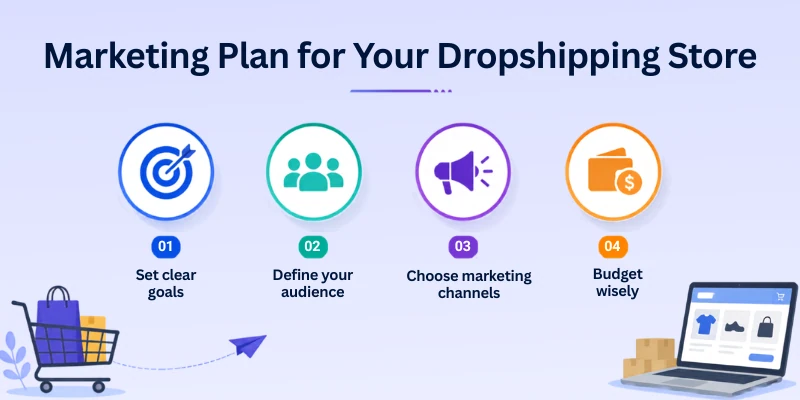
Steps to create a dropshipping marketing plan:
- Set clear goals – For example, 100 orders per month or 500 email subscribers
- Define your audience – Identify who is most likely to buy your dropshipping products
- Choose marketing channels – Decide whether to focus first on social media, SEO, paid ads, or email marketing for your dropshipping store
- Budget wisely – Allocate money for paid ads, content creation, and tools
Tip: Write your strategy on one page. This makes all your dropshipping marketing efforts focused and measurable.
Know Your Dropshipping Customers
Understanding your dropshipping customers makes all your marketing more effective.
Steps:
- Identify age, location, interests, and income
- Understand the problems your dropshipping products solve
- Find where your customers spend time online
Example: If you sell fitness accessories via dropshipping, your target audience may be 18–35-year-olds who watch workout videos on TikTok and follow fitness pages on Instagram.
Build Trust to Increase Dropshipping Sales
Trust is crucial in dropshipping because customers cannot physically see your products.
Ways to build trust:
- Product reviews: Display real customer reviews on your dropshipping product pages
- High-quality images: Show clear, professional photos from multiple angles
- Shipping information: Clearly display delivery times and policies
- Trust badges: Add secure checkout and money-back guarantees
Example: A dropshipping fashion store added verified customer photos on product pages and increased sales by 30% in one month.
Use the Right Marketing Channels for Dropshipping
Choosing the right marketing channels helps you reach more potential customers. Focus on the platforms where your target audience spends the most time.
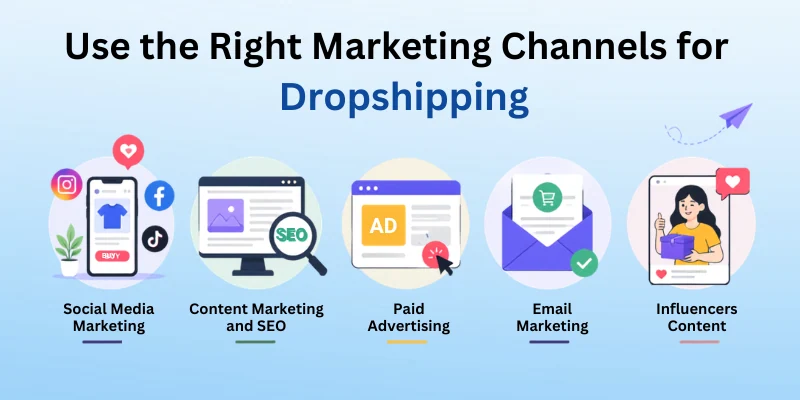
Focus on channels that reach your audience effectively.
1. Social Media Marketing for Dropshipping
Social media drives awareness and sales for dropshipping stores.
Best platforms:
- TikTok: Short videos showing your dropshipping products in action
- Instagram: Reels, Stories, and carousel posts for product demos
- Pinterest: Boards that visually inspire customers
Tips:
- Post consistently (3–5 times per week)
- Use trending hashtags for more visibility
- Share behind-the-scenes content and customer experiences
Example: A dropshipping LED lights store ran a TikTok challenge using user-generated content and increased sales by 35% in two weeks.
2. Content Marketing and SEO for Dropshipping
Content marketing and SEO bring long-term traffic to your dropshipping store.
Steps:
- Use keywords naturally in titles, product descriptions, and blog posts
- Write blogs like “5 Tips to Choose the Best Ergonomic Chair”
- Optimize images with descriptive filenames and alt text
- Add FAQs to answer customer questions and boost SEO
Tip: Use tools like Google Keyword Planner to find dropshipping-related search terms. Target both broad and long-tail keywords for better results.
3. Paid Advertising for Dropshipping
Paid ads bring instant traffic and help your dropshipping store make sales faster.
Platforms to use:
- Facebook & Instagram Ads
- TikTok Ads
- Google Search & Shopping Ads
Steps for beginners:
- Start with a small budget ($5–$10 per day)
- Test 2–3 ad creatives
- Use strong calls-to-action like “Buy Now” or “Limited Stock”
- Track conversions and adjust your campaigns
Example: A skincare dropshipping store tested multiple TikTok ads and discovered one video ad that converted 3x better than the others.
4. Email Marketing for Dropshipping
Email marketing is one of the most effective ways to get repeat sales in dropshipping.
What to send:
- Abandoned cart reminders
- Weekly or monthly product updates
- Exclusive discounts or promotions
Tip: Segment your email list. Send welcome emails to new buyers and loyalty offers to repeat customers.
5. Influencers and User-Generated Content for Dropshipping
Influencers and UGC build trust and social proof for dropshipping stores.
How to use them:
- Ask customers to share photos and videos of your dropshipping products
- Collaborate with micro-influencers in your niche
- Share UGC on social media and product pages
Example: A fitness accessories dropshipping store sent products to micro-influencers. Their posts boosted website traffic by 25% in one week.
Retarget Visitors Who Didn’t Buy in Your Dropshipping Store
Many visitors leave without buying. Retargeting reminds them of your products.
How to do it:
- Install Facebook Pixel or Google Tag on your dropshipping store
- Show ads to visitors who viewed products but didn’t purchase
- Offer discounts or free shipping as incentives
Example: A dropshipping store offered 10% off for abandoned carts. 40% of visitors returned to complete their purchase.
Track, Analyze, and Improve Your Dropshipping Marketing
You can’t grow your dropshipping store if you don’t measure what’s working. Tracking and analyzing your marketing lets you spend money wisely and get better results.
Key Metrics to Track for Dropshipping:
- Website Traffic Sources – Find out where your visitors come from: social media, Google, paid ads, or email. This helps you know which channel brings the most buyers.
- Ad Performance and Cost per Conversion – Check which ads lead to actual sales and how much each sale costs. Focus on ads that bring a high return on investment.
- Top-Selling Dropshipping Products – Identify which products are selling the most. Invest more in marketing those items and test similar products.
Tools You Can Use:
- Google Analytics: Track visitor behaviour, traffic sources, and conversions.
- Facebook Ads Manager: See which Facebook/Instagram ads are working and which are not.
- TikTok Analytics: Understand which TikTok campaigns drive traffic and sales.
- Shopify Dashboard: Monitor your dropshipping sales, products, and customer behaviour in one place.
Final Words
So guys, it’s time to conclude. In this article, we’ve covered digital marketing for dropshipping in detail. From building a clear strategy to using social media, SEO, paid ads, and email marketing, every step matters.
Personally, I recommend starting small, testing a few ads, tracking results, and focusing on what works before scaling. If you apply these strategies consistently, your dropshipping store can grow steadily.
Now it’s your turn, start implementing these tips today and watch your sales rise!
FAQs: Digital Marketing for Dropshipping
If you’re just getting started or have questions about dropshipping, these FAQs answer the most common concerns and give practical tips to help your store grow:
Social media marketing for dropshipping means sharing your products on platforms like TikTok, Instagram, and Pinterest. You can post videos, photos, or customer reviews to attract your target audience. Regular posting and trending hashtags increase visibility and drive traffic to your dropshipping store.
Paid ads like Facebook Ads, Instagram Ads, TikTok Ads, and Google Shopping Ads work well for dropshipping. These platforms allow you to target audiences who are most likely to buy your products. Testing small budgets and tracking ad performance helps you get the best results for your dropshipping business.
SEO helps your dropshipping website appear in Google search results for keywords your customers are searching. Optimizing product pages, titles, and blog content improves visibility and brings free traffic. Strong SEO increases long-term sales without relying only on paid ads.
You can track dropshipping marketing results using tools like Google Analytics, Facebook Ads Manager, TikTok Analytics, and Shopify dashboards. Measure website traffic, ad conversions, and top-selling products. Tracking these metrics helps you improve campaigns and increase sales.
Yes! Email marketing helps convert one-time buyers into repeat customers. You can send abandoned cart reminders, product updates, or special discounts. Personalized emails increase trust and encourage customers to return to your dropshipping store.
Retargeting shows ads to visitors who left your dropshipping store without buying. It reminds them of your products and encourages them to complete their purchase. Retargeting ads often increase conversions and recover lost sales.
Yes, working with micro-influencers can boost your dropshipping sales. Influencers create trust by showing real people using your products. Sharing influencer content on social media and product pages helps attract new buyers.




- Be Respectful
- Stay Relevant
- Stay Positive
- True Feedback
- Encourage Discussion
- Avoid Spamming
- No Fake News
- Don't Copy-Paste
- No Personal Attacks
- Be Respectful
- Stay Relevant
- Stay Positive
- True Feedback
- Encourage Discussion
- Avoid Spamming
- No Fake News
- Don't Copy-Paste
- No Personal Attacks
