Effective WhatsApp Marketing Strategies to Grow Sales Fast
Published: 8 May 2026
Want your messages to actually reach customers and get noticed? WhatsApp marketing strategies are designed to do just that.
They help businesses send updates, offers, and useful content directly to their audience in a personal way. Using tools like broadcast lists, chatbots, and guided flows, you can engage customers faster and increase loyalty.
Even beginners can start small and grow their results step by step. With the right approach, WhatsApp becomes a powerful tool to boost engagement and sales.
Top WhatsApp Marketing Strategies
Here are some strategies we will discuss to help you understand how to use WhatsApp for business. These tips will make it easier to connect with customers, share offers, and grow your brand effectively.
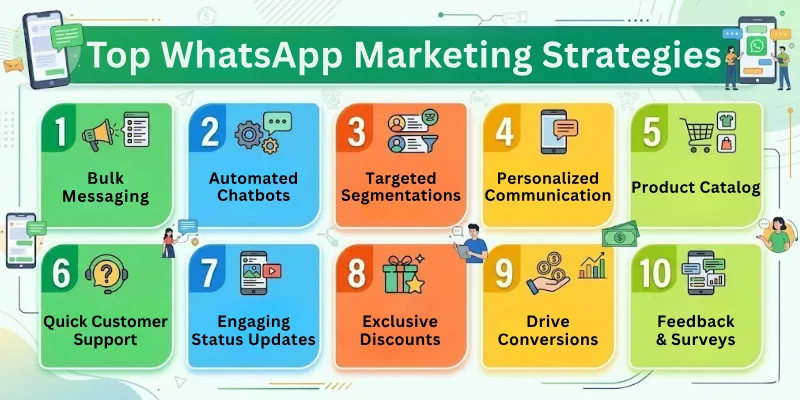
1. Click-to-WhatsApp Ads (Facebook/Instagram)
Many people scroll social media but hesitate to contact businesses because it feels too complicated. Click-to-WhatsApp ads let users start a chat instantly, removing friction and increasing engagement. This strategy is perfect for businesses that want leads, inquiries, or direct sales quickly.
How to run effective Click-to-WhatsApp Ads:
- Add a clear call to action like “Message Us” or “Chat Now”.
- Target the ad to the right audience based on location, interests, or demographics.
- Use eye-catching visuals and concise text to grab attention.
Example: A shoe brand posts an Instagram ad. “Want a free sample? Click here to chat with us on WhatsApp!”
Tips:
- Track clicks that convert into leads or sales.
- Test different images, messages, and buttons.
Common mistakes:
- Using generic text without a CTA.
- Targeting the wrong audience results in low engagement.
2. Subscriber Building with QR Code or WhatsApp Link
Some people prefer joining a list quickly without forms. QR codes and WhatsApp links allow users to subscribe in seconds, both online and offline. This gives your audience control while helping you grow your subscriber base naturally.
How to build subscribers using QR codes or WhatsApp links effectively:
- Place QR codes in visible areas like flyers, menus, posters, or store displays.
- Share WhatsApp links on social media, websites, or email newsletters.
- Include a short description explaining the benefit of subscribing.
Example: A café prints a QR code on its menu: “Scan to get daily coffee discounts on WhatsApp!”
Tips:
- Make the QR code or link visually noticeable.
- Keep the call to action simple and inviting.
Common mistakes:
- Hiding the QR code in hard-to-see places.
- Not explaining the benefit of subscribing.
3. Integration with Website, Email, & Social Media
Visitors often leave a website or email without contacting you. By integrating WhatsApp across platforms, you make it easy for people to connect instantly. Multiple touchpoints increase engagement and help capture leads wherever your audience is active.
How to integrate WhatsApp effectively with other channels:
- Add a WhatsApp chat button on your website and product pages.
- Include WhatsApp links in email newsletters.
- Share WhatsApp links regularly on social media posts.
Example: An online store adds a WhatsApp button at checkout. “Questions about your order? Chat with us now!”
Tips:
- Track which channels bring the most subscribers.
- Use clear, simple language on buttons.
Common mistakes:
- Using too many buttons, which can confuse visitors.
- Ignoring mobile users – ensure buttons are mobile-friendly.
4. Opt-In & Compliance Best Practices (Avoid Spam)
Sending messages without consent can annoy users and hurt your brand. Opt-in ensures subscribers agree to receive messages, which builds trust and keeps your WhatsApp account safe. Compliance also protects you from legal issues.
How to get proper opt-in and stay compliant effectively:
- Ask users to subscribe voluntarily.
- Clearly explain what type of messages they will receive.
- Provide an easy unsubscribe option.
Example: A fitness brand asks on its website, “Subscribe to our WhatsApp tips for free workout guides!”
Tips:
- Avoid sending too many messages.
- Keep content useful and relevant to subscribers.
Common mistakes:
- Adding users without consent.
- Failing to include an unsubscribe option.
5. WhatsApp Flows for Lead Capture
Manual follow-ups take time and can confuse new subscribers. WhatsApp flows automate conversations step by step, helping collect leads, guide users, and increase engagement without extra effort.
How to create effective WhatsApp Flows for lead capture:
- Use buttons or quick replies to guide users.
- Ask for one piece of information at a time.
- Test flows regularly to ensure smooth functioning.
Example: “Hi! Welcome to our store. Reply 1 for men’s shoes, 2 for women’s shoes.”
Tips:
- Keep steps short and simple.
- Personalize responses whenever possible.
Common mistakes:
- Asking too many questions at once.
- Not testing flows, which can confuse users.
6. Event Invitations & Reminders
Many people miss events because they forget or overlook emails. WhatsApp allows direct invitations and reminders, which increases attendance and keeps your audience engaged with your brand.
How to send effective event invitations & reminders:
- Include event details: date, time, location, and RSVP link.
- Send a reminder message closer to the event date.
- Keep messages short, clear, and actionable.
Example: “Join our free webinar on Friday at 5 PM. Click here to register!”
Tips:
- Use simple call-to-action buttons like “RSVP Now” or “Join Here”.
- Send reminders at optimal times to maximize attendance.
Common mistakes:
- Sending reminders too early or too late.
- Overloading messages with too many details.
7. Contests & Giveaways
People love winning prizes, and contests are a fun way to grow subscribers and increase engagement. They motivate new users to join while keeping current subscribers active.
How to run effective contests & giveaways on WhatsApp:
- Announce the contest or giveaway clearly.
- Ask participants to reply, share, or complete a task.
- Reward winners with prizes, discounts, or exclusive offers.
Example: “Reply to this message with your favourite product to win a $20 voucher!”
Tips:
- Keep rules simple and easy to follow.
- Choose rewards your audience cares about.
- Announce winners publicly to build trust and credibility.
Common mistakes:
- Complicated rules that confuse participants.
- Not delivering prizes promptly.
8. Broadcast Messages
Broadcast messages let you send the same message to many contacts at one time. Businesses use them to share updates, offers, or important announcements. This strategy helps you reach many people quickly without creating separate messages. When used properly, broadcast messages save time and increase engagement.
How to use broadcast messages effectively:
- Write short and clear messages that are easy to read.
- Send messages at the right time when your audience is active.
- Limit how often you send messages to avoid disturbing users.
Example: A grocery store sends a message: “Fresh fruits arrived today! Get 10% off before 8 PM.”
Tips:
- Add a clear call to action like “Visit Today” or “Reply YES”.
- Use line breaks or emojis to improve readability.
Common mistakes:
- Sending messages too frequently.
- Sending long or confusing text.
9. Personalized & Segmented Messaging
Personalized and segmented messaging helps you send relevant messages to the right people. Instead of sending the same message to everyone, you divide your audience based on interests, behaviour, or location. This makes messages feel more personal and useful.
How to do Personalized & segmented messaging effectively:
- Group users based on interests or actions.
- Use the customer’s name or preferences in messages.
- Send offers that match their needs.
Example: “Hi Ali, your favourite sports shoes are back in stock!”
Tips:
- Start with simple segments like new users and repeat buyers.
- Keep personalization natural and friendly.
Common mistakes:
- Over-personalizing with too much data.
- Sending irrelevant messages to the wrong group.
10. Automated Messaging (Welcome, Reminders, Notifications)
Automated messaging allows businesses to send messages without manual effort. These messages trigger automatically when users take an action. Automation helps you respond faster and improves customer experience.
How to use automated messaging effectively:
- Set up welcome messages for new subscribers.
- Send order or appointment reminders on time.
- Use notifications for updates like delivery status.
Example: “Thank you for your order! We will notify you once it ships.”
Tips:
- Keep automated messages polite and short.
- Always confirm the message timing.
Common mistakes:
- Sending too many automated messages.
- Using robotic or cold language.
11. Drip Campaigns (Message Series)
Drip campaigns send a series of messages over time instead of one message. This helps educate users step by step and keeps them engaged. Drip campaigns work well for onboarding, promotions, and product education.
How to create drip campaigns effectively:
- Plan messages in a logical order.
- Send messages with time gaps between them.
- Focus on one idea per message.
Example:
- Day 1: Welcome message
- Day 2: Product benefits
- Day 3: Special offer
Tips:
- Keep messages helpful, not sales-focused only.
- Track which messages get replies.
Common mistakes:
- Sending messages too fast.
- Repeating the same message again and again.
12. WhatsApp Status Marketing
WhatsApp Status lets you share content that stays visible for 24 hours. It works like stories on social media. This method helps you stay visible without sending direct messages.
How to use WhatsApp Status effectively:
- Post updates regularly but not too often.
- Share offers, tips, or behind-the-scenes content.
- Use text, images, or short videos.
Example: “Today only: free delivery on all orders!”
Tips:
- Add simple text with bright visuals.
- Use statuses for reminders and flash sales.
Common mistakes:
- Posting low-quality images.
- Posting too many statuses in one day.
13. Rich Media Content (Images, Videos, PDFs, GIFs)
Rich media content makes your messages more engaging and attractive. Visual content helps users understand products faster and keeps their attention longer. This works better than plain text messages.
How to use rich media content effectively:
- Use clear images or short videos.
- Share PDFs like catalogs or guides.
- Keep file sizes small for fast loading.
Example: A brand sends a PDF product catalog on WhatsApp.
Tips:
- Add a short caption to explain the content.
- Use visuals that match your brand style.
Common mistakes:
- Sending large files takes time to open.
- Sharing content without explanation.
14. Educational & Value Content
Educational content helps users learn something useful. Instead of selling, you provide value through tips, guides, or advice. This builds trust and long-term engagement.
How to share educational & valuable content effectively:
- Identify common questions from customers.
- Share tips, how-to guides, or quick advice.
- Keep content easy to understand.
Example: “3 tips to choose the right skincare product for your skin type.”
Tips:
- Keep content short and practical.
- Use simple words and examples.
Common mistakes:
- Making content too technical.
- Posting without a clear purpose.
15. Exclusive WhatsApp VIP Groups
VIP groups create a sense of exclusivity. These groups are for loyal customers who want special deals or early access. VIP groups help build strong customer relationships.

How to manage exclusive WhatsApp VIP groups effectively:
- Limit the group to selected users.
- Share exclusive offers or early announcements.
- Maintain group rules clearly.
Example: “VIP members get early access to our new collection.”
Tips:
- Keep the group active but controlled.
- Respond quickly to group questions.
Common mistakes:
- Allowing spam messages in the group.
- Adding users without permission.
16. Chatbots for Interaction and FAQs
Chatbots help businesses reply instantly to common questions. They reduce response time and improve customer satisfaction. Chatbots also work 24/7 without human support.
How to use chatbots effectively:
- Add answers to frequently asked questions.
- Use buttons or quick replies for easy navigation.
- Update chatbot responses regularly.
Example: “Reply 1 for pricing, 2 for delivery, and 3 to talk to support.”
Tips:
- Keep chatbot replies simple and friendly.
- Always give an option to talk to a human.
Common mistakes:
- Using long or confusing replies.
- Not updating chatbot information.
17. Retargeting & Follow-Up Messages
Retargeting messages help you reconnect with people who showed interest but did not take action. Follow-up messages remind them about products, offers, or unfinished actions. This strategy helps recover lost leads and increases conversions.
How to use retargeting & follow-up messages effectively:
- Identify users who clicked, asked questions, or added items to the cart.
- Send a gentle reminder after some time.
- Keep the message helpful, not pushy.
Example: “Hi Ahmed, you checked our laptop yesterday. Let us know if you need help.”
Tips:
- Wait some time before sending follow-ups.
- Personalize messages based on user action.
Common mistakes:
- Sending follow-ups too quickly.
- Using aggressive sales language.
18. Conversational Commerce Journeys (Step-by-Step Buying Path)
Conversational commerce guides customers through buying using simple chat messages. Instead of sending users to long pages, you help them choose, decide, and buy step by step. This feels natural and easy for beginners.
How to create conversational commerce journeys effectively:
- Start with a welcome message.
- Ask simple questions to understand needs.
- Guide users toward product selection and payment.
Example: “What are you looking for? Reply 1 for men’s wear. Reply 2 for women’s wear.”
Tips:
- Keep steps short and clear.
- Use buttons or quick replies.
Common mistakes:
- Asking too many questions at once.
- Making the journey confusing.
19. WhatsApp Payments for Direct Orders
WhatsApp payments allow customers to pay directly inside the chat. This removes extra steps and makes buying faster. When payment is easy, more people complete their orders.
How to use WhatsApp Payments effectively:
- Confirm product and price clearly.
- Share the payment request inside WhatsApp.
- Send order confirmation after payment.
Example: “Your total is $25. Tap below to pay and confirm your order.”
Tips:
- Use payments only where available.
- Always send payment confirmation.
Common mistakes:
- Not explaining payment steps.
- Delaying confirmation messages.
20. Multi-Product Catalog Messaging
Multi-product catalog messaging lets you show many products in one place. Customers can browse easily without asking again and again. This saves time for both the business and the customer.
How to use Multi-Product Catalog Messaging effectively:
- Organize products into clear categories.
- Share catalogs during chats or broadcasts.
- Keep product details simple.
Example: “Here is our summer collection catalog. Tap to view prices and details.”
Tips:
- Update catalogs regularly.
- Use clear product images.
Common mistakes:
- Using outdated products.
- Adding too many items at once.
21. Carousel Messages for Product Display
Carousel messages display multiple products in a scrollable format. Each product has its own image, text, and button. This helps users compare products quickly.
How to use Carousel Messages effectively:
- Show best-selling or related products.
- Add short descriptions for each item.
- Use clear action buttons like “Buy Now”.
Example: A carousel showing 5 shoe designs with prices.
Tips:
- Keep product titles short.
- Highlight key benefits.
Common mistakes:
- Using low-quality images.
- Adding too many products to one carousel.
22. Limited-Time Offers & Flash Sales
Limited-time offers create urgency and push quick decisions. Flash sales work well on WhatsApp because messages feel personal and instant. This strategy boosts short-term sales.
How to run limited-time offers effectively:
- Clearly mention the start and end times.
- Highlight the discount or benefit.
- Add a strong call to action.
Example: “Flash Sale! 30% off for the next 6 hours only.”
Tips:
- Use countdown language.
- Send reminders before the offer ends.
Common mistakes:
- Extending the offer too often.
- Not honouring the deadline.
23. Cross-Selling & Upselling
Cross-selling suggests related products. Upselling encourages a higher-value option. Both strategies increase order value when done politely and at the right time.
How to do cross-selling & upselling effectively:
- Suggest products that match the main purchase.
- Explain the extra benefit clearly.
- Keep suggestions optional.
Example: “Would you like socks with your shoes for just $5 more?”
Tips:
- Suggest only relevant items.
- Keep the tone helpful.
Common mistakes:
- Pushing too many add-ons.
- Suggesting unrelated products.
24. Customer Support & Help Desk on WhatsApp
WhatsApp works well as a customer support channel because people already use it daily. Customers prefer quick replies instead of emails or calls. A WhatsApp help desk builds trust and improves customer satisfaction.
How to use WhatsApp for customer support effectively:
- Set clear support hours and response time.
- Answer common questions quickly using saved replies or automation.
- Assign support staff to handle chats properly.
Example: “Hi! How can we help you today? Reply with your order number.”
Tips:
- Respond politely and clearly.
- Keep messages short and helpful.
Common mistakes:
- Delayed replies.
- Sending unclear or incomplete answers.
25. Loyalty Programs (Rewards, Points, Exclusive Perks)
Loyalty programs encourage customers to return again and again. WhatsApp makes loyalty programs easy because updates reach users directly. Rewards and exclusive perks help build long-term relationships.
How to run loyalty programs on WhatsApp effectively:
- Explain how customers earn points or rewards.
- Send regular updates about points and offers.
- Offer exclusive deals only for WhatsApp users.
Example: “You earned 50 points! Redeem them on your next purchase.”
Tips:
- Keep reward rules simple.
- Remind users about unused points.
Common mistakes:
- Making reward systems too complex.
- Forgetting to update users regularly.
26. Feedback & Survey Messages
Feedback messages help you understand what customers think. Surveys help improve products and services. WhatsApp surveys feel personal, so users reply more often.
How to collect feedback & surveys effectively on WhatsApp:
- Ask short and clear questions.
- Use buttons or quick replies for answers.
- Thank users for their feedback.
Example: “How was your experience today?
- Reply 1 for Good
- Reply 2 for Average
- Reply 3 for Poor”
Tips:
- Ask for feedback soon after service.
- Keep surveys very short.
Common mistakes:
- Sending long surveys.
- Ignoring the feedback received.
Final Words
This guide showed you how to use WhatsApp marketing strategies to grow your business. Sending helpful messages, sharing offers, and answering questions quickly lets you connect personally with your customers. Broadcasts, chatbots, contests, and rich media make messages engaging and easy to read.
Start small, test what works, and keep messages clear. By following these steps, WhatsApp can become a powerful tool to build trust, increase sales, and keep your customers happy.
FAQs: WhatsApp Marketing Strategies
Here are some common questions people ask about WhatsApp marketing strategies.
WhatsApp marketing strategies are simple methods businesses use to promote products on WhatsApp. These strategies help brands talk directly with customers. They include messages, offers, support, and updates. Businesses use WhatsApp because people open messages quickly. This makes WhatsApp marketing strategies very effective for engagement.
Beginners should start small and focus on value. Here are some WhatsApp marketing tips to begin:
- Create a WhatsApp Business profile
- Ask users to join with permission
- Send helpful and clear messages
- Avoid sending messages too often
These steps help build trust and results.
Businesses send WhatsApp marketing messages using broadcast lists, automation tools, or chatbots. They share offers, updates, or reminders. Good messages stay short and clear. Businesses also add a clear action like “Reply YES” or “Order Now.” This keeps users interested and active.
A WhatsApp marketing campaign is a planned series of messages sent for a goal. The goal can be sales, leads, or awareness.
A campaign usually includes:
- A clear offer or message
- A set time period
- Follow-up messages
This structure helps improve results.
To use WhatsApp for marketing safely, always ask for permission first. Send messages only to interested users. Keep content useful and relevant. Allow users to opt out easily. Respecting users builds trust and protects your business account.
Simple and useful content works best. Here are some effective tips on WhatsApp content:
- Short text messages
- Images or short videos
- Limited-time offers
- Helpful tips or guides
Avoid long or confusing messages.
WhatsApp generates revenue mainly from business tools. Companies pay to use the WhatsApp Business API. WhatsApp also earns from click-to-WhatsApp ads on Facebook and Instagram. Regular users do not pay. This model keeps WhatsApp free for personal use.
Yes, WhatsApp marketing works very well for small businesses. It costs less than ads and feels personal. Small brands can answer questions, send updates, and close sales faster. With the right strategy, even local businesses can grow using WhatsApp.


- Be Respectful
- Stay Relevant
- Stay Positive
- True Feedback
- Encourage Discussion
- Avoid Spamming
- No Fake News
- Don't Copy-Paste
- No Personal Attacks
- Be Respectful
- Stay Relevant
- Stay Positive
- True Feedback
- Encourage Discussion
- Avoid Spamming
- No Fake News
- Don't Copy-Paste
- No Personal Attacks
