Search Engine Optimization for Real Estate: Beginner’s Guide
Published: 3 May 2026
Today, most people start their property search online by typing a few words into Google. If your website doesn’t show up, your competitors get the leads instead.
Search engine optimization for real estate helps your business appear exactly when buyers and sellers are looking for homes or agents. In this guide, you’ll learn how to find the right keywords, optimize your pages, rank locally, and turn website visitors into real leads.
By the end, you’ll know how to grow your real estate business and get more clients without relying only on paid ads.
Let’s get started without wasting any time!
What is SEO in Real Estate?
Search engine optimization for real estate is the process of making your website easier for search engines like Google to find and show to people looking for properties or real estate services.
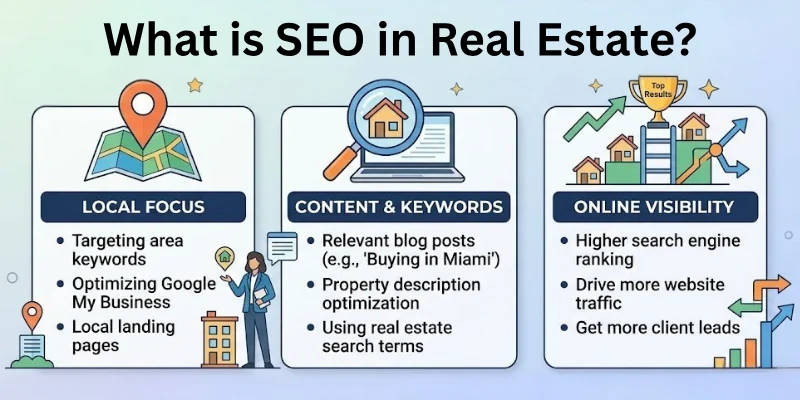
Simple Meaning of Real Estate SEO
- Helps your website appear in search results when someone looks for homes, agents, or property services online.
- Focuses on attracting the right audience who are ready to buy, sell, or invest.
- Improves visibility without relying only on paid ads.
Difference Between General SEO and Real Estate SEO
- General SEO: Works for any website, like blogs or e-commerce, focusing on broad keywords.
- Real Estate SEO: Focuses on property-related searches, local areas, listings, and agent services.
Real estate SEO also considers location, neighbourhoods, property types, and buyer intent.
How SEO Helps Agents, Brokers, and Investors
- Brings more potential clients directly to your website.
- Builds trust by ranking your business higher in search results.
- Saves money on ads by attracting organic traffic.
- Supports long-term business growth with consistent leads.
Example
- Imagine a real estate agent optimizes a property listing with the right keywords, high-quality images, and clear details.
- That listing appears at the top of Google searches for “homes for sale in [city].”
- Each month, the agent gets calls and emails from interested buyers without paying for ads.
How Search Engines Work for Real Estate Websites
Search engines like Google don’t just show random websites—they try to give users the most relevant results. Understanding how they work can help your real estate website appear higher in search results.
How Google Understands Property-Related Searches
- Google reads your website content to see what it is about.
- It looks at property descriptions, keywords, images, and headings.
- The goal is to match what people are searching for with the best answers on your site.
Role of Location, Intent, and Trust
- Location: Google prefers results near the user, so local SEO is important.
- Intent: Google checks if the searcher wants to buy, sell, or just get information.
- Trust: Websites with good reviews, secure connections, and quality content rank higher.
Why “Near Me” Searches Matter
- Most property searches include a location, like “houses for sale near me” or “real estate agent in [city].”
- Optimizing for these searches helps you appear to people ready to act in your area.
- Local listings, maps, and clear contact information increase your chances of showing up.
Who Needs Real Estate SEO?
Real estate SEO isn’t just for big agencies. Any agent, company, or investor who wants more clients online can benefit. It helps you get found by the right people at the right time.
SEO for Real Estate Agents
- Helps your name appear when local buyers or sellers search for an agent.
- Brings leads directly to your website or listing pages.
- Builds trust; people prefer agents they can find online.
SEO for Real Estate Companies
- Makes all your listings and services visible in search results.
- Promotes your brand across multiple neighbourhoods or cities.
- Attracts steady leads without paying for ads constantly.
SEO for Property Investors
- Shows your investment properties to serious buyers or renters.
- Connects you with partners or clients actively searching for deals.
- Helps grow your portfolio with minimal marketing spend.
When to Hire an SEO Firm
- If you don’t have time to manage SEO yourself.
- When you want expert guidance to rank higher locally.
- To get faster results without guesswork or trial and error.
Keywords Research for Real Estate
Finding the right keywords is the backbone of real estate SEO. The better you understand what people search for, the easier it is to attract serious buyers, sellers, and investors.
1. Understanding Search Intent
- Buyer intent vs. seller intent: Buyers want to find homes, while sellers want agents or ways to sell quickly.
- Informational vs. transactional: Some people are just learning (“how to price a house”), while others are ready to act (“buy a 2-bedroom apartment in [city]”). Target both types strategically.
2. How to Find the Right Real Estate Keywords
- Agent-focused keywords: Phrases like “best real estate agent near me”.
- Local keywords: Include cities, neighbourhoods, and landmarks to attract nearby clients.
- Long-tail keywords: Specific searches like “3-bedroom house with garden in [neighbourhood]” bring serious leads.
3. Mapping Keywords to Your Pages
- Homepage: Use broad keywords that represent your business.
- Service pages: Target what you offer, e.g., “real estate SEO for agents”.
- Listing pages: Include property type, location, and key features.
- Blog posts: Focus on questions or problems your audience searches for.
On-Page SEO for Real Estate Websites
On-page SEO helps search engines understand your website and makes it easier for potential clients to find your listings. Small changes can make a big difference in traffic and leads.
Optimizing Property Pages
- Titles, meta descriptions, and URLs: Use clear, descriptive titles with location and property type. Example: “3-Bedroom Apartment for Sale in Downtown [City]”. Make meta descriptions inviting and concise.
- Listing descriptions that rank and convert: Write unique descriptions highlighting key features, nearby amenities, and price. Avoid copying from other listings.
Content SEO for Realtors
- Blogs buyers actually search for: Create posts like “Tips to Buy Your First Home in [City]” or “How to Sell Your House Fast” to attract real leads.
- Avoid thin and duplicate content: Every page should offer real value. Don’t reuse the same text across multiple listings or blog posts.
Image SEO for Property Listings
- Image names and alt text: Name images with descriptive keywords like “2-bedroom-house-downtown-[city].jpg”. Use alt text for accessibility and SEO.
- Faster loading without losing quality: Compress images to improve page speed, which boosts both user experience and Google rankings.
Technical SEO for Real Estate Websites
Technical SEO makes your website easy for Google to read and for visitors to use. Without it, even the best content may never rank.
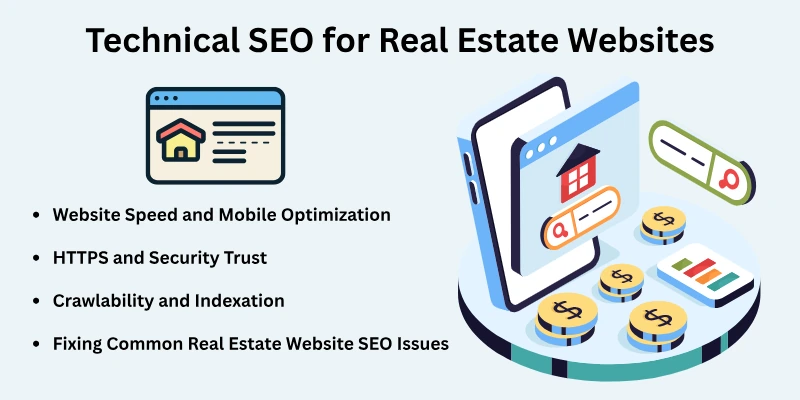
Website Speed and Mobile Optimization
- Fast loading: Slow pages drive visitors away and hurt rankings. Compress images, use caching, and choose a reliable hosting provider.
- Mobile-friendly: Most property searches happen on phones. Make sure your site adapts to all screen sizes.
HTTPS and Security Trust
- Secure connection: HTTPS protects user data and boosts trust. Google also prefers secure sites.
- Visible trust signals: Show badges, SSL certificates, and contact information to reassure visitors.
Crawlability and Indexation
- Easy for Google to read: Use clean URLs and proper sitemaps and avoid broken links.
- Indexing important pages: Ensure all property listings, service pages, and blogs are accessible to search engines.
Fixing Common Real Estate Website SEO Issues
- Duplicate listings or content across pages.
- Missing or poorly written meta tags and headings.
- Broken links or slow-loading property images.
- Poor navigation that confuses visitors and search engines.
Local SEO for Realtors and Property Businesses
Local SEO helps your real estate business show up for people searching nearby. Most buyers and sellers look for agents or properties in a specific city or neighbourhood, so optimizing locally is essential.
Google Business Profile Optimization
- Claim and verify your profile on Google.
- Add accurate business information, photos, hours, and services.
- Post updates, offers, and new listings to stay active.
NAP Consistency
- Ensure your name, address, and phone number are the same across your website, Google profile, and other directories.
- Inconsistent info confuses Google and lowers rankings.
Local Citations and Directories
- List your business on trusted local directories and real estate platforms.
- Use the same NAP information for every listing to improve credibility.
Reviews and Reputation Management
- Encourage satisfied clients to leave reviews on Google and other sites.
- Respond to reviews professionally to build trust and show engagement.
Example
- Optimizing your Google Business Profile and local citations can help you rank for searches like “real estate agent near me”.
- Potential clients can find your office on Google Maps, see your listings, and contact you directly.
Content Planning for Real Estate SEO and Lead Generation
A strong content strategy helps your website attract the right people and turn them into real leads. Instead of posting random blogs, focus on content that solves problems and matches what buyers and sellers actually search for.
Blog Topics That Attract Buyers and Sellers
Choose topics based on real questions clients ask you every day. This type of content brings high-quality traffic.
- Home buying guides for first-time buyers
- Tips to sell a house faster and at a better price
- Cost breakdowns, loans, and legal steps
- Common mistakes buyers or sellers should avoid
These topics attract people who are already interested in real estate, not casual readers.
Market Updates and Area Guides
Local content builds trust and improves local rankings.
- Share monthly or quarterly market updates with simple insights.
- Create area guides covering schools, transport, lifestyle, and pricing.
- Explain what makes one neighborhood better than another for families or investors.
This content helps visitors decide and positions you as a local expert.
Evergreen vs Seasonal Content
A balanced mix keeps your website active all year.
- Evergreen content stays useful long-term, like “How to Choose the Right Real Estate Agent.”
- Seasonal content targets timely searches, such as “Best Time to Buy a Home This Year.”
Evergreen content brings steady traffic, while seasonal content boosts visibility during high-demand periods.
Link Building for Real Estate SEO
Link building helps your real estate website gain trust in the eyes of Google. When reliable websites link to you, search engines see your site as more credible and worth ranking higher.
Why Backlinks Matter in Real Estate
- Backlinks act like recommendations from other websites.
- They help your site rank higher for competitive real estate keywords.
- Quality links bring referral traffic from relevant local sources.
Safe Link-Building Strategies
- Publish helpful content that others want to reference.
- Earn links from real estate blogs, news sites, and local websites.
- Share market reports or area guides that naturally attract links.
Local Partnerships and Listings
- Get listed on local business directories and real estate platforms.
- Partner with mortgage brokers, builders, or legal firms for mutual links.
- Join local chambers of commerce or property associations.
What to Avoid to Stay Penalty-Free
- Buying links from low-quality or spam websites.
- Using the same keyword-rich anchor text repeatedly.
- Creating links that have no connection to real estate or your location.
When you focus on relevant and trustworthy links, your real estate SEO grows steadily and safely over time.
SEO for Real Estate Websites: UX & Conversion
Getting traffic is only half the job. Your real success comes when visitors take action—call you, fill out a form, or book a meeting. A good user experience (UX) helps turn SEO traffic into real leads.
Making SEO Traffic Convert into Leads
- Make your website easy to use and simple to navigate.
- Show relevant listings or services quickly without confusion.
- Keep important information visible, not hidden.
When visitors find what they need fast, they are more likely to contact you.
Clear CTAs for Buyers and Sellers
- Use simple calls to action like “Book a Free Consultation” or “View Available Homes”.
- Place CTAs where users naturally look, such as at the top of pages or after listings.
- Use different CTAs for buyers and sellers to match their intent.
Contact Forms, Chat, and Trust Signals
- Keep contact forms short and easy to fill out.
- Add live chat or WhatsApp for quick responses.
- Show reviews, testimonials, certifications, and local experience to build trust.
A user-friendly website not only ranks better but also turns visitors into long-term clients.
SEO Services for Real Estate Investors & Agencies
SEO can bring steady leads, but only when it’s done the right way. Some people can handle it on their own, while others need expert support. Knowing the difference saves time and money.
When to Do SEO Yourself
- You have a small website with limited pages.
- You are willing to learn basics like keywords and content updates.
- You can give time regularly to track results and fix issues.
DIY SEO works best when competition is low and goals are simple.
When to Hire an SEO Firm
- You operate in a competitive city or market.
- You want faster growth without trial and error.
- You don’t have time to manage SEO consistently.
A professional SEO firm brings experience, tools, and strategy.
What Good SEO Services Include
- Clear keyword research focused on real estate searches.
- On-page, technical, and local SEO improvements.
- Content planning and link-building support.
- Regular reports with honest progress updates.
Red Flags When Choosing an SEO Company
- Promising instant or guaranteed rankings.
- Using secret or unclear SEO methods.
- Lack of reporting or communication.
- Offering very cheap packages with big claims.
Choosing the right SEO partner helps your real estate business grow safely and sustainably.
Real Estate SEO Tips for Long-Term Growth
Real estate SEO is not a one-time task. It works best when you improve and update it over time. Small, consistent efforts help you stay visible and competitive.
Tracking Rankings and Traffic
- Monitor which keywords bring visitors to your website.
- Check which pages get the most traffic and leads.
- Use simple tools like Google Search Console and Google Analytics to measure progress.
Tracking helps you understand what’s working and what needs improvement.
Updating Old Listings and Blogs
- Refresh old property listings with new details or photos.
- Update blogs with current prices, trends, and local data.
- Improve titles and content to match new search behavior.
Updated content often ranks better than brand-new pages.
Staying Ahead of Competitors
- Watch what top-ranking competitors are doing well.
- Create better content, not just more content.
- Focus on local expertise and real value instead of shortcuts.
When you stay consistent and keep improving, SEO becomes a reliable source of long-term real estate leads.
Future of SEO for Real Estate
The world of SEO is changing fast, but real estate businesses that adapt early will stay ahead. Understanding trends helps you prepare for the future and attract more leads.
AI and Search Behaviour Changes
- Search engines use AI to understand user intent better.
- Content that answers real questions clearly will rank higher.
- Optimizing for natural language, not just exact keywords, is becoming more important.
Voice Search and Property SEO
- More people use voice assistants to find homes or agents.
- Queries are longer and more conversational, e.g., “Find 2-bedroom apartments near downtown [city].”
- Optimizing listings and content for voice search helps capture this growing audience.
Why SEO Will Still Matter
- Organic search drives highly targeted traffic consistently.
- Paid ads are useful, but traffic stops when budgets end—SEO builds long-term visibility.
- Real estate is local and competitive; being discoverable online is essential to getting leads.
Keeping up with trends ensures your real estate website stays visible, trusted, and ahead of competitors for years to come.
Final Note
In this guide, we have covered search engine optimization for real estate and how it can help agents, companies, and investors get more clients online. SEO improves visibility, drives qualified leads, and builds trust.
By using the right keywords, optimizing listings, managing local SEO, and creating useful content, you can grow your business steadily. Start small, track results, and expand gradually.
Thank you for reading, and best of luck with your real estate journey! If you have any questions, feel free to ask in the comment section below.
FAQs: Search Engine Optimization for Real Estate
From ranking listings to attracting buyers, here are some questions about SEO for real estate you need to know:
An SEO firm for sale can handle all technical and content optimization for your real estate website. They help improve rankings, manage keywords, and generate consistent leads. Hiring experts saves time and ensures professional strategies that deliver results.
Keywords for real estate agents include phrases buyers and sellers type into Google, like “homes for sale in [city]” or “best realtor near me”.
Using these in listings, blogs, and service pages helps your website appear in relevant searches. Focus on both broad and long-tail keywords for maximum results.
SEO results for real estate websites usually appear in 3–6 months. It depends on competition, website quality, and keyword choices. Consistent updates, local SEO, and optimized content speed up the process.
Yes, beginners can start real estate SEO with basic tools and guides. Focus on optimizing listings, using the right keywords, and creating helpful content. For faster results, consider learning step-by-step strategies or consulting experts.
Local SEO focuses on showing your business in nearby searches, like Google Maps. Real estate SEO combines local strategies with property-specific keywords, blogs, and optimized listings. Together, they attract buyers and sellers in your area effectively.
Yes, backlinks from trusted websites signal credibility to search engines. They help your real estate website rank higher for competitive keywords. Focus on local partnerships, real estate directories, and guest posts to build quality links.




- Be Respectful
- Stay Relevant
- Stay Positive
- True Feedback
- Encourage Discussion
- Avoid Spamming
- No Fake News
- Don't Copy-Paste
- No Personal Attacks
- Be Respectful
- Stay Relevant
- Stay Positive
- True Feedback
- Encourage Discussion
- Avoid Spamming
- No Fake News
- Don't Copy-Paste
- No Personal Attacks
