Social Media Marketing for Doctors – Get More Patients Easily
Published: 1 May 2026
Social media is a powerful tool for doctors to connect with patients, share health information, and grow their practice. Using platforms like Facebook, Instagram, LinkedIn, YouTube, and TikTok helps educate patients, build trust, and showcase expertise while maintaining professionalism.
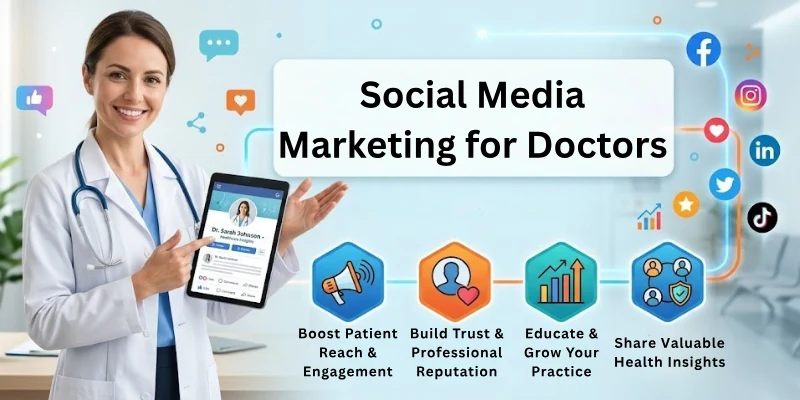
Effective social media healthcare marketing can expand reach, increase referrals, and strengthen your brand, making your practice more visible and credible in the community.
This article will explain social media marketing for physicians, helping you reach more patients effectively. By using social media marketing for clinics, doctors can share health tips, updates, and patient stories to build trust. Let’s begin and explore together.
Benefits of Social Media Marketing for Doctors
Social media is no longer just a way to connect with friends—it’s a powerful tool for doctors and healthcare practices. Using social media effectively can help doctors grow their practice, educate patients, and build trust.
Here are the main benefits:
1. Build Brand Awareness
Social media helps your practice get noticed by more people. By posting regularly and sharing valuable health tips, patients start recognizing your name and practice.
Example: Posting weekly health tips on Facebook or Instagram marketing for doctors can make your clinic a trusted source of information in your community. Over time, more people will remember your practice when they need medical care.
2. Patient Education & Engagement
Social media allows doctors to educate patients in a friendly, easy-to-understand way. You can explain medical conditions, preventive care, or healthy lifestyle tips through posts, videos, or live sessions.
Example: A short Instagram reel showing how to properly wash hands or manage stress can help patients learn important habits. Engaged patients are more likely to follow your advice and return for care.
3. Increase Patient Referrals
When patients see your helpful content online, they are more likely to recommend your practice to friends and family. Social media acts as a platform for word-of-mouth marketing.
Example: Sharing patient success stories (with consent) on social media marketing for clinics can inspire others to trust your services and refer new patients.
4. Reinforce Expertise & Authority
Doctors can establish themselves as experts by sharing knowledge and insights. Posting accurate health information regularly builds credibility and shows that your practice is professional and trustworthy.
Example: Writing short posts about seasonal illnesses or creating videos explaining common treatments can position you as a go-to expert in your field.
5. Improve Patient Experience
Social media allows doctors to communicate directly with patients, answer questions, and provide support outside the clinic. This improves patient satisfaction and loyalty.
Example: Responding to questions in comments or hosting Q&A sessions on Instagram marketing for doctors’ Stories can make patients feel heard and cared for, enhancing their overall experience with your practice.
Tip: Focus on creating content that is simple, educational, and visually appealing. Using images, videos, and clear captions makes it easier for patients to engage and benefit from your posts.
Goal Setting & Strategy Planning for Doctors on Social Media
Before posting on social media, it’s important for doctors to have a clear plan. Posting without a goal is like driving without a map; you may go in the right direction sometimes, but results will be slow and unpredictable.
Goal setting and strategic planning help you focus on what matters most for your practice.
1. Define Clear Goals
The first step is deciding what you want to achieve on social media. Different goals require different strategies:
- Awareness: Let more people know about your clinic and services. Example: Posting health tips and educational videos to reach new patients.
- Engagement: Build relationships with patients by encouraging likes, comments, and shares. Example: Hosting Q&A sessions or polls about common health questions.
- Leads/Conversions: Encourage patients to book appointments or consultations. Example: Promoting telemedicine services or sharing appointment booking links.
Tip: Choose 1–2 main goals at a time to avoid spreading your efforts too thin.
2. How to Set KPIs (Key Performance Indicators)
KPIs help you measure whether your social media marketing efforts for physicians are working. Some useful KPIs for doctors include:
- Followers & Audience Growth: Shows how many people are discovering your practice.
- Reach & Impressions: Measures how many people see your posts.
- Engagement Rate: Likes, comments, shares, and saves show how interested your audience is.
- Clicks & Website Traffic: Tracks whether people are visiting your website marketing for doctors or booking page.
- Appointment Bookings: The ultimate measure of conversion for a doctor’s social media.
Tip: Track KPIs weekly or monthly to identify what works and adjust your strategy accordingly.
3. Align Social Goals with Practice Goals
Your social media goals should support your overall practice objectives. For example:
- If your practice wants to increase patient education, your social media goal could focus on posting weekly health tips or video guides.
- If your goal is to attract more local patients, your social media strategy could include location-targeted ads and local community engagement.
Tip: Always ask, “Will this post or campaign help my practice grow or better serve patients?” If the answer is yes, it aligns with your goals.
Pro Strategy: Create a simple social media strategy document. Include your goals, KPIs, preferred platforms, and types of content. This ensures every post has a purpose and supports your practice growth.
Choose the Right Platforms for Doctors
Not all social media platforms work the same way, and doctors need to pick the ones that best match their goals and audience. Choosing the right platform ensures your time and effort bring real results.
1. Facebook: Patients & Community
Facebook is ideal for connecting with patients and the local community. It allows doctors to share longer posts, links, events, and patient stories.
How to use it:
- Post health tips, clinic updates, and seasonal advice.
- Create events like free check-up days or webinars.
- Encourage patients to leave reviews and share posts.
Example: A clinic posts a weekly article on managing diabetes. Patients read, share, and comment with questions, building engagement and trust.
2. Instagram: Visual Health Content
Instagram is perfect for sharing visually engaging content. Short videos, infographics, and reels can educate and inspire patients.
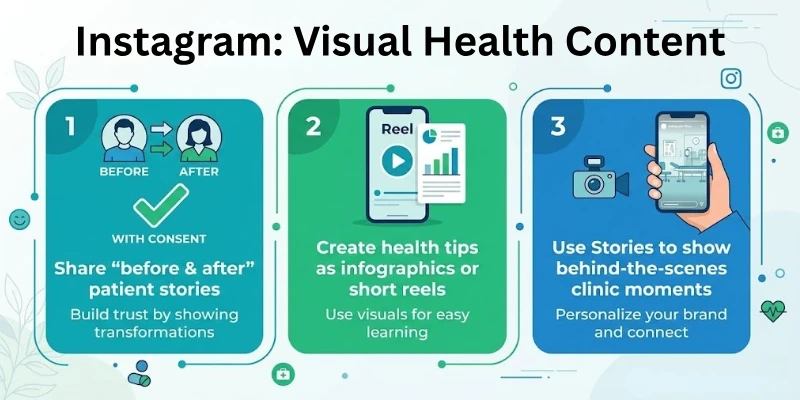
How to use it:
- Share “before & after” patient stories (with consent).
- Create health tips as infographics or short reels.
- Use Stories to show behind-the-scenes clinic moments.
Example: A dermatologist posts skincare tips through colourful infographics and short video tutorials, attracting new followers who trust their expertise.
3. LinkedIn: Professional Reliability
LinkedIn is more professional and is great for doctors who want to establish themselves as experts in their field. It’s ideal for networking, sharing research, and connecting with other healthcare professionals.
How to use it:
- Share articles, research, or case studies.
- Post professional achievements, certifications, and awards.
- Engage in healthcare groups or discussions.
Example: A cardiologist shares a post about the latest research on heart health, reinforcing their expertise and attracting professional connections.
4. YouTube: Educational Videos
YouTube is perfect for long-form video content and in-depth patient education. Videos can explain procedures, health conditions, or preventive tips in detail.
How to use it:
- Create “how-to” or explainer videos.
- Host live webinars or Q&A sessions.
- Include links to your website for appointments.
Example: An orthopedic doctor uploads videos explaining common joint injuries and recovery exercises. Patients subscribe and share videos, increasing clinic visibility.
5. TikTok: Short Medical Tips
TikTok is a growing platform for short, engaging, and creative health content. It’s ideal for reaching younger audiences with bite-sized tips and awareness campaigns.
How to use it:
- Share short, fun, and educational clips.
- Use trending audio to reach more viewers.
- Focus on simple health advice or quick tips.
Example: A pediatrician posts a 30-second video showing how to make healthy snacks for kids. The video goes viral and drives new patients to the clinic.
Pro Tip: Don’t try to be on every platform at once. Focus on 2–3 platforms where your target patients spend most of their time. Consistency is more important than quantity.
Social Media Content Strategy for Doctors
Creating great content is the heart of social media marketing for physicians. For doctors, the goal is to educate, engage, and build trust with patients while also promoting their practice. A well-planned content strategy saves time and ensures every post has a purpose.
1. Types of Content for Doctors
- Tutorials / Health Tips: “5 exercises to reduce back pain” or “How to check your blood pressure at home.”
- Myth Busting: “Debunking 3 myths about flu vaccines.”
- FAQs: “How often should adults get a dental check-up?”
- Behind-the-Scenes at the Clinic: Staff introductions, clinic tours, or preparation for special procedures.
- Patient Testimonials (With Consent): Short videos or quotes from patients describing their positive experience.
2. How to Build a Content Calendar
Steps:
- List topics and content types for each week.
- Assign posts to platforms like Facebook, Instagram marketing for doctors, LinkedIn, and YouTube.
- Schedule posts using tools like Meta Business Suite, Hootsuite, or Buffer.
- Track results and adjust based on engagement.
Tip: Start with one post every 2–3 days on key platforms, then adjust frequency based on patient interaction.
3. Post Frequency Recommendations
- Facebook: 3–5 posts/week
- Instagram: 3–7 posts/week (Stories/Reels included)
- LinkedIn: 1–2 posts/week
- YouTube: 1 video/week or bi-weekly
- TikTok: 2–3 short videos/week
Pro Tip: Mix content types—rotate between health tips, FAQs, and behind-the-scenes content.
Engagement & Community Building for Doctors
Posting content is just the first step. To make social media effective, doctors need to actively engage with their audience and build a community. Engagement strengthens trust, encourages loyalty, and can lead to more referrals.
- Responding to Comments and Messages: Answer politely, use simple language, and take sensitive questions offline when needed.
- Encouraging Patient Interaction: Ask questions, use polls, and encourage patients to share experiences (with consent).
- Using Interactive Content: Quizzes, polls, and live Q&A sessions keep patients engaged.
- Building a Supportive Community: Celebrate milestones, share patient stories, and health challenges.
- Handling Negative Comments Professionally: Stay calm, address factual concerns, and take complaints offline if needed.
Pro Tip: Engage 15–30 minutes daily to maintain trust and active community presence.
Paid Social Advertising for Doctors
Paid campaigns boost visibility and attract new patients. You can use social media marketing healthcare industry strategies to:
- Run awareness ads targeting local patients.
- Promote telemedicine or appointments through lead generation ads.
- Set a budget based on clinic size and target audience.
Example: A dentist runs a Facebook ad for teeth cleaning promotions, increasing bookings in one week.
Compliance & Ethics in Social Media Healthcare Marketing
Maintaining trust and protecting patient privacy are essential when using social media in healthcare. Following the right rules ensures your marketing stays professional and ethical.
- Always follow HIPAA rules.
- Obtain consent before posting patient info or testimonials.
- Avoid sharing diagnoses publicly.
- Pro Tip: Create a social media policy for staff to prevent accidental breaches.
Measuring Success/Analytics
Track KPIs to measure ROI:
- Engagement rate, reach, clicks, website traffic, and appointment bookings.
- Use tools like Meta Insights, Google Analytics, or YouTube Studio.
- Adjust strategy based on data trends.
Case Studies & Examples
Real-life examples show how social media marketing can work for doctors:
- Dermatologist: Shares Instagram skincare tips, gaining new patients weekly.
- Pediatrician: Posts TikTok nutrition tips, increasing bookings from younger parents.
- Orthopedic Doctor: Uses YouTube videos for rehab exercises, building credibility and trust.
Final Words
In this article, we have covered everything doctors need to know about social media marketing for doctors, including platforms, content strategies, goal setting, and engagement tips. Social media is now essential for growing your practice, educating patients, and building trust.
By posting the right content, engaging with your audience, and tracking results, doctors can reach more patients effectively. Combining social media with internet marketing for doctors maximizes visibility and patient engagement.
Start today: create a content plan, choose your platforms, and share valuable health information. Your patients—and your practice—will benefit.
FAQs: Social Media Marketing for Doctors
Social media can be confusing for many doctors. These frequently asked questions answer common concerns and help you use social media effectively to grow your practice.
Posts:
- Post 3–7 times per week, depending on the platform.
- Focus on quality over quantity and keep posts consistent.
Facebook, Instagram, and YouTube are most effective for patient engagement. These platforms allow doctors to share health tips, videos, and updates that reach a wide audience.
Yes, doctors can run ads to reach more patients, promote services, or boost appointments. Make sure all content is HIPAA-compliant and professional.
Track key metrics like engagement, reach, clicks, and patient bookings. These numbers show what works and help doctors improve their social media marketing for medical practices over time.
Type of Content:
- Health tips and tutorials
- FAQs and myth-busting posts
- Patient testimonials (with consent)
- Behind-the-scenes clinic content
Good content educates patients and builds trust in your practice.
Social media reaches patients where they spend most of their time online. Combined with internet marketing for doctors, it can attract new patients, improve engagement, and grow your practice more effectively than traditional methods.


- Be Respectful
- Stay Relevant
- Stay Positive
- True Feedback
- Encourage Discussion
- Avoid Spamming
- No Fake News
- Don't Copy-Paste
- No Personal Attacks
- Be Respectful
- Stay Relevant
- Stay Positive
- True Feedback
- Encourage Discussion
- Avoid Spamming
- No Fake News
- Don't Copy-Paste
- No Personal Attacks
