Beginner’s Guide to Digital Marketing for Therapists
Published: 2 Jul 2026
Did you know that over 80% of people search online before booking a therapist?
Digital marketing for therapists is the process of using online tools, like websites, social media, SEO, and email, to promote therapy services and reach more clients.
In this article, we’ll explore why digital marketing is essential for therapists, the most effective strategies, common mistakes to avoid, and advanced tips to grow your practice online.
So, guys, let’s get started.
Why Therapists Need Digital Marketing
Therapists need digital marketing because more people search online for help than ever before. A strong online presence makes it easier for clients to find, trust, and connect with your practice. Without it, even highly skilled therapists can go unnoticed.
Digital marketing helps therapists in several important ways:
- Reach More Clients: Many people look for therapists on Google or social media. Digital marketing ensures your practice appears in these searches.
- Build Trust and Credibility: A professional website, helpful content, and positive reviews make potential clients feel confident choosing you.
- Showcase Your Specialities: Whether you focus on anxiety, trauma, or couples therapy, online marketing lets you highlight your expertise clearly.
- Improve Accessibility: Online booking, video introductions, and informative resources make it easy for clients to access your services anytime.
- Stay Competitive Locally: If other therapists in your area use digital marketing and you don’t, clients may find them first.
- Educate and Support: Through blogs, videos, and social media, therapists can provide guidance and awareness even before clients book sessions.
- Track and Grow Your Practice: Digital marketing allows therapists to see what works, like which posts, ads, or website pages attract clients, and improve over time.
Now that we know why digital marketing matters, let’s explore the key strategies therapists can use to grow their practice online.
Digital Marketing Strategies for Therapists
Digital marketing helps therapists reach people who need support. The right strategies make it easier for clients to find you, trust you, and connect with your services.
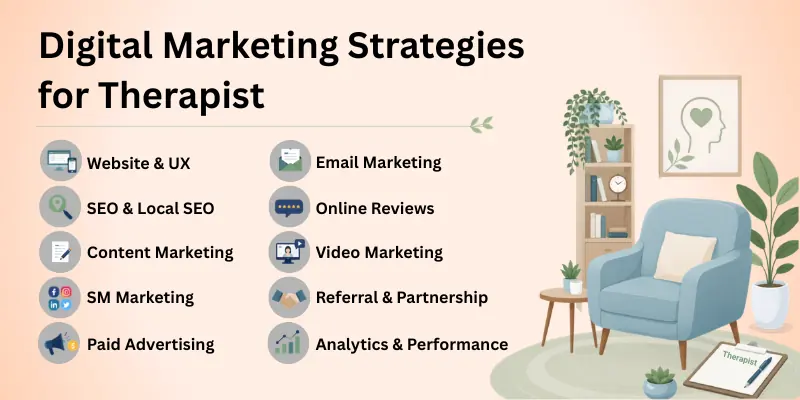
Here are 10 simple and effective strategies that therapists can use to grow their practice online.
1. Website & UX for Therapists
Your website is like your digital therapy room; it’s where potential clients form their first impression. A therapist’s website must be professional, easy to navigate, and mobile‑friendly (so it works well on phones and tablets).
What to include:
- A clear homepage with what you offer (e.g., anxiety therapy, couples counselling)
- Easy navigation to “About,” “Services,” “Contact,” and “Book an Appointment”
- A visible online booking button or form
- Simple language that makes visitors feel safe and supported
Good user experience (UX) reduces frustration and makes people more likely to reach out.
2. SEO & Local SEO for Therapists
SEO (Search Engine Optimization) helps therapists show up when people search online. Local SEO helps clients nearby find your practice. For example, someone might search “therapist near me” or “anxiety therapist in [your city]”.
To improve SEO for therapists:
- Use relevant keywords like “therapist,” “mental health counselling,” and location names
- Add your practice to Google Business Profile
- Include your address, phone number, and hours on your website
- Create pages with helpful information about the specific therapy services you offer
This makes it easier for the right clients to find you on Google.
3. Content Marketing for Therapists
Content marketing means creating helpful articles, guides, and resources that show your expertise. For therapists, this is a way to educate, support, and build trust before someone even contacts you.
Good content ideas for therapists:
- Blog posts like “How to Prepare for Your First Therapy Session”
- Pages explaining different therapy types (CBT, couples therapy, etc.)
- FAQs that answer common client questions
Writing content that feels caring, respectful, and clear strengthens your connection with potential clients.
4. Social Media Marketing for Therapists
Social media lets therapists share insights and build a community. You don’t have to be everywhere; focus on platforms where your audience spends time, like Instagram, Facebook, or LinkedIn.
Therapist social media tips:
- Post short mental health tips or calming graphics
- Share explanations of therapy approaches
- Use stories or reels to show your professional side
Keep posts supportive and professional, not personal. This builds trust without violating boundaries.
5. Paid Advertising for Therapists
Paid ads help therapists reach people who are actively looking for help. You can run ads on Google or social media to appear at the top of search results or users’ feeds.
For therapists, good paid advertising practices include:
- Targeting local audiences (e.g., people near your city)
- Using clear, compassionate language (e.g., “Support for stress and anxiety”)
- Sending traffic to a useful landing page on your website
Paid ads can bring fast visibility when done thoughtfully.
6. Email Marketing for Therapists
Email lets therapists stay connected with people who have already shown interest. An email list is a way to provide value over time without being intrusive or spammy.
Therapist email ideas:
- Weekly or monthly newsletters with tips and resources
- Reminders about upcoming workshops or webinars
- Helpful downloads like stress‑management worksheets
Always get consent before adding someone to your list, and keep emails warm and respectful.
7. Online Reviews & Reputation Management for Therapists
Reviews influence how people choose a therapist. Many potential clients check Google reviews or therapy directories before making a decision.
Tips for therapists’ digital marketing:
- Ask satisfied clients (when appropriate) to leave a review
- Thank reviewers politely, even when feedback is mixed
- Keep your review profiles updated
Good reviews show credibility and help others feel confident in choosing you.
8. Video Marketing & Webinars for Therapists
Video content is powerful because it lets people hear your voice and understand your approach. Therapists can use videos to educate and connect without giving formal advice.
Effective therapist video ideas:
- Short videos explaining common issues (e.g., “What is CBT?”)
- Mini‑sessions on coping skills or relaxation techniques
- Live Q&A sessions or webinars on mental health topics
Always focus on general education, not personal therapy.
9. Referral & Partnership Marketing for Therapists
Therapists grow when other professionals recommend them. Building partnerships with doctors, wellness coaches, or community organizations helps clients find you through trusted sources.
How therapists can use referral marketing:
- Attend networking events
- Offer to speak at local health groups or schools
- Stay in touch with referral sources consistently
Trusted referrals often turn into long‑term clients.
10. Analytics & Performance Tracking for Therapists
Tracking your digital marketing results helps you see what works and what needs improvement. Therapists can use tools like Google Analytics or ad dashboards to understand audience behaviour.
What to track:
- Website traffic and popular pages
- Clicks on contact buttons or booking links
- Engagement rates on social media posts
- ROI (return on investment) for ads
Understanding these numbers helps you make informed choices and grow your practice over time.
Common Digital Marketing Mistakes Therapists Make
Even experienced therapists can make mistakes when promoting their practice online. Small missteps can reduce trust, make your marketing less effective, or even confuse potential clients.
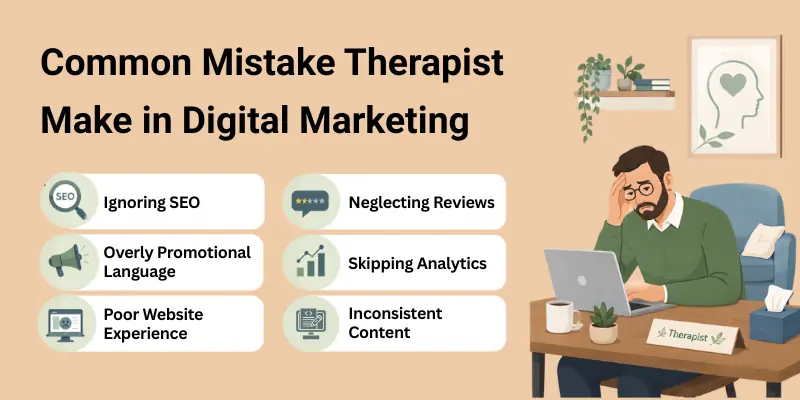
Knowing these common mistakes helps you avoid them and build a stronger online presence.
Common Mistakes Therapists Make:
- Ignoring SEO: Therapists often focus only on social media or ads. Without SEO, your website may not appear when clients search for “therapist near me” or your speciality.
- Overly Promotional Language: Clients are looking for help, not sales pitches. Therapists who sound too pushy online risk losing credibility.
- Poor Website Experience: Slow websites, confusing navigation, or unclear booking options can frustrate potential clients. A therapist’s website should feel safe and professional.
- Neglecting Reviews: Many therapists overlook online reviews. Positive reviews build trust, while ignoring negative ones can hurt your reputation.
- Skipping Analytics: Without tracking website visits, clicks, or ad performance, therapists may waste time and money on strategies that don’t work.
- Inconsistent Content: Therapists who post sporadically or share unclear messages risk losing engagement and credibility. Regular, helpful content is key.
Ignoring Legal & Ethical Guidelines: Some therapists unintentionally share personal advice, make promises, or violate privacy laws online.
Final Thoughts
In this article, we’ve covered digital marketing for therapists in detail. From my experience, focusing on a few key strategies, like a strong website, consistent content, and ethical social media use, can make the biggest impact without feeling overwhelming.
Start small, track your results, and gradually expand your efforts. Take the first step today by reviewing your current online presence and planning one improvement you can implement this week.
FAQs: Digital Marketing for Therapists
Here are some of the most common questions and clear, simple answers to help you get started:
Online marketing for therapists is the practice of using online tools to promote therapy services. It includes strategies like a professional website, social media, SEO, and email marketing. These methods help therapists reach more clients and build trust online.
Therapists can attract clients by optimizing their website for search engines and creating helpful content. Using local SEO, Google Business Profile, and social media engagement makes it easier for clients to find you. Paid ads and email newsletters can also bring in new clients quickly.
The best platforms for therapists are Instagram, Facebook, and LinkedIn because they allow sharing educational content and connecting with local clients. Therapists should post short tips, videos, or mental health awareness posts. Keep content professional, helpful, and consistent to build credibility.
The cost of digital marketing for therapists varies depending on the strategies used. A simple website and organic social media are low-cost, while paid ads and advanced SEO may require a budget. Start small, track results, and gradually invest in methods that bring the most clients.
Yes, therapists can market ethically by focusing on education, awareness, and transparency rather than making promises or giving personal advice. Use clear language about your services and respect client privacy. Following HIPAA guidelines and professional standards ensures marketing stays ethical and professional.
Results can vary depending on the strategy used. Organic SEO and content marketing may take 3–6 months to show significant results, while social media engagement and paid ads can bring faster visibility. Consistency and tracking metrics help therapists understand what works best for their practice.




- Be Respectful
- Stay Relevant
- Stay Positive
- True Feedback
- Encourage Discussion
- Avoid Spamming
- No Fake News
- Don't Copy-Paste
- No Personal Attacks
- Be Respectful
- Stay Relevant
- Stay Positive
- True Feedback
- Encourage Discussion
- Avoid Spamming
- No Fake News
- Don't Copy-Paste
- No Personal Attacks
