Digital Marketing for Roofers: Grow Your Roofing Business
Published: 11 Jun 2026
Digital marketing for roofers means using the internet to find new customers and grow your roofing business. Today, most homeowners look online before hiring a roofer. If your business isn’t visible online, you could be missing dozens of potential customers every month.
In this article, we will show you how to use digital marketing to get more leads, build trust, and grow your roofing business. You’ll learn step-by-step strategies, practical tips, and tools that make marketing easier, even if you have never done it before.
By the end of this guide, you’ll know exactly how to make your roofing business stand out online and attract more customers consistently.
Without further delay, we’re jumping into Internet marketing for roofers.
Set Clear Marketing Goals
Before you spend money or create ads, it’s important to know what you want to achieve with digital marketing. Setting clear goals helps you stay focused and get better results.
Here’s how to start:
Define realistic goals
- Example: “Get 50 new roofing leads per month” or “Increase website visits by 30% in 3 months.”
- Small goals are better at first, then grow over time.
Know your service area
- Only target areas you can realistically serve.
- This helps your marketing reach the right people and saves money.
Understand your ideal customer
- Are they homeowners or commercial clients?
- What problems do they have (e.g., leaks, roof replacement, storm damage)?
- Knowing this helps you create messages that actually attract them.
Decide your marketing channels
- Will you focus on Google search, social media, ads, or all of them?
- Start with the channels most likely to bring leads for your business.
Tip: Write down your goals and check them regularly. This helps you see what works and what needs improvement.
Build a Powerful Roofing Website
Your website is the heart of your digital marketing. It’s where most potential customers will learn about your roofing business and decide whether to hire you. A good website can turn visitors into leads.
Here’s what your roofing website should include:
Fast and mobile-friendly design
- Most people search on their phones.
- Make sure your website loads quickly and looks good on all devices.
Clear service pages
- List all your services, like roof repair, replacement, inspections, or storm damage.
- Explain each service simply so customers understand what you offer.
Contact information on every page
- Include phone number, email, and a contact form.
- Make it easy for visitors to reach you immediately.
Emergency roofing option
- If you handle urgent repairs, highlight them clearly.
- Customers searching for fast help will find you easily.
Before-and-after project gallery
- Show your past work with real photos.
- This builds trust and shows your skill.
Customer testimonials
- Add reviews from happy clients.
- This improves credibility and helps with SEO.
Tip: Keep your website simple, clear, and focused on getting leads. Avoid clutter or too much text.
SEO for Roofers
SEO, or Search Engine Optimization, helps your website show up on Google when people search for roofers in your area. Without SEO, even the best website might go unnoticed.

There are two main types of SEO for roofers:
Local SEO (Most Important for Roofers)
Local SEO makes sure people near you can find your business.
Google Business Profile (GBP)
- Claim and verify your listing.
- Add your business name, phone number, website, hours, and service area.
Get reviews
- Ask satisfied customers to leave positive reviews on Google.
- Respond to reviews politely, both positive and negative.
Consistent business listings
- Make sure your name, address, and phone number are the same everywhere online (like Yelp, Bing, and local directories).
Organic SEO (Helps You Rank in Search Results)
Organic SEO improves your website so it appears in search results for roofing-related terms.
Use roofing keywords
- Include words people search for, like “roof repair,” “roof replacement,” or “storm damage roofing.”
- Add city names to target local searches (e.g., “roof repair in Dallas”).
Write helpful blog posts
- Answer homeowners’ questions, like “How to spot roof leaks” or “Roof repair cost guide.”
- This builds trust and attracts visitors to your website.
Create city-specific pages
- If you serve multiple areas, make a page for each city.
- Include relevant keywords and services for each location.
Content Marketing for Roofing
If you want homeowners to trust your roofing company, you must educate them first.
Content marketing helps you answer their questions, show your expertise, and stay visible online.
When you share helpful information consistently, customers choose you before they even call.
Key Elements of Content Marketing for Roofing
- Educational Blog Posts: Write simple guides that answer common roofing questions.
- Storm Damage Tips: Share safety and repair advice before and after storms.
- Cost Breakdown Articles: Explain roof repair and replacement pricing clearly.
- Before-and-After Photos: Show real project transformations to build trust.
- Short Inspection Videos: Record quick videos explaining roofing problems and solutions.
- Customer Case Studies: Highlight real jobs and how you solved the issue.
- Local SEO Content: Create city-specific pages to rank in local searches.
- FAQs Section: Answer common homeowner concerns in simple language.
- Seasonal Maintenance Guides: Share roof care tips for summer, winter, and monsoon seasons.
- Email Newsletters: Send helpful reminders and roofing updates to past customers.
Strong content builds authority, improves search rankings, and turns readers into paying clients.
Paid Advertising for Roofers (PPC for Roofers)
SEO takes time, but paid advertising brings leads quickly. If you want calls this week instead of next month, paid ads help you reach homeowners who are ready to hire right now. With the right setup, you can control your budget, target specific areas, and track every lead.
Key Paid Advertising Options for Roofers
- Google Search Ads: Show your roofing business at the top when people search for urgent services.
- Google Local Services Ads: Appear above regular ads and pay only for verified leads.
- Facebook Ads: Target homeowners by location, age, and property ownership.
- Instagram Ads: Promote before-and-after projects with eye-catching visuals.
- Retargeting Ads: Show ads again to people who visited your website but didn’t contact you.
- Geo-Targeted Campaigns: Focus only on neighbourhoods you serve to avoid wasting budget.
- Seasonal Campaigns: Run special ads during storm season or peak roofing months.
- Landing Page Optimization: Send traffic to a focused page with one strong call-to-action.
- Call Tracking Setup: Measure which ads generate real phone calls and jobs.
- Budget Testing Strategy: Start small, test what works, then increase spending on winning ads.
When managed properly, paid advertising can create a steady stream of high-quality roofing leads and faster business growth.
Social Media Marketing for Roofers
Social media is a powerful way to build trust and stay visible in your local community.
It lets homeowners see your work, follow your business, and feel confident hiring you.
Consistent posting turns followers into leads over time.
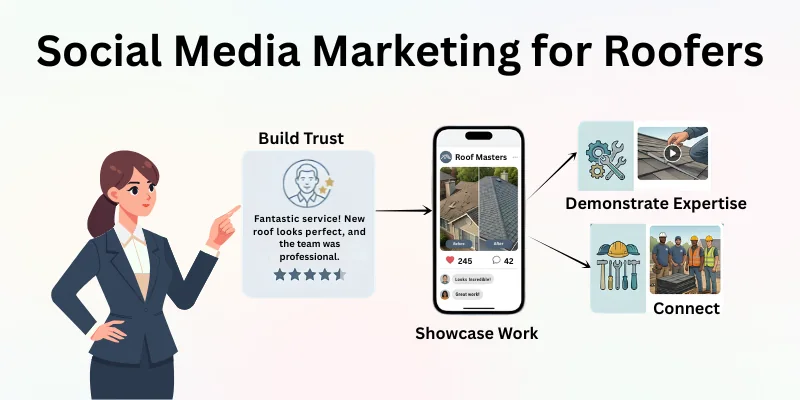
Key Social Media Strategies for Roofers
- Show Completed Projects: Post before-and-after photos to demonstrate quality work.
- Customer Testimonials: Share short videos or quotes from happy clients.
- Team Introductions: Let homeowners see the people behind the company.
- Safety Practices: Highlight safety measures on job sites to build trust.
- Community Involvement: Showcase local events or charity work your team participates in.
- Seasonal Tips: Share advice for storm preparedness or roof maintenance.
- Short Video Clips: Post quick tips or roof inspections to engage viewers.
- Consistent Posting Schedule: Maintain 2–3 posts per week to stay visible.
- Engage With Followers: Reply to comments and messages promptly.
- Boost Posts When Needed: Promote high-performing posts to reach more local homeowners.
Active social media marketing keeps your roofing business top-of-mind and helps turn online followers into real customers.
Online Reviews for Roofers: Your Most Powerful Sales Tool
Online reviews are one of the most trusted sources of information for homeowners.
A strong review profile makes roofing businesses look reliable, professional, and trustworthy, even before a customer calls. Positive reviews can directly increase leads and sales for roofers.
Key Strategies for Roofers to Collect Reviews
- Ask Every Satisfied Customer: Encourage happy clients to leave a review on Google and Facebook.
- Send Direct Review Links: Make it easy with a text or email containing a direct link.
- Respond to All Reviews: Reply professionally to both positive and negative feedback.
- Highlight Testimonials on Your Website: Show off your best reviews to visitors.
- Use Reviews in Social Media Posts: Share customer praise as part of your marketing.
- Track Review Trends: Monitor ratings to understand strengths and areas for improvement.
- Promote Verified Jobs: Ask customers to mention specific services or projects in their review.
- Leverage Video Reviews: Record short clips of satisfied clients talking about their experience.
- Maintain Consistency: Keep collecting reviews regularly to stay relevant in search results.
For roofers, strong online reviews build trust instantly and make homeowners more likely to choose their services over competitors.
Track Your Roofing Marketing Performance
You can’t improve what you don’t measure. Tracking your marketing helps roofers see what works, what doesn’t, and where to invest more for better results. It turns guesswork into data-driven decisions that grow your roofing business.
Key Steps and Tools for Roofers to Track Performance
- Monitor Website Traffic: Use Google Analytics to see visitors, page views, and user behaviour.
- Track Calls and Leads: Implement CallRail or similar tools to know which campaigns generate phone calls.
- Measure Form Submissions: Use HubSpot or Zoho CRM to track estimate requests.
- Analyze Paid Ads: Check campaign performance in Google Ads, Facebook Ads Manager, or Instagram Ads.
- Check Local SEO Results: Track city-specific keyword rankings with SEMrush or Ahrefs.
- Set Clear Goals: Define monthly targets for leads, calls, or booked jobs.
- Track ROI: Compare marketing spend to revenue generated from leads.
- Adjust Strategies Based on Data: Double down on winning campaigns and pause underperforming ones.
- Review Monthly: Evaluate all marketing channels regularly to stay on track.
Using the right tools, roofers can make informed decisions, improve results, and grow their business efficiently.
Conclusion
In this article, we’ve covered digital marketing for roofers in detail. From building a strong website to optimizing local SEO and running paid ads, every step helps roofers attract more leads.
I personally recommend starting with your Google Business Profile and collecting reviews first, as they provide quick wins for local visibility.
Don’t wait, apply these strategies today and watch your roofing business grow.
FAQs: Digital Marketing for Rooofing
Here are the top FAQs to help roofers improve online visibility, generate more leads, and grow their business:
Roofer contractor marketing is the process of promoting your roofing business online to attract local customers. It includes SEO, social media, paid ads, and online reviews. Investing in marketing helps roofers get more leads, increase calls, and grow revenue consistently.
Roofers can get local leads by optimizing their Google Business Profile, creating location-specific service pages, and collecting online reviews. Paid ads on Google and Facebook also bring high-intent local customers. Combining these strategies improves visibility when homeowners search for roofing services.
The most effective channels are local SEO, paid Google and Facebook ads, social media marketing, and content marketing. Roofers should focus on channels that generate calls, form submissions, and estimate requests. Using multiple channels together creates a steady stream of qualified leads.
Most successful roofing companies invest 5–10% of their annual revenue in marketing. Start small with website optimization, Google Business Profile, and review generation. Then gradually scale ads and content marketing as your leads increase.
Yes! Posting project photos, customer testimonials, and roof maintenance tips builds trust with homeowners. Platforms like Facebook and Instagram allow geo-targeting so you reach people in your service area. Engaging content keeps your business visible and top-of-mind.
Track website visits, calls, form submissions, and ad conversions using tools like Google Analytics, CallRail, and Facebook Ads Manager. Measure ROI by comparing marketing spend to revenue generated from leads. Regularly reviewing this data helps roofers improve campaigns and maximize results.
Roofers should create blogs, videos, FAQs, and before-and-after project galleries. Focus on topics like roof repair tips, cost guides, storm damage advice, and insurance claims. Helpful content builds authority, improves SEO, and turns readers into paying customers.




- Be Respectful
- Stay Relevant
- Stay Positive
- True Feedback
- Encourage Discussion
- Avoid Spamming
- No Fake News
- Don't Copy-Paste
- No Personal Attacks
- Be Respectful
- Stay Relevant
- Stay Positive
- True Feedback
- Encourage Discussion
- Avoid Spamming
- No Fake News
- Don't Copy-Paste
- No Personal Attacks
