Digital Marketing for Lawyers: Grow Your Law Firm With Real Clients
Published: 6 May 2026
These days, finding a lawyer usually starts online. People Google, read reviews, and check websites before they even make a call.
Even referrals often lead to some online research first. If your firm isn’t visible on the internet, you’re missing opportunities every single day.
That’s where lawyer internet marketing comes in. By showing up in the right places, sharing helpful information, and making it easy for clients to reach you, you can attract the right people, build trust, and grow your practice steadily.
In this guide, we’ll break down everything you need to know about digital marketing for lawyers, step by step, in simple, actionable terms, so you can start seeing results without feeling overwhelmed.
What is Digital Marketing for Lawyers?
Online law firm marketing is the practice of promoting legal services through digital channels. It includes websites, search engines, social media, paid ads, and content marketing.
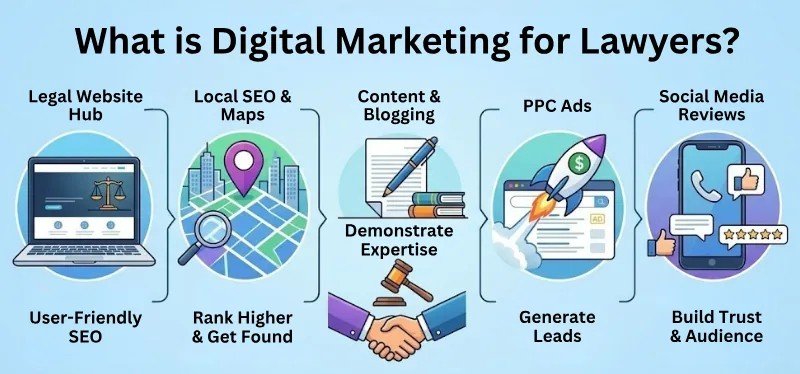
Unlike traditional advertising, it focuses on clients actively seeking legal help rather than interrupting people who are not interested.
- Connect with potential clients at the exact moment they need help
- Explain your services clearly and professionally online
- Build trust without relying on cold calls or flyers
- Reach a wider audience than offline methods allow
- Measure results to see what works and adjust quickly
Example: A personal injury lawyer writes a blog post about “Steps to Take After a Car Accident”. When someone searches for help, they find the post, understand the lawyer’s expertise, and call for a consultation.
Importance of Internet Marketing for Law Firms
The legal field is highly competitive. Traditional offline marketing is expensive and often slow. Most clients now start their search online, meaning firms without a digital presence miss opportunities every day.
- Gain instant visibility for clients searching online
- Measure results to know exactly which strategies work
- Build credibility with a professional website and active online presence
- Save costs compared to traditional marketing, like print ads
- Stay ahead of competitors who are investing in digital channels
Real-Life Example: A small family law firm in Austin optimized their website and Google Business Profile. In three months, calls increased by 40%, demonstrating how online presence can directly grow a practice.
Understanding Client Behaviour Online
Clients looking for lawyers are often stressed, confused, or anxious. Their online searches reflect real-life problems they want solved quickly. Understanding how clients think helps your firm create content and marketing campaigns that actually work.
Typical Search Behaviours
- Location-focused searches: “Best lawyer near me” or “divorce lawyer in Chicago”
- Process questions: “How to file for child custody” or “Steps to contest a will”
- Cost-focused queries: “Affordable DUI lawyer” or “Average estate planning cost”
Tip: Create content that answers these questions in plain, reassuring language. When clients feel informed, they are more likely to reach out.
Role of a Website in Web Marketing for Law Firms
Your website is the hub of your digital marketing strategy. Every SEO effort, paid ad, and social post directs traffic there. A website that is slow, confusing, or outdated will drive potential clients away, losing valuable leads.
- Fast-loading and mobile-friendly on all devices
- Clearly explain services, processes, and pricing
- Include simple forms or appointment booking features
- Project authority, professionalism, and credibility
- Act as your online office open 24/7
Example: A criminal defense lawyer added an easy booking form on the homepage. Clients could schedule consultations instantly, resulting in a 30% increase in leads.
Website Design
First impressions matter. Clients decide within seconds if a website looks credible. A clean, well-structured design builds trust and encourages visitors to contact your firm.
- Simple, uncluttered layouts with professional branding
- Easy-to-read fonts and well-organized content
- Clear navigation so clients can find information fast
- Prominent call-to-action buttons like “Schedule a Free Consultation”
- Real photos of staff and office for authenticity
Real-Life Tip: Avoid generic stock images. Showing your actual office or team helps visitors feel more comfortable and confident.
Law Firm Website Pages
Each page on your website serves a unique purpose. Properly structured pages improve user experience, SEO, and client conversion.
- Home Page: Introduce your firm, highlight services, and convey credibility
- About Page: Show credentials, experience, and core values
- Practice Area Pages: Focus on specific client needs and target high-intent searches
- Contact Page: Make it easy to reach the firm without friction
- Privacy Policy & Legal Pages: Build professionalism and trust
Example: A personal injury firm created a “How We Help Car Accident Victims” page that clearly explained the steps clients should take and included a contact form, resulting in more inquiries each month.
Search Engine Optimization (SEO) for Lawyers
SEO is the backbone of digital marketing for lawyers. It ensures your website appears when clients are actively searching for legal services. A strong SEO strategy builds credibility and generates consistent leads.
- Target keywords for each practice area
- Create content that answers real client questions
- Ensure technical optimization for speed, security, and accessibility
- Build backlinks from reputable websites to improve authority
- Focus on long-term, sustainable growth
Tip: Include FAQ sections on pages to capture voice search traffic like “What should I do after a car accident near me?”
Keyword Research for Lawyers’ Digital Marketing
Keyword research identifies the exact terms clients use when searching online. Targeting the right keywords ensures your content reaches people ready to hire your services.
- Combine practice area and location (e.g., “divorce lawyer Chicago”)
- Problem-based searches (e.g., “steps after a car accident”)
- Question-based searches (e.g., “how to file for child custody”)
- Long-tail keywords that reflect specific legal needs
- Align content with client intent to increase conversions
Example: A real estate lawyer optimized pages for “property dispute attorney Los Angeles” and gained multiple inquiries per month from highly targeted searches.
On-Page SEO for Law Firm Websites
On-page SEO makes your content clear for both users and search engines. Optimized pages improve rankings and attract high-quality leads.
- Use optimized titles, meta descriptions, and headings
- Internal links to related pages to guide visitors
- Natural keyword usage without overstuffing
- Write readable, helpful content
- Include clear calls-to-action like “Call Now for a Free Consultation”
Technical SEO for Lawyer
Technical SEO ensures your website functions smoothly behind the scenes. Even great content may fail to rank without proper technical setup.
- Fast loading speed
- Mobile-friendly design
- Secure HTTPS connection
- Correct indexing and sitemap submission
- Structured data to improve appearance in search results
Tip: Test your website with tools like Google PageSpeed Insights and fix any issues slowing down performance.
Local SEO for Law Firms
Local SEO helps your firm appear in city-specific searches and maps, which is crucial for law firms serving a geographic area.
- Optimize Google Business Profile with accurate information
- Encourage clients to leave reviews and respond politely
- Include location-specific keywords in content
- Maintain consistent business listings across online directories
- Regularly post updates to GBP
Example: A family law firm in Dallas optimized local SEO and started responding to reviews, resulting in 60% more calls within six months.
Content Marketing for Lawyers
Content marketing educates potential clients and builds trust before they call. It positions your firm as knowledgeable, helpful, and reliable.
- Blogs explaining legal processes in plain language
- FAQs that answer common client questions
- Case studies showing your experience and results
- Video guides to simplify complex topics
- Share content across social media and email
Tip: Offer free guides like “5 Steps to File for Divorce” to capture emails and nurture leads.
Blogging for Authority and Organic Growth
Blogs attract search traffic and establish your authority. They provide clients with helpful information and improve SEO.
- Step-by-step legal guides
- Common mistakes clients make
- Legal rights explained simply
- How-to guides for urgent issues
- Post regularly for visibility and credibility
Example: A family law firm blogged about “5 Mistakes to Avoid in Child Custody Cases” and received 20+ inquiries per month from that single post.
Practice Area Pages
Practice area pages focus on a specific service and are often the highest-converting pages on a website.
- Identify who the service is for
- Explain common client problems
- Outline your legal process clearly
- Show why your firm is the best choice
- Include strong CTA buttons like “Call Today for Free Consultation”
Tip: Include short client testimonials on each page to reinforce trust and credibility.
Online Advertising for Lawyers
Paid advertising gives instant visibility to clients actively looking for legal services. It complements SEO and content marketing by providing immediate results.
- Google search ads for high-intent clients
- Display ads for brand awareness
- Retargeting campaigns to bring back past visitors
- Track ROI and performance regularly
- Link ads to focused landing pages
Example: A criminal defense lawyer ran Google Ads for “DUI lawyer near me” and gained five high-intent leads per week.
Pay-Per-Click (PPC) Advertising for Lawyers
PPC allows law firms to target the right audience and control marketing costs. You only pay when someone clicks your ad.
- Target keywords relevant to potential clients
- Exclude irrelevant searches to save budget
- Test multiple landing pages to improve results
- Track cost per lead and ROI
- Use ad extensions for calls, locations, or service links
Social Media Marketing for Lawyers
Social media helps firms stay visible and approachable. While not always a direct lead generator, it builds familiarity and trust over time.
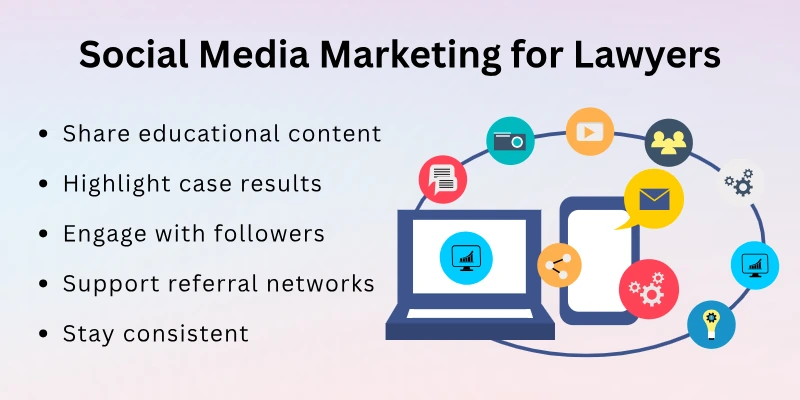
- Share educational content and blog links
- Highlight case results and achievements
- Engage with followers in comments or messages
- Support referral networks through social interactions
- Stay consistent to maintain long-term recognition
Tip: Weekly tips or legal facts posts can keep your firm top-of-mind.
Email Marketing for Law Firms
Email marketing nurtures relationships with potential and existing clients. It strengthens trust and encourages repeat engagement.
- Legal updates or new laws affecting clients
- Helpful guides and tips
- Referral program promotions
- Re-engagement campaigns for past clients
- Personalized messaging to improve engagement
Example: A personal injury firm sent monthly newsletters with recent case results and helpful tips, generating repeat consultations and referrals.
Online Reputation Management
Client reviews and feedback influence decisions heavily. Maintaining a strong online reputation boosts credibility and rankings.
- Ask satisfied clients for reviews
- Respond politely to all feedback
- Monitor online mentions of your firm
- Address negative feedback calmly
- Display positive reviews on your website
Legal Directories and Citations
Legal directories improve visibility, build authority, and support local SEO. Consistent listings increase trust among potential clients.
- List your firm on platforms like Avvo, Justia, FindLaw, Lawyers.com
- Provide accurate contact info and services
- Include office photos and bios
- Gain backlinks for SEO authority
- Keep listings updated
Tracking and Analytics in Legal Marketing
Tracking ensures your marketing decisions are data-driven. Without monitoring, campaigns can fail, wasting time and budget.
- Monitor website traffic and referral sources
- Track conversions and lead quality
- Evaluate cost per lead for paid campaigns
- Analyze client behavior and journey
- Optimize strategies based on insights
Common Mistakes in Online Law Firm Marketing
Many law firms fail to see results because of avoidable mistakes. Being aware of these ensures your marketing is effective.
- Expecting instant results from SEO or content
- Ignoring technical website issues
- Publishing generic or low-quality content
- Stopping campaigns too early
- Not tracking or analyzing performance
Choosing the Best Digital Marketing Approach
No single strategy works for every law firm. The most effective approach combines multiple channels for consistent leads and sustainable growth.
- SEO for organic traffic and long-term growth
- Blogging and content for authority
- Paid advertising for immediate leads
- Social media for brand recognition
- Review management for credibility and trust
Tip: Combining these strategies creates a steady flow of clients and strengthens your firm’s reputation online.
Final Thought
We have explored digital marketing for lawyers in detail and seen how each part, from your website and SEO to content, social media, and client reviews, works together to bring in the right clients.
If I were to give one piece of advice, it’s this: start simple. Make your website professional and easy to use, focus on local SEO, and create content that genuinely answers the questions your clients have. Once that foundation is solid, add social media, email campaigns, and online ads to grow steadily.
Online marketing for law firms isn’t about quick wins. It’s about being consistent, clear, and trustworthy. When you focus on helping clients first, the rest falls into place.
Keep at it, and over time, your firm will reach more people, earn their trust, and grow into the go-to choice in your area.
FAQs: Lawyer Internet Marketing
Here are some frequently asked questions related to the best digital marketing for lawyers:
Lawyer internet marketing means using digital tools to promote your law firm online. It includes your website, SEO, social media, ads, and email. This helps people find your firm when they search for legal services.
A digital marketing strategy for law firms helps you attract clients by showing up in search results, building trust, and sharing useful content. It brings you more visibility than old methods like flyers or offline ads.
The best online marketing for lawyers includes SEO to rank in search engines, content that answers client questions, social media to build awareness, and internet advertising for lawyers to reach clients quickly.
A website alone is not enough. Web marketing for lawyers means you use many tools like SEO, content, and ads to get clients to see that website. That way, more people find and contact your firm.
Internet advertising for lawyers includes pay‑per‑click (PPC) ads on Google and social media ads. These ads put your firm at the top of results for active searches and help you get leads quickly.
Digital marketing services for lawyers help build trust by showing your firm’s reviews, useful content, and professional online presence. When clients see helpful info first, they feel more confident contacting you.
Local SEO and Google Business Profile optimization work best for local clients. This makes your firm show up in map results and local searches when people look for lawyers nearby.




- Be Respectful
- Stay Relevant
- Stay Positive
- True Feedback
- Encourage Discussion
- Avoid Spamming
- No Fake News
- Don't Copy-Paste
- No Personal Attacks
- Be Respectful
- Stay Relevant
- Stay Positive
- True Feedback
- Encourage Discussion
- Avoid Spamming
- No Fake News
- Don't Copy-Paste
- No Personal Attacks
