Types of Interactive Content to Engage Your Audience in 2026
Published: 31 Mar 2026
Have you ever wondered why your blog posts get views but hardly any interaction? Many people don’t realize most readers want to do something with content, not just read it.
That’s exactly why types of interactive content matter so much. When you add quizzes, polls, or interactive videos, people stay longer, explore more, and feel part of the experience.
In this article, I’ll guide you through the most effective types of interactive content and show you how to use them to keep your audience engaged.
So why are you waiting? Let’s get started!
Types of Interactive Content
Interactive content engages users by allowing them to participate rather than just consume information. It increases engagement, improves retention, and can drive leads or conversions.
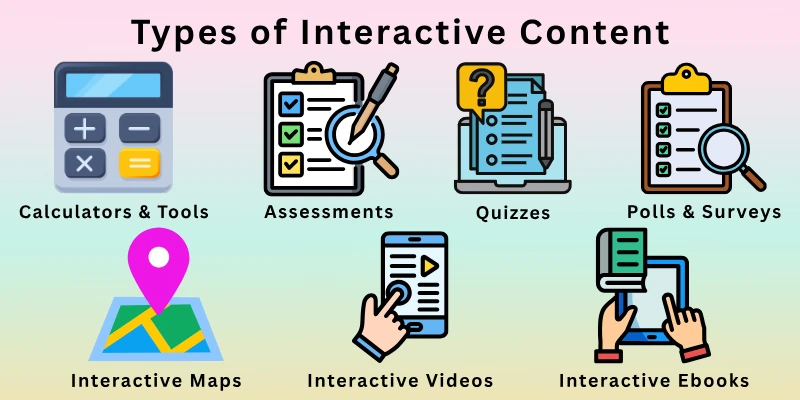
Below are the main types of interactive content.
- Quizzes
- Calculators & Tools
- Polls & Surveys
- Interactive Infographics
- Interactive Videos
- Games & Gamified Content
- Interactive Maps
- Interactive Ebooks & Whitepapers
- Interactive Email Content
- Assessments & Product Finders
- Interactive Social Content
Let’s explain interactive content for social media in detail.
1. Quizzes
Quizzes are engaging content that encourages users to answer questions and discover results. They are highly shareable and keep audiences involved while providing insights into their preferences or knowledge.
Types of Quizzes:
- Personality Quizzes: Reveal traits or styles, e.g., “What Type of Traveler Are You?”
- Product Match Quizzes: Suggest suitable products based on answers.
- Trivia Quizzes: Fun or educational questions that entertain and inform.
- Assessments: Measure skills or knowledge, often used in professional or educational settings.
Benefits of Quizzes:
- Boosts engagement and social shares
- Collects data for audience insights
- Encourages repeat visits
Interactive content examples: BuzzFeed quizzes, travel style quizzes.
2. Calculators & Tools
Calculators and tools let users input data and get instant, personalized results. They are highly practical and encourage users to spend more time on your site.
Popular Types:
- Financial Calculators: Budget planners, mortgage or loan estimators
- Health Calculators: BMI calculators, calorie trackers
- Planning Tools: Event planners, project timelines, cost estimators
Benefits:
- Provides actionable insights for users
- Improves site reliability and trust
- Can increase repeat visits
Example: Online mortgage calculators showing monthly payments based on user input.
3. Polls & Surveys
Polls and surveys allow users to provide quick feedback or detailed opinions. They are simple to implement and offer valuable information for decision-making.
Types of Polls & Surveys:
- Single-Question Polls: Quick audience opinion on one topic
- Multi-Question Surveys: Gather detailed data on preferences or experiences
Benefits:
- Improves understanding of your audience
- Guides content, product, and marketing strategies
- Increases user interaction
Example: Social media polls asking which new feature users prefer.
4. Interactive Infographics
Interactive infographics transform data-heavy visuals into engaging experiences. Users can explore and interact with elements for a deeper understanding.
Interactive Features:
- Clickable sections revealing extra info
- Hover effects for additional details
- Combination of charts, images, and animations
Benefits:
- Simplifies complex data for better understanding
- Keeps users engaged longer
- Highly shareable for traffic and backlinks
Example: A world map with clickable countries showing population or internet usage statistics.
5. Interactive Videos
Interactive videos turn passive viewers into active participants. Users can make choices, click on hotspots, or explore different story paths.
Types of Interactions:
- Clickable Paths: Choose how the story unfolds
- Hotspots: Clickable elements that show more info or links
- Branching Stories: Different outcomes based on choices
Benefits:
- Increases engagement and retention
- Enhances product demos or tutorials
- Makes content memorable
Example: Product demo videos where users click features for detailed information.
6. Games & Gamified Content
Gamified content uses elements of play, challenges, or rewards to engage users. This type keeps users motivated and makes content fun.
Common Gamification Elements:
- Leaderboards, points, badges
- Challenges or quizzes with rewards
- Progress tracking for motivation
Benefits:
- Boosts engagement and loyalty
- Encourages repeated interaction
- Generates leads through game participation
Example: A marketing site that rewards points for completing quizzes or challenges.
7. Interactive Maps
Interactive maps allow users to explore locations, availability zones, or spatial data. They are often used in travel, real estate, or local services.
Key Features:
- Clickable pins or locations
- Search and filter options
- Dynamic data overlays
Benefits:
- Simplifies complex location-based info
- Increases engagement for local searches
- Enhances user experience with visual navigation
Example: Real estate maps showing available properties with pricing and details.
8. Interactive Ebooks & Whitepapers
Unlike static PDFs, interactive e-books or white papers include clickable menus, embedded videos, and multimedia elements. This makes them engaging and easier to navigate.
Interactive Features:
- Embedded videos or images
- Clickable chapter menus
- Hyperlinks to external or internal resources
Benefits:
- Higher engagement than static documents
- Makes complex information easier to digest
- Can generate leads with form integration
Example: An interactive guide with videos explaining marketing strategies.
9. Interactive Email Content
Interactive emails include elements like polls, sliders, or embedded games to make email campaigns more engaging.
Features:
- Polls or surveys embedded inside an email
- Clickable carousels or sliders
- Mini-games or interactive elements
Benefits:
- Increases open rates and clicks
- Encourages users to engage without leaving the inbox
- Improves brand experience
Example: An email with a slider to choose a favourite product colour.
10. Assessments & Product Finders
Assessments and product finders help users determine needs or match products. They are highly effective for conversion-focused content.
Features:
- Personalized recommendations
- Diagnostic or evaluation quizzes
- Step-by-step guided questions
Benefits:
- Increases conversions by guiding decisions
- Provides valuable insights about users
- Builds trust and authority
Example: A skincare product finder quiz that recommends products based on user answers.
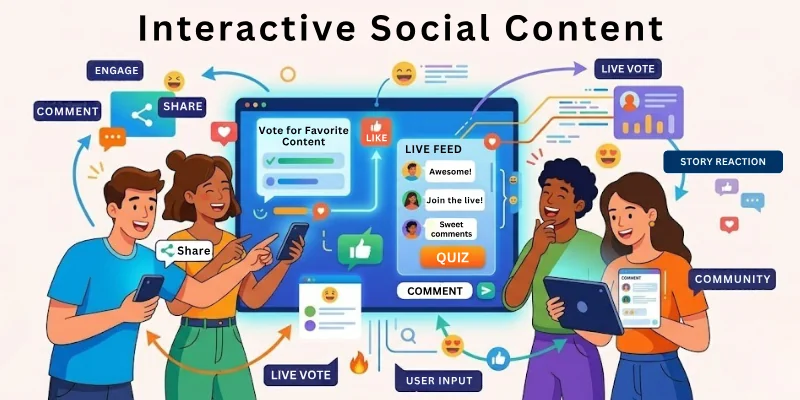
11. Interactive Social Content
Interactive social content leverages social platforms to engage audiences with polls, stories, and Q&A features.
Common Features:
- Polls, sliders, and Q&A stickers on stories
- Contests or challenges on social media
- Clickable interactive posts
Benefits:
- Boosts engagement on social platforms
- Encourages sharing and participation
- Strengthens brand presence online
Example: Instagram stories with polls and interactive quizzes.
How to Choose the Right Type of Interactive Content for Your Audience
Choosing the right interactive content ensures your efforts drive engagement, leads, and results. Not all interactive content works for every goal or audience, so aligning your content type with your objectives is key.
- Engagement-focused content: Use quizzes, polls, and interactive infographics to keep users on your site and boost interaction.
- Lead-generation content: Use assessments, calculators, and product finders that require users to submit information, such as emails, to get results.
- Education or awareness: Interactive videos and e-books help explain complex topics while keeping users engaged.
- Awareness stage: Your audience is learning about a topic or problem. Choose interactive content that entertains and informs, like infographics, quizzes, or polls.
- Decision stage: Your audience is ready to take action or make a purchase. Use content that helps them choose, such as calculators, product finders, or assessments.
- Retention stage: For existing customers, gamified content, interactive emails, or social quizzes help maintain engagement.
Benefits of Interactive Content
Interactive content goes beyond passive reading or watching. By inviting users to participate, it creates a more engaging and memorable experience.
Here’s how it helps your website and marketing efforts:
1. Boosts Engagement and Time on Page
Interactive content keeps users actively involved, whether they are answering a quiz, exploring an infographic, or navigating an interactive map.
- Users spend more time interacting compared to reading static content.
- Higher engagement reduces bounce rates and encourages repeated visits.
- Example: A personality quiz can keep users on your page for several minutes while they explore results.
2. Improves Lead Generation and Conversions
Many interactive formats naturally capture user information, helping you generate leads and drive conversions.
- Calculators, assessments, and product finders often require email submission to deliver results.
- Gamified content and quizzes encourage sign-ups to unlock rewards or results.
- Example: A product recommendation quiz that collects emails to send personalized suggestions.
3. Supports SEO
Interactive content can improve search engine performance by increasing engagement metrics and generating backlinks.
- Longer dwell time signals to search engines that your content is valuable.
- Interactive content is highly shareable, generating social signals and backlinks.
- Example: Clickable infographics or interactive videos are often linked to by other sites.
4. Helps Collect User Insights
Interactive content allows you to understand your audience better by tracking their choices and behaviours.
- Polls, surveys, and quizzes provide direct feedback about preferences, interests, and needs.
- This data can guide future content, product development, or marketing strategies.
- Example: A survey embedded in an interactive ebook reveals which topics your audience cares about most.
Pro Tip: Combining engagement, data collection, and lead generation makes interactive content one of the most versatile tools in digital marketing.
Wrapping Up
In this article, we have covered the types of interactive content and how each format can boost engagement, collect insights, and drive conversions.
From quizzes and polls to interactive videos, maps, and gamified tools, every type offers a unique way to connect with your audience. By choosing the right content for your goals and user intent, you can make your website or marketing campaigns more effective and memorable.
Now it’s your turn to experiment, create, and see how interactive content can transform your engagement.
FAQs: Types of Interactive Content
To make it easier for you to grasp the value of interactive content, we’ve addressed some detailed questions that readers commonly have, highlighting effective interactive multimedia examples you can use.
The 12 types of interactive media include things people can click, explore, or respond to. These usually cover quizzes, polls and surveys, interactive infographics, interactive videos, calculators and tools, interactive e-books, games, augmented reality experiences, interactive maps, product finders, interactive webinars, and interactive email content.
Examples of interactive content are quizzes that ask questions, calculators that give instant results, polls that let people vote, and interactive maps that users can explore.
Other examples are games, interactive videos with clickable options, and interactive infographics that show more information when clicked.
You can use interactive content ideas like:
- Quizzes to help people learn about themselves or your products.
- Calculators for budgets, costs, or estimates.
- Interactive infographics that reveal info when users interact.
- Games or challenges that make learning fun.
These ideas help your visitors stay longer and act more.
An interactive content platform is a tool or service that helps you build interactive pieces without coding. For example, platforms like H5P let you make quizzes, interactive videos, and timelines easily using a simple editor. These platforms usually work on websites, blogs, or learning systems.
A good interactive multimedia example is an infographic where viewers click or hover to explore data, like a climate map that shows changes when you interact with it.
Another is a video where users choose the next part of the story. These mix visuals, text, and interaction to make learning more fun.
Interactive content helps your blog stand out and keeps readers involved. When people click quizzes, explore infographics, or use tools on your site, they stay longer, share more, and you can learn more about what they like. This makes your blog more useful and alive instead of just static text.
Interactive content helps businesses by:
- Getting more engagement and clicks
- Helping gather feedback and data from users
- Increasing chances of turning visitors into leads
- Making learning or decision‑making easier for users



- Be Respectful
- Stay Relevant
- Stay Positive
- True Feedback
- Encourage Discussion
- Avoid Spamming
- No Fake News
- Don't Copy-Paste
- No Personal Attacks
- Be Respectful
- Stay Relevant
- Stay Positive
- True Feedback
- Encourage Discussion
- Avoid Spamming
- No Fake News
- Don't Copy-Paste
- No Personal Attacks
