Beginner’s Guide to the Most Effective Types of Direct Marketing
Published: 18 Mar 2026
Imagine getting a message that feels made just for you, offering exactly what you need. That’s the power of types of direct marketing. This article will guide you through these methods, showing how businesses can connect with customers directly.
Each approach works in its own way to grab attention, build trust, and encourage action. By learning how to use them effectively, small businesses and beginners can engage customers better and achieve measurable results without wasting time or money.
Without any further delay, let’s get started and discover all the ways you can connect with your audience effectively.
Direct Marketing Types
There are many ways to reach customers directly. Each method has its own benefits and works best in different situations. As a beginner, it’s helpful to understand each type so you can choose the right one for your business or project.
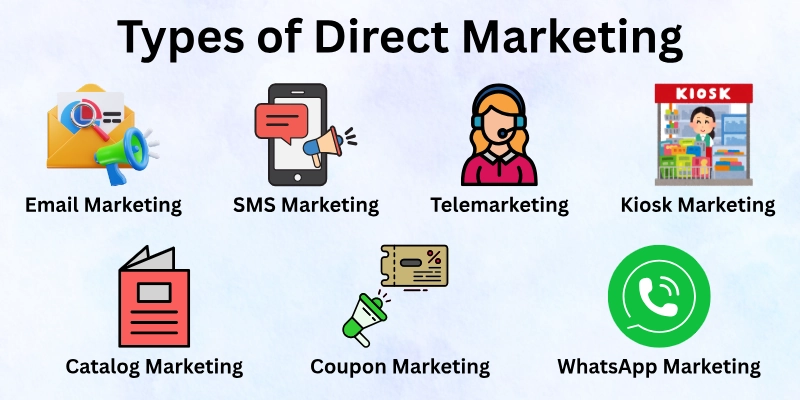
These are the primary forms of direct marketing that you should understand.
- Email Marketing
- SMS Marketing
- Telemarketing
- Direct Mail Marketing
- WhatsApp Marketing
- Social Media Direct Messages
- Door-to-Door Marketing
- Catalog Marketing
- Kiosk Marketing
- Coupon Marketing
- Loyalty Program Marketing
- Event-Based Direct Marketing
Let’s explore all 12 types in detail with examples and tips.
1. Email Marketing
Email marketing allows businesses to communicate directly with their audience through emails. It’s one of the simplest and most popular ways to share updates, offers, or helpful information. Sending emails regularly helps build trust with customers while keeping them informed about new products or promotions.
Example: A clothing store might send weekly emails to subscribers showcasing new arrivals and special discounts.
How to Use It:
- Write clear, engaging subject lines.
- Keep the email short and easy to read.
- Include one clear action, like “Shop Now.”.
- Personalize emails with the recipient’s name.
2. SMS Marketing
SMS marketing uses text messages to communicate with customers directly on their phones. It is quick, attention-grabbing, and works best for timely promotions or reminders. Because people often read messages immediately, SMS marketing is ideal for limited-time offers.
Example: A restaurant may send a discount code via SMS to customers who ordered last month.
How to Use It:
- Keep messages concise (under 160 characters).
- Send messages at convenient times.
- Avoid sending too many messages to prevent unsubscribes.
3. Telemarketing
Telemarketing involves calling customers to provide information or promote products. It can be outbound, where the business calls the customer, or inbound, where the customer reaches out to the company. Telemarketing works well for services that need explanation or guidance.
Example: A bank calls customers to explain a new credit card offer.
How to Use It:
- Be polite, friendly, and professional.
- Keep calls short and focused on key benefits.
- Listen to customer questions and answer clearly.
4. Direct Mail Marketing
Direct mail marketing sends physical materials like letters, flyers, or postcards to customers’ homes. Even in today’s digital world, printed mail stands out because fewer people receive it. Personalized offers in direct mail can make customers feel special and valued.
Example: A grocery store might mail weekly discount flyers to nearby households.
How to Use It:
- Use a clear, simple design and text.
- Include a strong call to action.
- Target based on location or past purchases.
5. WhatsApp Marketing
WhatsApp marketing uses the popular messaging app to reach customers. Since many people check WhatsApp daily, messages sent here feel personal and engaging. You can include images, videos, or links to make messages interactive and informative.
Example: An online store may send order updates or flash sale alerts through WhatsApp.
How to Use It:
- Get permission before sending messages.
- Keep messages short and helpful.
- Include links or buttons for easy action.
6. Social Media Direct Messages
Social media DMs allow businesses to reach followers privately on platforms like Instagram, Facebook, or LinkedIn. This method is useful for engaging people who already follow or interact with your brand. Personal messages can strengthen relationships and encourage action.
Example: A boutique may send a follower a special discount via Instagram DM.
How to Use It:
- Personalize messages for each recipient.
- Avoid generic or spammy content.
- Respond quickly to replies.
7. Door-to-Door Marketing
Door-to-door marketing involves visiting people at their homes to explain products or services in person. It works well for local businesses or services that benefit from personal explanation. Face-to-face interactions can quickly build trust and answer questions.
Example: An internet service provider might visit houses to offer new broadband plans.
How to Use It:
- Be polite and respectful.
- Keep your explanation short and clear.
- Respect customers who are not interested.
8. Catalog Marketing
Catalog marketing sends printed or digital catalogs to showcase products. Retailers and e-commerce businesses use this method to display their offerings in a detailed and organized way. Customers can browse at their own pace and make informed choices.
Example: A clothing brand may mail a seasonal catalog highlighting new collections.
How to Use It:
- Use high-quality images and clear product descriptions.
- Organize items by category for easy browsing.
- Include special offers or discounts.
9. Kiosk Marketing
Kiosk marketing uses physical or digital kiosks to interact with customers. You often see them in malls, stores, or events. Kiosks can display offers, collect information, or provide interactive experiences that engage potential buyers.
Example: A touch-screen kiosk in a mall may show daily deals and collect email addresses for future marketing.
How to Use It:
- Keep the interface simple and user-friendly.
- Offer quick actions like “Sign Up” or “Get Coupon”.
- Place kiosks in high-traffic areas.
10. Coupon Marketing
Coupon marketing offers customers discounts through paper or digital coupons. Coupons encourage purchases and can motivate repeat visits. They create urgency, making customers more likely to act quickly.
Example: A café may provide discount coupons with each purchase to encourage customers to return.
How to Use It:
- Make the offer clear and attractive.
- Include an expiry date to create urgency.
- Track which coupons are used most.
11. Loyalty Program Marketing
Loyalty programs reward repeat customers with points, discounts, or special perks. This type of direct marketing encourages long-term relationships and repeat business. Customers feel valued and are more likely to stay connected to the brand.
Example: A coffee shop may give points for every purchase that can later be redeemed for free drinks.
How to Use It:
- Keep the program simple and easy to understand.
- Send updates about points and rewards regularly.
- Encourage members to refer friends.
12. Event-Based Direct Marketing
Event-based marketing engages people during trade shows, fairs, or local events. It allows businesses to meet potential customers face-to-face, collect contacts, and create memorable experiences.
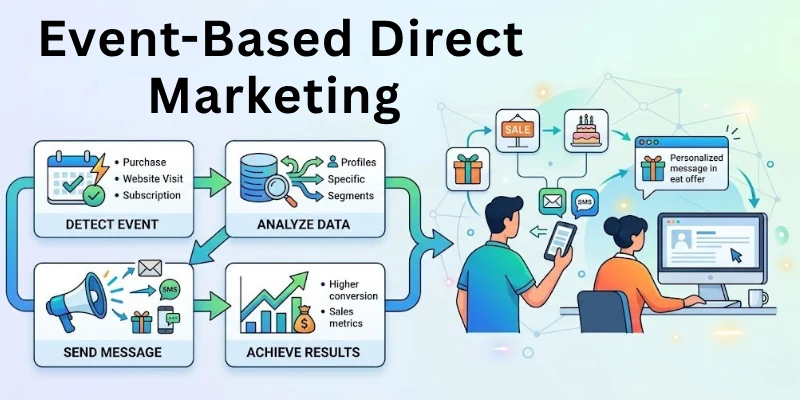
Example: A tech company might give free samples and collect email addresses at a trade show.
How to Use It:
- Offer something valuable for contact information.
- Follow up after the event.
- Use banners and visuals to attract attention.
How to Choose the Right Type of Direct Marketing
Choosing the right type of direct marketing is important because not every method works for every business or audience. Your goal, audience, and budget play a big role in deciding which approach will give the best results.
Here’s a clear guide to help you make the right choice.
1. Know Your Audience
Understanding your audience is the first step. Think about who your customers are, where they spend their time, and what they prefer.
- Are they more likely to check emails, or do they respond better to text messages?
- Do they spend time on social media platforms like Instagram or Facebook?
- Are they local customers who can be reached door-to-door or with direct mail?
Knowing these details helps you pick a method that will reach the right people effectively.
2. Define Your Goal
Your goal determines which type of direct marketing to use.
- If you want to increase sales quickly, SMS or coupon marketing works well.
- If your goal is to build long-term relationships, email marketing or loyalty programs are better.
- For brand awareness in a local area, direct mail or door-to-door marketing may be more effective.
Be clear about what action you want your customers to take before choosing a method.
3. Consider Your Budget
Different types of direct marketing have different costs. Some methods, like SMS and email marketing, are low-cost and beginner-friendly. Others, like direct mail, kiosks, or events, can be more expensive.
Choose a method that fits your budget while still reaching your target audience effectively. You can always start small and scale up as you see results.
4. Match the Method to Your Product or Service
Certain direct marketing methods work better for specific products or services.
- High-touch services, like insurance or broadband, work well with telemarketing or door-to-door marketing.
- Physical products, like clothing or groceries, are suitable for catalog, coupon, or email marketing.
- Digital products or online services can benefit from WhatsApp or social media direct messages.
Think about which method allows your customers to understand and engage with your product easily.
5. Test and Measure
The best way to find the right type of direct marketing is to test it. Start small, try one or two methods, and track results.
- Measure responses, clicks, or purchases.
- Track which messages work best.
- Adjust your approach based on what you learn.
Testing helps you avoid wasting money and ensures your marketing reaches the right audience.
6. Combine Methods Strategically
Sometimes, using more than one method gives better results. For example, you can send an email first and follow up with an SMS reminder. Or you can collect contacts at an event and then continue communication via WhatsApp or email.
Combining methods carefully helps reinforce your message without overwhelming your audience.
Common Mistakes to Avoid in Direct Marketing
Direct marketing can be very effective, but many beginners make mistakes that reduce results. Avoiding these errors saves time, money, and effort.
Here’s a guide to the most common mistakes and how to prevent them.
- Not knowing your audience and sending messages to the wrong people.
- Sending generic or spammy messages that feel impersonal.
- Ignoring the timing of your messages or sending them too often.
- Not including a clear call to action in your messages.
- Skipping follow-up after initial contact with potential customers.
- Overseeing data and tracking to measure results and improve campaigns.
- Focusing only on sales and ignoring relationship-building with customers.
Final Note
In this article, we have discussed the types of direct marketing and why they matter for reaching the right customers. From personal messages to event-based strategies, each type allows businesses to engage customers more meaningfully.
Using these approaches correctly can help beginners boost engagement, encourage repeat actions, and achieve measurable outcomes without wasting resources.
Start exploring these methods today and take your marketing efforts to the next level.
FAQs About Direct Marketing
Here are some common questions about direct marketing types. These answers will help you understand how it works and how to use it effectively.
Direct marketing includes methods like
- Email Marketing
- SMS Messages
- Telemarketing Calls
- Direct Mail
- Social Media Messages and More
These types let a business contact people directly rather than using general ads.
Businesses use direct marketing to reach the right people with personal messages. It helps them get quick responses, track results easily, and save money compared to broad advertising.
Telemarketing is when a business calls customers by phone to share information or promote products. It works well when a product needs explanation, and a conversation helps customers understand it.
Yes. Direct mail sends printed flyers, postcards, or catalogs to homes. Because fewer people get mail now, personalized offers can stand out and catch attention.
WhatsApp marketing uses the WhatsApp app to send messages, photos, or links directly to customers. It feels personal and reaches people on the messaging app they use every day.
Beginners should learn their audience, set a clear goal (like sales or sign‑ups), and choose one or two types that match their audience and budget. Test and track results to improve over time.
Yes. Direct marketing lets businesses measure results like opens, clicks, or responses. This helps them see what works and adjust future campaigns for better results.

- Be Respectful
- Stay Relevant
- Stay Positive
- True Feedback
- Encourage Discussion
- Avoid Spamming
- No Fake News
- Don't Copy-Paste
- No Personal Attacks
- Be Respectful
- Stay Relevant
- Stay Positive
- True Feedback
- Encourage Discussion
- Avoid Spamming
- No Fake News
- Don't Copy-Paste
- No Personal Attacks
