Digital Marketing for Sports Business: Grow Fans & Revenue in 2026
Published: 5 Jul 2026
Digital marketing means using the internet to promote your sports business. It helps you reach more fans, players, or customers online.
Why does it matter? With digital marketing, you can grow your sports brand, sell memberships, tickets, or gear, and connect with fans easily.
In this article, we will cover:
- The benefits of using digital marketing.
- Main digital marketing channels include social media, email, SEO, and paid ads.
- How to create a simple sports business website.
- Tips to engage your audience and grow your business online.
- Common mistakes to avoid and beginner-friendly strategies.
By the end, you will understand how to use digital marketing to attract more fans and make your sports business successful.
Benefits of Digital Marketing for the Sport Business
Digital marketing helps your sports business grow in many ways. Here are the main benefits:
- Reach more fans and customers online: Connect with people who are interested in your sport, no matter where they are.
- Build trust and a strong sports brand: Share updates, tips, and success stories to make fans trust your business.
- Sell tickets, memberships, or gear easily: Promote your products and services online and make sales faster.
- Track results and improve your strategies: Use simple tools to see what works and make your marketing better.
Digital Marketing Channels for Sport Business
Different online tools help you reach fans, players, and customers. These channels increase brand awareness, boost engagement, and drive ticket sales and revenue.
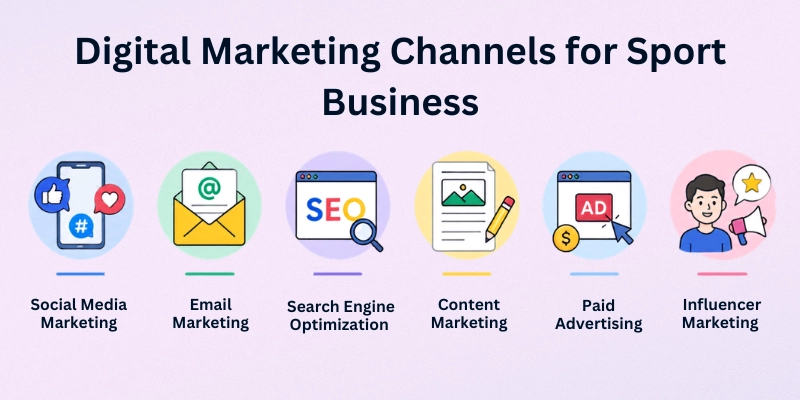
Here are the main digital marketing channels you can use:
a) Social Media Marketing
Social media is a powerful way to show your sports business and connect with fans.
- Post videos and photos – Share game highlights, training sessions, or events.
- Engage with followers – Reply to comments and messages to build relationships.
- Run contests or giveaways – Attract attention and increase your fan base.
b) Email Marketing
Email helps you stay in touch with your fans and customers.
- Send updates and newsletters – Share news about games, training, or products.
- Share special offers – Promote discounts, memberships, or events.
- Remind about upcoming events – Keep fans informed and involved.
c) Search Engine Optimization (SEO)
SEO makes your website easy to find on Google and other search engines.
- Use simple keywords – Example: “local football training” or “best gym near me.”
- Optimize titles and descriptions – Make your pages clear and searchable.
- Add images and videos – Use captions to improve search visibility.
d) Content Marketing
Content marketing attracts fans by providing helpful information.
- Share training tips and guides – Help your audience improve their skills.
- Post-match highlights and stories – Keep fans engaged with your team or business.
- Create blogs or videos – Teach something useful and build trust with fans.
e) Paid Advertising (PPC)
Paid ads help you reach people quickly and grow your business.
- Promote events or memberships – Get immediate attention online.
- Target local audiences – Focus on people near your sports business.
- Track results – See which ads work best and adjust your strategy.
f) Influencer Marketing
Influencers can help you reach new fans and customers.
- Partner with local athletes or coaches – Let them share your business online.
- Showcase your products or services – Fans trust influencers’ recommendations.
- Increase brand visibility – Reach a wider audience through influencer networks.
Creating a Sport Business Website
A website is your online home. It helps fans, players, and customers learn about your sports business easily.
- Keep it simple and mobile-friendly: Make sure people can use it on phones and computers.
- Include schedules and booking options: Show training times, events, or allow online reservations.
- Add contact information: Let fans easily call, email, or visit your business.
- Include a blog or news section: Share updates, tips, match results, or event announcements.
- Showcase your products or services: Display memberships, gear, or tickets with clear descriptions.
Engaging Your Audience
Engaging your fans and customers keeps them interested in your sports business. The more you interact, the stronger your brand grows.
- Ask questions in posts – Example: “Who is your favourite player?” or “Which training session do you like most?”
- Use polls, quizzes, or challenges – Encourage fans to participate and share their opinions.
- Share behind-the-scenes stories – Show training, team preparation, or event setup to make fans feel involved.
- Respond to comments and messages quickly – Fans feel valued when you reply.
- Celebrate achievements – Highlight wins, milestones, or fan shout-outs to keep excitement high.
Measuring the Success of Sport Business in Digital Marketing
Measuring your results helps you know what works and what needs improvement.
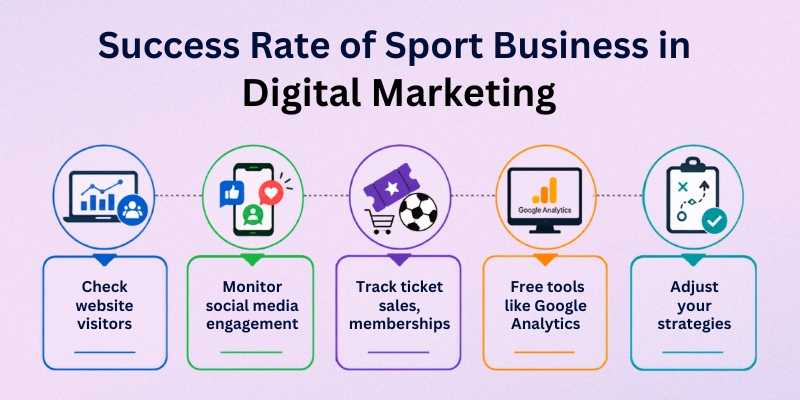
You can grow your sports business faster when you track your efforts.
- Check website visitors – See how many people visit your site and which pages they like.
- Monitor social media engagement – Track likes, comments, shares, and follower growth.
- Track ticket sales, memberships, or gear orders – Know if your marketing leads to real results.
- Use free tools like Google Analytics – Get detailed insights about your audience and their behaviour.
- Adjust your strategies – Focus more on what works and improve what doesn’t.
Common Mistakes to Avoid in Digital Marketing for Sport Business
Avoiding common mistakes helps your sports business grow faster and saves time. Here are the most frequent errors beginners make:
- Ignoring social media comments and messages – Fans feel ignored if you don’t respond.
- Posting too little or too much – Keep a regular schedule that is easy for followers to follow.
- Not updating your website or content regularly – Old information can make your business look inactive.
- Not tracking results – Without tracking, you won’t know what marketing works.
- Copying competitors blindly – Use inspiration, but make your content unique and true to your brand.
Tips for Beginners in Digital Marketing for the Sport Business
Starting digital marketing can feel tricky, but simple steps can make it easier. Here are key tips for beginners:
- Start with one or two channels first – Focus on social media or email before using everything at once.
- Be consistent with posts and updates – Post regularly so fans and customers know you are active.
- Engage with your audience – Reply to comments, messages, and questions quickly.
- Use simple language and visuals – Videos, photos, and easy words help fans understand your message.
- Track your results and improve – Check what works and do more of it; fix what doesn’t.
- Learn from your audience – Ask what they like, want, or need, and adjust your content.
Final Words
In this article, we’ve covered digital marketing for sport business in detail. From social media and email to SEO and paid ads, you now know the main ways to grow your fans and customers online.
My personal recommendation is to start small, pick one or two channels and do them well before adding more. Consistency and engagement will make a big difference.
Start today, take action, and watch your sports business grow!
FAQs: Digital Marketing for Sports
Here are some common questions about digital marketing for the sports business:
Digital marketing is important because it helps you reach more fans and customers online. You can sell tickets, memberships, or sports gear, build trust in your brand, and stay connected with your audience. Without digital marketing, many sports businesses miss opportunities to grow.
The best channels for sports businesses are:
- Social media – Connect with fans and share updates.
- Email marketing – Send newsletters, offers, and reminders.
- SEO (Search Engine Optimization) – Make your website easy to find on Google.
- Content marketing – Share tips, guides, and highlights.
- Paid ads (PPC) – Promote events or products instantly.
Influencer marketing – Collaborate with athletes or local sports personalities.
Social media helps you engage fans and attract new customers. You can post match highlights, training videos, and upcoming events. By replying to comments, running contests, and sharing behind-the-scenes stories, you create trust and a loyal fan base that keeps coming back.
Yes! A simple and mobile-friendly website is very important. It shows schedules, booking options, contact information, and products. A website also helps your business appear in Google search results, making it easier for new fans and customers to find you.
You can measure success by tracking key results:
- Website visits and most popular pages.
- Social media likes, comments, shares, and follower growth.
- Sales of tickets, memberships, or products.
Use tools like Google Analytics or social media insights to see what works and improve your strategies.
Avoid these mistakes to grow your business effectively:
- Ignoring comments and messages on social media.
- Posting inconsistently or too much at once.
- Leaving your website outdated or incomplete.
- Not tracking results to see what works.
- Copying competitors instead of creating unique content.



- Be Respectful
- Stay Relevant
- Stay Positive
- True Feedback
- Encourage Discussion
- Avoid Spamming
- No Fake News
- Don't Copy-Paste
- No Personal Attacks
- Be Respectful
- Stay Relevant
- Stay Positive
- True Feedback
- Encourage Discussion
- Avoid Spamming
- No Fake News
- Don't Copy-Paste
- No Personal Attacks
