Digital Marketing for Pest Control – Boost Your Calls in 2026
Published: 8 Jul 2026
Why do some pest control companies get tons of calls while others barely get any? Doesn’t it make sense at first, right? The answer is digital marketing for pest control.
Simply put, it’s using the internet to help people find your business when they need pest help. This can be a website, Google search, social media posts, ads, or emails. All of these work together to make your business visible, trusted, and easy to contact.
In this article, I’ll show you step by step how to use digital marketing for your pest control business. We’ll cover websites, local search, social media, ads, content, and ways to keep clients coming back. Think of it as a friendly guide from one marketer to another.
Why Digital Marketing Matters for Pest Control
Using digital marketing can change your business fast. Here’s why it works:
- People search online first: Most homeowners look for pest help on Google before calling anyone.
- Get more calls and leads: Being visible online brings more people to contact you.
- Stand out from competitors: Many pest control companies are not online, so you get an edge.
- Build trust with customers: Helpful posts, reviews, and content show you are an expert.
- Reach local clients easily: With local SEO and ads, your business appears to nearby customers only.
- Save marketing costs: Online marketing can cost less than traditional flyers or ads.
Build a Strong Website for Your Pest Control Business
Your website is the front door of your pest control business. It tells visitors who you are and why they should trust you with their home or office.
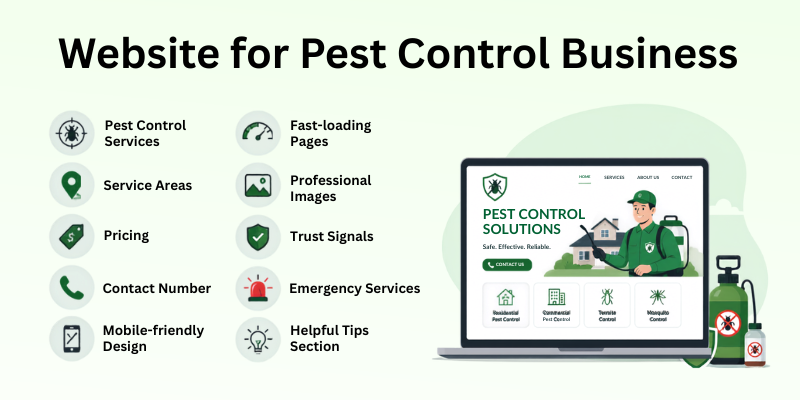
Here’s how to make it work perfectly:
- Show all pest control services clearly – Termites, ants, rodents, bed bugs, or cockroaches. People must see what you handle at a glance.
- Display service areas – Let visitors know exactly which cities or neighbourhoods you serve.
- Add clear pricing or packages – Show rates for single visits, monthly plans, or seasonal treatments.
- Make contacting you easy – Phone buttons, WhatsApp links, or quick forms for free quotes.
- Mobile-friendly design – Many people search for pest control on phones during emergencies.
- Fast-loading pages – If your pest control info loads slowly, potential customers leave.
- Professional images – Show real before-and-after pest treatments to build trust.
- Trust signals – Include testimonials, certifications, and customer reviews for pest services.
- Highlight emergency services – Make it clear if you handle urgent calls like rodent infestations or wasp nests.
- Helpful tips section – Add short blogs or guides about pests. This shows expertise and helps people find your site on Google.
Show Up in Local Search with SEO and Google Business Profile
Now that your website is ready, the next step is making sure people nearby can actually find you. Most pest control searches happen locally; people type “pest control near me” when they have ants in the kitchen or termites in the basement.
Here’s how to get noticed:
- Claim your Google Business Profile: Add your business name, address, phone, and working hours. Make it easy for people to contact you.
- Add photos of your pest control work: Show before-and-after pictures, your team in action, or trucks and equipment.
- Use local keywords: Include your city or neighbourhood in titles, descriptions, and posts, like “Rodent control in [City Name].”
- Collect customer reviews: Ask happy clients to leave reviews about pest treatments. Positive reviews make new customers trust you.
- Respond to reviews: Thank good reviews and politely reply to concerns. It shows professionalism and care.
- Update your profile regularly: Add seasonal offers, new services, or helpful pest tips. Fresh info keeps your business visible.
Run Paid Ads to Get More Pest Control Clients Fast
After your website and local SEO are set, paid ads can bring calls quickly. Think of it like putting your business right in front of people who need pest help now.
Here’s how to do it effectively:
- Use Google Ads: Target keywords like “exterminator near me,” “termite treatment,” or “bed bug removal.” People searching for these are ready to hire.
- Run Local Service Ads: Google shows these at the top for urgent pest problems. You only pay for leads, not clicks.
- Target specific areas: Focus ads on neighbourhoods or cities you serve. This saves money and brings relevant clients.
- Highlight your offers: Mention free inspections, discounts for first-time customers, or seasonal pest treatments.
- Use social media ads: Facebook and Instagram let you show your pest control services to local homeowners with tips, videos, or before-and-after photos.
- Track results carefully: See which ads bring calls or leads. Stop what doesn’t work and focus on what gets results.
Use Social Media and Content to Build Trust
Once your ads are running, it’s time to show people you know your craft.
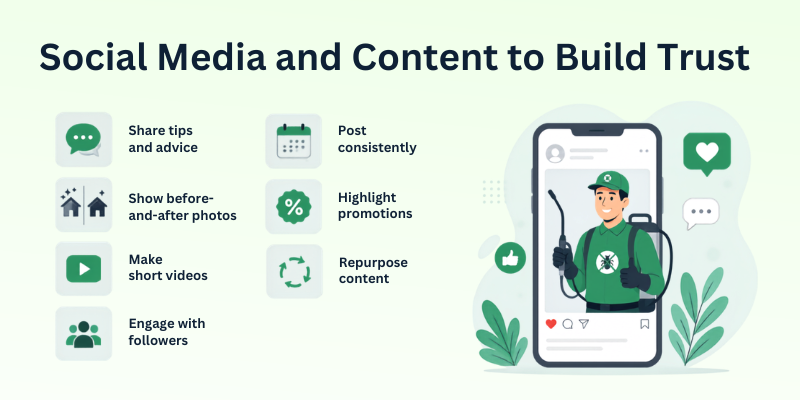
Social media and helpful content make your pest control business trustworthy and easy to find. Here’s how:
- Share tips and advice: Post short tips like “How to prevent ants in the kitchen” or “Simple ways to avoid rodents this season.”
- Show before-and-after photos: People love to see proof of your work, like a termite-infested area you treated successfully.
- Make short videos: Quick clips showing pest treatments or DIY prevention advice help people trust you.
- Engage with followers: Answer questions, reply to comments, and be friendly. It shows you care.
- Post consistently: Even 2-3 posts a week keep your business visible.
- Highlight promotions or seasonal services: Let people know about discounts, yearly inspections, or special pest treatments.
- Repurpose content on your website: Turn tips, videos, and posts into blogs to improve your SEO and reach more clients.
Stay Connected with Email Marketing
After you get new clients, it’s important to stay on their radar. Email marketing helps your pest control business stay useful and trustworthy. Here’s how to do it right:
- Send helpful pest tips – Share advice like “How to prevent rodents this winter” or “Quick ways to stop ants in your kitchen.”
- Offer seasonal deals – Remind past clients about termite inspections, bed bug treatments, or yearly pest control plans.
- Follow up after service – A short email saying “Hope your home is pest-free! Contact us if you need help again” shows care.
- Keep it simple and personal – Use the client’s name and write as if you are talking to them.
- Include easy contact info – Make it simple for them to call or reply for new services.
- Send regularly but not too often – One email a month or seasonal updates work best.
- Highlight your expertise – Occasionally share a success story or a before-and-after case to show you know your craft.
Track Results and Keep Improving
Marketing isn’t a one-time job. To grow your pest control business, you need to see what works and fix what doesn’t. Here’s how to do it smartly:
- Use Google Analytics: Check how many people visit your website and which pages they like most.
- Track calls and messages: See which ads, posts, or emails bring real client calls.
- Monitor reviews and feedback: Positive reviews show what works; negative feedback shows where to improve.
- Check your ad performance: Stop ads that don’t bring clients and spend more on ads that do.
- Test new ideas: Try different posts, tips, or seasonal offers to see what your audience responds to.
- Adjust your strategy regularly: Small updates can make a big difference in getting more calls and leads.
- Celebrate successes: When a campaign brings results, keep using the techniques that worked.
Conclusion
Digital marketing for your pest control business is not complicated; it’s about being visible, trustworthy, and easy to contact.
From building a clear website to showing up in local search, running ads, sharing tips on social media, sending helpful emails, and tracking results, every step brings more clients to your door.
Start small, focus on what works, and keep improving. Remember, people need your help with pests; they are searching online right now. Make it easy for them to find you, trust you, and call you.
Follow these steps, and your pest control business can grow steadily, professionally, and confidently.
FAQs: Digital Marketing for Pest Control
Many people have questions about digital marketing for pest control. Here, I’ve simply answered the most common ones, so you can understand how to grow your business online:
Use local SEO by adding your city in titles, descriptions, and posts. Claim your Google Business Profile and ask clients for reviews to rank higher.
Yes! Google Ads and Facebook ads help reach people ready to hire for pest problems. Target local neighbourhoods and highlight your services or discounts.
Social media builds trust and shows expertise. Share tips, before-and-after photos, videos, and answer questions to connect with potential clients.
Absolutely. Email past clients with seasonal tips, reminders, or offers. It keeps your business in their mind and encourages repeat calls.
Track website visits, ad leads, and calls. Monitor reviews and feedback. Keep improving campaigns based on what brings the most clients.




- Be Respectful
- Stay Relevant
- Stay Positive
- True Feedback
- Encourage Discussion
- Avoid Spamming
- No Fake News
- Don't Copy-Paste
- No Personal Attacks
- Be Respectful
- Stay Relevant
- Stay Positive
- True Feedback
- Encourage Discussion
- Avoid Spamming
- No Fake News
- Don't Copy-Paste
- No Personal Attacks
