Grow Your Business Fast with Digital Marketing for Small Businesses in 2026
Published: 22 Jun 2026
Ever wondered why some small businesses get more customers online while others struggle to get even a few?
Digital marketing for small businesses uses the internet to promote products or services and attract customers. It helps small businesses show what they offer to the right people in the right place.
In this article, we will explain everything a small business owner needs to know about digital marketing. We will cover what digital marketing is, why it matters, and the main strategies small businesses can use to grow quickly.
Importance of Digital Marketing for Small Businesses
Digital marketing is not just a trend. It is now essential for small businesses.
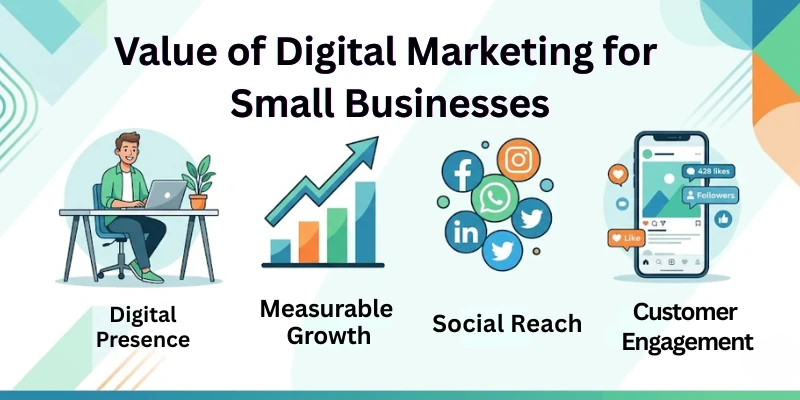
Here are some strong reasons why small businesses need digital marketing:
- Customers search online first: Most people search on Google or social media before buying.
- Low-cost marketing: Promote your business with little money compared to TV or billboards.
- Build trust: A professional website, social media presence, and reviews make people trust your business.
- Target the right audience: Show your ads to people who really need your products or services.
- Track results easily: You can see who visits your site, clicks your ads, or buys your product.
- Grow faster than competitors: Businesses using digital marketing often attract more customers quickly.
Main Types of Digital Marketing for Small Businesses
Small businesses have many ways to use digital marketing. You don’t need to do everything at once. Start with the methods that bring the most results.
1. Search Engine Optimization (SEO) for Small Businesses
SEO helps your website appear in Google search results when people look for products or services like yours.
How SEO helps small businesses:
- Keyword research: Find words people use to search online. Example: “Best bakery near me” or “Affordable plumber in my city.”
- Content creation: Write helpful articles or guides that answer questions. Example: A fitness coach writes “5 Easy Home Workouts for Beginners.”
- Website optimization: Make your website fast, mobile-friendly, and easy to navigate.
- Backlinks: Other websites linking to your website improve trust in Google.
- Local SEO: Register on Google Business Profile so local customers can find you.
Step-by-step mini-guide for SEO:
- Make a list of search words your customers may use.
- Write one article or blog post per keyword.
- Check that your website loads fast and works on mobile.
- Share your website link on other websites or social media.
- Track website traffic and improve monthly.
Who can use SEO: Any small business with a website or blog.
2. Social Media Marketing for Small Businesses
Social media helps small businesses connect directly with customers and show their work.
How social media marketing works:
- Post photos and videos of your products or services.
- Share customer reviews or feedback.
- Show behind-the-scenes content or tutorials.
- Run small ads for your target audience.
Example: A clothing store posts daily outfit ideas on Instagram and Facebook to attract fashion lovers.
Step-by-step mini-guide for social media:
- Choose 1–2 social media platforms your customers use.
- Post 2–3 times per week.
- Respond to messages and comments.
- Run small paid ads to increase followers or sales.
- Track engagement and adjust content.
Who can use social media marketing: Any small business wanting to reach local or online customers.
3. Content Marketing for Small Businesses
Content marketing means creating helpful information for your audience to build trust.
How content marketing works:
- Write blog posts, guides, or tutorials.
- Create videos explaining products or services.
- Make infographics with tips or advice.
Example: A home cleaning company writes “5 Easy Tips to Keep Your Kitchen Clean” to help customers.
Step-by-step mini-guide for content marketing:
- List questions your customers often ask.
- Write blog posts or make videos to answer these questions.
- Share content on your website, social media, and emails.
- Encourage readers to contact you or buy your product.
Who can use content marketing: Any small business that wants to educate customers and build trust.
4. Email Marketing for Small Businesses
Email marketing helps small businesses stay connected and bring customers back.
How email marketing works:
- Collect emails from website visitors or buyers.
- Send promotions, discounts, or updates.
- Share helpful tips or guides.
Example: A bakery sends emails to previous customers offering birthday discounts or new cake designs.
Step-by-step mini-guide for email marketing:
- Collect emails using a form on your website.
- Send a welcome email to new subscribers.
- Send monthly updates with offers or tips.
- Track who opens your emails and clicks links.
- Improve emails based on performance.
Who can use email marketing: Any small business with repeat customers or online visitors.
5. Pay-Per-Click (PPC) Advertising for Small Businesses
PPC ads give fast results because you pay only when someone clicks your ad.
How PPC works:
- Run Google Ads for people searching for products or services.
- Run Facebook or Instagram ads for your target audience.
- Start with a small budget and test which ads work best.
Example: A plumber runs an ad for “Emergency Plumbing Service” that appears at the top of Google.
Step-by-step mini-guide for PPC:
- Decide which product or service to advertise.
- Choose a platform: Google, Facebook, or Instagram.
- Set a small daily budget.
- Monitor clicks, leads, and sales.
- Increase the budget for ads that bring the best results.
Who can use PPC: Any small business that wants fast leads or website traffic.
Final Tips for Small Business Owners
From my experience in digital marketing, here are tips that help small businesses grow online:
- Start with 1–2 marketing channels first.
- Focus on helpful and honest content.
- Understand your customer needs.
- Post and email regularly.
- Track results and improve your strategy each month.
Small businesses do not need complicated methods. Consistency, patience, and smart work bring results.
Digital Marketing Tools for Small Businesses
Running digital marketing is much easier when you use the right tools. These tools help you save time, reach more customers, and track results.
Here are some useful tools for small businesses:
- Google Analytics: Track website visitors and see which pages perform best.
- Google Business Profile: Show your business in Google search and maps.
- Canva: Create professional social media posts, banners, and graphics easily.
- Hootsuite or Buffer: Schedule social media posts on multiple platforms.
- Mailchimp: Send emails and newsletters to customers.
- Ahrefs or SEMrush (small plan): Find keywords and track SEO performance.
- Facebook Ads Manager: Run ads on Facebook and Instagram.
- Trello or Asana: Plan content and organize marketing tasks.
- Zoom or Loom: Record videos or tutorials for your audience.
- Hotjar: See how visitors interact with your website with heatmaps.
These tools are beginner-friendly and affordable. I have used many of them for small businesses, and they make marketing simple and effective.
Digital Marketing Budget for Small Businesses
Many small business owners worry about how much money they need for digital marketing. The good news is, digital marketing can work even with a small budget if you plan it smartly.
Here are some tips for managing your budget:
- Start small: You don’t need a big budget at first. Start with $50–$100 per month for ads or tools.
- Focus on what works: Test one or two channels first, like social media or email marketing.
- Use free tools: Tools like Canva, Google Business Profile, and Google Analytics are free and very useful.
- Allocate money for ads wisely: Paid ads bring fast results. Start with a small daily budget and increase it when it works.
- Track every expense: Keep a record of all your marketing spending to see what gives the best results.
- Invest in content: Writing blogs or making videos is cheaper than TV ads and helps your business grow long-term.
- Adjust monthly: Check results every month and move money to what brings more leads or sales.
Pro Tip: I have helped small businesses grow with as little as $100–$200 a month by focusing on the right channels and tracking results carefully.
Common Digital Marketing Mistakes Small Businesses Make
Many small businesses start digital marketing with full energy but make mistakes that slow down their growth. Avoiding these mistakes can save time, money, and effort.
Here are some common mistakes:
- No clear strategy: Posting randomly without a plan does not bring results.
- Ignoring SEO: Many businesses forget to optimize their website for Google. This means they miss free traffic.
- Inconsistent posting: Posting once a month will not build an audience or followers.
- Not tracking results: If you don’t track clicks, website visits, or leads, you can’t improve.
- Focusing only on sales: Only promoting products without helping or educating customers turns them away.
- Ignoring customer engagement: Not replying to messages or comments loses trust.
- Overcomplicating campaigns: Trying to do too many things at once can confuse you and your audience.
Pro Tip: I have seen small businesses grow faster when they focus on 1–2 marketing channels, post consistently, track results, and help their audience first.
Final Thoughts
In this article, we have covered what digital marketing for small businesses is, why it is important, the main types of digital marketing, useful tools, budget tips, and common mistakes to avoid. Now you have a clear understanding of how to start and grow your business online.
From my experience, small businesses should start with 1–2 marketing channels, like social media and email marketing, focus on helpful content, track results regularly, and stay consistent. Even with a small budget, these strategies can bring real growth over time.
Start your digital marketing journey today, apply these tips, and watch your small business reach more customers and grow faster than ever!
FAQs: Digital Marketing for Small Business
Below are the most asked questions about digital marketing for small businesses:
Social media, SEO, email marketing, content marketing, and PPC ads work well for small businesses. Start with 1–2 channels and track results. Choose the channels your customers use the most.
Optimize your website for search engines and mobile devices. Add clear contact information and product details. Post helpful content regularly to attract more visitors.
Yes, social media marketing helps small businesses reach local and online customers. Posting photos, videos, and offers builds trust. Paid ads can bring fast results if used wisely.
SEO makes your website appear on Google when customers search for products or services. It increases free traffic and leads. Using the right keywords and content is the key to success.
Many small businesses post randomly, ignore SEO, or do not track results. Others focus only on selling without helping customers. Avoid these mistakes to save time, money, and grow faster.
Email marketing keeps customers engaged and brings them back. You can send promotions, updates, or tips. It is a low-cost method to increase sales and loyalty.
Tools like Google Analytics, Canva, Mailchimp, and Hootsuite help small businesses. They save time, track results, and improve marketing. Using the right tools makes online marketing easier and more effective.




- Be Respectful
- Stay Relevant
- Stay Positive
- True Feedback
- Encourage Discussion
- Avoid Spamming
- No Fake News
- Don't Copy-Paste
- No Personal Attacks
- Be Respectful
- Stay Relevant
- Stay Positive
- True Feedback
- Encourage Discussion
- Avoid Spamming
- No Fake News
- Don't Copy-Paste
- No Personal Attacks
