Digital Marketing for Financial Advisors That Get Clients in 2026
Published: 29 May 2026
Many financial advisors face a common challenge: attracting clients online in a crowded market. Traditional word-of-mouth is no longer enough, and without a strong digital presence, even the best advisors can miss out on opportunities.
Digital marketing helps financial advisors reach the right audience, build trust, and showcase their expertise.
In this article, we will explore effective strategies, tools, and practical tips specifically designed to help financial advisors grow their online presence and attract more clients.
So, guys, stay with us, and let’s uncover the secrets to mastering digital marketing for financial advisors together!
Why Financial Advisors Need Digital Marketing
In today’s competitive financial landscape, digital marketing is essential for advisors. It helps attract clients, build credibility, and grow your brand effectively.
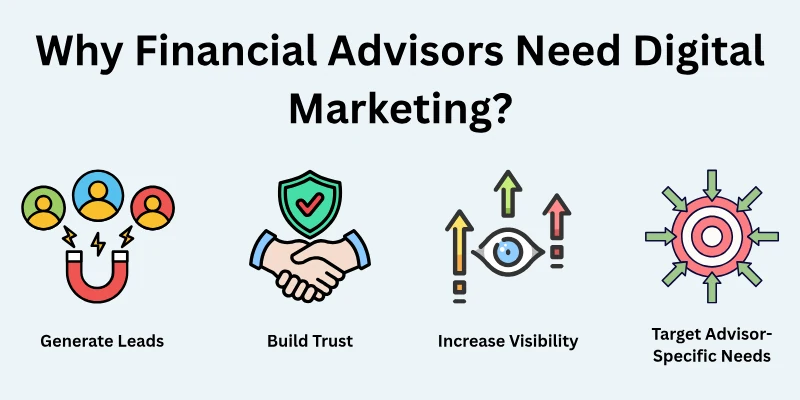
Key Benefits:
- Generate Leads: Reach prospects actively seeking financial advice.
- Build Trust: Share insights and position yourself as an expert.
- Increase Visibility: Make your services easy to find online.
- Target Advisor-Specific Needs: Focus on retirement planning, investment consulting, or wealth management.
Core Digital Marketing Strategies for Financial Advisors
To grow your client base online, financial advisors need a well-rounded digital marketing approach. Each strategy plays a specific role in attracting leads, building trust, and establishing authority.
Here’s a detailed breakdown of the most effective marketing techniques for financial advisors:
1. Website & SEO Services for Financial Advisors
Your website is your digital office. It should clearly communicate your services, expertise, and approach to financial planning.
- Include service pages for retirement planning, investment management, tax planning, and wealth consulting.
- Use SEO keywords specific to your local area or niche, like “retirement planner in [city]” or “investment advisor for small businesses.”
- Add client-friendly features like calculators for retirement savings, investment growth, or tax projections to engage visitors.
2. Content Marketing for Financial Advisor
Providing valuable content helps establish your credibility and keeps potential clients returning.
- Write blogs or guides that answer questions like “How to plan for early retirement” or “Top investment mistakes to avoid.”
- Create downloadable resources such as budgeting spreadsheets or eBooks on wealth management strategies.
- Share LinkedIn articles that focus on professional financial advice for different demographics, such as young professionals, entrepreneurs, or retirees.
3. Social Media Marketing for Financial Advisors
Social platforms can be used to educate, engage, and nurture relationships with potential clients.
- LinkedIn is particularly effective for reaching professionals seeking financial guidance. Share success stories, client testimonials (with privacy respected), and financial planning tips.
- YouTube videos explaining complex topics, like stock portfolio diversification or retirement accounts, help build authority and trust.
- Use Twitter for quick tips, financial news updates, or insights on market trends relevant to your target audience.
4. Email Marketing for Financial Advisors
Emails allow you to maintain ongoing contact and build long-term relationships.

- Send regular newsletters with updates on market trends, investment strategies, or retirement planning tips.
- Segment your email list by client type, retirees, business owners, and young professionals, to provide personalized recommendations.
- Include clear CTAs like “Schedule a Portfolio Review” or “Download Your Retirement Checklist” to convert readers into leads.
5. PPC & Paid Ads for Financial Advisors
Paid advertising ensures your services reach people actively searching for financial guidance.
- Run Google Ads targeting searches like “best financial advisor for retirement planning” or “investment planning for small businesses.”
- Use Facebook or LinkedIn ads to promote free webinars or online workshops on financial topics, attracting high-quality leads.
- Experiment with retargeting campaigns for visitors who previously engaged with your website or content, reminding them of your services.
Tools & Platforms for Financial Advisors
Using the right tools makes digital marketing for financial advisors more efficient and effective. The right platforms help manage clients, automate tasks, and track results while keeping your content professional and compliant.
Here are some essential tools every financial advisor should consider:
- Customer Relationship Management (CRM) Software: Manage client details, follow-ups, and communication in one place.
- Financial Planning Tools: Create retirement, investment, and tax planning projections for clients.
- Email Marketing Platforms: Send personalized newsletters and updates to nurture client relationships.
- Social Media Management Tools: Schedule posts, track engagement, and maintain a consistent online presence.
- Analytics & Reporting Tools: Monitor website traffic, lead sources, and campaign performance for data-driven decisions.
- Webinar & Video Platforms: Host educational webinars or video consultations to engage clients remotely.
- Content Creation Tools: Design infographics, guides, or videos to explain complex financial concepts clearly.
Compliance Tips for Financial Advisors
Financial advisors must follow strict rules when sharing advice online. Compliance ensures your marketing is ethical, builds trust, and avoids legal issues.
Here are essential compliance tips for digital marketing in the financial advisory space:
- Disclose Risks Clearly: Always mention risks when discussing investments or financial products.
- Avoid Personalized Advice: Share general guidance instead of client-specific recommendations online.
- Follow Regulatory Guidelines: Ensure your content meets SEC, FINRA, or local financial authority rules.
- Keep Records of Marketing Material: Store copies of posts, emails, and ads for accountability.
- Review Third-Party Content: Verify accuracy before sharing articles, charts, or statistics.
- Use Professional Language: Avoid exaggerated claims like “guaranteed returns” or “risk-free profits.”
- Get Compliance Approval: Have marketing materials reviewed by your compliance officer before publishing.
Final Thoughts
In this article, we’ve covered digital marketing for financial advisors in detail. Investing time and effort into a well-planned online presence can significantly increase client trust and lead to lead generation.
My recommendation: Start with one or two strategies like content marketing and social media, test their results, and gradually expand.
Take action today by creating a digital marketing plan tailored to your advisory services and watch your client base grow.
FAQs: Digital Marketing for Financial Advisors
Here’s a quick guide to the most asked questions on online marketing for financial advisors to help you succeed online:
Digital marketing helps financial advisors reach potential clients who are searching for financial guidance online. It builds credibility, improves visibility, and allows you to share valuable insights with your audience. By leveraging websites, social media, and email campaigns, you can attract more clients without relying solely on referrals or offline marketing.
The most effective platforms include:
- LinkedIn: For connecting with professionals and sharing expertise.
- YouTube: To create educational videos explaining financial concepts.
- Twitter: To share quick tips, news, and updates on investments or retirement planning.
Focusing on platforms where your target audience spends time ensures higher engagement and better lead generation.
Financial advisors can generate leads by:
- Optimizing their website for local and niche keywords like “retirement advisor near me.”
- Offering free resources such as eBooks, calculators, or webinars.
- Running targeted paid ads for high-intent searches, like “investment planning consultation.”
Combining these tactics attracts qualified prospects actively seeking financial advice.
Content should educate, inform, and build trust. Examples include:
- Blog posts on retirement planning, tax strategies, or investment mistakes to avoid.
- Newsletters with market updates and actionable tips.
- Video tutorials explaining complex financial topics in a simple way.
Providing helpful content positions you as an expert and encourages potential clients to reach out.
You can measure success using these methods:
- Website Analytics: Track visitor numbers, page views, and lead forms submitted.
- Email Metrics: Monitor open rates, click-throughs, and conversions from campaigns.
- Social Media Insights: Check engagement, followers growth, and shares.
By analyzing these metrics regularly, you can optimize campaigns and improve ROI.




- Be Respectful
- Stay Relevant
- Stay Positive
- True Feedback
- Encourage Discussion
- Avoid Spamming
- No Fake News
- Don't Copy-Paste
- No Personal Attacks
- Be Respectful
- Stay Relevant
- Stay Positive
- True Feedback
- Encourage Discussion
- Avoid Spamming
- No Fake News
- Don't Copy-Paste
- No Personal Attacks
