How Digital Marketing for Manufacturers Can Grow Your Leads in 2026
Published: 22 Aug 2026
You may feel frustrated when customers say they can’t find your products online. Many manufacturers struggle to get leads or compete with bigger brands.
With digital marketing for manufacturers, you can fix that. Online marketing helps you reach buyers, show your products clearly, and grow your sales. Many companies now see real results and more leads because they use digital tools every day.
In this article, we will cover the best digital marketing channels, strategies, tips, and common mistakes so you can promote your manufacturing business successfully.
Benefits of Digital Marketing for Manufacturers
Digital marketing helps manufacturers grow their business faster and smarter. It allows you to reach more buyers, save money, and track your progress easily. Here are the main benefits:
- Reach more customers online – Connect with buyers anywhere in the world using websites, social media, and online ads.
- Save marketing costs – Spend less than traditional methods like print ads or trade shows while reaching more people.
- Track results easily – See clicks, leads, and website visits in real time to improve your strategies.
- Build brand awareness and trust – Share blogs, videos, and updates that show your expertise and make buyers trust your brand.
- Generate qualified leads – Attract buyers who are already interested in your products through targeted ads and content.
- Stay ahead of competitors – Manufacturers using digital marketing can appear first on search engines and social media, leaving competitors behind.
- Showcase products effectively – Use images, videos, and detailed product pages to help buyers understand your products better.
Key Digital Marketing Channels for Manufacturers
Digital marketing can feel confusing, but for manufacturers, it’s all about showing your products to the right buyers online.
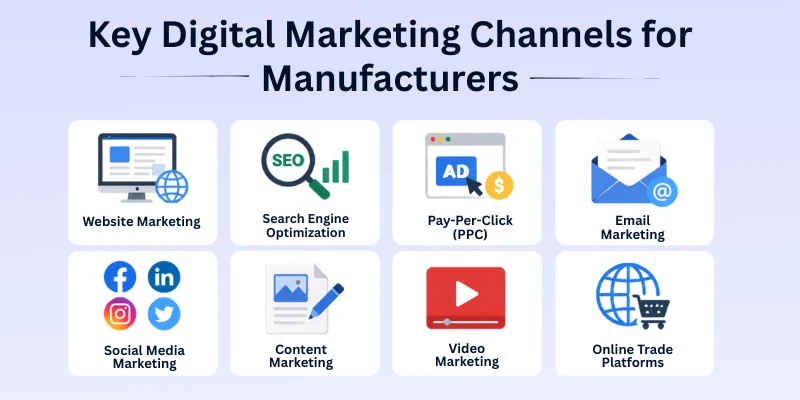
The channels below are the ones that work best for manufacturing businesses, and I’ll explain how you can use each of them today.
1. Website Marketing
Think of your website as your online showroom. You want buyers to see your products clearly and understand what you make.
- Make pages for each product with images, videos, and specs.
- Add a contact form so buyers can ask questions or request a quote quickly.
- Keep it simple and fast to load.
Example: If you make machine parts, show pictures, technical details, and let buyers download brochures.
2. Search Engine Optimization (SEO)
SEO helps people find your company on Google when they search for your products.
- Use words buyers type, like product names and industry terms.
- Write blogs that explain how your products solve problems.
- Make sure page titles and descriptions are clear.
Example: When someone searches “industrial conveyor supplier,” SEO helps your company show up first.
3. Pay-Per-Click (PPC) Advertising
PPC ads are paid ads that show on Google or social media. You only pay when someone clicks.
- Target buyers who need your products now.
- Highlight a specific machine or solution.
- Test ads to see which brings real leads.
Example: If you sell packaging machines, run an ad for “automatic packaging machine supplier” to reach factories looking for it.
4. Email Marketing
Emails help you stay in touch with buyers. You can share new products, updates, or tips.
- Send brochures or PDFs of your products.
- Share success stories showing how your machines helped other clients.
- Keep emails short and useful.
Example: A steel manufacturer can email monthly updates about new products or offers to buyers.
5. Social Media Marketing
Social media is not just for fun; it’s for showing your expertise and products.
- Use LinkedIn for B2B buyers and Facebook or Instagram for visibility.
- Post behind-the-scenes videos from your factory.
- Engage with buyers by answering comments or questions.
Example: A packaging manufacturer posts a short video showing how a machine works. This builds trust with potential clients.
6. Content Marketing
Content marketing means creating useful information to attract buyers.
- Write blogs about how your products solve common problems.
- Make guides or manuals for your machines.
- Create videos showing products in action.
Example: A CNC machine manufacturer can write a blog called “3 ways to save time using CNC machines.”
7. Video Marketing
Video helps buyers see your products in real life.
- Make short product demos or tutorials.
- Show your factory or production process.
- Share videos on your website, YouTube, or social media.
Example: A chemical manufacturer films how products are packaged safely to reassure buyers.
8. Online Trade Platforms
Listing your products on trade sites puts you in front of buyers actively searching for what you make.
- Use platforms like Alibaba, ThomasNet, or IndiaMART.
- Include clear product images, specs, and prices.
- Reply quickly to inquiries to get more leads.
Example: A metal parts manufacturer lists products on ThomasNet and gets inquiries from factories worldwide.
Pro Tip: Don’t rely on just one channel. Share blogs on social media, include them in emails, and run small ads. This way, you reach buyers in many places and get more real leads.
How to Create a Digital Marketing Strategy for Manufacturers
A good strategy helps you spend your time and money wisely and get real buyers for your products.
Here’s how you can build one, even if you’re new to digital marketing.
1. Set Clear Goals
Ask yourself: what do you want digital marketing to do? Examples:
- Get more buyers to contact you.
- Increase sales for a specific product.
- Make more people know about your brand.
Write down 1–3 goals. This keeps your efforts focused and easier to measure.
2. Know Your Buyers
You can’t sell if you don’t know who will buy. For manufacturers:
- Identify your ideal buyers (factories, distributors, or B2C clients).
- Understand what they search online.
- Learn where they spend time online (LinkedIn, Google, industry forums).
Tip: Imagine your buyer visiting your website, what would they want to see first?
3. Choose the Right Channels
Not all digital channels work the same for every manufacturer. Pick the ones that match your buyers:
- Website and SEO – for long-term leads.
- Social media – to show products and build trust.
- Email marketing – to stay in touch with leads.
- Ads – to reach buyers fast.
Tip: Start small with 2–3 channels and expand as you see results.
4. Plan Your Content
Content is what attracts buyers. For manufacturers:
- Share product guides, case studies, or tips for using your machines.
- Use images and videos; buyers want to see products in action.
- Keep content short, simple, and useful.
Example: Write a blog like “How to reduce production downtime with conveyor belts” or make a short demo video.
5. Set a Budget and Schedule
Decide how much money and time you can spend on digital marketing.
- Budget for ads, website updates, or video creation.
- Make a posting schedule for blogs, emails, and social media.
- Keep it realistic; small steps consistently work better than big, rare efforts.
6. Track and Measure Results
Digital marketing is easy to measure if you track it properly:
- Check how many people visit your website.
- Count leads from forms, emails, or ads.
- See which posts or campaigns get the most attention.
Tip: Adjust your strategy based on results. If something works well, do more of it. If not, try something new.
7. Keep Improving
Digital marketing is always changing. For manufacturers:
- Update your website and content regularly.
- Try new tools like videos, chat support, or automation.
- Learn from competitors or industry leaders.
Tip: Even small improvements each month add up to big results over time.
Tips for Successful Digital Marketing for Manufacturers
Digital marketing works best when you do it smart and consistently.
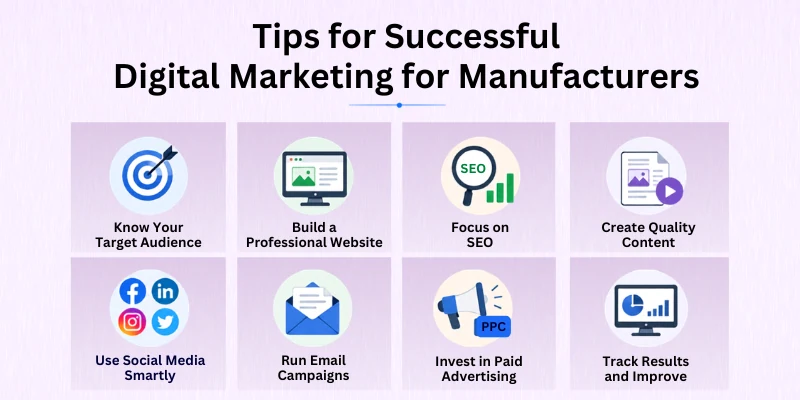
Here are some tips that manufacturers can use to get real results:
- Focus on Quality, Not Quantity: Don’t post just to post. Share helpful, clear content that buyers actually need.
- Show Your Products Clearly: Use good photos and videos. Make sure buyers can see how your machines work.
- Keep Content Simple: Avoid long, technical words. Write or speak in a way anyone can understand quickly.
- Update Your Website and Content Regularly: Add new products, blogs, or videos so your site always looks active.
- Engage With Buyers Online: Reply to comments, answer emails quickly, and connect with people on social media.
- Use Multiple Channels Together: Share your blogs on social media, include them in emails, and run small ads for better results.
- Track What Works: Check which posts, emails, or ads bring real leads. Focus on strategies that give results and adjust the rest.
- Build Trust: Share behind-the-scenes videos, client success stories, or certifications. Buyers trust companies that are transparent.
Final Words
In this article, we’ve covered digital marketing for manufacturers in detail. From my experience, manufacturers see the best results when they combine a strong website, clear product content, and social media updates consistently.
Start small, focus on quality, and track your results; this approach always works. If you haven’t started yet, take the first step today and plan your digital marketing strategy for your business.
If you have any questions, then tell me in the comment section!
FAQs: Digital Marketing for Manufacturers
Here are some common questions manufacturers have about digital marketing:
SEO for manufacturers helps your website show up higher on Google when buyers search for your products. It brings organic traffic without paying for ads. When buyers find your site easily, you get more leads and sales.
Manufacturers should share product demos, factory videos, tips, and customer success stories on social media. This builds trust and shows buyers how your machines work. Regular posts also help your brand stay visible online.
Yes, email marketing keeps your brand top‑of‑mind for buyers who are interested in your products. Sending product updates, tips, and case studies helps you stay in touch and generate more inquiries. Over time, this builds trust and increases repeat business.
Paid ads like Google Ads and social media ads help manufacturers reach buyers quickly. They show your products to people who are actively searching for what you make. Paid ads work best when paired with a strong website and clear product pages.
Manufacturers track success using tools like Google Analytics, social media insights, and email reports. These tools show website visits, clicks, leads, and engagement. Measuring results helps you improve and focus on the most effective strategies.




- Be Respectful
- Stay Relevant
- Stay Positive
- True Feedback
- Encourage Discussion
- Avoid Spamming
- No Fake News
- Don't Copy-Paste
- No Personal Attacks
- Be Respectful
- Stay Relevant
- Stay Positive
- True Feedback
- Encourage Discussion
- Avoid Spamming
- No Fake News
- Don't Copy-Paste
- No Personal Attacks
