Digital Marketing for Architects – Boost Your Design Business in 2026
Published: 27 Jun 2026
Many architects spend years perfecting their craft, only to feel invisible online when it comes time to attract new clients. Your portfolio is strong, your ideas are clear, but your phone stays quiet.
Digital marketing for architects exists to solve this exact problem by turning your online presence into a steady source of real interest and real conversations.
Clients today want guidance before they reach out, and they look for it on websites, search engines, and social platforms.
This guide will show you how to connect these tools into one smooth system that builds trust, visibility, and long-term growth.
What is Digital Marketing for Architects?
Online marketing for architects is the process of using online tools and platforms to promote your architecture services. It helps you reach people who are already looking for design help, whether they are planning a new home, a business space, or a public project.
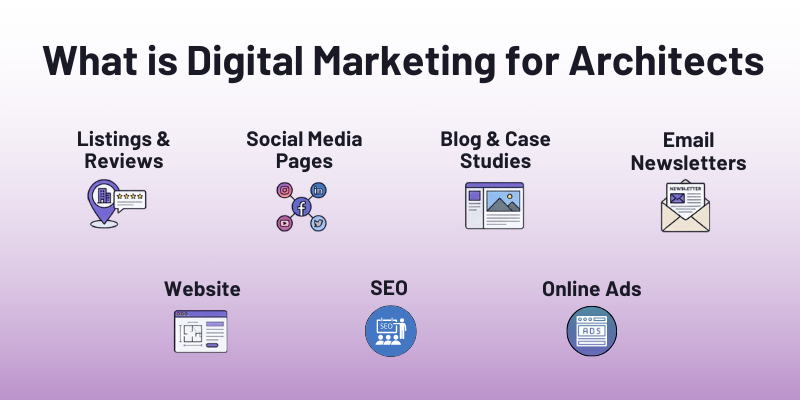
Instead of relying only on word of mouth, digital marketing creates a system that works for you every day. This system can include:
- A professional website
- Search engine optimization
- Blog content and case studies
- Social media pages
- Email newsletters
- Online advertisements
- Business listings and reviews
Each part has a role. Your website is your main office online. SEO helps people find you. Content explains your ideas. Social media shows your style and culture. Email keeps you in touch. Reviews build trust.
The goal is simple. You want the right people to find you, understand you, and feel confident reaching out.
Why Digital Marketing Matters for Architects
Architecture is a visual and trust-based field. Clients do not just hire a service. They hire a vision. They want to feel safe, understood, and inspired before they move forward.
Digital marketing helps you create that feeling online.
Here is why it matters so much:
- Visibility: If people cannot find you online, they may never know you exist.
- Credibility: A strong digital presence makes your firm look reliable and established.
- Connection: You can share your values, not just your projects.
- Growth: You can attract clients who match your design style and budget level.
It also helps small and medium-sized firms compete with larger ones. A clear message and a helpful website can make a big impact, even without a huge budget.
How Clients Find Architects Online
Most clients follow a similar path when looking for an architect. It starts with a need and ends with a decision.
Their journey often looks like this:
- They search online for architects in their area.
- They click on a few websites from the results.
- They look at project photos and services.
- They read reviews and testimonials.
- They follow social media links.
- They contact one or two firms.
Your job is to guide them through each step. Your website should be clear and easy to use. Your content should answer basic questions. Your social pages should show real work and real people.
When these pieces work together, clients feel informed instead of confused.
Website as the Core of Digital Marketing for Architects
Your website is the centre of your entire digital strategy. Every ad, post, and email should lead people back to it. Think of it as your digital studio, open all day and night.
A strong website should do three main things:
- Show your best work
- Explain how you work
- Make it easy to contact you
Your homepage should clearly say who you help and what you offer. Use simple words. Keep sentences short. Let your images support your message, not replace it.
Key Elements of a High-Performing Architecture Website
Here are the core parts every architecture website should have:
- Portfolio: High-quality photos of completed projects
- About Page: Your story, mission, and team
- Services Page: Clear list of what you offer
- Contact Page: Simple form and contact details
- Testimonials: Honest feedback from past clients
You can also add a blog or resources section. This helps with SEO and shows your knowledge over time.
A clean design, fast loading speed, and mobile-friendly layout are also very important. Many users visit from their phones, so your site must work well on small screens.
Search Engine Optimization (SEO) for Architects
SEO helps your website appear in search engine results when people look for architecture services. This is one of the most powerful parts of Digital Marketing for Architects because it brings in visitors who are already interested.
Basic SEO focuses on:
- Using clear page titles and headings
- Writing helpful and original content
- Adding keywords in a natural way
- Making your site fast and secure
- Ensuring mobile compatibility
The goal is not to trick search engines. The goal is to help users. When your pages answer real questions, search engines reward you with better rankings.
Local SEO for Architecture Firms
Most architects serve a specific area. Local SEO helps people nearby find you.
Steps to improve local visibility include:
- Creating a Google Business Profile
- Adding your address and phone number to your site
- Asking clients for reviews
- Listing your firm in local directories
These actions help search engines trust your business and show it to local users.
Content Marketing for Architects
Content marketing is about sharing useful information instead of direct promotion. It helps people learn, plan, and feel confident before they contact you.
Good content builds long-term trust. It also helps your SEO and social media efforts.
Ideas for content include:
- Design tips for homeowners
- Budget planning guides
- Project walkthroughs
- Behind-the-scenes stories
- Material selection advice
Blog and Case Study Strategy
Blogs and case studies work well together. Blogs answer common questions. They help new visitors understand the design process. Case studies show how you solve real problems for real clients.
A simple case study structure can be:
- The client’s goal
- The challenge
- Your design approach
- The final result
Use photos and short paragraphs to keep it easy to read.
Social Media for Architecture Firms
Social media is where you show the personality of your firm. It is not just about perfect images. It is about sharing your process and people.
You can post:
- Early sketches and concepts
- Site visits and progress shots
- Team introductions
- Client success stories
This makes your firm feel human and approachable.
Choosing the Right Platforms
You do not need to be everywhere. Focus on platforms that fit your audience.
- Instagram: Great for visual projects and stories
- LinkedIn: Good for business and commercial clients
- Facebook: Useful for local community reach
Choose one or two platforms and post regularly.
Paid Advertising in Digital Marketing for Architects
Paid advertising gives you fast visibility. It can be helpful when you launch a new service or enter a new market.
There are two main types of ads:
Google Ads vs Social Ads
- Google Ads appear when people search for architects or design services. These users already have intent.
- Social Ads appear in social media feeds. These users may not be searching, but they can still be interested.
Both can work well. The key is a clear message and a strong landing page.
Email Marketing for Architects
Email marketing helps you stay connected with people who already know your firm. This includes past clients, partners, and new leads.
You can use email to:
- Share new projects
- Send design tips
- Announce firm updates
- Invite people to events
Keep your emails short and friendly. Always include a clear way to contact you.
Online Reputation and Reviews for Architects
Your online reputation can influence decisions more than you think. Many clients read reviews before they reach out.
Encourage happy clients to leave feedback. Respond to all reviews, even negative ones. A calm and respectful reply shows professionalism.
You can guide clients to trusted platforms like Google Reviews. For deeper insights on digital visibility, you can also explore resources from Moz, which offers helpful guides on SEO and online presence.
Tracking Results in Digital Marketing for Architects
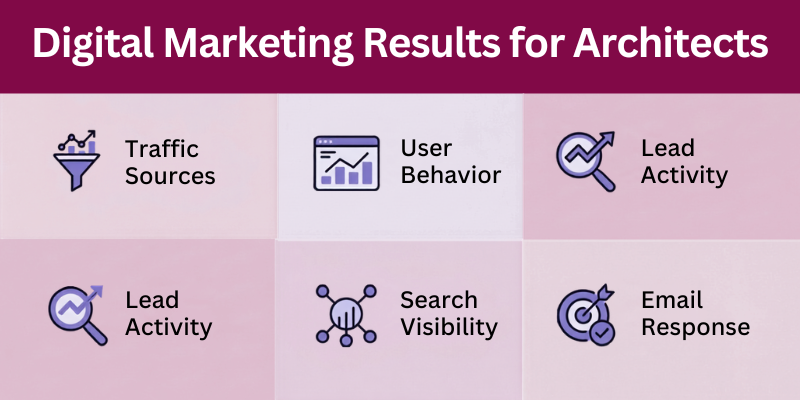
Tracking results in Digital Marketing for Architects helps you see how your online efforts turn into real client interest. Instead of guessing what works, you use clear signals to guide your next steps.
Begin by defining what matters most to your firm. This could be website visits, inquiry forms, or direct calls from potential clients. Each goal should connect to a simple way to measure progress.
Focus on these key indicators:
- Traffic Sources: Learn where visitors come from, such as search engines, social media, or ads.
- User Behavior: See which pages keep attention and which ones people leave quickly.
- Lead Activity: Monitor how often visitors contact you.
- Search Visibility: Track your position for important keywords.
- Email Response: Check how many people open and read your messages.
Review your data on a monthly basis to spot trends, not just short-term changes. When you notice patterns, you can adjust your content, website, or campaigns with confidence. This steady approach helps you build a digital presence that grows stronger and more effective over time.
Common Mistakes Architects Make in Digital Marketing
Even the most talented architecture firms can struggle online if their digital marketing has weak spots. Here are some common mistakes architects make, and how to avoid them:
- Neglecting the Website: A slow, outdated, or hard-to-navigate website can drive potential clients away before they even see your work.
- Ignoring SEO: Without proper search optimization, your firm may never appear when clients search for architects online.
- Inconsistent Content Posting: Irregular blogs, social media updates, or email newsletters fail to build trust or engagement.
- Overcomplicating Messages: Using technical jargon or long paragraphs can confuse clients instead of guiding them.
- Not Tracking Results: Failing to monitor traffic, leads, or engagement prevents you from knowing what works.
- Neglecting Reviews and Reputation: Ignoring client feedback or failing to request reviews reduces credibility and local visibility.
- Relying on One Channel Only: Focusing on just social media, email, or ads limits your reach and opportunities.
By avoiding these mistakes and maintaining a balanced, consistent strategy, architects can create a strong, professional, and client-friendly digital presence.
Building a Long-Term Digital Marketing Strategy
A successful digital presence doesn’t happen overnight. For architects, building a long-term digital marketing strategy ensures steady growth, consistent leads, and stronger client relationships over time.
Start by defining clear goals for your firm. Do you want more inquiries, higher local visibility, or stronger brand recognition? Once your goals are set, you can design a plan that focuses on measurable actions.
Key elements of a long-term strategy include:
- Content Planning: Schedule regular blog posts, case studies, and social updates to keep your audience engaged.
- SEO Updates: Continuously optimize your website for relevant keywords and local searches.
- Social Media Consistency: Post consistently on platforms where your clients spend time, like Instagram or LinkedIn.
- Email Campaigns: Send periodic newsletters or project updates to stay connected with past and potential clients.
- Review Management: Encourage and respond to client reviews to build trust and credibility.
Regularly track your performance and adjust your plan based on results. A long-term strategy is flexible, it grows with your firm and keeps your digital marketing efforts effective, organized, and client-focused.
Future of Digital Marketing for Architects
The world of digital marketing is evolving rapidly, and architecture firms that adapt early can gain a significant advantage. Emerging trends and technologies are shaping how architects connect with clients and showcase their work online. Understanding these changes helps your firm stay relevant and competitive.
Key trends to watch in the future of Digital Marketing for Architects include:
- Virtual and Augmented Reality: Allow clients to explore designs through immersive 3D walkthroughs before construction begins.
- Video Content Dominance: Short videos and project timelapses on social media will become increasingly important for engagement.
- AI-Powered Tools: Tools for content creation, design visualization, and client communication will streamline marketing efforts.
- Personalized Marketing: Tailoring content and campaigns to specific client needs will improve lead quality and conversion.
- Voice Search Optimization: More users will search for architects using voice assistants, requiring optimized content for voice queries.
- Sustainability and Storytelling: Clients increasingly value eco-friendly designs and authentic stories behind projects, which should be reflected in marketing.
By integrating these innovations into your digital strategy, your firm can stand out, attract the right clients, and build a modern, forward-thinking brand that keeps pace with changing technology and expectations.
Final Thoughts
In this article, we have covered digital marketing for architecture firms in detail and how it can help showcase your work effectively.
Digital marketing for architects is not about selling. It is about sharing your vision in a way that feels honest and helpful. When people visit your website or social pages, they should feel your passion for design and your care for clients.
Start with small steps. Improve one area at a time. Over months, these efforts create a strong and trusted presence. Your designs shape how people live and work. Let your digital presence reflect that same level of thought and purpose.
FAQs
Here are some frequently asked questions related to internet marketing for architects:
SEO and content usually take a few months to grow. Paid ads can bring faster results. Long-term success comes from consistency.
Yes, even simple steps can help. A clear website and local SEO can attract quality leads. You can grow your strategy over time.
Yes, it helps show your work and your team. People like to see real projects and progress. It builds trust before contact.
Try to update it every few months. Add new projects or blog posts. This keeps your site fresh for users and search engines.
Google Reviews is a strong choice. Many people check it before calling a firm. It also supports local SEO.
Yes, many firms start on their own. With planning and simple tools, it is manageable. As you grow, you can get expert help.




- Be Respectful
- Stay Relevant
- Stay Positive
- True Feedback
- Encourage Discussion
- Avoid Spamming
- No Fake News
- Don't Copy-Paste
- No Personal Attacks
- Be Respectful
- Stay Relevant
- Stay Positive
- True Feedback
- Encourage Discussion
- Avoid Spamming
- No Fake News
- Don't Copy-Paste
- No Personal Attacks
