Digital Marketing for Universities: Strategies to Reach Students & Grow Enrollment
Published: 25 May 2026
Universities today face fierce competition for students. Traditional marketing alone is no longer enough. Prospective students search online for program details, campus life, and career outcomes.
Parents want accurate information at their fingertips. Alumni look for ways to stay connected. This makes digital marketing for universities essential.
In this article, we will explore how universities can leverage digital channels, create engaging content, and improve enrollment outcomes.
By the end, you will have a complete roadmap to design a digital marketing strategy specifically for universities and higher education institutions.
Why Digital Marketing Matters for Universities
Digital marketing has become the foundation of student recruitment. Most prospective students start their journey online, browsing websites, social media, and search engines. A strong digital presence allows universities to:
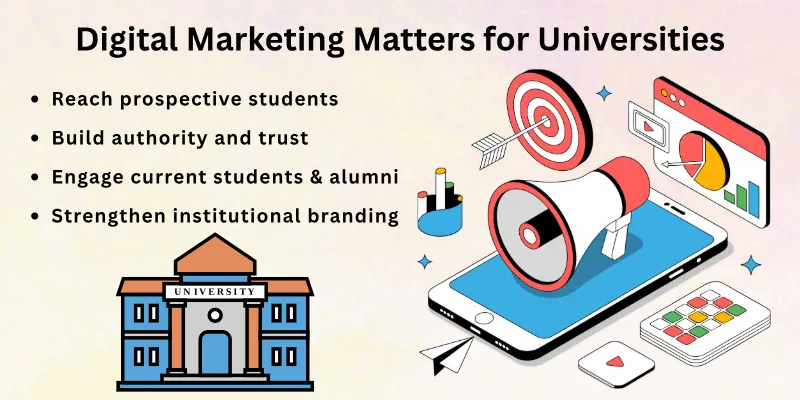
- Reach prospective students effectively.
- Build authority and trust through helpful, relevant content.
- Engage current students and alumni with targeted campaigns.
- Strengthen institutional branding in a competitive environment.
After understanding why digital marketing is critical, let’s explore who we are trying to reach.
Understanding Your Audience
Every university must identify its audience before designing campaigns. Different student segments require different strategies:
- Undergraduate students: Interested in programs, campus life, and scholarships.
- Graduate students: Look for research opportunities, faculty expertise, and specialization.
- International students: Need information on visas, financial aid, and campus support.
- Alumni and community: Engage via events, newsletters, and development programs.
By defining personas for each group, universities can create content and campaigns that resonate and inspire action.
Digital Marketing Channels for Universities
Once the audience is clear, universities can select the right channels. Each channel serves a unique purpose in reaching students, engaging them, and converting them into applicants.
Now, let’s explore the most effective digital marketing channels for universities.
1. Search Engine Optimization for Universities
SEO ensures that your university website and program pages appear in relevant searches when students look for programs or guidance online. Key strategies include:
- Using keywords like “digital marketing for higher education” and program-specific terms.
- Optimizing meta titles, headings, and descriptions to match student queries.
- Ensuring mobile-friendly, fast-loading pages.
- Implementing local SEO to attract nearby students and build regional visibility.
Effective SEO helps universities reach more prospective students organically over time.
2. Content Marketing for Universities
Content marketing allows universities to engage students, share expertise, and demonstrate credibility. Examples include:
- Blog posts about student experiences, career paths, or campus events.
- Detailed guides on admissions, scholarships, or program selection.
- Student success stories, alumni achievements, and faculty highlights.
After content creation, universities can distribute it across social media and email to amplify reach.
3. Social Media Marketing for Universities
Social media is where students spend much of their time. Strategies include:
- Sharing authentic content on Instagram, TikTok, and YouTube.
- Highlighting campus life, events, and student achievements.
- Running targeted campaigns for specific programs or open days.
Social media builds community and allows universities to interact with students directly.
4. Paid Advertising for Universities
Paid campaigns help universities attract students who are actively searching or browsing relevant topics:
- Search ads for program-specific queries.
- Display and remarketing ads to stay visible to interested students.
- Geographically and demographically targeted campaigns to maximize ROI.
Paid advertising complements organic efforts and accelerates enrollment results.
5. Email Marketing for Universities
Email remains one of the most effective tools for student engagement:
- Send personalized updates to prospective students about programs, deadlines, or events.
- Automate sequences that guide students through the application process.
- Keep alumni engaged with newsletters and event invitations.
Email campaigns help universities nurture leads and maintain long-term engagement.
6. Website Design and User Experience for Universities
A university’s website is central to its digital marketing efforts. Best practices include:
- Clear navigation and intuitive layout.
- Mobile responsiveness for students on smartphones.
- Fast page load speed and effective calls to action.
A well-designed website converts visitors into applicants and improves overall engagement.
Advanced Strategies for Higher Education Marketing
After establishing channels, universities can adopt advanced strategies:
- Analytics and Reporting: Use data to track student interactions, campaign performance, and conversion rates.
- Personalization: Tailor messages and offers using CRM systems and automation tools.
- Virtual Experiences: Offer online campus tours, webinars, and Q&A sessions to reach students unable to visit in person.
These strategies increase engagement and help universities make informed decisions.
Measuring Success for Universities
After implementing digital marketing strategies, it is essential for universities to track their performance to ensure results. Without proper measurement, even the best campaigns may fail to deliver impact.
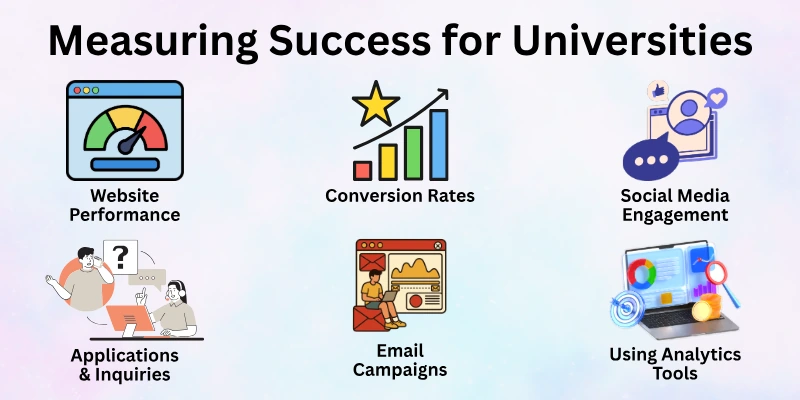
Key Metrics to Track:
- Website Performance: Monitor page views, unique visitors, and time spent on program pages. This shows which programs attract the most interest.
- Applications and Inquiries: Track how many prospective students complete application forms or contact the admissions team. This is a direct measure of campaign effectiveness.
- Social Media Engagement: Measure likes, comments, shares, and video views. Higher engagement indicates that content resonates with your audience.
- Email Campaigns: Monitor open rates, click-through rates, and form submissions. Personalized emails often outperform generic ones.
- Conversion Rates: Determine how many website visitors take the next step, like signing up for a campus tour or submitting an application.
- Using Analytics Tools: Universities should use tools such as Google Analytics, CRM dashboards, and social media insights to collect and analyze data. Setting up clear goals for each campaign, like increasing program inquiries by a certain percentage, allows teams to adjust strategies and optimize performance continuously.
By consistently tracking these metrics, universities can identify what works, refine campaigns, and make data-driven decisions that improve enrollment and engagement.
Common Mistakes Universities Make
Even experienced teams can make errors that reduce campaign impact. Avoiding these ensures better results:
- Ignoring Mobile Users: Most students browse and apply on phones. Non-mobile-friendly websites frustrate users and reduce inquiries.
- Irregular or Low-Quality Content: Posting inconsistently or sharing irrelevant content lowers engagement. Content should inform, showcase campus life, and highlight achievements.
- Not Measuring or Acting on Data: Without tracking performance, universities cannot see what works. Adjusting campaigns based on analytics improves results.
- Overlooking Audience Differences: Undergraduates, graduates, and international students have different needs. Personalized campaigns perform better.
- Relying on a Single Channel: Focusing on only one platform limits reach. Multi-channel campaigns increase visibility and engagement.
By avoiding these mistakes, universities can make their digital marketing more effective and aligned with enrollment goals.
Future Trends in Digital Marketing for Universities
Digital marketing continues to evolve rapidly, and universities that embrace these trends stay ahead of the competition:
- Video and Live Content: Short videos, live streams, and virtual campus tours capture attention and engage students more effectively.
- Personalized Experiences: Using data insights and automation, universities can tailor messages to individual student interests.
- Global Student Recruitment: Targeted online campaigns help universities reach and attract international applicants.
- Integration Across Channels: Coordinating website, social media, email, and paid campaigns strengthens awareness and builds trust.
Adopting these strategies enhances engagement, boosts recruitment, and reinforces the university’s overall presence in the higher education market.
Final Words
In this article, we have covered digital marketing for universities and higher education, including content marketing, SEO, social media, paid advertising, email marketing, website optimization, advanced strategies, measurement, common mistakes, and future trends.
For universities looking to improve student recruitment, these strategies provide a complete roadmap. If you have any questions or need clarification, feel free to ask in the comments section. Start applying these techniques today to attract more students and enhance engagement.
To help you further, we are adding an FAQs section that highlights queries about digital marketing in higher education.
FAQs About Digital Marketing for Universities
Here are some frequently asked questions related to digital marketing for universities:
Digital marketing for universities is the use of online channels to promote programs, engage students, and boost enrollment. It includes SEO, content marketing, social media, email campaigns, and paid ads. This approach helps universities reach students where they spend most of their time online.
SEO for universities makes program pages and websites visible on Google and other search engines. Optimized content attracts prospective students searching for courses and scholarships. Better visibility leads to more inquiries and applications.
Instagram, TikTok, and YouTube are highly effective for engaging prospective students. LinkedIn can be used for graduate programs and alumni outreach. Choosing platforms depends on the audience’s age, interests, and location.
Content marketing builds trust and authority by sharing student stories, guides, and blogs. It answers common student questions and highlights programs effectively. Strong content encourages students to explore your university further and apply.
Yes, email marketing for universities helps nurture prospective students with personalized updates. Automated campaigns can remind students about deadlines and campus events. Emails also engage alumni for fundraising and community building.
Universities should track website traffic, social media engagement, email open rates, and applications submitted. Conversion rates show how many visitors become applicants. Regular tracking helps improve campaigns and maximize enrollment results.
Small universities can focus on niche programs, personalized campaigns, and local SEO. Engaging content and targeted ads help reach the right students efficiently. Consistency across digital channels builds trust and strengthens visibility over time.





- Be Respectful
- Stay Relevant
- Stay Positive
- True Feedback
- Encourage Discussion
- Avoid Spamming
- No Fake News
- Don't Copy-Paste
- No Personal Attacks
- Be Respectful
- Stay Relevant
- Stay Positive
- True Feedback
- Encourage Discussion
- Avoid Spamming
- No Fake News
- Don't Copy-Paste
- No Personal Attacks
